
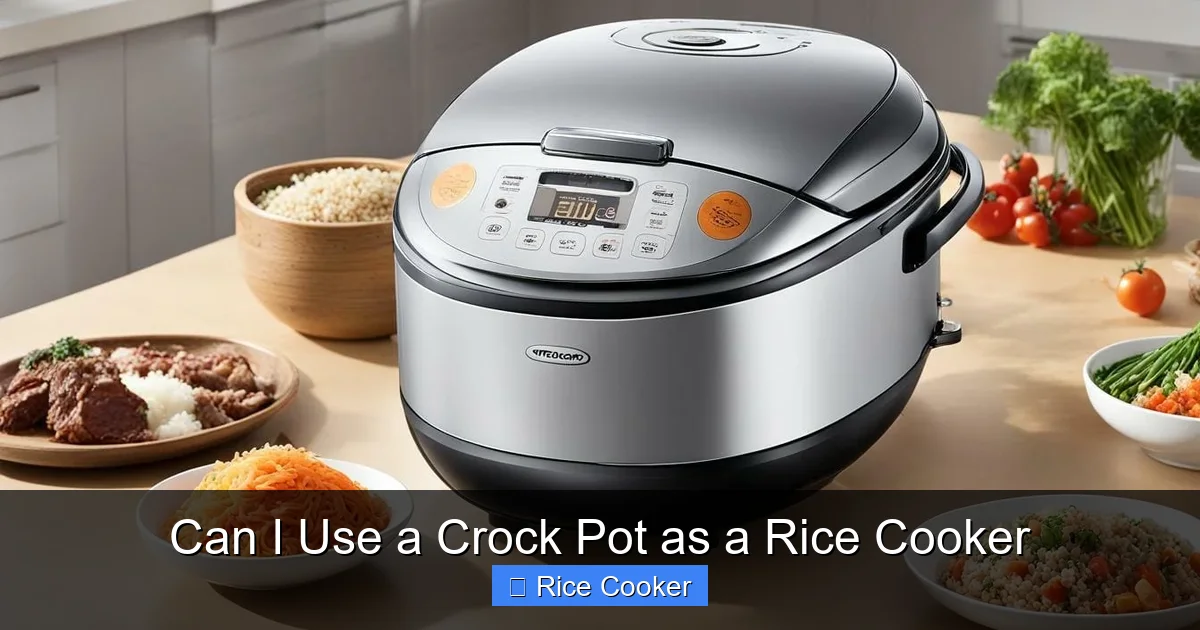
Yes, you can use a crock pot as a rice cooker—but it’s not ideal. While both appliances cook grains, their designs differ significantly. A crock pot uses moist heat over long periods, which can lead to mushy or unevenly cooked rice unless you adjust technique. With proper ratios, timing, and preparation, however, your slow cooker can produce decent rice—just not as reliably as a dedicated rice cooker.
Key Takeaways
- Functionality: A crock pot can cook rice, but it lacks the precision of a rice cooker’s automatic switching from heating to warming.
- Cooking Method: Crock pots rely on moist heat and long cooking times, which may result in softer or stickier rice compared to stovetop or electric rice cooker results.
- Water Ratio: Use a 1:2 ratio of rice to water for most types of white rice; adjust slightly for brown rice (1:2.5).
- Pre-Cooking Step: Rinsing rice removes excess starch and helps prevent clumping during slow cooking.
- Ventilation Matters: Covering the pot too tightly traps steam, leading to soggy rice; leave the lid slightly ajar if possible.
- Safety & Convenience: Slow cookers keep food warm automatically but don’t alert when done—unlike rice cookers with audible signals.
- Best Rice Types: Short-grain white rice works best; avoid very long-grain or wild rice due to texture issues.
[FEATURED_IMAGE_PLACEHOLDER]
## Can I Use a Crock Pot as a Rice Cooker?
Let’s be honest—we’ve all been there. You’re craving perfectly fluffy jasmine rice or creamy arborio risotto, but your rice cooker is already in use… or maybe you don’t even own one! Enter the humble crock pot: that trusty kitchen appliance that’s saved countless meals through stews, soups, and pulled pork. So naturally, the question arises—can I use a crock pot as a rice cooker? The short answer is yes—but with caveats.
Rice cookers and slow cookers are both electric appliances designed to simplify meal prep, but they serve different purposes. A rice cooker excels at transforming dry grains into light, tender, evenly cooked perfection using precise temperature control and an automated cycle. A crock pot, on the other hand, thrives on low-and-slow cooking for meats and vegetables, often relying on liquid-heat transfer. That said, with a little know-how, your crock pot might just become your new go-to for side dishes.
Before we dive into techniques and tips, let’s clarify what makes each appliance tick. Understanding these differences will help you decide whether repurposing your crock pot is worth the effort—or if investing in a rice cooker is smarter in the long run.
## How Do Rice Cookers Work?
At its core, a rice cooker is a marvel of simplicity and efficiency. Most modern electric rice cookers feature a simple design: a non-stick inner pot, heating elements at the base, and a thermostat that monitors internal temperature. Here’s how it works:
When you add rice and water, plug in the unit, and press “cook,” the heating element warms the bottom of the pot. As the water heats up, it creates steam, which rises and surrounds the grains. Once the water fully evaporates—usually after about 20–30 minutes—the temperature inside the pot climbs rapidly. At around 212°F (100°C), the thermostat detects this spike and automatically switches off the heating element.
But here’s the genius part: the switch doesn’t stop there. Many models also turn on a separate warming plate that maintains the rice at a gentle 167–185°F (75–85°C) until you’re ready to eat. This keeps everything warm without overcooking or drying out. Some high-end models even have fuzzy logic sensors that adjust cooking time based on the type of rice you select.
This entire process happens without you lifting a finger—hence why rice cookers are beloved worldwide. They eliminate guesswork, reduce cleanup, and deliver consistent results every single time.
## How Does a Crock Pot Operate?
Unlike rice cookers, crock pots aren’t built for quick transformations. Instead, they’re engineered for patience. Also known as slow cookers, these appliances use low-wattage heating elements wrapped around the sides or bottom of the ceramic insert. The heat is indirect and gradual—typically maintaining temperatures between 190–200°F (88–93°C)—which allows foods to break down slowly and infuse flavors deeply.
Because crock pots operate at lower temperatures for longer durations, they’re perfect for tough cuts of meat that need hours to become fork-tender. However, this same principle presents challenges when cooking delicate grains like rice. Rice requires rapid boiling to gelatinize its starches properly, something a crock pot rarely achieves directly.
That doesn’t mean it’s impossible—it just means you’ll need to tweak your approach. Think of your crock pot more as a patient caretaker than a high-speed chef. With careful attention to water levels, timing, and sometimes pre-soaking, you can coax decent rice out of it. But again, “decent” isn’t always “perfect.”
## What Are the Pros of Using a Crock Pot for Rice?
Now that we understand the mechanics, let’s explore why someone might choose a crock pot over a rice cooker—even if it’s not optimized for it.
### Hands-Off Convenience
One of the biggest advantages of a crock pot is its ability to multitask. While your rice cooks, you could be simmering chili, roasting chicken, or preparing a sauce nearby. Since rice takes longer to cook in a slow cooker than in a rice cooker (often 45–90 minutes depending on settings), it fits naturally into the crock pot’s rhythm. Plus, once it’s done, many crock pots enter a built-in “warm” mode—so you won’t have to rush to serve it immediately.
### Energy Efficiency
Running a rice cooker for 20–30 minutes uses less electricity than a crock pot running for an hour or more. However, if you’re already using your crock pot for another dish, adding rice won’t significantly increase energy consumption. In fact, some users find that cooking rice alongside other ingredients reduces overall cookware usage and saves time.
### Flavor Infusion Potential
Here’s a pro you might not expect: cooking rice in a crock pot allows it to absorb surrounding flavors. If your stew includes herbs, garlic, or broth, tossing in rinsed rice early lets it soak up those tastes during the long cook time. This method is especially useful for pilafs, risottos, or grain bowls where you want subtle background notes throughout every bite.
### Accessibility
Not everyone owns a rice cooker—especially in households where space is limited or budgets are tight. For these folks, learning to make rice in a crock pot is a practical skill that expands culinary options without extra cost.
Of course, these benefits come with trade-offs. Let’s look at what can go wrong—and how to fix it.
## Common Challenges When Cooking Rice in a Crock Pot
Even experienced cooks occasionally struggle with rice in slow cookers. Here are the most frequent issues—and solutions.
### Mushy or Starchy Texture
Because crock pots maintain steady, moderate heat without boiling, rice often ends up softer than desired. White rice, in particular, can lose its distinct bite and turn gluey. To combat this:
– Reduce water slightly: Try a 1:1.75 ratio instead of 1:2.
– Avoid opening the lid: Every time you lift it, heat escapes and cooking slows down.
– Use short-grain varieties: They hold shape better under prolonged moisture.
### Uneven Cooking or Undercooked Grains
Some kernels stay hard while others turn to paste—a frustrating mix. This usually stems from overcrowding or insufficient stirring during initial stages.
– Rinse thoroughly: Remove surface starch so grains don’t clump.
– Pre-cook briefly on stove: Sautéing rice for 2–3 minutes before transferring to the crock pot adds structure and jumpstarts gelatinization.
– Stir halfway through: Gently fluff the rice after 20–30 minutes to redistribute heat.
### Excessive Steam Buildup
Crock pots aren’t sealed like pressure cookers. Still, too much condensation can make rice soggy. To manage this:
– Leave lid slightly open if your model allows airflow (though most don’t).
– Place a clean towel over the insert to absorb excess moisture without letting steam escape completely.
– Don’t add extra liquid beyond recommended amounts.
## Best Practices for Making Rice in a Crock Pot
Ready to give it a try? Follow these step-by-step guidelines for the best possible outcome.
### Choose the Right Rice Type
Not all rice is created equal when it comes to slow cooking. Stick with:
– Short-grain white rice (e.g., Calrose, Jasmine): Holds together well and absorbs flavor nicely.
– Medium-grain rice: Works too, though slightly less forgiving than short-grain.
– Brown rice: Requires more water and time; aim for 1:2.5 ratio and high setting for 60+ minutes.
Avoid long-grain basmati or wild rice—they tend to become mushy or develop unpleasant textures in crock pots.
### Measure Accurately
Precision matters more than in most recipes. Use measuring cups specifically for rice, not liquid ones. Overwatering is the #1 cause of failure.
| Rice Type | Water Ratio | High Setting Time |
|—————–|————-|——————-|
| White (short/med)| 1:2 | 60–75 min |
| Brown | 1:2.5 | 75–90 min |
### Prep Like a Pro
Before adding anything to your crock pot:
1. Rinse the rice in cold water until the runoff runs clear. This removes excess amylose, preventing stickiness.
2. Soak (optional): Let soaked rice sit for 15–30 minutes to soften cell walls and improve texture.
3. Combine ingredients gently: Avoid compacting the rice—loose layers cook more evenly.
### Cook Smart
Set your crock pot to “high” for faster results or “low” for gentler heat. Most experts recommend “high” because it helps jumpstart the cooking process.
– Start with cold water, not hot—this ensures even heating throughout the pot.
– Stir once after 15–20 minutes to check progress and loosen any clumps.
– Test doneness by pressing the tip of a knife into the center—it should slide through easily with no resistance.
### Finish Strong
Once done, let the rice rest covered for 10 minutes. This final steam burst finishes the cooking process evenly and fluffs the grains naturally. Then fluff with a fork before serving.
## Creative Ways to Use Your Crock Pot Beyond Plain Rice
Why stop at plain white rice? Your slow cooker opens doors to delicious variations.
### Herbed Rice Pilaf
Add chopped onions, garlic, thyme, and bay leaf to the crock pot along with rice and broth. Cook on high for 60 minutes. The result? A fragrant, aromatic side that pairs beautifully with roasted meats.
### Coconut Curry Rice
Sauté onions and ginger in oil before adding rice, coconut milk, curry powder, and diced tomatoes. Simmer on high for 70 minutes. Garnish with cilantro and lime wedges for an exotic twist.
### One-Pot Meals
Combine rice, beans, corn, and shredded chicken in the crock pot. Season with cumin, paprika, and salt. Cook on high for 50–60 minutes. Serve topped with avocado and sour cream.
These ideas showcase how versatile your crock pot really is—even without a rice cooker!
## Is It Worth Buying a Rice Cooker Instead?
This is the million-dollar question. If you only plan to make rice once in a blue moon, sticking with your crock pot makes sense. But if rice is a staple in your diet, a dedicated rice cooker offers undeniable advantages:
– Consistency: No more guessing games or inconsistent textures.
– Speed: Cooks in half the time.
– Cleanup: Non-stick inner pots are easy to wash.
– Additional Functions: Many models offer steaming baskets, porridge modes, and even yogurt makers.
That said, rice cookers range from $20 budget models to $200 smart units with Wi-Fi connectivity. Consider your cooking habits before splurging.
## Final Thoughts: Yes, But…
So, can you use a crock pot as a rice cooker? Absolutely—but with realistic expectations. It won’t replace your rice cooker’s precision, and results may vary. However, if you’re resourceful, willing to experiment, and okay with slightly softer rice, your crock pot can definitely handle the job.
Remember: cooking is part science, part art. Even professional chefs tweak methods based on ingredients and equipment. Don’t be discouraged if your first attempt isn’t perfect. Adjust ratios, try different rice types, and trust your senses—not just timers.
And who knows? You might discover a new favorite way to prepare rice that complements your slow-cooked mains beautifully. After all, great meals aren’t just about tools—they’re about intention, creativity, and sharing good food with others.
Now go forth and give it a whirl. Your taste buds (and your rice-loving family) will thank you!
Can I cook brown rice in a crock pot?
Yes, but it requires more water and longer cooking time. Use a 1:2.5 ratio of rice to water and cook on high for 75–90 minutes. Brown rice holds up better than long-grain varieties in crock pots.
How do I prevent rice from sticking in my crock pot?
Rinsing the rice thoroughly removes excess starch that causes clumping. Also, avoid packing the rice tightly and consider lightly sautéing it before adding liquid.
Should I use high or low setting for rice in a crock pot?
High setting is generally preferred because it helps rice cook faster and more evenly. Low setting may result in mushier texture over long periods.
Can I cook rice and soup together in a crock pot?
Absolutely! Adding rinsed rice to a simmering soup or stew allows it to thicken the broth and absorb flavors. Just ensure enough liquid remains for proper rice hydration.
What if my rice is still hard after the recommended time?
Try adding a splash of water or broth and continuing to cook on high for another 10–15 minutes, checking frequently to avoid overcooking.
Is it safe to leave rice in the crock pot overnight?
Only if the crock pot has a “warm” function and the rice was fully cooked earlier. Perishable ingredients left in the danger zone (40–140°F / 4–60°C) for over two hours can grow harmful bacteria.
This is a comprehensive guide about can i use a crock pot as a rice cooker.
Key Takeaways
- Understanding can i use a crock pot as a rice cooker: Provides essential knowledge
Frequently Asked Questions
What is can i use a crock pot as a rice cooker?
can i use a crock pot as a rice cooker is an important topic with many practical applications.