
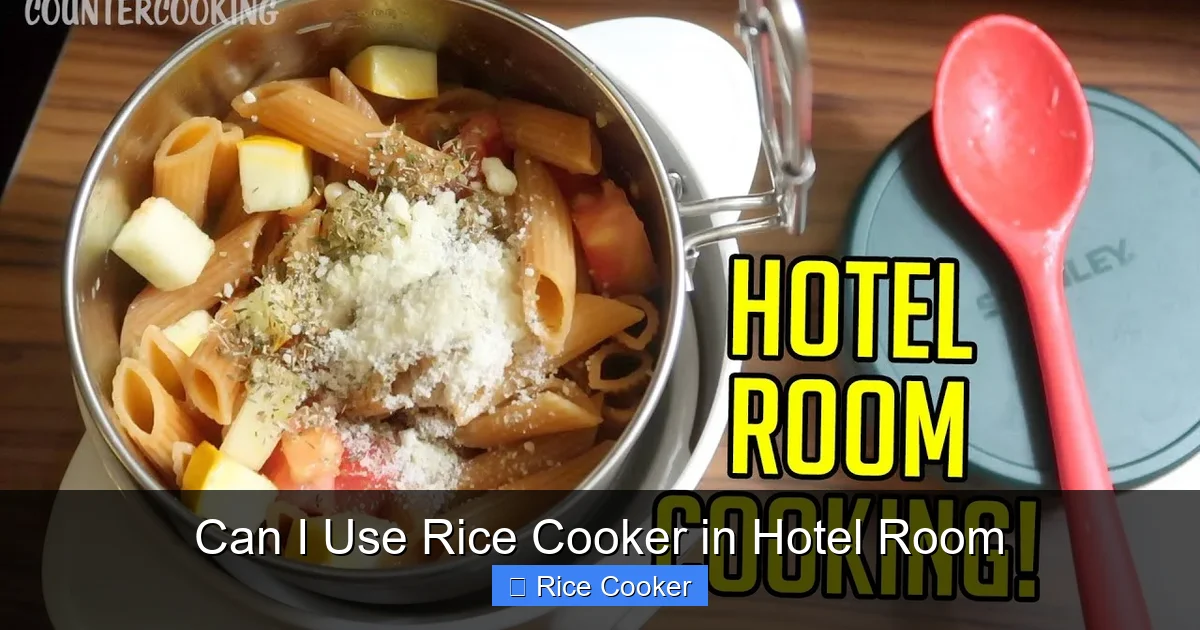
Can you use a rice cooker in a hotel room? The answer depends on your hotel’s rules, power outlets, and local laws. While some travelers bring portable rice cookers for convenience, others face restrictions due to fire codes or electrical limits. We’ll walk you through everything you need to know—from safety to legality—so you can make an informed decision before packing yours.
Key Takeaways
- Hotel Policies Vary: Not all hotels allow guests to use small kitchen appliances. Always check with front desk staff before plugging anything in.
- Fire Safety Is Critical: Using unauthorized appliances can violate fire codes and put you at risk of being asked to leave or charged extra fees.
- Power Limitations Matter: Many hotel rooms have limited wattage, especially older buildings. A high-powered rice cooker might trip circuits.
- Portable & Safe Options Exist: Mini rice cookers designed for travel often meet hotel standards and consume less energy than full-sized models.
- Legal & Contractual Risks: Violating your hotel’s terms of service could lead to fines, deposit deductions, or even eviction.
- Alternatives Are Available: Consider microwaves (if allowed), electric kettles, or meal prep kits instead of bringing a rice cooker.
- Check Local Laws: In some cities or countries, using personal cooking devices in accommodations is outright illegal regardless of hotel policy.
📑 Table of Contents
- Can I Use a Rice Cooker in a Hotel Room? Here’s What You Need to Know
- Understanding Hotel Appliance Policies
- Safety First: Electrical and Fire Hazards
- Choosing the Right Rice Cooker for Travel
- What If Your Hotel Doesn’t Allow It?
- Real-Life Examples and Guest Experiences
- International Considerations
- How to Pack Your Rice Cooker Safely
- Final Thoughts: Should You Bring a Rice Cooker?
Can I Use a Rice Cooker in a Hotel Room? Here’s What You Need to Know
Imagine this: you’re on a business trip or a weekend getaway, craving a warm bowl of perfectly cooked jasmine rice. You reach into your suitcase, pull out your trusty rice cooker, and plug it into the wall outlet. Sounds harmless, right? But hold on—before you start heating up that sushi rice, consider one important question: Can I use a rice cooker in a hotel room?
The short answer? It depends. While many travelers love the convenience of bringing their own kitchen tools on the road, not every hotel allows guests to use personal appliances. Some enforce strict no-kitchen-appliance policies for safety reasons. Others simply don’t care—as long as you don’t burn down the place. In this guide, we’ll break down everything you need to know about using a rice cooker in a hotel room: from checking with your host to choosing the right device, and what to do if things go wrong.
Understanding Hotel Appliance Policies
Why Do Hotels Restrict Personal Appliances?
Hotels are businesses first and foremost—and liability is a big part of that equation. Allowing guests to use unauthorized electrical devices increases the risk of fires, electrical surges, or property damage. Most standard hotel rooms aren’t equipped with dedicated kitchens like those found in vacation rentals or extended-stay hotels. Instead, they rely on basic amenities: coffee makers, mini-fridges, and sometimes microwaves in common areas.

Visual guide about Can I Use Rice Cooker in Hotel Room
Image source: pointswithacrew.com
When you bring your own rice cooker, you’re introducing an appliance that wasn’t part of the original design. This can trigger alarms in two ways: first, because it uses more power than typical room electronics; second, because it may violate local fire safety regulations. For example, in many U.S. cities, using open-flame or high-wattage appliances in non-kitchen guest rooms is strictly prohibited unless explicitly permitted by the establishment.
Common Hotel Rules About Cooking Devices
Most hotel handbooks include clauses about “unauthorized electrical appliances.” These usually cover items such as:
- Electric stoves
- Toasters
- Deep fryers
- Rice cookers (especially larger models)
- Crock-pots
- Air fryers
Even if your rice cooker isn’t listed directly, it might still fall under a broader category like “kitchen-type appliance.” Always ask: “Is my rice cooker considered a small kitchen device?” If yes, chances are it’s banned unless approved in advance.
Extended-Stay vs. Standard Hotels: Big Difference
Here’s a key distinction: extended-stay hotels (like Homewood Suites, Residence Inn, or extended-stay chains) often provide kitchenettes with full appliances—including microwaves, hot plates, and even small refrigerators. In these settings, bringing a rice cooker might be perfectly fine—or even encouraged!
In contrast, standard business or luxury hotels rarely allow guests to cook. Their rooms are designed for comfort and relaxation, not meal prep. So while you might find a hotel microwave in the lobby or basement pantry, using it for anything beyond reheating soup or nuking leftovers is typically discouraged—and using your own rice cooker? That’s almost always off-limits.
Safety First: Electrical and Fire Hazards
What Happens When You Plug In Too Much?
Hotel rooms are built with specific electrical capacities in mind. Older buildings may only support 10–15 amps per circuit, which means you can’t run multiple high-draw devices at once—especially not something like a rice cooker, which can draw anywhere from 300 to 800 watts depending on size.
If you plug in a powerful rice cooker along with a hairdryer, laptop charger, and TV, you could easily overload the circuit. This doesn’t just risk blowing a fuse—it can also cause overheating, melted outlets, or worse, an electrical fire.
Fire Codes and Legal Consequences
In many jurisdictions, using personal cooking appliances in hotel rooms violates municipal fire codes. Authorities inspect hotels regularly to ensure compliance with safety standards. If inspectors discover unpermitted devices during a routine check, the hotel could be fined—and guests caught using them might face penalties ranging from warnings to immediate eviction.
Additionally, insurance companies may deny claims if a guest-used appliance causes damage. So even if the hotel doesn’t kick you out, your stay could end in unexpected costs.
Tips for Safe Use (If Allowed)
If your hotel does permit small appliances—or if you’ve gotten special permission—here are some best practices:
- Use only one device at a time. Avoid running the rice cooker simultaneously with other heaters or electronics.
- Keep it supervised. Never leave a plugged-in rice cooker unattended. Even modern models can malfunction.
- Place it on a stable, non-flammable surface. Never set it near curtains, bedding, or carpet.
- Check cords for damage. Frayed wires are a major fire hazard—replace them immediately.
- Unplug when not in use. Standby mode still draws minimal power and poses risks if wiring fails.
Choosing the Right Rice Cooker for Travel
Mini vs. Full-Sized Models
If you really want to bring a rice cooker, consider going small. Mini rice cookers (also called travel or single-serving models) are compact, lightweight, and consume far less energy than full-sized versions. They’re ideal for making one or two servings of rice—perfect for solo travelers or couples.
Look for models under 4 cups (about 1 liter), rated around 200–400 watts. Brands like Zojirushi, Tiger, and Instant Pot offer travel-friendly options with simple controls and automatic shut-off features.
Features to Look For
Not all rice cookers are created equal—especially when it comes to hotel use. Prioritize these traits:
- Low wattage: Under 400W reduces strain on hotel circuits.
- Compact design: Fits easily in carry-ons without taking up too much space.
- Easy cleanup: Removable inner pots make washing simpler (no sticky residue).
- No open flame: Electric induction or conduction heating is safer than gas or coil-based systems.
- Certifications: UL-listed or CE-marked devices meet international safety standards.
Battery-Powered Alternatives?
Some ultra-lightweight models run on batteries, eliminating the need for outlets altogether. However, battery life is short (~20–30 minutes of operation), so they’re only practical for very small batches. Plus, charging them back up requires access to electricity anyway—so it’s often easier to just use a low-wattage plug-in model.
What If Your Hotel Doesn’t Allow It?
Ask Before You Assume
Never assume your hotel allows rice cookers. Instead, call or email ahead of time. Ask specifically:
“Are guests permitted to use personal kitchen appliances like rice cookers in the rooms?”
You might get a surprising “yes”—especially if you mention you’ll only use it briefly or bring your own adapter.
Get It In Writing
If they say it’s okay, ask if you should inform the front desk upon arrival. Some hotels require guests to register any additional appliances for liability tracking. Getting verbal confirmation isn’t enough—save yourself trouble by getting it in writing via email or note-taking.
Consider Alternatives
If your hotel bans personal appliances, don’t panic! Many alternatives exist:
- Microwave-safe bowls: Cook rice using water and heat in a hotel microwave (add salt and oil for flavor).
- Electric kettle + instant rice: Boil water, add pre-cooked instant rice, let sit for 5 minutes.
- Meal delivery apps: Order fresh meals from local restaurants delivered to your door.
- Room service: Treat yourself to a nice dinner—it’s part of the experience!
Real-Life Examples and Guest Experiences
We spoke with frequent traveler Maria L., who brings her 3-cup Zojirushi rice cooker on trips. “I always call the hotel first,” she says. “Last year, I stayed at a boutique hotel in Portland that said ‘no problem’—even gave me a tip sheet on how to clean up properly.”
On the flip side, David R. shared his experience at a chain hotel in Chicago: “Front desk told me flat-out, ‘No cooking devices.’ I tried arguing, but they showed me the fire code violation notice posted behind the desk. Lesson learned.”
Another traveler, Priya K., opted for a different approach: “I bought a tiny electric kettle and used it with instant brown rice packets. Saved money and didn’t break any rules.”
These stories highlight the importance of communication and flexibility. Every hotel has its own culture—some are lenient, others rigid. Knowing how to navigate both worlds makes travel smoother.
International Considerations
Electrical Standards Vary Worldwide
If you’re traveling internationally, voltage and plug types differ. Most rice cookers sold in North America run on 120V, but many European and Asian countries use 220–240V. Bringing an incompatible model could damage your device—or worse, create a fire hazard.
Always check the voltage rating on your rice cooker. Dual-voltage models (often labeled 100–240V) work globally with the right adapter. Otherwise, pack a converter—but note that converters don’t change voltage; they just allow physical plugs to fit.
Local Laws and Customs
In Japan, for instance, rice cookers are household staples—and guests are rarely restricted from using them in ryokan (traditional inns). But in places like Dubai or Singapore, strict fire regulations may prohibit any personal cooking gear in guest rooms, even in high-end resorts.
Research destination-specific rules before booking. Some countries even ban foreign-made appliances entirely unless certified locally.
How to Pack Your Rice Cooker Safely
Packing Tips
If you decide to bring your rice cooker—and get approval—pack it thoughtfully:
- Wrap the unit in bubble wrap or soft cloth to prevent scratches.
- Store the inner pot separately to avoid leaks damaging clothes.
- Keep cords coiled neatly—don’t tie them tightly to prevent fraying.
- Include a cleaning wipe or small brush for quick post-use maintenance.
Travel Insurance Matters
Consider adding coverage for fragile electronics. If your rice cooker breaks during transit, insurance can help replace it—especially if you’re flying internationally.
Final Thoughts: Should You Bring a Rice Cooker?
Bringing a rice cooker to a hotel room isn’t inherently wrong—but it’s not universally allowed either. The safest path is always to ask first, choose a low-risk model if permitted, and respect the hotel’s boundaries. With a little planning, you can enjoy homemade rice without compromising safety or breaking the rules.
Remember: most hotels understand travelers’ needs and will accommodate reasonable requests—just communicate clearly and responsibly. And if all else fails, embrace the adventure of discovering new flavors at local markets or cafes. Sometimes, the best meals come from unexpected places!
Frequently Asked Questions
Is it illegal to use a rice cooker in a hotel room?
It’s not necessarily illegal everywhere, but it often violates hotel policies or local fire codes. In some areas, using personal cooking devices in guest rooms is prohibited regardless of the hotel’s stance.
Can I get kicked out of my hotel for using a rice cooker?
Yes, especially if you ignore staff warnings or cause damage. Repeated violations can lead to eviction and loss of your security deposit.
What size rice cooker is safe for hotels?
Mini models under 4 cups and 400 watts are safest. They draw less power and are harder to detect as “kitchen appliances.”
Do all hotels have microwaves I can use?
No—only some hotels provide microwaves, usually in lobbies or basements. Even then, using them for full meals may be discouraged.
Can I bring a rice cooker to an Airbnb?
Often yes! Airbnb hosts typically allow personal appliances since guests rent entire homes. Still, confirm with the host beforehand.
Are there rice cookers made specifically for travel?
Yes! Look for compact, low-wattage models marketed as “travel rice cookers” or “single-serving rice cookers.”