
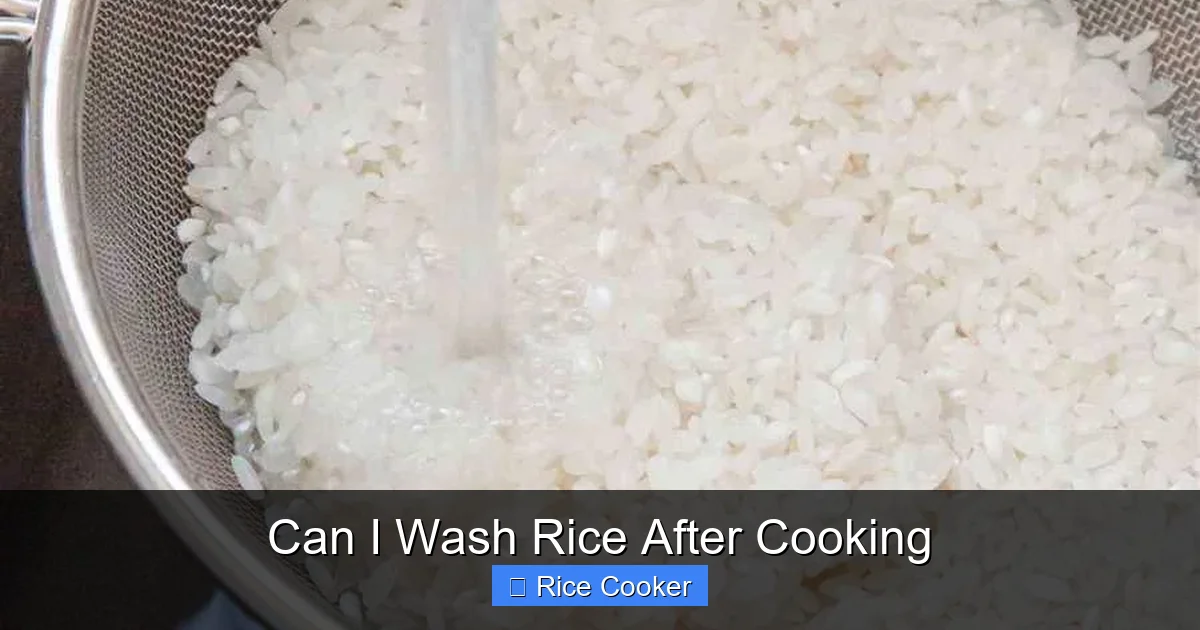
Can I wash rice after cooking? While it’s not necessary to wash rice before cooking, you might wonder if doing so after is beneficial or even safe. Washing cooked rice isn’t typically recommended because it can lead to losing flavor, texture, and nutrients. However, there are specific cases—like removing excess starch or reheating—where post-cooking rinsing may be useful. Understanding when and how to handle cooked rice ensures better taste and safety in your meals.
When you pop open a bag of rice and see those tiny white grains, you might instinctively reach for a colander under cold running water. That action—rinsing—is something many of us do instinctively, especially when preparing sushi or fluffy steamed rice. But what happens if you’ve already cooked your rice and now consider giving it another rinse? Is it safe? Does it change the outcome? The short answer: it depends, but generally, washing cooked rice isn’t recommended unless you have a specific reason—like adjusting texture or removing excess starch.
Let’s unpack this common kitchen dilemma. Whether you’re using an electric rice cooker, a stovetop pot, or even a microwave, understanding the science behind rice preparation helps you make smarter choices. This guide will walk you through everything you need to know about washing rice—before and after cooking—so you can serve up delicious, safe, and perfectly textured rice every time.
Key Takeaways
- Washing before vs. after cooking: Rinsing raw rice removes surface starch and impurities, but washing cooked rice risks losing flavor and texture.
- Food safety first: Never rinse hot cooked rice unless reheating, as water on warm rice can encourage bacterial growth if not handled properly.
- Starch removal matters: Some dishes (like sushi or fried rice) benefit from minimal starch; light rinsing after cooking may help control stickiness.
- Nutrient loss is real: Excess washing—especially of cooked rice—can leach out vitamins and minerals that were already absorbed during cooking.
- Proper storage is key: If you must rinse cooked rice, do so quickly and refrigerate promptly to maintain freshness and reduce contamination risk.
- Alternative methods work better: Instead of washing, use techniques like fluffing with a fork or draining excess water to improve texture without compromising quality.
- Know your rice type: Long-grain white rice often needs less starch removal than short-grain varieties used in sushi or risotto, affecting whether post-cooking rinsing makes sense.
📑 Table of Contents
- The Science Behind Rice and Starch
- Why People Wash Rice (Before Cooking)
- What Happens If You Wash Cooked Rice?
- Food Safety Considerations
- Best Practices for Handling Cooked Rice
- Different Types of Rice, Different Needs
- How to Fix Common Rice Problems Without Washing
- Final Thoughts: Know When to Say No
The Science Behind Rice and Starch
Rice contains natural starches that play a crucial role in its texture and behavior during cooking. These starches are located both inside and outside each grain. When you add water to raw rice and begin heating it, the starches absorb moisture and expand. As the temperature rises, the outer layer of starch breaks down and becomes more soluble—meaning it dissolves easily in water.
This is why some rice varieties become sticky when overcooked or left sitting too long: the starches continue to break down and migrate between grains. On the other hand, rinsing raw rice before cooking helps remove some of these surface starches, resulting in less clumping and a fluffier final product. But here’s the catch: once the rice has finished cooking, those starches have already done their job. Adding more water or continuing to rinse won’t magically “clean” them off—in fact, it could strip away flavors and nutrients that were released during the cooking process.
So while pre-rinsing is standard practice for many recipes, post-cooking rinsing is a different story altogether.
Why People Wash Rice (Before Cooking)
Visual guide about Can I Wash Rice After Cooking
Image source: rusticaly.com
Most people who rinse rice do so because they’ve heard it improves texture or reduces stickiness. And there’s truth to that—but only when done correctly and at the right stage.
For example, jasmine rice or basmati rice often benefits from a quick rinse under cold water. This removes excess surface starch, which can otherwise cause the grains to clump together. Similarly, brown rice sometimes gets rinsed to remove dirt or debris, especially if it’s been stored for a while.
However, not all rice needs rinsing. Short-grain rice—like arborio used in risotto or sushi rice—contains more starch intentionally, so rinsing it before cooking would actually defeat the purpose. In those cases, you want the creamy, clingy consistency that comes from retained starch.
The key takeaway? Rinsing before cooking is about preparation, not cleanup. It sets the stage for the right texture, but it doesn’t clean the rice in the way dish soap cleans plates.
What Happens If You Wash Cooked Rice?
Now let’s get to the heart of the matter: what occurs if you decide to wash rice after it’s finished cooking?
First, consider temperature. Hot cooked rice is extremely sensitive to sudden changes in moisture and environment. Running cold water over steaming-hot rice can create condensation, which introduces extra moisture into the mix. That extra dampness increases the risk of bacterial growth—especially *Bacillus cereus*, a common culprit in foodborne illnesses linked to improperly stored or reheated rice.
Second, think about texture. Cooked rice absorbs water during the cooking process. Adding more water afterward—even just rinsing it—can make it mushy or soggy. Fluffy, well-cooked rice relies on proper absorption and controlled steam release. Rinsing disrupts that balance.
Third, flavor suffers. During cooking, rice takes on subtle notes from the water, seasonings, or surrounding ingredients (like herbs or broth). Rinsing washes away those delicate flavors, leaving behind bland, lifeless grains.
That said, there are exceptions. For instance, if you’re making fried rice later and notice your cooked rice is too moist or gummy, a very brief, cold-water rinse might help loosen the grains slightly. Or if you’re reheating rice and want to remove any residual stickiness, a quick pass under cool water could work—but only if done immediately and followed by thorough drying.
When Might Washing Cooked Rice Be Acceptable?
There are limited scenarios where washing cooked rice might be justified:
– **Reheating for fried rice**: If your leftover rice is clumpy, a quick rinse under cold water can separate the grains. Just don’t soak it—just a few seconds of gentle swirling.
– **Removing excess moisture**: After cooking, some rice retains too much water. A light rinse followed by draining can help achieve a firmer texture.
– **Cooling rapidly**: If you’re cooling large batches for refrigeration, spreading rice on a tray and misting lightly with water (then blotting dry) can speed up cooling—but again, avoid prolonged soaking.
Even in these cases, alternatives exist. Using a fork to fluff rice, placing it in a colander to drain excess water, or letting it sit uncovered for 10–15 minutes are gentler methods that preserve quality.
Food Safety Considerations
One of the biggest reasons experts advise against washing cooked rice is food safety. Unlike raw rice—which is processed and packaged under clean conditions—cooked rice enters a vulnerable phase once it hits high temperatures.
According to the USDA, cooked rice should be cooled within two hours of cooking and stored below 40°F (4°C). If rice remains at room temperature for too long, bacteria can multiply rapidly. Adding water to warm rice creates ideal conditions for this growth.
Moreover, if you’ve already cooked rice and plan to store it, rinsing it adds unnecessary moisture. Proper storage means keeping rice in an airtight container in the refrigerator and consuming it within 3–4 days. Washing it post-cooking complicates this timeline and increases contamination risk.
If you suspect your rice is too wet after cooking, the safest approach is to spread it thinly on a baking sheet lined with parchment paper and place it in the refrigerator for 20–30 minutes. This method cools the rice faster than leaving it in a closed container, reducing bacterial risk without introducing more water.
Best Practices for Handling Cooked Rice
So if you shouldn’t wash cooked rice, what should you do instead?
Here are practical tips to keep your rice perfect:
– **Fluff gently**: Use a fork to lift and separate grains immediately after cooking. This prevents sticking and maintains airiness.
– **Drain excess water**: If your rice cooker or pot leaves standing water, transfer the rice to a colander and let it drain briefly before serving.
– **Serve promptly**: Rice tastes best when eaten soon after cooking. If you must delay, cover it loosely with a towel or lid to retain warmth without trapping steam.
– **Store smartly**: Cool rice quickly by spreading it out, then refrigerate in shallow containers. Reheat thoroughly—preferably to 165°F (74°C)—before eating.
– **Avoid cross-contamination**: Always use clean utensils when handling cooked rice, especially if storing multiple portions.
These habits protect both taste and safety without relying on risky rinses.
Different Types of Rice, Different Needs
Not all rice behaves the same way—and neither should your approach to washing it.
| Rice Type | Pre-Cooking Rinse? | Post-Cooking Rinse? | Notes |
|——————-|——————–|———————-|——-|
| Basmati | Yes | No | Long grain; rinses off starch for fluffiness |
| Jasmine | Yes | No | Similar to basmati; avoid post-cook rinsing |
| Sushi Rice | Optional | Rarely | Retains starch for stickiness; no need to wash after |
| Brown Rice | Sometimes | No | May need pre-rinse for dirt; never rinse cooked |
| Arborio / Risotto | No | No | Creamy texture requires full starch retention |
| Instant Rice | No | No | Already pre-treated; rinsing ruins texture |
Understanding your rice type helps you skip unnecessary steps—and avoid mistakes like washing sushi rice after it’s cooked, which would ruin its signature cling.
Common Myths About Rice Washing
Let’s clear up a few misconceptions:
– **Myth**: Washing rice removes pesticides.
**Fact**: Commercial rice is highly regulated. Rinsing won’t significantly reduce pesticide residues, and overdoing it wastes water and nutrients.
– **Myth**: All rice must be rinsed before cooking.
**Fact**: Only certain types benefit. Check the package instructions or recipe guidelines.
– **Myth**: You can wash rice multiple times to get it “perfect.”
**Fact**: Each rinse removes flavor, texture, and nutrients. One quick pass is enough—if needed at all.
– **Myth**: Cold water fixes overcooked rice.
**Fact**: Rinsing doesn’t reverse mushiness. Try drying it out or repurposing it into fried rice instead.
How to Fix Common Rice Problems Without Washing
What if your rice turned out too sticky, wet, or dry? Here’s how to rescue it—without resorting to a colander:
– **Too sticky?** Spread it on a tray, let it cool uncovered for 10 minutes, then fluff with a fork. Refrigerate if needed.
– **Too dry or hard?** Place it in a bowl, sprinkle with a bit of warm water, cover with a damp cloth, and steam for 5–10 minutes.
– **Leftovers turning gluey?** Mix in a splash of oil or butter when reheating to revive moisture and richness.
– **Burnt bottom?** Scrape off charred bits, add a little broth or water, cover tightly, and simmer slowly to absorb the liquid.
Each of these methods addresses the issue directly—without compromising safety or flavor.
Final Thoughts: Know When to Say No
At the end of the day, washing cooked rice is rarely worth the trade-offs. You lose flavor, risk food safety, and potentially undo the careful cooking process you just completed. While there are niche situations where a quick rinse might help (like prepping fried rice), they’re exceptions—not the rule.
Instead, focus on proper technique: measuring water accurately, using the right ratio, timing the cook cycle correctly, and handling the rice gently afterward. These fundamentals matter far more than post-cooking rinsing.
Your rice cooker is designed to deliver consistent results—trust its process. And remember: if it looks, smells, and feels right, chances are your rice is perfect as-is.
With these insights, you’ll feel confident navigating rice prep like a pro—whether you’re making a simple side dish or crafting gourmet risotto. After all, great rice starts with informed choices, not guesswork.
Frequently Asked Questions
Is it safe to wash cooked rice?
Generally, no. Washing hot cooked rice introduces extra moisture, which can promote bacterial growth like *Bacillus cereus*. It also risks stripping away flavor and nutrients. Only rinse briefly and immediately if reheating for dishes like fried rice.
Should I rinse my rice before cooking?
It depends on the type. Long-grain varieties like basmati or jasmine benefit from a quick rinse to remove surface starch. Short-grain rice (like sushi or arborio) usually shouldn’t be rinsed, as it retains starch for texture.
Can washing rice remove toxins?
No significant amount. Commercial rice is processed under strict standards. Rinsing won’t meaningfully reduce pesticide residues and may waste water and nutrients.
What’s the best way to cool cooked rice quickly?
Spread rice thinly on a baking sheet lined with parchment paper and refrigerate for 20–30 minutes. This method cools faster than leaving it in a closed container and avoids adding more moisture.
How do I fix overly sticky cooked rice?
Let it cool uncovered for 10–15 minutes, then fluff gently with a fork. Avoid rinsing, as this worsens stickiness. For future batches, check your water ratio and stir gently during cooking.
Can I reuse rice that’s gone bad?
No. If rice develops an off smell, slimy texture, or unusual color, discard it immediately. Do not taste or attempt to “save” questionable rice—food safety comes first.