
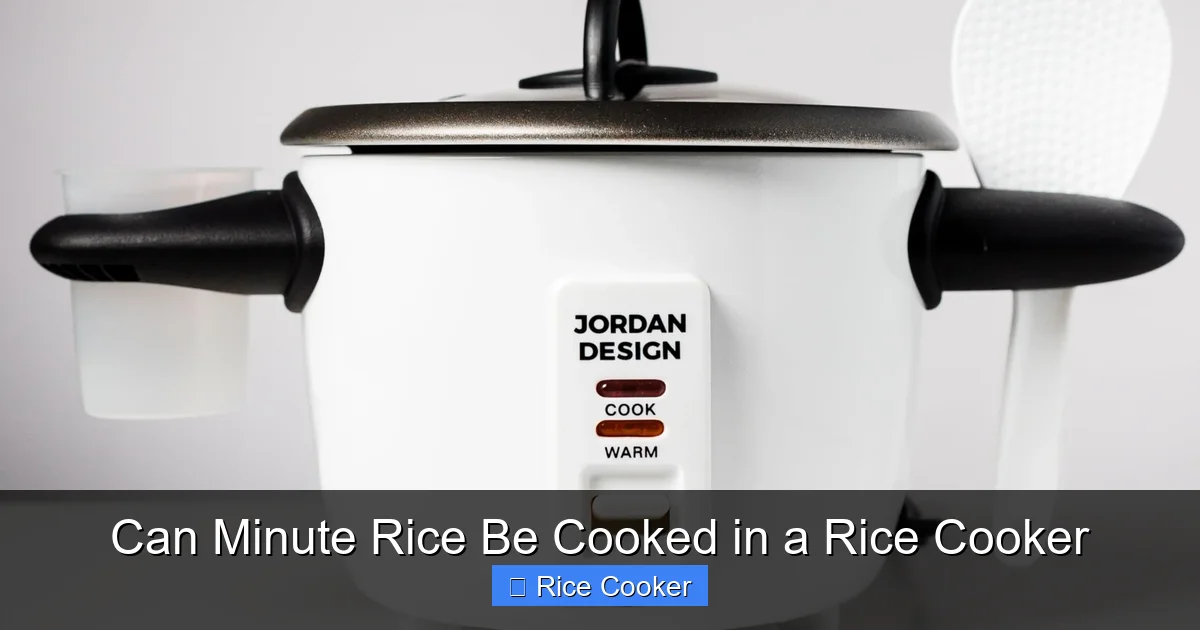
Minute Rice can absolutely be cooked in a rice cooker, offering a fast, hands-off way to prepare a side dish or base for meals. Unlike traditional long-grain rice, Minute Rice is parboiled and precooked, so it only needs reheating and moisture adjustment. With the right water-to-rice ratio and timing, your rice cooker delivers perfectly fluffy results in under 15 minutes.
Can Minute Rice Be Cooked in a Rice Cooker?
You’ve probably seen those little yellow boxes on the grocery shelf—Minute Rice. They promise “ready in 1 minute” when boiled, but what if you don’t have a pot? What if you just bought a shiny new rice cooker and want to try something other than jasmine or basmati? Can you actually use Minute Rice in a rice cooker? The short answer? Absolutely!
Minute Rice is one of those pantry staples that feels like cheating—it’s fast, affordable, and surprisingly versatile. But because it’s not raw grain, people often wonder whether tossing it into a rice cooker will ruin it or turn it into a soggy mess. Spoiler alert: it won’t. In fact, using a rice cooker might even give you better results than boiling it on the stove.
In this article, we’ll walk through everything you need to know about cooking Minute Rice in a rice cooker—from the science behind how it works to pro tips for maximizing flavor and texture. Whether you’re meal prepping, feeding picky eaters, or just trying to cut down on kitchen cleanup, read on to discover why your rice cooker might just become your new best friend for quick sides.
What Is Minute Rice, Anyway?
Before we dive into the how-to, let’s talk about what Minute Rice actually is. It’s not raw rice—it’s parboiled. That means the grains have been partially cooked before being packaged. Here’s the process in simple terms:
First, brown rice is soaked in water. Then, it goes through steam pressure treatment, which gelatinizes the starches inside the kernel. After that, it’s dried and milled into the familiar white flakes you see on store shelves. Because of this pre-processing, Minute Rice doesn’t need hours of simmering like long-grain rice. Instead, all it needs is hot liquid and a bit of heat to finish the job.
This is why you can stir it into soup, sprinkle it over casseroles, or—you guessed it—cook it gently in a rice cooker. The key is understanding that Minute Rice isn’t meant to be cooked from scratch; it’s designed to be rehydrated and warmed through.
Why Use a Rice Cooker Instead of Boiling?
You might be wondering: if Minute Rice cooks so quickly on the stovetop, why bother with a rice cooker? Well, there are several advantages:
– Even heating: Rice cookers distribute heat more uniformly than a pot on the burner, reducing hot spots that can burn the bottom.
– No stirring required: Once you add water and hit “cook,” you can walk away. No constant monitoring or babysitting.
– Fluffy texture: Many rice cookers automatically switch to “warm” mode after cooking, keeping your rice at the perfect serving temperature without drying it out.
– Easy cleanup: Modern rice cooker inner pots are usually non-stick, making residue removal a breeze compared to scrubbing a greasy pan.
Plus, rice cookers come with built-in timers and keep-warm functions—perfect for busy mornings or dinner prep when you want food ready exactly when you need it.
Which Type of Minute Rice Works Best?
Not all Minute Rice is created equal when it comes to rice cooker compatibility. There are three main varieties:
1. **Minute White Rice** – This is your go-to choice. Made from polished rice grains, it cooks up light and fluffy with minimal effort.
2. **Minute Brown Rice** – While technically possible, brown Minute Rice tends to stay chewier and may require longer cooking times or extra water. It’s also more prone to clumping.
3. **Minute Wild Rice Mix or Flavored Varieties** – These often contain added seasonings or wild rice blends that can alter texture and color. Proceed with caution—check labels for added ingredients.
For most users, sticking with plain Minute White Rice yields the best results. If you’re adventurous, try flavored options like garlic or cheddar, but be aware they may not cook as evenly.
How Much Water Do You Need?
This is where many beginners go wrong. Because Minute Rice is already partially cooked, you don’t need nearly as much water as you would with raw rice. Using too much leads to gummy, soupy results.
Here’s the general rule:
Use 1 cup of Minute Rice with 1¼ cups of liquid (water or broth).
That’s about 20% more water than raw rice requires, but still significantly less than traditional methods. For example:
– Raw white rice: 1 cup rice + 1¾–2 cups water
– Minute Rice: 1 cup rice + 1¼ cups liquid
If you’re using broth instead of water, adjust based on salt content—broth is often saltier, so you may want to reduce added seasoning later.
Pro Tip: Always measure your rice by volume (not weight) since Minute Rice expands slightly during processing. A true 1-cup measurement ensures consistency.
Step-by-Step Guide: Cooking Minute Rice in a Rice Cooker
Ready to give it a try? Follow these simple steps for foolproof results every time:
1. **Measure Your Ingredients**
Start with 1 cup of Minute White Rice and 1¼ cups of liquid. Use a measuring cup for accuracy.
2. **Rinse Optional (But Recommended)**
Though not strictly necessary, rinsing removes excess starch and helps prevent stickiness. Just rinse until the water runs clear.
3. **Add Everything to the Inner Pot**
Place the rice and liquid into your rice cooker’s non-stick inner pot. Stir once gently to mix.
4. **Close Lid & Select Setting**
Most rice cookers have a “White Rice” or generic “Cook” setting—that’s fine here. Avoid “Quick Cook” or “High Heat” modes, which can overcook the delicate grains.
5. **Let It Do the Work**
Press start. Total cooking time should be around 8–12 minutes. You’ll hear a chime when done.
6. **Rest & Fluff**
Let the rice sit for 2–3 minutes after the cycle ends. Then fluff gently with a fork or wooden spoon. This redistributes moisture and separates the grains.
7. **Serve Immediately or Keep Warm**
If you’re not eating right away, the rice cooker will maintain warmth without drying out the rice.
Common Mistakes to Avoid
Even experienced home cooks sometimes run into issues when adapting recipes to new appliances. Here are some frequent pitfalls and how to fix them:
– **Using too much water:** Remember—Minute Rice absorbs less liquid than raw rice. Stick to the 1:1.25 ratio.
– **Over-fluffing:** Too much agitation breaks apart the tender grains. Light touches only.
– **Skipping the rest period:** Allowing the rice to sit briefly after cooking helps equalize temperature and texture.
– **Choosing the wrong type:** Brown or wild blends behave differently. Test small batches first.
– **Ignoring flavor enhancers:** Adding butter, herbs, or cheese during the last minute of cooking can elevate plain Minute Rice into something special.
Enhancing Flavor Without Extra Effort
Plain Minute Rice tastes… fine. But it doesn’t wow anyone. Fortunately, boosting flavor takes almost zero effort when using a rice cooker.
Try these tricks:
– **Swap water for low-sodium broth:** Chicken, vegetable, or mushroom broth adds depth without requiring extra spices.
– **Add aromatics:** Toss in a bay leaf, pinch of saffron threads, or a crushed garlic clove while cooking.
– **Finish with fat:** Stir in 1 tablespoon of olive oil, butter, or sour cream after fluffing for richness.
– **Season post-cook:** Salt, pepper, or even a splash of soy sauce can transform the dish instantly.
These tweaks turn a basic side into a standout component of any meal.
Meal Prep Potential
One of the biggest perks of Minute Rice is its shelf stability—but another hidden benefit is how well it holds up when stored. Because it’s already cooked, leftover Minute Rice reheats beautifully in the microwave or on the stove.
When using a rice cooker, consider batch cooking:
– Double or triple your recipe.
– Store portions in airtight containers in the fridge for up to 5 days.
– Reheat with a splash of milk or broth to revive dryness.
This makes it ideal for families, dorm rooms, or anyone looking to save time midweek.
Safety Considerations
Because Minute Rice is processed and dried, there’s minimal risk of bacterial growth—unlike raw grains that sit in humid environments. However, always follow package storage instructions and avoid leaving cooked rice at room temperature for more than 2 hours.
Also, ensure your rice cooker is clean before use. Old starch buildup from previous batches can affect future cooking performance.
Troubleshooting: What If My Rice Comes Out Wrong?
Nobody’s perfect. Sometimes things go awry. Here’s how to diagnose and fix common issues:
Too dry? You likely used too little liquid. Next time, increase water by ¼ cup increments until texture improves.
Mushy or gluey? Over-absorption or prolonged high heat caused this. Reduce liquid next batch and avoid pressing the rice after cooking.
Burnt bottom? Your rice cooker may be overheating. Try reducing liquid slightly or placing a trivet beneath the inner pot if it has one.
Uneven texture? Some grains absorbed more liquid than others. Stirring halfway through (if safe for your model) can help.
Don’t worry—these are learning curves. Every cook experiments. The good news is Minute Rice is forgiving enough to let you tweak and improve with each attempt.
Comparing Methods: Stovetop vs. Rice Cooker
| Method | Time | Effort | Texture Control | Cleanup |
|—————|———-|——–|——————|———|
| Stovetop | 5–8 min | Medium | Moderate | Harder |
| Rice Cooker | 8–12 min | Low | High | Easier |
While the stovetop method is faster, it demands attention and risks scorching. The rice cooker trades a few extra seconds for convenience, consistency, and peace of mind.
Final Thoughts
So yes—can Minute Rice be cooked in a rice cooker? Absolutely. And once you try it, you’ll likely find yourself reaching for that yellow box more often than expected. It’s not gourmet cuisine, but it’s reliable, fast, and adaptable.
Whether you’re cooking for one, doubling a recipe, or prepping ahead of time, the rice cooker offers a hassle-free path to satisfying, fluffy rice. With minor adjustments to water ratios and a dash of creativity, you can turn this humble pantry item into a kitchen hero.
Next time you’re staring at an empty plate and a half-full pantry, remember: Minute Rice and your rice cooker might just save dinner.
Key Takeaways
- Understanding can minute rice be cooked in a rice cooker: Provides essential knowledge
Frequently Asked Questions
Can I cook Minute Rice in any type of rice cooker?
Yes, Minute Rice works in most standard electric rice cookers with non-stick inner pots. Avoid pressure or multi-cooker models unless specified for quick-cook grains.
Do I need to soak Minute Rice before cooking?
No soaking required. Minute Rice is designed to rehydrate quickly. Rinsing is optional but recommended to reduce stickiness.
How do I prevent Minute Rice from becoming sticky?
Use the correct water ratio (1 cup rice to 1¼ cups liquid), avoid over-fluffing, and let the rice rest briefly after cooking to allow moisture distribution.
Can I add salt or spices while cooking Minute Rice?
Yes, you can salt the liquid before adding rice. Herbs, garlic, or onion powder dissolve nicely into hot water for infused flavor.
Is Minute Rice healthier than regular rice?
Both provide similar nutritional value per serving. Minute Rice loses some fiber during processing, so choose whole-grain alternatives if maximizing nutrients is your goal.
How long does cooked Minute Rice last in the fridge?
Refrigerated cooked Minute Rice stays fresh for up to 5 days. Reheat with a splash of milk or broth to restore moisture.