
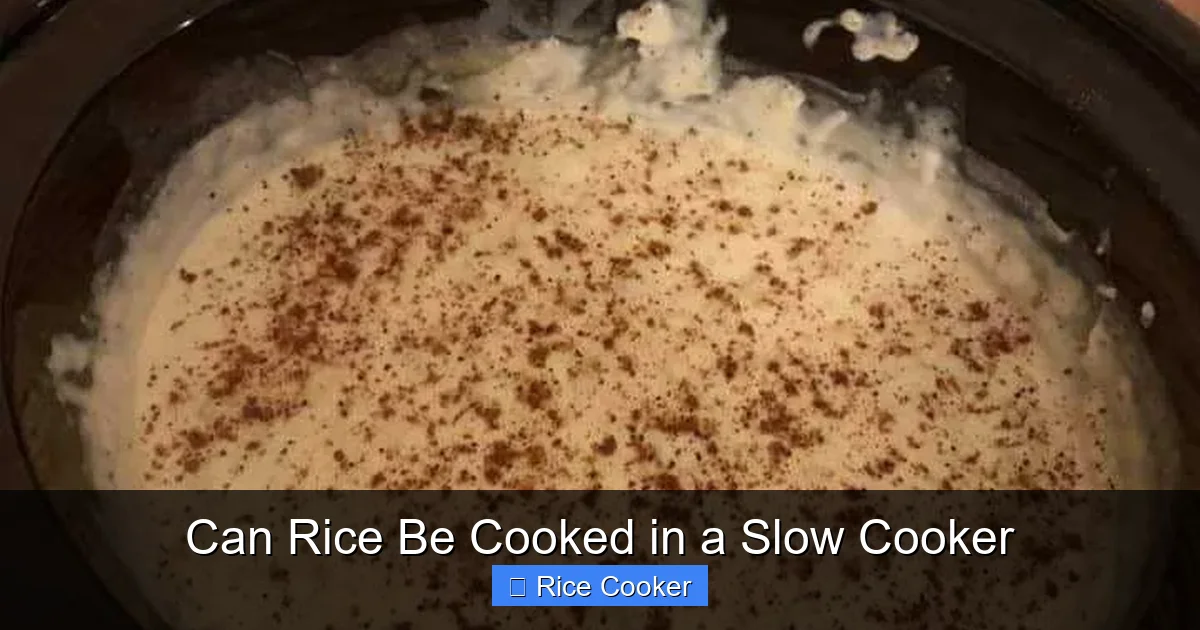
Can rice be cooked in a slow cooker? Absolutely! While it might seem unusual, a slow cooker can produce tender, fluffy rice—no rice cooker needed. With the right water-to-rice ratio and cooking settings, you can achieve consistent results every time. This method is especially handy when you want to free up your stovetop or cook larger batches without babysitting.
# Can Rice Be Cooked in a Slow Cooker?
Have you ever found yourself staring at a pot of rice that’s either mushy or undercooked? Maybe your rice cooker broke, or you just didn’t feel like standing over the stove. Don’t worry—your trusty slow cooker might just be the answer. Yes, you read that right: you can absolutely cook rice in a slow cooker. It might not be the first thing you think of, but with a few simple tricks, you can turn your slow cooker into a reliable rice-making machine.
Cooking rice in a slow cooker isn’t about rushing the process. Instead, it’s about patience and precision. The low-and-slow method allows the rice to absorb moisture gradually, resulting in fluffy, well-cooked grains. Whether you’re making a side dish for dinner or prepping rice for meal prep, this method offers convenience without sacrificing quality. Plus, once you master the basics, you can easily adapt it to different rice varieties and add flavorings like garlic, onions, or even coconut milk.
In this guide, we’ll walk through everything you need to know—from choosing the right equipment to perfecting your technique. You’ll learn how much water to use, whether to soak the rice, and how to avoid common pitfalls. By the end, you’ll be confident cooking rice in your slow cooker like a pro.
## Why Use a Slow Cooker for Rice?
You might wonder why anyone would cook rice in a slow cooker when rice cookers are specifically designed for this task. But there are several good reasons to give it a try:
First, slow cookers are incredibly hands-off. Once you set it and forget it, you can focus on other parts of your meal. This makes them ideal for busy days or when you’re multitasking in the kitchen.
Second, slow cookers are excellent for meal prep and batch cooking. If you’re making a large quantity of rice for lunches throughout the week, the slow cooker can handle it without burning or drying out.
Third, using a slow cooker frees up your stovetop. This is especially helpful when you’re making a multi-dish meal and need all your burners.
Finally, slow cookers offer consistent, even heat, which helps prevent scorching and promotes uniform cooking—something that’s harder to control on the stove.
That said, it’s important to note that not all slow cookers are created equal. Models with thicker ceramic inserts retain heat better and provide more even cooking. Also, avoid models with non-stick coatings that may degrade over time with high-heat cooking.
## Choosing the Right Rice for Your Slow Cooker
Not all rice is created equal when it comes to slow cooking. Some types respond better to the gentle, prolonged heat than others. Here’s a quick breakdown of the most common types and how they perform:
### White Rice
White rice is the easiest to cook in a slow cooker because it has a shorter grain length and cooks relatively quickly. Basmati and jasmine rice work particularly well, as their long grains tend to stay separate and fluffy.
### Brown Rice
Brown rice takes longer due to its bran layer, which slows down absorption. It requires more water and a longer cooking time—usually around 60–90 minutes on low. However, the result is nuttier, chewier, and more nutrient-rich.
### Wild Rice
Wild rice is trickier because it expands significantly during cooking. It also needs more water and longer time. A 1:3 ratio (rice to liquid) and cooking on low for 90–120 minutes usually yields good results.
### Instant or Parboiled Rice
These varieties are pre-treated to cook faster and are more forgiving in slow cookers. They’re less likely to become mushy if overcooked.
When selecting rice, always choose long-grain or medium-grain varieties for best texture. Short-grain rice tends to become sticky and clumpy in a slow cooker.
## Essential Equipment and Setup
Before you start cooking, make sure you have the right setup. Here’s what you’ll need:
– A standard slow cooker (4–6 quarts is ideal)
– A heavy-bottomed stainless steel or enamel pot that fits snugly inside the crock
– A measuring cup and spoon
– A fork or rice paddle for fluffing
Why use an insert pot? Because slow cookers rely on indirect heat. Placing rice directly in the ceramic crock can lead to uneven cooking or even cracking if the material isn’t heat-resistant enough. A small pot creates a barrier and improves heat transfer.
If you don’t have a compatible pot, some slow cookers come with a removable liner that’s safe for dry cooking. Check your manual before proceeding.
Also, avoid plastic utensils when stirring—they can melt near hot surfaces. Stick to metal or wooden tools.
## Perfecting the Water-to-Rice Ratio
This is arguably the most critical factor in slow-cooking rice. Too little water = dry, hard rice. Too much = soupy, mushy rice. Here are general guidelines:
| Rice Type | Water Ratio | Cooking Time (Low) |
|—————–|————-|——————–|
| White Rice | 1:1.5 | 60–75 minutes |
| Brown Rice | 1:2 | 90–120 minutes |
| Wild Rice | 1:3 | 90–120 minutes |
| Instant Rice | 1:1.25 | 45–60 minutes |
Start with these ratios and adjust based on your experience. If you prefer softer rice, increase the water slightly. For firmer grains, reduce it.
Pro tip: Use warm water instead of cold. Warm water helps the rice cook more evenly and reduces the risk of uneven absorption.
## Step-by-Step Guide to Cooking Rice in a Slow Cooker
Follow these steps for foolproof results every time:
### Step 1: Rinse the Rice
Rinsing removes excess starch, which can cause stickiness. Place rice in a fine-mesh strainer and rinse under cold water until the water runs clear. Drain well.
### Step 2: Combine Rice and Liquid
Add rinsed rice and the appropriate amount of water (or broth for extra flavor) to your insert pot. Stir gently to distribute evenly.
### Step 3: Optional – Pre-Soak
For even better texture, soak the rice in water for 30 minutes before cooking. Drain again before adding to the slow cooker. This step is especially helpful for brown rice.
### Step 4: Cover and Cook
Place the pot inside the slow cooker and cover with the lid. Set to LOW and cook according to the chart above. Do not lift the lid during cooking—this releases steam and extends cooking time.
### Step 5: Natural Release
Once done, turn off the slow cooker and let the rice sit covered for 10–15 minutes. This allows residual steam to finish hydrating the grains and makes fluffing easier.
### Step 6: Fluff and Serve
Use a fork to gently fluff the rice, breaking up any clumps. Serve immediately or store for later use.
## Common Mistakes to Avoid
Even experienced cooks can run into issues when making rice in a slow cooker. Here are the most common mistakes—and how to fix them:
– **Overfilling the pot:** Leave at least ½ inch of space between the top of the rice and the lid. Overfilling can lead to overflow and mess.
– **Not rinsing the rice:** Skipping this step increases the chance of gummy rice.
– **Opening the lid too often:** Each time you lift the lid, you lose heat and moisture, extending cooking time.
– **Using the wrong pot:** A thin aluminum pot may warp; opt for thick, stable materials.
– **Ignoring altitude:** At higher elevations, water boils at lower temperatures, so you may need to increase cooking time slightly.
## Adding Flavor and Variety
One of the biggest advantages of cooking rice in a slow cooker is the ability to infuse it with flavor. Instead of plain water, try using:
– Chicken or vegetable broth
– Coconut milk for a creamy, tropical twist
– Soy sauce or tamari for savory depth
– Fresh herbs like thyme, bay leaf, or parsley
– Diced onions or garlic sautéed briefly before adding rice
You can also add frozen vegetables along with the rice—just be sure to increase liquid slightly since veggies release moisture.
For aromatic dishes, consider adding a splash of lemon juice or lime zest after cooking for brightness.
## Storing and Reheating Cooked Rice
Cooked rice from the slow cooker keeps well in the refrigerator for up to 5 days. Store it in an airtight container to maintain freshness. When reheating, sprinkle a little water over the rice and cover while microwaving to prevent drying out.
Never reheat rice more than once to reduce the risk of foodborne illness. Always ensure it reaches an internal temperature of 165°F (74°C).
## Troubleshooting: What to Do If Your Rice Is Too Wet or Too Dry
**Too Wet (Mushy):**
– Likely caused by too much water or overcooking.
– Next time, reduce water by ¼ cup and check doneness earlier.
– To salvage, spread rice on a baking sheet and broil in the oven for 5–10 minutes to evaporate excess moisture.
**Too Dry:**
– Caused by insufficient liquid or short cooking time.
– Mix in 2–3 tablespoons of warm water and cover again for 10 minutes to rehydrate.
**Grains Sticking Together:**
– Usually due to insufficient rinsing or overmixing.
– Try rinsing more thoroughly next time and avoid vigorous stirring after adding liquid.
## Comparing Slow Cooker vs. Rice Cooker vs. Stovetop
Each method has pros and cons:
| Method | Pros | Cons |
|—————–|——————————————-|——————————————-|
| Slow Cooker | Hands-off, great for batch cooking | Longer cooking time, requires monitoring |
| Rice Cooker | Fast, precise, automatic | Limited capacity, single-purpose device |
| Stovetop | Immediate control, quick results | Requires attention, easy to burn |
If you only cook rice occasionally, a stovetop might suffice. But if you value convenience and consistency, the slow cooker shines—especially for large meals.
## Final Thoughts
So, can rice be cooked in a slow cooker? Yes, and it can turn out beautifully. With the right technique, ratios, and patience, your slow cooker becomes a versatile tool in the kitchen. Whether you’re making a side dish, prepping for the week, or experimenting with flavors, this method delivers reliable, tasty results.
Give it a try tonight. Start with white rice and a simple chicken broth base. Once you see how easy and foolproof it is, you’ll reach for your slow cooker more often. And who knows? You might just discover your new favorite way to cook rice.
—
Key Takeaways
- Understanding can rice be cooked in a slow cooker: Provides essential knowledge
Quick Answers to Common Questions
Can I cook instant rice in a slow cooker?
Yes! Instant rice works very well in a slow cooker because it’s already partially cooked. Use a 1:1.25 water-to-rice ratio and cook on low for 45–60 minutes. It should be tender but not mushy.
Do I need to soak rice before slow cooking?
Soaking isn’t required, but it helps improve texture and reduces cooking time, especially for brown or wild rice. Soak for 30 minutes, then drain before cooking.
Can I cook rice in a slow cooker liner?
Only if the liner is labeled safe for dry cooking. Most slow cooker liners are meant for wet recipes like soups or stews. Check your manual to confirm.
How do I prevent rice from sticking to the bottom?
Always use a heavy-bottomed pot inside the slow cooker. Avoid stirring too soon after adding liquid, and make sure there’s enough water to prevent scorching.
Is it safe to leave rice in the slow cooker overnight?
It’s not recommended. Rice left at room temperature for more than 2 hours can grow bacteria. Cook fresh each time or refrigerate promptly after serving.
Frequently Asked Questions
What type of rice works best in a slow cooker?
White rice, basmati, and jasmine rice work best due to their long grains and fast cooking time. Brown rice is possible but requires more water and longer cooking.
How much water do I use per cup of rice?
For most rice types, use 1.5 to 2 cups of water per 1 cup of uncooked rice. Adjust based on desired texture and rice variety.
Can I add vegetables or meat to rice in the slow cooker?
Yes, but add them separately or cook them first to avoid overcooking. Vegetables may need extra liquid, and meats should be added early to develop flavor.
Why is my slow-cooked rice still crunchy?
This usually means it wasn’t cooked long enough. Increase cooking time by 15–20 minutes and ensure you used enough liquid.
Can I cook rice in a crockpot with a glass insert?
Most glass inserts are not rated for dry cooking. Only use glass if your manufacturer specifies it’s safe for rice or other dry grains.
How do I reheat leftover slow-cooked rice?
Reheat in the microwave with a damp paper towel covering it to add moisture. Alternatively, steam it in a pot with a splash of water over low heat.