
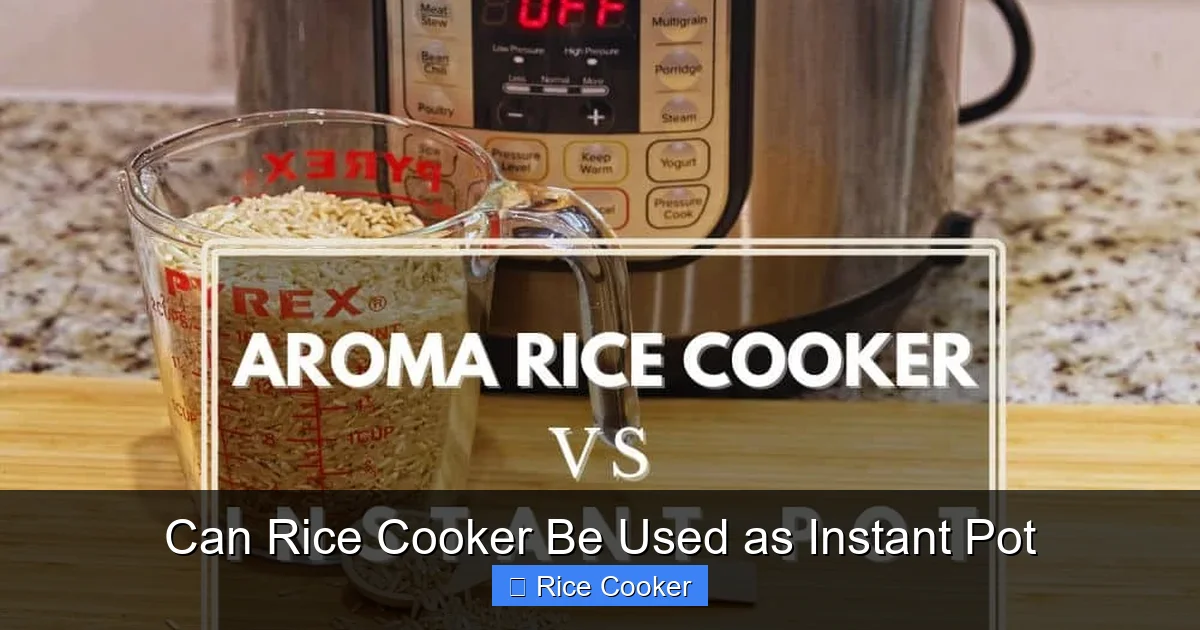
Can a rice cooker be used as an Instant Pot? While both appliances cook food quickly and efficiently, they serve different purposes. A rice cooker is great for steaming rice and simple meals, but lacks the pressure-cooking power of an Instant Pot. For multi-functional cooking with speed and versatility, an Instant Pot remains unmatched.
Key Takeaways
- Rice cookers are limited to low-pressure, slow cooking methods, while Instant Pots use high-pressure steam to cook faster.
- Instant Pots offer multiple functions: pressure cooking, slow cooking, sautéing, yogurt making, and more—most rice cookers only boil or steam.
- Not all rice cookers can handle high pressure or sealed environments, making them unsafe or ineffective for pressure cooking.
- Using a rice cooker as an Instant Pot may save money, but you’ll miss out on time-saving features and recipe variety.
- Hybrid rice cookers with pressure settings exist, offering a middle ground between traditional rice cookers and full-fledged Instant Pots.
- For best results, match your appliance to your cooking needs. If you want one versatile machine, invest in an Instant Pot.
[FEATURED_IMAGE_PLACEHOLDER]
Introduction: Are Rice Cookers and Instant Pots the Same Thing?
Have you ever looked at your trusty rice cooker and thought, “Could this do more?” Maybe you’ve seen someone post a video of their Instant Pot making a full pot of chili in under 30 minutes, and you’re wondering if your rice cooker can keep up. After all, both machines sit on the counter, heat up quickly, and promise perfectly cooked meals with the push of a button.
But here’s the truth: rice cookers and Instant Pots are not the same—even though they might look similar at first glance. One is designed primarily for steaming grains, and the other was built to revolutionize home cooking with speed and versatility. That said, some people try to stretch the limits of their rice cookers, hoping to turn them into makeshift pressure cookers. So, can a rice cooker be used as an Instant Pot? Let’s dig in and find out.
In this article, we’ll explore the key differences between these two kitchen staples, explain why a standard rice cooker won’t fully replace an Instant Pot, and give you practical tips on when a rice cooker might come close. Whether you’re a busy parent, a meal-prep enthusiast, or just curious about kitchen gadgets, you’ll get a clear picture of what each device does—and doesn’t—do.
Understanding the Core Functions: What Is a Rice Cooker?
Before we compare, let’s talk about what a rice cooker actually does. At its heart, a rice cooker is a simple, reliable appliance that uses thermal conduction to cook grains evenly. Most basic models rely on a thermostat that detects temperature changes—when the water boils away, the heat rises, and the cooker switches from heating to warming mode.
The Science Behind Rice Cooking
When you add rice and water to a rice cooker, it heats the liquid until it reaches boiling point. As the water evaporates, the temperature inside rises past 100°C (212°F), signaling the cooker to stop active heating. This prevents overcooking and keeps the rice fluffy. After cooking, many models enter a “warm” mode to keep the rice at the perfect serving temperature without drying it out.
Common Features of Standard Rice Cookers
– Automatic shut-off after cooking
– Non-stick inner pots
– Simple timer controls
– Steam trays for veggies or dumplings
– Keep-warm function
These features make rice cookers ideal for people who eat a lot of rice, want quick side dishes, or need a hands-off way to prepare meals. But here’s the catch: they don’t create pressure. They don’t seal tightly. And they weren’t designed to handle the intense heat and steam buildup that defines pressure cooking.
What Makes an Instant Pot Unique?
Now, let’s talk about the Instant Pot. Launched in 2010 by Robert Wang, an engineer who wanted a better pressure cooker, it quickly became a kitchen sensation. The Instant Pot combines several cooking methods—pressure cooking, slow cooking, sautéing, steaming, yogurt making, and even sous-vide—all in one device.
The Power of Pressure Cooking
Pressure cooking works by trapping steam inside a sealed pot. As the liquid heats up, it turns into steam, increasing internal pressure and raising the boiling point of water to around 121°C (250°F). This allows food to cook up to 70% faster than traditional methods. Think stews, beans, tough cuts of meat—all tenderized in minutes instead of hours.
Multi-Function Versatility
Unlike a rice cooker, the Instant Pot has programmable settings, adjustable pressure levels (low and high), and safety mechanisms like float valves and rubber seals. It also includes features like:
– Sauté function for browning meat before pressure cooking
– Slow cook mode for gentle, long-term cooking
– Yogurt maker for homemade fermented foods
– Sterilizer setting for baby bottles
This makes the Instant Pot a true kitchen workhorse. You can brown onions, simmer soup, make eggs, or even bake desserts—all without switching appliances.
Can a Rice Cooker Be Used as an Instant Pot? The Short Answer
So, back to the big question: Can a rice cooker be used as an Instant Pot? The short answer is no—not safely or effectively. Here’s why.
Lack of Pressure-Sealing Mechanism
Most rice cookers aren’t designed with the tight seals, pressure-release valves, or locking lids that pressure cookers require. Without those, you can’t build up steam pressure. Trying to force it could result in steam leaks, scorched food, or even damage to the appliance.
Inadequate Heat and Safety Controls
Instant Pots have advanced sensors and safety cutoffs that respond to pressure and temperature changes. Rice cookers lack these. They’re not built to handle the high heat or rapid pressure shifts that pressure cooking demands. Using one incorrectly could be dangerous.
No Pressure Cooking Mode
Even if you try to improvise, a standard rice cooker doesn’t have a pressure cooking setting. You can’t adjust pressure levels or control the release valve manually. That means no fast, tender stews or perfectly cooked beans.
That said, there’s hope. Some modern rice cookers now include pressure cooking functions. These hybrid models blur the line between traditional rice cookers and Instant Pots. Let’s explore that next.
Hybrid Rice Cookers: A Middle Ground
Over the past decade, manufacturers have started releasing rice cookers with added pressure cooking capabilities. These are often marketed as “multi-cookers” or “pressure rice cookers.” They look like traditional rice cookers but include pressure-sealed lids and pressure-release systems.
Examples of Hybrid Models
– Zojirushi NS-ZCC10 (Compact Electric Pressure Cooker)
– Cuckoo CRP-HHP0670F (Super Multi-Cooker)
– Aroma Housewares ARC-914SBD (Pressure Cooker & Rice Cooker)
These devices combine the simplicity of rice cooking with the power of pressure cooking. For example, you can cook jasmine rice in 18 minutes using pressure, then switch to warm mode. Or pressure-cook chicken thighs with vegetables in under 20 minutes.
Pros of Hybrid Rice Cookers
– One-touch cooking for rice and pressure meals
– Compact design (often smaller than an Instant Pot)
– Gentle pressure settings suitable for delicate foods
– Built-in timers and keep-warm functions
Cons of Hybrid Rice Cookers
– Limited capacity (usually 4–6 cups of rice)
– Fewer cooking modes than full-sized Instant Pots
– Less durable for heavy daily use
– Not ideal for large batches or entertaining
If you love rice and occasionally want to pressure cook, a hybrid model might be worth considering. But if you’re doing a lot of meal prep, batch cooking, or making complex recipes like soups or risottos, an Instant Pot still offers more flexibility.
What Happens If You Try to Use a Rice Cooker Like an Instant Pot?
Let’s get real: some people try it anyway. They seal the lid tightly, add extra liquid, and hit the “cook” button, hoping for pressure. What usually happens?
Steam Leaks and Messy Results
Without a proper gasket and pressure valve, steam escapes through gaps in the lid. This leads to undercooked food, wasted energy, and a kitchen covered in condensation.
Uneven Cooking
Rice cookers aren’t designed to distribute heat evenly under pressure. Food may cook inconsistently, with some parts dry and others mushy.
Safety Risks
While rare, improper sealing can lead to sudden pressure releases, hot liquid splashing, or even warped plastic components. Always follow manufacturer instructions.
That’s not to say you can never use a rice cooker for anything beyond rice. You can steam vegetables, poach fish, or even make simple oatmeal. But don’t expect it to replace your Instant Pot.
When a Rice Cooker Might Be a Good Alternative
There are situations where a rice cooker comes close to matching an Instant Pot’s utility—especially for certain types of cooking.
Steaming and Gentle Cooking
Both appliances excel at steaming. Add potatoes, carrots, or eggs to the steamer basket, and both will produce tender, moist results. The rice cooker’s gentle heat is actually better for delicate foods.
Making Oatmeal or Porridge
Many rice cookers have a porridge setting that slowly thickens oats, quinoa, or steel-cut oats. It’s hands-off and foolproof—just add oats, water, and salt, press start, and forget it.
Simple One-Pot Meals
Some rice cookers allow you to cook grains with vegetables or proteins in one pot. For example, you can make a basic chicken and rice dish with broth and rice—no pressure needed. Just stir occasionally and let it simmer.
Travel and Small Kitchens
If you live in a small apartment or travel frequently, a compact rice cooker is lighter, quieter, and easier to store than a bulky Instant Pot. It’s perfect for dorm rooms or RVs.
But again, these are limited scenarios. For full functionality, you’ll still need a dedicated pressure cooker.
How to Choose Between a Rice Cooker and an Instant Pot
So how do you decide which appliance is right for you? It depends on your cooking habits and lifestyle.
Ask Yourself These Questions
– Do I eat rice almost every day? → Rice cooker wins
– Do I want to cook beans, stews, and soups quickly? → Instant Pot
– Do I need one appliance that does everything? → Instant Pot
– Do I have space and budget for two devices? → Consider both
– Am I okay with simpler cooking methods? → Rice cooker
Cost Comparison
A basic rice cooker starts around $20–$50. A mid-range Instant Pot ranges from $80–$150. Hybrid models fall in the $100–$200 range. While a rice cooker is cheaper upfront, an Instant Pot saves time and effort over the long run.
Maintenance and Durability
Instant Pots have more moving parts and gaskets that need occasional cleaning. Rice cookers are simpler and often last longer with minimal care. Both require regular descaling and gasket checks.
Tips for Getting the Most Out of Your Rice Cooker
Even if you don’t plan to use your rice cooker as an Instant Pot, it can still be a kitchen superstar. Here are some pro tips:
Use the Right Water Ratio
For white rice, use a 1:1.5 ratio (rice to water). For brown rice, go 1:1.75. Too much water = soggy rice; too little = burnt bottom.
Pre-Rinse Your Rice
Rinsing removes excess starch and prevents clumping. Rinse until the water runs clear.
Let It Rest
After cooking, wait 5–10 minutes with the lid on. This lets steam finish cooking the rice evenly.
Clean the Lid and Inner Pot Properly
Remove the inner pot after each use. Wash the lid gasket separately to prevent mold.
Experiment with Recipes
Try making risotto, polenta, or even baked apples in your rice cooker. The keep-warm function is perfect for slow-cooked dishes.
Conclusion: Know Your Kitchen Tools
So, can a rice cooker be used as an Instant Pot? Not really. While both are convenient, efficient, and beloved by home cooks, they serve different roles. A rice cooker is perfect for steaming rice, porridge, and simple side dishes. An Instant Pot is built for speed, versatility, and tackling tough ingredients with ease.
If you already own a rice cooker and love it, don’t feel pressured to buy an Instant Pot. But if you find yourself constantly wanting to pressure-cook beans, whip up a quick soup, or make yogurt, it might be time to expand your kitchen toolkit.
Remember: having the right tool for the job makes cooking easier, safer, and more enjoyable. Whether you choose a rice cooker, an Instant Pot, or both, the goal is to spend less time in the kitchen and more time enjoying your food.
FAQs
Can I use my rice cooker to pressure cook food?
Most standard rice cookers cannot safely or effectively pressure cook because they lack the proper sealing, pressure release, and safety mechanisms. Only hybrid rice cookers with built-in pressure functions can do this.
Are hybrid rice cookers as good as Instant Pots?
Hybrid rice cookers offer some pressure cooking features but are generally smaller, less powerful, and have fewer functions than full-sized Instant Pots. They’re great for light use but may not handle large meals or complex recipes.
Is it safe to try to modify a rice cooker for pressure cooking?
No. Attempting to modify a rice cooker for pressure cooking can lead to steam leaks, burns, or damage to the appliance. Always use appliances as intended by the manufacturer.
Can a rice cooker cook beans?
A standard rice cooker isn’t designed to cook beans, which require high pressure and long cooking times. However, some hybrid models with pressure settings can cook beans successfully.
Do I need both a rice cooker and an Instant Pot?
It depends on your needs. If you eat a lot of rice and prefer simple steaming, a rice cooker is sufficient. If you want speed, versatility, and multi-function cooking, an Instant Pot is the better investment.
What’s the difference between a rice cooker and a multi-cooker?
A rice cooker focuses mainly on cooking grains. A multi-cooker (like an Instant Pot or hybrid rice cooker) includes additional functions such as pressure cooking, slow cooking, sautéing, and yogurt making.
This is a comprehensive guide about can rice cooker be used as instant pot.
Key Takeaways
- Understanding can rice cooker be used as instant pot: Provides essential knowledge
Frequently Asked Questions
What is can rice cooker be used as instant pot?
can rice cooker be used as instant pot is an important topic with many practical applications.