
Can rice go bad after cooked? Absolutely. While cooked rice is safe to eat for a short time, it can harbor dangerous bacteria like *Bacillus cereus* if not stored properly. Proper storage, timely refrigeration, and safe reheating are key to preventing spoilage and foodborne illness.
Key Takeaways
- Cooked rice can spoil: Despite its long shelf life when dry, cooked rice becomes a breeding ground for bacteria once cooled and stored in the refrigerator.
- Bacillus cereus is a major concern: This common bacterium survives cooking and thrives in warm, moist environments, producing toxins that cause food poisoning.
- Refrigeration slows spoilage: Storing cooked rice within 1 hour of cooking and keeping it at or below 40°F (4°C) significantly reduces bacterial growth.
- Reheating kills most bacteria: Properly reheating rice to an internal temperature of 165°F (74°C) destroys live bacteria, though toxins from *B. cereus* may remain.
- Freezing extends shelf life: Freezing cooked rice can keep it safe for up to 6 months, making meal prep more convenient without sacrificing safety.
- Smell, texture, and color matter: Spoiled rice often smells sour, slimy, or off, with a mushy or discolored appearance—trust your senses.
- Portion control helps: Cooking only what you’ll eat reduces waste and lowers the risk of improper storage.
📑 Table of Contents
- Introduction: The Rice Dilemma – Can Cooked Rice Really Go Bad?
- Understanding Food Spoilage: What Happens to Cooked Rice?
- Signs That Your Cooked Rice Has Gone Bad
- Safe Storage Practices for Cooked Rice
- Reheating Rice Safely: Does It Kill Bacteria?
- Does Type of Rice Matter? White vs. Brown
- Common Myths About Rice and Food Safety
- Practical Tips for Rice Lovers: Meal Prep and Convenience
- Conclusion: Enjoy Rice with Confidence
Introduction: The Rice Dilemma – Can Cooked Rice Really Go Bad?
Have you ever opened your fridge, grabbed a container of leftover rice, and wondered, “Is this still good?” You’re not alone. Millions of people around the world rely on rice as a staple food—whether it’s a bowl of fluffy jasmine rice for dinner or a side of brown rice with stir-fry. But here’s the thing: just because rice doesn’t look rotten doesn’t mean it’s safe to eat. In fact, cooked rice can go bad—and surprisingly fast.
Unlike raw rice, which can sit on a pantry shelf for years without issue, cooked rice is a whole different story. Once water is added and heat transforms starch into tender grains, the clock starts ticking. Bacteria love warm, moist environments, and rice left out at room temperature becomes a perfect playground for them. So yes, rice can definitely go bad after cooking—but understanding how and why is the first step toward eating safely.
In this article, we’ll explore everything you need to know about whether rice goes bad after cooking. From the science behind food spoilage to practical tips for storing and reheating rice safely, you’ll learn how to enjoy your meals without worry. Whether you’re using a traditional pot or a modern rice cooker, these insights apply to every grain. Let’s dive in.
Understanding Food Spoilage: What Happens to Cooked Rice?
Visual guide about Can Rice Go Bad After Cooked
Image source: freezeknowhow.org
When rice is cooked, it’s no longer the inert grain it was in the package. The starches gelatinize, the moisture content rises, and the protective shell (if it had one) is gone. This makes it vulnerable to contamination. But what exactly causes rice to go bad?
The primary culprit is a bacterium called Bacillus cereus. This hardy microbe is commonly found in soil and dust—and it’s also present in raw rice. When you rinse or soak uncooked rice, some spores may wash into the water. These spores survive boiling, but they don’t multiply during cooking because of the high heat. However, once the rice cools, especially in a warm environment, the spores can wake up and start reproducing.
*Bacillus cereus* forms spores that resist heat and can grow in temperatures between 40°F and 140°F—the so-called “danger zone” for food. If rice is left out too long after cooking, these bacteria multiply rapidly. They produce toxins that aren’t destroyed by normal reheating. That means even if your rice looks and smells fine, you could still get food poisoning.
Other signs of spoilage include mold, unusual odors, sliminess, or a change in color. But the real danger is invisible—toxins produced by bacteria that you can’t see, smell, or taste.
The Role of Moisture and Temperature
Moisture and temperature are the twin engines of food spoilage. Cooked rice has plenty of moisture—about 60% water content. Combine that with warmth from your body heat or ambient room temperature, and you’ve got ideal conditions for bacterial growth.
That’s why leaving rice out overnight (or even for a few hours) increases the risk dramatically. The U.S. Department of Agriculture (USDA) recommends refrigerating perishable foods within two hours (one hour if it’s hotter than 90°F outside). For rice, that means putting it in the fridge as soon as possible.
How Long Is Cooked Rice Safe?
Here’s a quick reality check: cooked white rice kept at room temperature for more than two hours should be discarded. Refrigerated rice lasts about 3 to 4 days. Frozen rice can stay safe for up to 6 months. These timelines assume proper storage—meaning covered containers and consistent cold temperatures.
It’s important to note that “safe” doesn’t always mean “tasty.” Even if your rice isn’t contaminated, it can become dry, chalky, or develop off-flavors after a couple of days in the fridge.
Signs That Your Cooked Rice Has Gone Bad
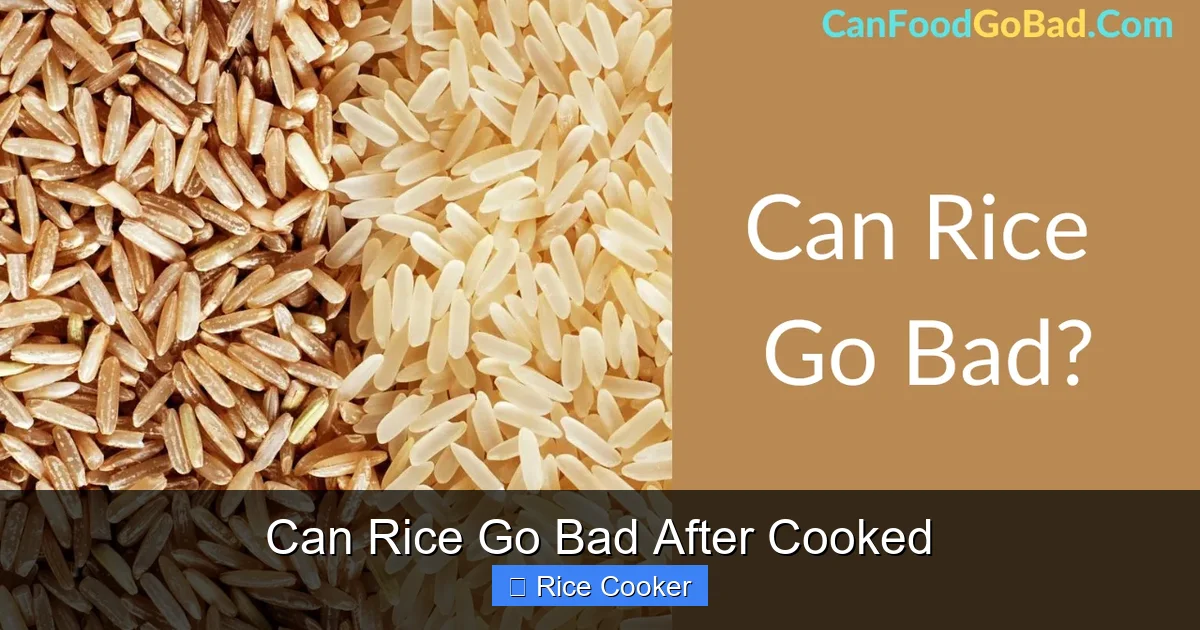
Visual guide about Can Rice Go Bad After Cooked
Image source: canfoodgobad.com
Knowing how to tell if rice is spoiled is crucial. Some warning signs are obvious; others are subtle.
Visual Clues
Look for changes in color. Freshly cooked rice should be uniform in hue—white, brown, or golden, depending on the variety. If it appears grayish, green, or spotted, mold might be growing. Also watch for sliminess. Healthy rice is slightly firm; spoiled rice can feel sticky or glue-like.
Odor Warnings
Fresh rice has a mild, neutral scent—almost like earth or grain. If it smells sour, fermented, or “off,” it’s likely spoiled. Trust your nose: if it doesn’t smell right, don’t risk it.
Texture Changes
Cooked rice should have a pleasant, slightly chewy texture. If it’s mushy, clumpy, or overly soft, that’s a red flag. These textures often result from bacterial breakdown of starches.
Taste Test – Use Caution
While you shouldn’t take a full bite of questionable food, a small taste can sometimes reveal spoilage. If the rice tastes bitter, sour, or metallic, toss it.
Remember: just because rice doesn’t show obvious signs doesn’t mean it’s safe. Toxins from *Bacillus cereus* are odorless and tasteless. That’s why proper handling is so important.
Safe Storage Practices for Cooked Rice
Prevention is the best medicine when it comes to food safety. Here’s how to store cooked rice like a pro.
Cool It Fast
After cooking, let the rice sit uncovered for about 10 to 15 minutes to allow excess steam to escape. Then transfer it to an airtight container. Cooling quickly reduces the time it spends in the danger zone where bacteria thrive.
Use Airtight Containers
Plastic containers with tight-fitting lids, glass jars, or vacuum-sealed bags all work well. Avoid leaving rice in the cooking pot—it retains heat and moisture, creating a cozy home for microbes.
Label and Date Everything
Write the date on the container. This helps you track how long it’s been in the fridge or freezer. Most experts recommend using refrigerated rice within 3 to 4 days.
Refrigerate Promptly
Place the container in the coldest part of your refrigerator—usually the back shelves, away from the door. Keep the fridge at 40°F (4°C) or lower.
Freeze for Long-Term Storage
If you won’t eat the rice within a few days, freeze it. Portion it into smaller containers or freezer-safe bags to make thawing easier. Frozen rice stays safe for up to 6 months.
Avoid Cross-Contamination
Always use clean utensils when serving rice. Don’t scoop directly from the pot with dirty hands or used spoons.
By following these steps, you’ll minimize the risk of spoilage and keep your rice tasting fresh.
Reheating Rice Safely: Does It Kill Bacteria?
Many people assume that reheating rice kills all germs. While heat does destroy live bacteria, it doesn’t neutralize toxins produced by *Bacillus cereus*. So, can rice go bad after cooked even if you reheat it properly?
The Science of Reheating
When you reheat rice to 165°F (74°C), you eliminate most harmful bacteria. That’s the USDA-recommended internal temperature for poultry and other meats—and it applies to rice too. Use a food thermometer to check, especially when reheating large portions.
However, if the rice was already contaminated before reheating (via improper cooling or storage), the toxins are still there. These heat-stable compounds cause vomiting or diarrhea—classic symptoms of rice-related food poisoning.
Best Methods for Reheating
- Stovetop: Place rice in a saucepan with a splash of water. Cover and simmer over low heat for 5–10 minutes, stirring occasionally.
- Microwave: Transfer rice to a microwave-safe dish. Add a tablespoon of water per cup, cover with a damp paper towel, and heat on high for 1–2 minutes per cup. Stir and check temperature.
- Oven: Spread rice on a baking sheet, drizzle with water, and warm at 350°F (175°C) for 10–15 minutes.
Always ensure the rice reaches 165°F throughout. Don’t just rely on visual cues—steam or hot spots don’t guarantee safety.
Why Some People Get Sick After Eating Leftover Rice
If you’ve ever eaten leftover rice and gotten sick, you’re not imagining it. Many cases of food poisoning linked to rice occur because:
– The rice wasn’t refrigerated quickly enough.
– It was stored in a shallow, wide container that cooled slowly.
– It sat out during a picnic or buffet.
– Someone reheated it inadequately.
Even small amounts of contaminated rice can trigger symptoms within 1–5 hours.
Does Type of Rice Matter? White vs. Brown
You might wonder: does brown rice spoil faster than white rice? The answer is nuanced.
Nutrient Density and Moisture
Brown rice has more fiber, fat, and nutrients than white rice. These components can affect shelf life. Because brown rice contains natural oils, it may become rancid (go “off”) sooner if exposed to air or light. However, in terms of bacterial growth, both types are equally vulnerable once cooked.
Storage Differences
Brown rice should ideally be refrigerated immediately after cooking, just like white rice. But since it’s more perishable overall, some people prefer freezing it. Brown rice also benefits from being portioned into smaller servings due to its oil content.
No Major Difference in Safety Risk
Whether you’re eating white or brown rice, the same rules apply: cool it fast, store it cold, and reheat thoroughly. The main difference lies in flavor and texture over time—not necessarily safety.
Common Myths About Rice and Food Safety
There are several myths floating around about rice safety. Let’s clear them up.
Myth 1: “Rice Can Last Forever in the Fridge”
False. While some foods last weeks in the fridge, cooked rice should be eaten within 3–4 days. Beyond that, the risk of contamination increases.
Myth 2: “If It Smells Fine, It’s Safe”
Partially true—but misleading. As mentioned earlier, toxins from *Bacillus cereus* are odorless and tasteless. A seemingly perfect-looking bowl of rice could still make you sick.
Myth 3: “Boiling Again Makes It Safe”
Not reliable. Simply boiling leftover rice won’t destroy pre-formed toxins. You must heat it to 165°F uniformly.
Myth 4: “Dry Rice Doesn’t Go Bad”
True—but only if it’s uncooked. Once hydrated and cooked, rice behaves like any other perishable food.
Myth 5: “All Leftovers Are Equal”
Nope. Rice, meat, dairy, and vegetables each have different spoilage rates. Rice is particularly tricky because of its bacterial risks.
Practical Tips for Rice Lovers: Meal Prep and Convenience
Life gets busy. That’s why many people prepare rice in bulk. Here’s how to do it smartly.
Batch-Cook and Freeze
Cook a large pot of rice, divide it into portions, and freeze individual servings. Thaw overnight in the fridge or quickly in the microwave. This saves time and ensures you always have safe, ready-to-eat rice.
Use a Rice Cooker Wisely
Modern rice cookers often have “keep warm” settings that maintain temperatures in the danger zone for hours. Unless your model has a precise thermostat, avoid using this function for more than 20–30 minutes after cooking. Better yet, turn it off once the rice is done.
Portion Control
Only cook as much as you plan to eat. Extra rice increases the chance of improper storage or waste.
Keep a Rice Journal
Track when you cook rice and when you eat it. This simple habit helps prevent confusion about freshness.
Invest in Quality Containers
Clear, stackable containers with silicone seals make excellent rice storage. Brands like GlassLock or Rubbermaid offer reliable options.
By planning ahead, you reduce stress and food waste while staying safe.
Conclusion: Enjoy Rice with Confidence
So, can rice go bad after cooked? The answer is yes—and it can happen faster than you think. But with a little knowledge and attention to detail, you can enjoy rice safely every time. The key lies in prompt cooling, proper storage, and thorough reheating.
Remember: cooked rice is perishable. Treat it like any other food that needs refrigeration. Whether you’re using a classic stovetop method or a high-tech rice cooker, follow the same principles. Cool it fast, store it cold, and reheat it hot.
Don’t let fear stop you from enjoying one of the world’s most beloved grains. Armed with these tips, you’ll savor every bite—without worry. After all, good food should nourish, not endanger. And with safe handling practices, rice will continue to be a delicious, versatile, and trustworthy part of your meals.
Frequently Asked Questions
How long can cooked rice sit at room temperature before it goes bad?
Cooked rice should not be left at room temperature for more than 2 hours—or 1 hour if the ambient temperature exceeds 90°F. Beyond that, bacteria like Bacillus cereus can multiply rapidly, increasing the risk of food poisoning.
Is it safe to eat rice that’s been in the fridge for a week?
Generally, no. While rice can last 3–4 days in the refrigerator, after a week, the risk of spoilage or toxin production increases significantly. Even if it looks and smells fine, it’s safest to discard rice older than 4–5 days.
Can you get food poisoning from rice?
Yes. Consuming improperly stored or reheated rice contaminated with Bacillus cereus toxins can lead to food poisoning, causing symptoms like nausea, vomiting, diarrhea, and abdominal cramps within 1–5 hours of eating.
Does freezing rice kill bacteria?
Freezing stops bacterial growth but doesn’t kill existing bacteria or destroy toxins produced by Bacillus cereus. However, frozen rice remains safe to eat for up to 6 months if stored properly.
Should I rinse my rice before cooking?
Rinsing removes excess starch and prevents clumping, but it also washes away some beneficial nutrients and may introduce surface bacteria. For safety, especially with imported rice, consider rinsing briefly under running water before cooking.
Can I leave rice in the rice cooker overnight?
No. Leaving rice in a rice cooker on “warm” mode allows it to linger in the danger zone (40°F–140°F), promoting bacterial growth. Turn off the cooker once it’s done, and refrigerate promptly.