
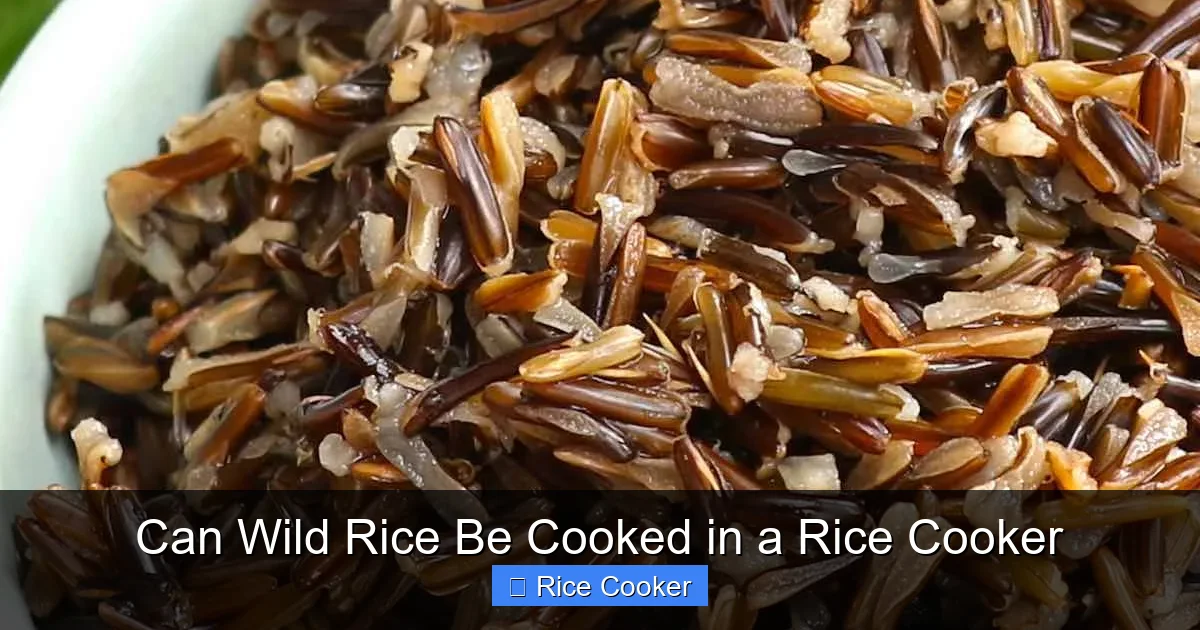
Yes, you can absolutely cook wild rice in a rice cooker, and it’s easier than you might think! With the right ratio of water, a little patience, and a few simple tweaks, your rice cooker can produce tender, nutty-tasting wild rice that rivals stovetop results. Whether you’re meal prepping or whipping up a side dish for dinner, using your rice cooker saves time and ensures consistent texture.
Wild rice isn’t actually rice—it’s a grass seed from North American wetlands—but it cooks beautifully in modern appliances designed for grains. While traditional methods like simmering on the stove have long been favored, today’s rice cookers offer convenience without sacrificing flavor. In fact, many home cooks report that their electric rice cookers deliver perfectly cooked wild rice with minimal effort. This guide walks you through everything you need to know: how to prepare it, what settings to use, troubleshooting common issues, and even creative ways to serve your finished dish.
Key Takeaways
- Wild rice can be successfully cooked in a standard rice cooker. Most models handle it well when using the correct water-to-grain ratio and allowing extra cooking time.
- The ideal water-to-wild rice ratio is 3:1 by volume. This helps prevent dryness and ensures proper hydration without oversaturation.
- Rinse and soak wild rice for 30–60 minutes before cooking. This reduces bitterness and shortens overall cook time.
- Use a slow-cook setting or manual mode if available. Wild rice benefits from gentle, sustained heat rather than rapid boiling.
- Let the rice rest after cooking for 10 minutes. Resting allows steam to finish softening any remaining grains and improves texture.
- Experiment with broth instead of water for added flavor. Chicken, vegetable, or mushroom broth enhances depth without overpowering the natural nuttiness.
- Store leftover cooked wild rice properly to maintain quality. Refrigerate within two hours and reheat gently to avoid mushiness.
[FEATURED_IMAGE_PLACEHOLDER]
Understanding Wild Rice: More Than Just Another Grain
Before diving into the “how,” let’s clarify what wild rice really is. Despite its name, wild rice (Zizania palustris) is not a true rice at all—it’s the seed of aquatic grasses native to lakes and rivers across North America. Native American communities have harvested it for centuries, valuing both its nutritional profile and cultural significance. Unlike domestic brown rice, wild rice grows wild in shallow waters and ripens slowly over several months, resulting in a unique flavor and chewy texture.
What makes wild rice special? It’s packed with protein, fiber, B vitamins, and antioxidants—up to three times more protein than regular rice. Its earthy, slightly smoky taste pairs beautifully with mushrooms, nuts, dried fruit, and savory herbs. But here’s the catch: wild rice takes longer to cook than most grains due to its dense structure and fibrous hull. That’s where the rice cooker comes in handy.
Modern rice cookers—especially those with fuzzy logic or microcomputer controls—are designed to adapt to different grains. While white rice cooks in about 20 minutes, wild rice needs closer to 45–60 minutes when done on the stovetop. The challenge lies in managing moisture and heat distribution without overcooking. Fortunately, with the right approach, your rice cooker can do all the work while keeping you out of the kitchen.
Can You Actually Cook Wild Rice in a Rice Cooker?
The short answer? Absolutely. In fact, many professional chefs and home cooks swear by using rice cookers for wild rice because of their precision and automation. Unlike stovetop cooking—which requires constant monitoring and stirring—a rice cooker handles everything automatically after you set it and forget it.
But not all rice cookers are created equal. Basic models with simple heating elements may struggle with wild rice’s extended cook time and variable moisture absorption. On the other hand, advanced units with multiple settings (like “brown rice,” “porridge,” or “slow cook” modes) often perform beautifully. If your rice cooker has a “wild rice” preset—great! If not, no worries; you can mimic the process manually.
One key advantage of using a rice cooker is temperature control. Once the water reaches boiling point, the appliance maintains a steady simmer, preventing scorching and ensuring even cooking. This consistency is especially important for wild rice, which can turn mushy or undercooked if heat fluctuates too much. Plus, the sealed lid traps steam perfectly, helping each grain absorb just enough water without becoming soggy.
Of course, there are limitations. Rice cookers typically hold smaller quantities than pots (usually 1–3 cups uncooked), so plan accordingly if feeding a crowd. Also, wild rice expands significantly during cooking—about three to four times its original volume—so don’t overload the inner pot. But for everyday meals or meal prep, these trade-offs are minor compared to the convenience gained.
How to Prepare Wild Rice for Your Rice Cooker
Getting started begins with proper preparation. Raw wild rice contains small amounts of tannins that contribute to its signature astringency. Rinsing removes much of this bitterness and prevents a harsh aftertaste in your final dish. Here’s how to prep it like a pro:
Start by placing 1 cup of raw wild rice in a fine-mesh strainer. Rinse under cold running water for 1–2 minutes, swirling occasionally to dislodge impurities. Don’t worry—this won’t wash away all the nutrients, but it will improve flavor.
Next, soak the rinsed rice. While soaking isn’t mandatory, it’s highly recommended. Soaking softens the outer layers, reduces cook time by 10–15%, and yields a more uniform texture. Submerge the rice in twice its volume of water and let it sit at room temperature for 30–60 minutes. For faster results, use warm water—it speeds up hydration.
After soaking, drain thoroughly and return the rice to the strainer to remove excess moisture. Now it’s ready for the rice cooker. Some recipes call for toasting the rice first (in a dry pan over medium heat for 2–3 minutes), but this step is optional and mainly adds depth of flavor. For simplicity, skip toasting unless you specifically want a richer taste.
Step-by-Step Guide: Cooking Wild Rice in a Rice Cooker
Now for the main event. Follow these steps to achieve fluffy, aromatic wild rice every single time:
Begin by measuring your ingredients carefully. Use a 1:3 ratio—one part wild rice to three parts liquid. Water is standard, but as mentioned earlier, consider swapping in broth for extra richness. Cold water works fine; hot water may reduce total cook time slightly, but cold is safer for beginners.
Add the soaked (and optionally toasted) wild rice to the inner pot of your rice cooker. Pour in the measured liquid, then close the lid securely. Avoid lifting the lid during cooking—each opening releases valuable steam and extends cook time unnecessarily.
If your rice cooker has a specific “wild rice” setting, select it now. These presets usually extend the cook cycle to 45–60 minutes and lower the temperature toward the end to finish steaming. If no such option exists, choose the “white rice” or “brown rice” mode, but be prepared to monitor closely toward the end. Wild rice often needs 50–70 minutes total.
Once the cycle completes, turn off the cooker and let the rice stand, covered, for 10 minutes. This resting period allows residual heat to finish cooking any stubborn grains and lets moisture distribute evenly. After resting, fluff the rice gently with a fork—don’t mash it!
Finally, serve immediately or transfer to an airtight container for storage. Freshly cooked wild rice tastes best within 24 hours, though properly refrigerated leftovers keep for up to 5 days.
Pro Tips for Perfect Results
– Don’t skip rinsing or soaking. Both steps make a noticeable difference in taste and texture.
– Adjust liquid slightly based on altitude. Higher elevations may require adding 1–2 tablespoons extra water.
– Try mixing wild rice with other grains. A blend of ¾ wild rice + ¼ brown rice balances flavor and cook time.
– Reheat wisely. Add a splash of water or broth when warming leftovers in a saucepan or microwave.
Common Mistakes and How to Fix Them
Even experienced cooks occasionally run into issues when working with wild rice. Here are the most frequent problems and their solutions:
Mushy or Gummy Texture
This usually happens when too much liquid is used or the rice isn’t drained properly after soaking. Always stick to the 3:1 ratio, and ensure excess water is removed post-soak. Also, avoid opening the lid mid-cycle—steam loss can cause uneven cooking.
Undercooked or Hard Grains
If some kernels remain firm, it’s likely due to insufficient cook time. Extend the cycle by 10–15 minutes next time, or transfer the pot to a warm oven (turned off) for another 10 minutes to finish steaming.
Bitter Taste
Unrinsed wild rice often tastes sharp or unpleasant. Double-check that you’ve rinsed thoroughly under cold water before soaking.
Dry or Crumbly Result
Over-draining during the rinse/soak phase can strip away essential moisture. Patience pays off—let the rice sit undisturbed in water for the full recommended time.
Rice Cooker Overflows
Wild rice expands dramatically. Never exceed ⅔ full capacity in your inner pot. If overflow occurs, reduce initial water by ¼ cup and extend cook time slightly.
By anticipating these pitfalls and adjusting accordingly, you’ll soon master wild rice in your rice cooker.
Creative Ways to Serve and Enjoy Wild Rice
Wild rice is incredibly versatile. Beyond plain side dishes, it shines in salads, soups, stuffing, and even desserts (yes, really!). Try mixing cooled wild rice with diced apples, celery, raisins, and a honey-mustard dressing for a Thanksgiving-inspired salad. Or combine it with sautéed mushrooms, walnuts, and fresh thyme for a vegetarian pilaf.
In soups, wild rice adds heartiness and nutrition. Stir a cup into minestrone, chicken noodle, or lentil soup during the last 20 minutes of simmering. Its robust flavor complements beans, root vegetables, and herbs like rosemary and sage.
For breakfast, mix cooked wild rice with scrambled eggs, spinach, and feta cheese. Top toast or avocado slices with a spoonful for a protein-rich start to the day. Even sweet applications exist—fold wild rice into oatmeal cookies or bake it into muffins with cranberries and orange zest.
No matter how you serve it, wild rice brings depth and elegance to any plate. And thanks to your trusty rice cooker, preparing it has never been simpler.
Storing and Reheating Leftover Wild Rice
Proper storage preserves wild rice’s texture and flavor. Cool cooked rice completely within two hours of cooking, then transfer to an airtight container. Label with the date—leftovers stay fresh in the refrigerator for up to 5 days or in the freezer for 3 months.
When reheating, avoid high heat. Instead, place the rice in a saucepan with a tablespoon of water or broth per cup. Cover and warm over low-medium heat, stirring occasionally until heated through. Microwave works too—add moisture, cover with a damp paper towel, and heat in 30-second intervals, fluffing between bursts.
Never microwave without adding liquid—it’ll turn rock-hard!
Frequently Asked Questions
Can I cook wild rice directly from dry in my rice cooker?
Yes, but soaking beforehand is strongly advised. Dry wild rice takes longer to hydrate fully and may result in inconsistent texture. Soaking reduces cook time and softens the grains more evenly.
Do I need a special type of rice cooker for wild rice?
Not necessarily. Any rice cooker with adjustable timing or a “brown rice” setting works well. Models with fuzzy logic (microprocessor-controlled) tend to perform best because they adapt to grain density.
How much does wild rice expand when cooked?
Approximately three to four times its original volume. One cup of raw wild rice becomes about 3–4 cups cooked—plan serving sizes accordingly.
Can I substitute vegetable broth for water?
Absolutely! Broth adds richness and complexity. Just ensure it’s low-sodium if you’re watching salt intake, and adjust seasoning at the end since wild rice itself is mildly salty.
Is wild rice gluten-free?
Yes, wild rice is naturally gluten-free and safe for those with celiac disease or gluten sensitivity. Always check packaging if buying pre-packaged blends containing other grains.
Why does wild rice sometimes sink to the bottom of the pot?
This is normal! Wild rice grains are denser than jasmine or basmati rice. They settle initially but should rise slightly during cooking. Fluff gently before serving to redistribute them.
Final Thoughts: Why Wild Rice Deserves a Place in Your Kitchen
Cooking wild rice in a rice cooker isn’t just possible—it’s practical, delicious, and rewarding. This ancient grain offers unmatched nutrition, satisfying chew, and a flavor profile that elevates any meal. With a little preparation and the right technique, your rice cooker becomes a powerful tool for bringing out its best qualities.
Whether you’re feeding a family, meal prepping for the week, or simply craving something wholesome and comforting, wild rice delivers. It adapts beautifully to both bold and subtle flavors, making it ideal for everything from hearty winter stews to light summer salads.
And let’s face it—the peace of mind that comes with a “set it and forget it” appliance is hard to beat. No more standing over a bubbling pot, stirring constantly, or worrying about burning. Just measure, rinse, press a button, and enjoy.
So go ahead—grab that bag of wild rice from your pantry or grocery shelf. Rinse it, soak it, add it to your rice cooker, and discover why generations of cooks have cherished this humble yet extraordinary grain. Your taste buds (and your busy schedule) will thank you.
This is a comprehensive guide about can wild rice be cooked in a rice cooker.
Key Takeaways
- Understanding can wild rice be cooked in a rice cooker: Provides essential knowledge
Frequently Asked Questions
What is can wild rice be cooked in a rice cooker?
can wild rice be cooked in a rice cooker is an important topic with many practical applications.