
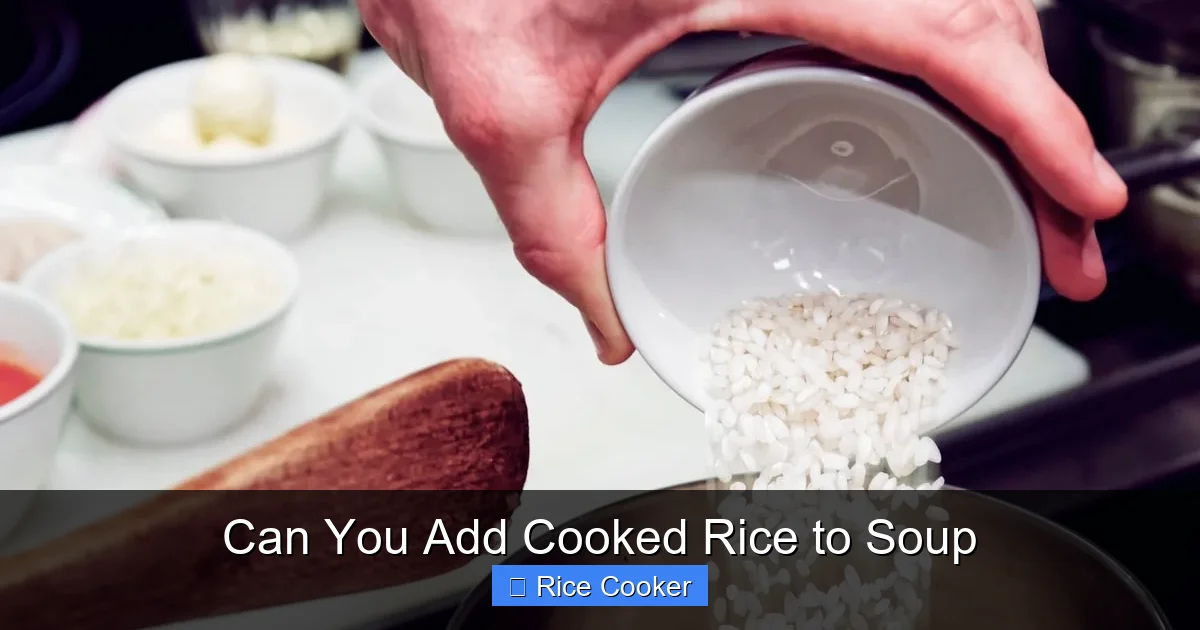
Can you add cooked rice to soup? Absolutely! Adding cooked rice to soup is a simple, delicious way to thicken your broth and boost the meal’s heartiness. Whether you’re making chicken noodle soup or a creamy tomato base, rice adds fiber, absorbs flavors, and turns a light broth into a satisfying bowl of comfort.
Key Takeaways
- Yes, it’s safe and common: Adding cooked rice to soup is a time-honored technique used in cuisines worldwide, from Chinese congee to Italian minestrone.
- Enhances texture and thickness: Rice softens further in hot soup, creating a thicker, more filling consistency without needing roux or flour.
- Boosts nutritional value: Rice contributes carbohydrates, fiber (especially brown rice), and some B vitamins, rounding out your meal’s macronutrients.
- Absorbs flavor beautifully: As rice cooks in the broth, it soaks up spices, herbs, and sauces, deepening the overall taste.
- Works with most soup types: From clear broths to rich chowders, rice adapts well—just adjust cooking time and rice variety accordingly.
- Rice cooker convenience: Using a rice cooker makes pre-cooking rice effortless, ensuring perfect results every time.
- Storage and reheating tips: Leftover rice-soup combos store well and reheat evenly, making them ideal for batch cooking and meal prep.
📑 Table of Contents
- Can You Add Cooked Rice to Soup? Yes, and Here’s Why It Works
- Why People Add Rice to Soup
- Which Types of Rice Work Best?
- How to Safely Add Cooked Rice to Soup
- Creative Ways to Use Rice in Soups
- Health and Safety Considerations
- Using a Rice Cooker: Your New Best Friend for Soup Prep
- Storage and Meal Prep Tips
- Conclusion: Yes, You Should Try It
Can You Add Cooked Rice to Soup? Yes, and Here’s Why It Works
Imagine this: you’re stirring a warm pot of homemade soup on the stove—maybe it’s a fragrant tomato basil blend or a hearty vegetable stew. The aroma fills your kitchen, and suddenly, you wonder, “Can I add some cooked rice to thicken this up?” The short answer? Yes, absolutely!
Adding cooked rice to soup isn’t just possible—it’s a culinary trick used across cultures and kitchens worldwide. From the silky congee of East Asia to the robust minestrone of Italy, rice plays a starring role in many soup recipes. But even if your soup doesn’t originally call for rice, tossing in a scoop of leftover or freshly cooked rice can transform it from a light broth into something more substantial and satisfying.
In this article, we’ll explore everything you need to know about adding cooked rice to soup—why it works, which types of rice are best, how to do it without overcooking, and creative ways to use it in your favorite recipes. Whether you’re using a traditional stovetop or a modern rice cooker, this guide will help you make the most of every grain.
Why People Add Rice to Soup
A Time-Tested Tradition
Soup and rice have been paired for thousands of years. In ancient Rome, garum—a fermented fish sauce—was often served over boiled grains. In China, congee (rice porridge) has long been used not only as food but also as medicine, especially during recovery from illness. These traditions show that combining rice and soup isn’t just practical—it’s deeply rooted in culinary history.

Visual guide about Can You Add Cooked Rice to Soup
Image source: survivalfreedom.com
Texture and Thickness
One of the biggest reasons people add rice to soup is for texture. A clear broth can feel thin or insubstantial, especially when you’re looking for something more filling. When you stir in cooked rice, it absorbs liquid and softens further, creating a creamier, more cohesive mouthfeel. Think of it like adding pasta to pasta sauce—rice acts as a natural thickener without the need for cornstarch or flour.
Nutritional Balance
Rice adds carbohydrates, which provide steady energy. Brown rice, in particular, offers fiber, magnesium, and B vitamins. When you combine rice with vegetables, proteins, and broth, you create a balanced meal that’s both nourishing and satisfying. This makes rice-soup combinations ideal for lunches, dinners, or even quick breakfasts (try it in a savory oat-rice porridge with veggies and eggs).
Which Types of Rice Work Best?
Not all rice is created equal—and when it comes to soup, the type you choose can affect flavor, texture, and cooking time. Let’s break down the best options.

Visual guide about Can You Add Cooked Rice to Soup
Image source: weknowrice.com
White Rice
Best for: Clear broths, soups where you want minimal starch release.
Long-grain white rice (like jasmine or basmati) holds its shape well and absorbs flavor without turning mushy. Because it contains less amylose than other varieties, it won’t get too sticky. This makes it perfect for lighter soups like miso-based or chicken noodle.
Tip: Rinse the rice before adding it to soup to remove excess starch, which helps prevent clumping.
Brown Rice
Best for: Hearty stews, vegetarian soups, or any dish where extra fiber is welcome.
Brown rice has a nuttier flavor and chewier texture, which can add depth to your soup. However, because it’s harder and takes longer to cook, it’s usually better to pre-cook it before adding it to soup. You can boil it separately or use a rice cooker—then add it near the end of soup cooking.
Pro Tip: Soak brown rice overnight to reduce cooking time and improve digestibility.
Instant Rice
Best for: Quick fixes, emergency meals, or when you’re short on time.
Instant rice (like Minute Rice or microwaveable packs) is pre-cooked and rehydrated with water or broth. While convenient, it can sometimes be overly soft or bland. Still, it’s a lifesaver when you need to bulk up a soup fast—just drain off excess liquid before adding it to avoid sogginess.
Glutinous or Sticky Rice
Best for: Southeast Asian soups like Thai tom yum or Vietnamese canh chua.
This rice variety breaks down easily when cooked, creating a thick, almost porridge-like consistency. Use it sparingly—too much can make your soup gluey. If you’re using glutinous rice, cook it separately first, then stir it in at the end.
How to Safely Add Cooked Rice to Soup
You might be wondering: “Should I add raw rice to soup and let it cook together, or is it better to use already-cooked rice?” Both methods work, but each has pros and cons.
Option 1: Using Pre-Cooked Rice
This is the safest and most common method. Simply cook your rice ahead of time (using a rice cooker, stovetop, or instant pot), then add it to the soup during the last 5–10 minutes of cooking. This prevents overcooking and keeps the rice tender but not mushy.
Steps:
- Cook rice until fully done (usually 18–20 minutes for white rice).
- Drain any excess water if using instant rice.
- Add rice to hot soup and stir gently.
- Let sit for 5 minutes to allow flavors to meld.
Option 2: Cooking Rice Directly in Soup
Some recipes (like Spanish arroz caldoso or Filipino ginataang gulay) call for rice to be cooked inside the soup itself. This infuses the entire dish with rice flavor but requires attention.
Tips for cooking rice in soup:
- Use short-grain rice (like sushi or arborio) for better absorption.
- Increase liquid slightly—rice needs more water than usual.
- Stir frequently to prevent sticking.
- Check doneness halfway through; rice should be tender but not falling apart.
Common Mistakes to Avoid
- Overcooking: Rice continues to cook after being added to hot soup. Taste-test before serving.
- Using cold rice: Cold rice can cool down your soup and lead to uneven heating. Warm it slightly in broth first if needed.
- Skipping rinsing: Unrinsed rice releases too much starch, making soup slimy.
Creative Ways to Use Rice in Soups
Rice isn’t just a filler—it’s a versatile ingredient that can elevate your soup game. Here are some inspired ideas.
1. Creamy Tomato Basil Soup with Rice Swirls
Blend ripe tomatoes, garlic, onion, and fresh basil into a smooth puree. Simmer with vegetable broth, then stir in pre-cooked jasmine rice. Finish with a splash of heavy cream or coconut milk for richness. Garnish with torn basil leaves and a drizzle of olive oil.
2. Chicken and Wild Rice Stew
Wild rice takes 45 minutes to cook, but it’s worth the wait. Sear chicken thighs, sauté mushrooms and carrots, then add wild rice and enough broth to cover. Simmer until rice is tender and chicken is cooked through. Season with thyme, salt, and pepper.
3. Vegan Lentil and Rice Soup
A protein-packed, fiber-rich option. Sauté onions, celery, and carrots. Add red lentils and cooked brown rice. Cover with vegetable stock and simmer until lentils soften. Season with cumin, smoked paprika, and lemon juice.
4. Japanese Miso Ramen Broth with Rice Noodles
While not traditional, swapping wheat noodles for short-grain rice adds a unique twist. Make a miso-based broth with dashi, soy sauce, and ginger. Add cubed tofu, scallions, and pre-cooked rice. Top with a soft-boiled egg.
5. Leftover Fried Rice Soup
Turn yesterday’s fried rice into a new dish. Heat it in a pot with a little broth or water, then stir in frozen peas, carrots, and soy sauce. Serve hot with a sprinkle of sesame seeds.
Health and Safety Considerations
Adding cooked rice to soup is generally safe, but there are a few food safety tips to keep in mind—especially if you’re using leftover rice.
Reheating Leftover Rice Correctly
If you’re using refrigerated rice, reheat it thoroughly before adding it to soup. The ideal temperature for reheating is above 165°F (74°C). Microwave or bring to a boil on the stove.
Avoiding Foodborne Illness
Cooked rice can harbor bacteria like Bacillus cereus, which survives boiling and can multiply at room temperature. To minimize risk:
- Refrigerate rice within 2 hours of cooking.
- Never leave cooked rice sitting out overnight.
- When reheating, ensure it reaches a rolling boil.
Allergen Awareness
Rice is gluten-free and suitable for most dietary restrictions. However, check labels if using flavored or packaged rice (some contain soy or other additives).
Using a Rice Cooker: Your New Best Friend for Soup Prep
If you own a rice cooker, you’re already halfway to soup success. These handy appliances take the guesswork out of cooking perfect rice every time—and they’re great for meal prep.
Benefits of a Rice Cooker
- Consistency: Delivers evenly cooked rice without burning.
- Hands-off cooking: Set it and forget it while you chop veggies or simmer broth.
- Multiple functions: Some models have steaming baskets, slow cook settings, or even soup modes.
How to Use It for Soup Ingredients
Pre-cook rice in your rice cooker, then transfer it to the soup pot. Or, use the cooker’s steam function to blanch vegetables that will later go into your soup. Many rice cookers also double as slow cookers—perfect for making one-pot rice-and-stew dishes.
Top Rice Cooker Recommendations
- Zojirushi Neuro Fuzzy: Known for precise temperature control and fluffy rice.
- Instant Pot Duo: Combines pressure cooking, slow cooking, and rice cooking.
- Aroma Housewares Digital: Budget-friendly with customizable settings.
Storage and Meal Prep Tips
Rice-soup combos are fantastic for meal prep. They store well, reheat beautifully, and taste even better the next day as flavors deepen.
Storing Leftovers
Let your soup cool completely, then transfer to an airtight container. Store in the fridge for up to 4 days or freeze for up to 3 months. When freezing, portion into individual servings for easy grab-and-go meals.
Reheating Tips
Thaw frozen soup in the fridge overnight. Reheat on the stove, stirring occasionally, until steaming hot. Add a splash of broth or water if it’s too thick.
Freezing Rice-Soup Mixes
For extra efficiency, cook rice and chop vegetables ahead of time. Freeze them together in a bag with a label indicating what kind of soup you plan to make (e.g., “Chicken-Veggie Soup Base”). Just thaw, add broth, and simmer.
Conclusion: Yes, You Should Try It
So, can you add cooked rice to soup? The answer is a resounding yes. It’s a simple, smart way to enrich flavor, improve texture, and make your meals more satisfying. Whether you’re using a rice cooker, leftovers, or fresh ingredients, this technique works across cuisines and occasions.
Next time you’re making soup, consider tossing in a handful of rice. Experiment with different varieties, seasonings, and add-ins to find your favorite combo. And if you’ve got a rice cooker sitting on your counter, put it to good use—it might just become your secret weapon for cozy, homemade comfort food.
The best part? There’s no wrong way to do it. Even if your soup turns out a little different than expected, that’s part of the fun of cooking. So go ahead—grab that pot, add that rice, and enjoy a bowl made with care.
Frequently Asked Questions
Can I add raw rice directly to soup?
Yes, you can cook rice directly in soup, but it requires more liquid and longer cooking time. Short-grain rice works best, and you’ll need to stir frequently to prevent sticking and burning.
Will rice make my soup too thick?
It depends on how much you add. One cup of cooked rice typically thickens a quart of broth moderately. Start small and adjust to your preference—you can always add more liquid if it gets too thick.
Is it okay to use leftover rice in soup?
Absolutely! Just make sure it’s been stored properly and reheated thoroughly. Leftover rice absorbs flavor well and adds heartiness to any soup.
What’s the difference between adding rice early vs. late in soup cooking?
Adding rice early lets it cook fully in the broth, infusing flavor throughout. Adding it late keeps it tender and separate. For most soups, adding pre-cooked rice at the end is easier and prevents mushiness.
Can I substitute other grains for rice in soup?
Yes! Quinoa, barley, or millet all work well. Adjust cooking times accordingly—quinoa cooks quickly, while barley needs longer to soften.
Does rice absorb all the soup’s flavor?
Yes, and that’s a good thing! Rice soaks up spices, herbs, and broth, enhancing the overall taste. That’s why rice-based soups often taste richer and more complex than broth-only versions.