
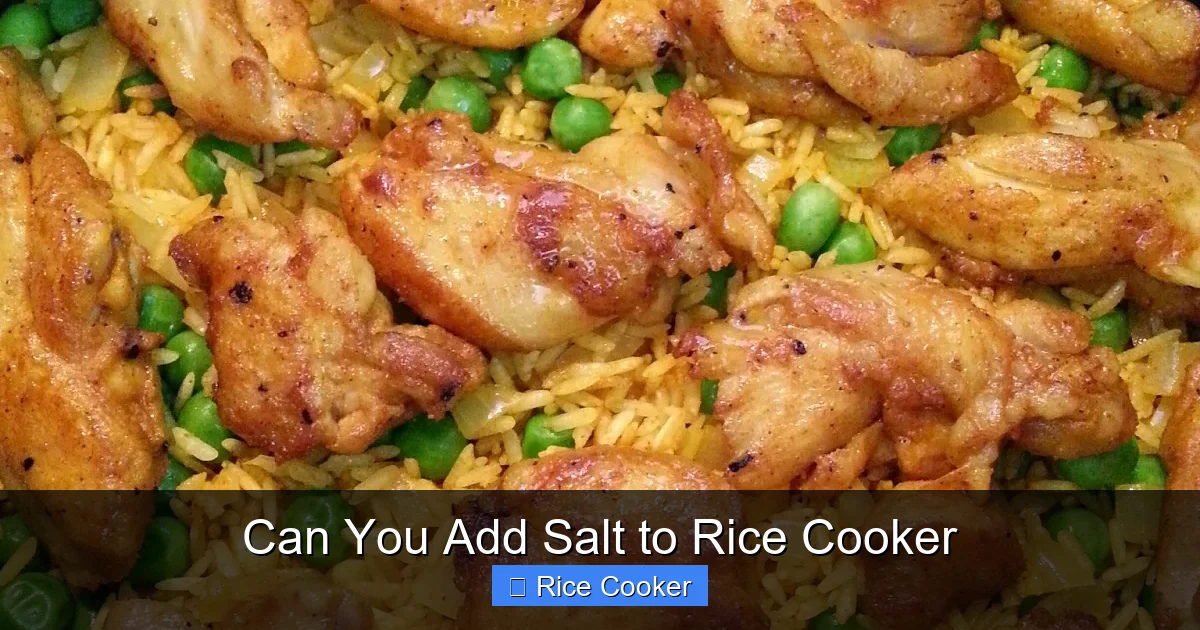
Adding salt to your rice cooker is not only safe—it’s recommended for enhancing taste and preventing mushy grains. Too much salt can affect texture, but a pinch or two makes a big difference in flavor without harming your appliance. Whether you’re cooking plain white rice or experimenting with grains like brown or jasmine, knowing the right amount and timing ensures delicious results.
# Can You Add Salt to Rice Cooker?
You’ve just measured out the perfect amount of rice. You’ve added water. Maybe you’re thinking, *Should I add salt?* Or maybe you’ve heard conflicting advice: *Salt ruins rice! Don’t put salt in your rice cooker!* So what’s the truth?
The short answer? Yes—you absolutely can (and should) add salt to your rice cooker. In fact, skipping salt might leave your rice tasting bland. But before you reach for the salt shaker, let’s dive deep into why salt matters, how much to use, when to add it, and how it affects different types of rice. We’ll also clear up common myths and give you pro tips to master perfectly seasoned rice every single time.
Whether you’re cooking for one or feeding a family, understanding how salt interacts with your rice cooker can transform an ordinary meal into something extraordinary. Let’s get started.
## Why Do People Think Salt Is Bad for Rice?
Before we talk about benefits, let’s address the elephant in the room: why do some people say salt is bad for rice?
Historically, certain rice varieties—especially long-grain whites like jasmine or basmati—are rinsed multiple times before cooking to remove excess starch. This rinsing process also washes away surface salts that were sometimes added during milling. When people rinse their rice thoroughly but forget to re-season it, the dish ends up tasting flat or even bland. To them, it feels like “salt ruined the rice”—but really, they just didn’t add any!
Another myth comes from older recipes or cultural practices where salt was used sparingly or omitted entirely. Some traditional dishes rely on broth, sauces, or side ingredients for flavor instead of salting the rice itself. Over time, this led to the belief that salt isn’t necessary—or worse, harmful.
But science tells us otherwise. Salt plays a key role in both flavor and texture development during cooking.
## The Science Behind Salt in Rice Cooking
When you add salt to water while boiling pasta or cooking rice, it increases the boiling point slightly—a phenomenon called colligative properties. While this effect is minimal in household cooking, it means rice absorbs water more efficiently and cooks more uniformly.
More importantly, salt strengthens gluten-like proteins in rice (yes, rice has protein too!), which helps bind grains together just enough to prevent them from falling apart—without making them gluey. It also balances sweetness and enhances aroma compounds released during steaming.
In short: salt isn’t just about taste—it improves structural integrity and overall mouthfeel.
## How Much Salt Should You Use?
Now for the million-dollar question: how much salt?
Most experts recommend **1/4 to 1/2 teaspoon of salt per 1 cup (180g) of uncooked rice**. That’s about 1–2 grams of sodium per serving—far below daily recommended limits. For reference, one teaspoon of table salt contains roughly 2,300 mg of sodium.
If you’re watching your sodium intake, consider using low-sodium broth or flavored liquids instead. But if you love flavorful rice, a light hand with salt does wonders.
### Quick Salt-to-Rice Ratio Guide
| Rice Type | Cups of Uncooked Rice | Teaspoons of Salt |
|—————–|————————|——————–|
| White (short/long) | 1 | ¼ – ½ |
| Brown | 1 | ¼ |
| Jasmine | 1 | ¼ |
| Basmati | 1 | ¼ |
| Wild | 1 | ¼ |
> 💡 Pro Tip: If you’re unsure, start with less salt. You can always add more after cooking—but you can’t take it out!
## When Should You Add Salt?
Timing is everything—even with salt.
**Best practice:** Add salt along with water before turning on the rice cooker. This allows it to dissolve evenly throughout the cooking liquid, ensuring consistent flavor and texture.
Avoid adding salt halfway through or after cooking. Not only will it be unevenly distributed, but it won’t have time to integrate properly into the grain structure.
Some advanced rice cookers come with settings like “seasoning” or “flavor boost,” but these are usually marketing gimmicks. Stick to basics: measure rice, add water + salt, press start.
## Does Salt Damage Your Rice Cooker?
Absolutely not.
Salt is chemically inert—it doesn’t react with stainless steel, aluminum, or non-stick coatings commonly found in rice cooker inner pots. It won’t corrode metal or damage heating elements.
Just remember to wipe up any spilled salt crystals afterward. While harmless, excessive buildup near electrical components could theoretically cause issues (though highly unlikely). Always clean your rice cooker according to manufacturer instructions.
## Can You Use Other Seasonings Instead of Salt?
Of course! If you want to reduce sodium or add complexity, try these alternatives:
– **Broth or stock:** Use vegetable, chicken, or beef broth instead of water. Just adjust salt accordingly.
– **Herbs & spices:** Bay leaves, cumin, turmeric, or dried thyme infuse subtle flavors.
– **Garlic powder or minced garlic:** Add a clove or two directly to the water.
– **Lemon zest or vinegar:** Brightens flavor without increasing saltiness.
These options work especially well with aromatic rice types like jasmine, basmati, or sushi rice.
## What About Different Types of Rice?
Salt behaves differently depending on the grain. Here’s a breakdown:
### White Rice (Short & Long Grain)
White rice has a higher starch content than brown rice, so it benefits from a touch of salt to prevent clumping and improve fluffiness. Long-grain whites like jasmine absorb salt quickly and develop a pleasant savory note.
### Brown Rice
Because brown rice takes longer to cook and retains more nutrients, it needs slightly less salt—too much can intensify its earthy flavor unnaturally. Stick to ¼ tsp per cup.
### Sushi Rice
Traditionally, sushi rice is seasoned with a sweet-and-sour mixture (*shari*), but if you’re making plain sushi-style rice, a pinch of salt enhances stickiness and flavor balance.
### Wild Rice
This nutty, chewy grain pairs beautifully with salt. Use ¼ tsp per cup—its robust profile handles seasoning well.
### Instant or Pre-Cooked Rice
Skip the salt! These are already processed and often pre-seasoned. Adding more salt leads to overpowering flavors.
## Common Mistakes to Avoid
Even seasoned cooks slip up sometimes. Watch out for these pitfalls:
– **Using too much salt:** Remember, rice absorbs liquid. Extra salt draws out moisture, leading to dry, crumbly grains.
– **Not measuring accurately:** Eyeballing salt leads to inconsistency. Use a small spoon.
– **Skipping rinsing for sticky rice:** If your rice is too gluey, you probably rinsed it too little. Conversely, over-rinsing removes flavor carriers.
– **Ignoring altitude:** At high elevations, water boils faster. You may need slightly more salt to compensate for quicker evaporation.
## Step-by-Step Guide: Perfect Salted Rice in Any Rice Cooker
Ready to make restaurant-quality rice at home? Follow this foolproof method:
1. **Measure your rice** using a dry measuring cup. Fluff with a fork to separate clumps.
2. **Rinse (if needed):** For white rice, rinse under cold water until runoff runs clear. Skip this step for brown or wild rice.
3. **Add rice to inner pot.**
4. **Pour in water.** As a rule: 1 cup rice = 1.5 cups water (adjust for desired consistency).
5. **Sprinkle in salt** (¼–½ tsp per cup).
6. **Give it a gentle stir** so salt dissolves.
7. **Close lid and select “White Rice” or standard setting.**
8. **Wait patiently**—don’t peek!
9. **Let sit 5–10 minutes** after cooking completes. This steeps the flavor and firms up texture.
10. **Fluff gently** with a wooden utensil before serving.
> 🌟 Bonus: For fried rice prep, cook seasoned rice the night before and store in the fridge. Cold rice fries better!
## Troubleshooting: What If My Rice Is Too Salty?
Accidents happen. If your rice tastes too salty:
– Serve with a side of plain yogurt, unsalted bread, or neutral veggies to cut the saltiness.
– Mix it into soups or stews where extra salt gets diluted.
– Freeze leftovers—they reheat well in the microwave.
Remember: you can’t un-cook rice, but you can salvage a meal.
## Cultural Perspectives on Salted Rice
Globally, salting rice reflects local tastes and traditions:
– In Japan, *shari* (vinegar-seasoned rice) includes a hint of salt.
– Indian biryanis often use salted water plus whole spices.
– Southern U.S. dishes like jambalaya combine salted rice with bold seasonings.
– In China, steamed white rice is typically unsalted but served alongside spicy or salty sides.
So whether you salt your rice depends on personal preference and culinary context—not universal rules.
## Final Thoughts: Salt Is Your Friend
Adding salt to your rice cooker isn’t just acceptable—it’s encouraged. Done correctly, it elevates flavor, improves texture, and makes every bite satisfying.
Forget outdated myths or fear-based advice. With the right amount and timing, salt is a simple yet powerful tool in your kitchen arsenal.
Next time you measure rice, don’t hesitate—grab that salt shaker. Your taste buds (and rice cooker) will thank you.
—
Key Takeaways
- Salt improves flavor: A small amount of salt brings out the natural taste of rice, making each grain more enjoyable.
- Timing matters: Add salt at the beginning of cooking for even distribution; adding it later may result in uneven seasoning.
- Don’t overdo it: Too much salt can make rice tough or overly salty; use just a pinch per cup of rice.
- It doesn’t damage your rice cooker: Salt is non-reactive and won’t harm the inner pot or electronics.
- Works with all rice types: From white to brown, jasmine, basmati, and wild rice—salt enhances every variety.
- Pair with other seasonings: Combine salt with garlic, herbs, or broth for extra depth without complicating the process.
Frequently Asked Questions
Can adding salt ruin my rice cooker?
No, salt won’t damage your rice cooker. It’s safe to use in any model with a standard inner pot. Just avoid pouring large amounts near electrical parts.
How much salt should I use per cup of rice?
Use ¼ to ½ teaspoon of salt per cup of uncooked rice. Start with less—you can always add more after cooking if needed.
Is it better to add salt before or after cooking?
Add salt before cooking, along with water. This ensures even distribution and proper integration into the grain structure.
Can I substitute salt with broth?
Yes! Using broth adds flavor and reduces sodium if you choose low-sodium versions. Adjust salt accordingly to avoid oversalting.
Does salt change the texture of rice?
Lightly salted rice tends to hold together better and resist becoming mushy. However, too much salt can draw out moisture and make rice dry.
Do I need to rinse salt off rice?
No. Unlike pasta, rice doesn’t release starch when salted. Rinse only to remove excess starch—not salt—unless your recipe calls for it.