
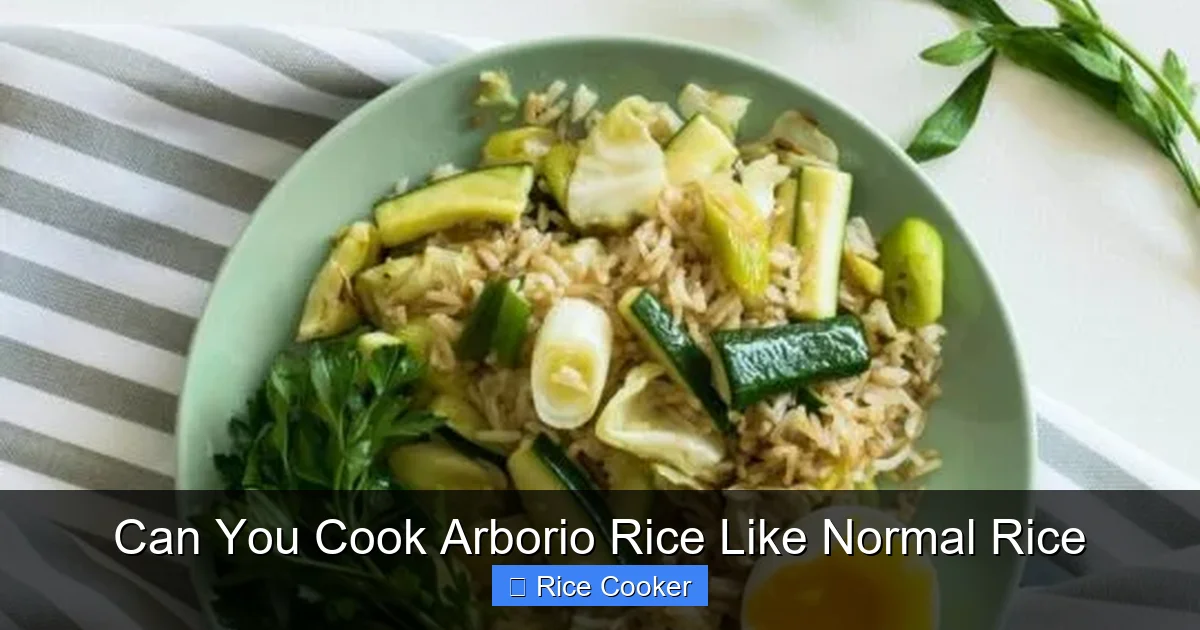
Arborio rice is a short-grain variety prized for its creamy texture in risotto, but yes—you can absolutely cook it like regular rice. While traditional methods involve constant stirring and broth addition, modern rice cookers simplify the process. With the right settings and technique, you can achieve either a rich, creamy risotto or a slightly chewy yet tender grain, depending on your recipe needs.
Key Takeaways
- Arborio rice has higher starch content: This makes it ideal for creamy dishes like risotto but means it behaves differently than long-grain rice when cooked.
- You can use a rice cooker for arborio rice: Most models support risotto or mixed-grain settings, though results may vary between brands.
- Cooking time differs significantly: Arborio typically takes 18–20 minutes in a rice cooker vs. 15–20 minutes for white rice.
- Water-to-rice ratio matters: Use about 2:1 water (or broth) to rice for a softer result; reduce slightly if you prefer firmer grains.
- Stirring still helps: Even with automation, gentle stirring at the start improves texture and prevents sticking.
- Purpose drives method: Decide upfront whether you want risotto or plain cooked rice to adjust technique accordingly.
- Experimentation is key: Every rice cooker is different—don’t hesitate to tweak ratios or timing based on your machine’s performance.
📑 Table of Contents
- Introduction: The Curious Case of Arborio Rice
- Understanding Arborio Rice: What Makes It Unique?
- Can You Use a Rice Cooker for Arborio Rice?
- What to Expect: Texture and Consistency
- Troubleshooting Common Issues
- Creative Uses Beyond Risotto
- Choosing the Right Rice Cooker for Arborio
- Final Thoughts: Embrace the Experiment
Introduction: The Curious Case of Arborio Rice
Have you ever stood in your kitchen, staring at a bag of Arborio rice, wondering, “Can I just cook this like regular rice?” It’s a fair question—especially if you’re used to boiling jasmine or basmati and walking away. But here’s the thing: Arborio rice isn’t your average grain. Originating from Italy’s Piedmont region, this short-grain wonder is celebrated not for its ability to stay separate when fluffed with a fork, but for its ability to transform into something velvety, luxurious, and deeply satisfying—like a creamy risotto.
So, can you cook Arborio rice like normal rice? The short answer is yes—but with important caveats. If your goal is a fluffy, distinct grain side dish, you might be disappointed. But if you’re open to experimenting, your rice cooker can become a versatile tool for both traditional risotto and uniquely textured cooked rice. In this guide, we’ll walk through everything you need to know: from understanding what makes Arborio special, to adapting your rice cooker for optimal results, and even troubleshooting common pitfalls. Let’s dive in.
Understanding Arborio Rice: What Makes It Unique?
The Science Behind the Creaminess
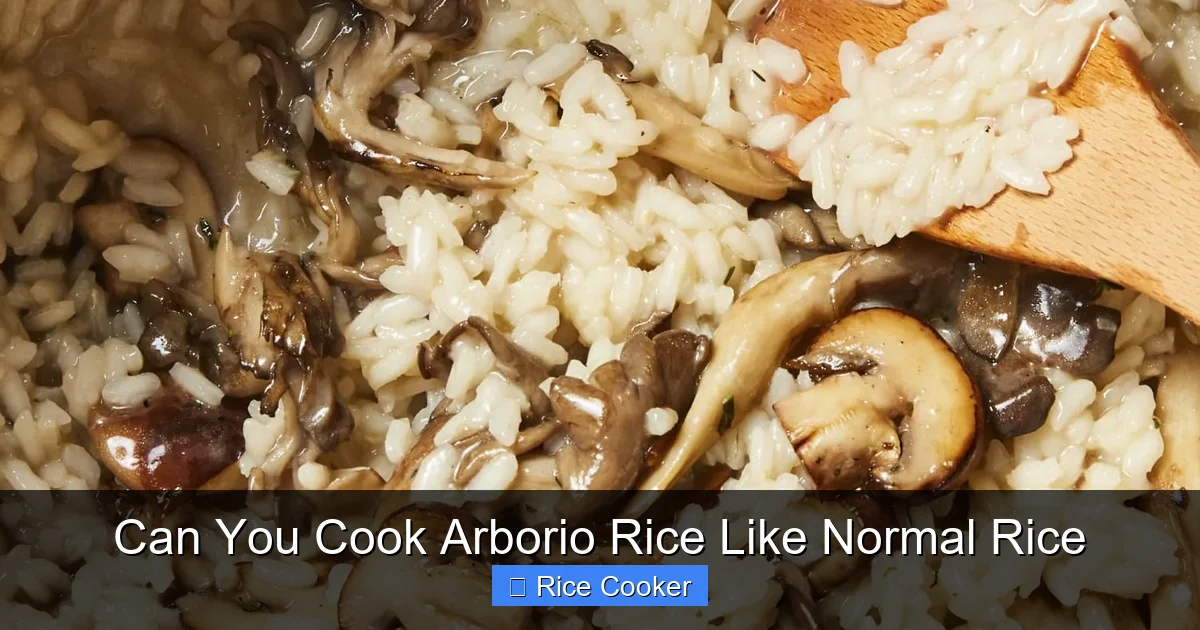
Arborio rice gets its signature creaminess thanks to a high concentration of amylopectin, a type of starch that breaks down during cooking. Unlike long-grain rice (like basmati or jasmine), which has more amylose (a starch that resists gelatinization), Arborio releases its starches slowly into the cooking liquid. This creates that rich, sauce-like consistency beloved in risotto.
Visual guide about Can You Cook Arborio Rice Like Normal Rice
Image source: cdn.apartmenttherapy.info
This starch release also means Arborio absorbs liquid faster and more thoroughly than other rices. That’s why recipes call for gradual additions of warm broth—usually every few minutes—while constantly stirring. The constant motion helps distribute heat evenly and encourages starch dispersion.
How Is It Different From Normal Rice?
Let’s compare:
- Grain Type: Arborio is short-grain; most “normal” rice (like American long-grain) is, well—long-grain.
- Texture When Cooked: Arborio becomes soft, slightly sticky, and clingy; long-grain stays separate.
- Water Absorption: Arborio absorbs ~1.8 times its volume; long-grain absorbs ~1.5.
- Cooking Method: Arborio traditionally requires active cooking (stirring + broth addition); long-grain can often be boiled unattended.
That said, “normal rice” isn’t a single category. Brown Arborio exists too, and so do hybrid varieties like Carnaroli and Vialone Nano—each with slight variations in starch content and cooking behavior. But for most home cooks, standard white Arborio is the go-to.
Can You Use a Rice Cooker for Arborio Rice?
Yes—But Expect Some Adjustments
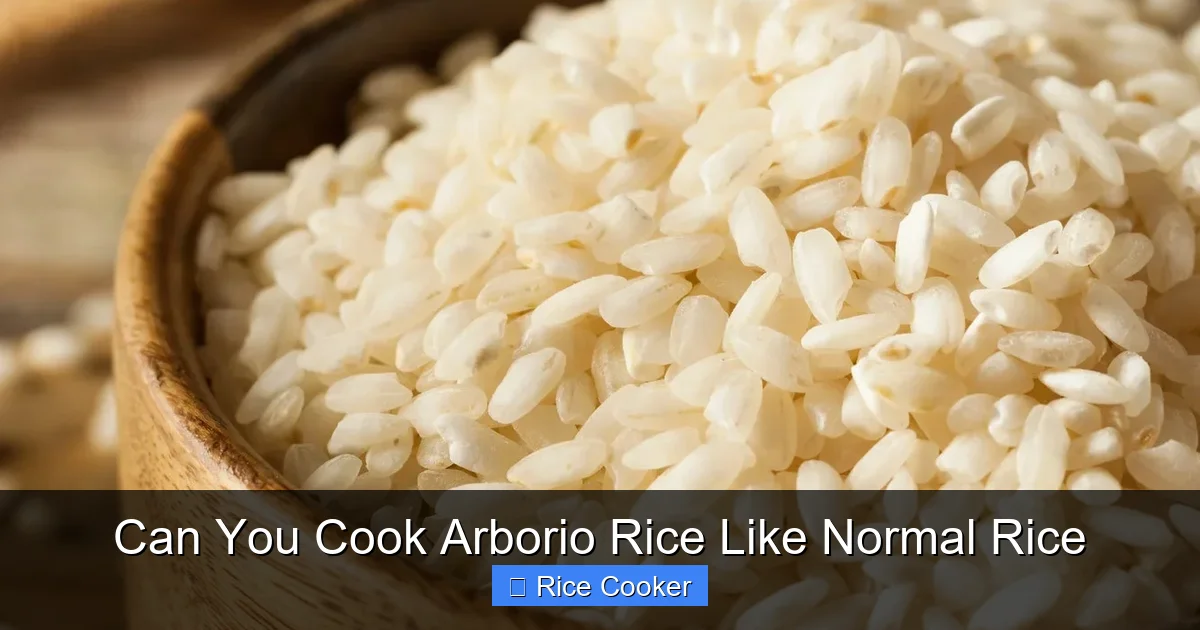
Modern rice cookers are surprisingly adaptable. Many come with preset modes for “risotto,” “mixed grains,” or even “creamy rice.” These settings use lower heat and extended steaming times to mimic traditional risotto preparation. However, not all rice cookers are created equal. Budget models may lack precision, while premium ones offer temperature control and delay timers.
Visual guide about Can You Cook Arborio Rice Like Normal Rice
Image source: ricecookerjunkie.com
If your rice cooker doesn’t have a dedicated risotto setting, you can still make it work. The key is understanding that Arborio needs patience—and a little manual intervention at the start.
Step-by-Step: Cooking Arborio in a Rice Cooker
- Rinse the Rice: Rinse Arborio under cold water until the water runs clear. This removes excess starch and prevents gummy results.
- Sauté First: In your rice cooker pot, heat 1 tablespoon of oil or butter over medium heat. Add rinsed Arborio and stir for 1–2 minutes to toast lightly—this enhances flavor and reduces stickiness.
- Add Liquid: Pour in 2 cups of liquid (water, broth, or a mix) for every 1 cup of rice. Use warm liquid for faster absorption.
- Start the Cooker: Close the lid and select the “white rice” or “risotto” setting. If neither exists, use the standard cycle.
- Stir Once Midway: After about 10 minutes (when the rice looks translucent), lift the lid and gently stir. This ensures even cooking and prevents clumping.
- Let It Rest: Once done, let it sit covered for 5 minutes before fluffing. Don’t peek too often—steam buildup affects texture.
Pro tip: For a richer flavor, substitute half the water with vegetable or chicken broth. And if you want a true risotto consistency, add hot broth gradually after the initial cook cycle, stirring constantly for another 5–7 minutes.
What to Expect: Texture and Consistency
Soft, Creamy (Risotto Style)
If you follow the full risotto method—toasting, slow broth addition, and constant stirring—you’ll end up with a luxurious, almost pudding-like dish. Perfect with mushrooms, saffron, or Parmesan cheese. This version uses minimal liquid initially but adds more during finishing.
Mushy vs. Al Dente: Finding Your Sweet Spot
Arborio can go either way. Too much liquid = mushy. Too little = hard, chalky centers. A good rule of thumb: aim for a creamy but still-tender bite. If using a rice cooker without broth-addition capability, lean toward a slightly firmer result—you can always stir in extra hot liquid at the end.
Comparing Results Across Methods
Here’s how different approaches stack up:
| Method | Average Cook Time | Texture | Best For |
|---|---|---|---|
| Traditional Stovetop Risotto | 18–22 mins | Velvety, cohesive | Pure risotto lovers |
| Standard Rice Cooker Cycle | 18–20 mins | Soft, slightly sticky | Hearty side dishes |
| Modified Rice Cooker (with broth addition) | 20–25 mins | Creamy, risotto-like | Fancy dinner prep |
Note: Always check doneness halfway through by tasting a few grains. Overcooking leads to a gluey mess—undercooking leaves crunchy bits.
Troubleshooting Common Issues
Why Is My Arborio Mushy?
Overcooked, too much liquid, or excessive stirring can all lead to mush. Solution: Rinse more thoroughly next time, reduce liquid by 1/4 cup, and avoid lifting the lid frequently during cooking.
Sticking to the Bottom?
Low-quality nonstick coatings fail with sticky grains. Try greasing the pan well before adding rice, or use a stainless steel insert if available. Also, ensure the rice layer isn’t too thick—spread it evenly.
Not Creamy Enough?
Your rice cooker might be too hot or too fast. Try reducing heat after the initial boil (if possible), or finish with a splash of hot broth and let it rest uncovered for 2 minutes.
Grains Separating?
This usually happens when the rice isn’t rinsed or is stirred too vigorously. Gentle folding at the end helps reintegrate grains without breaking them.
Creative Uses Beyond Risotto
Arborio as a Base for Bowls
Even if you don’t aim for full risotto, cooked Arborio makes an excellent base for grain bowls. Top with roasted vegetables, chickpeas, tahini dressing, or poached eggs for a hearty, nutritious meal.
Sweet Applications
Surprisingly, Arborio works in desserts! Cook it with milk, cinnamon, and sugar to make rice pudding—its creamy texture shines here too.
Freezing and Reheating Tips
Cooked Arborio freezes beautifully for up to 3 months. Thaw overnight in the fridge, then reheat with a splash of water or broth in a microwave-safe bowl, covered. Stir halfway through for even warmth.
Choosing the Right Rice Cooker for Arborio
Features to Look For
- Nonstick Inner Pot: Essential for easy cleanup and preventing sticking.
- Multiple Settings: “Risotto,” “Mixed Grains,” or “Creamy Rice” modes save time.
- Timer Function: Lets you prep ingredients ahead and start cooking later.
- Glass Lid: Allows visual monitoring without releasing steam.
- Keep Warm Function: Keeps rice at safe serving temps without drying out.
Top Picks Under $100
Zojirushi NS-ZCC10: Compact, reliable, with a 5-cup capacity.
Tiger RCT-A10U: Heats quickly, great for small batches.
Instant Pot Duo Crisp: Doubles as an air fryer—ideal for multi-taskers.
Final Thoughts: Embrace the Experiment
Cooking Arborio rice like normal rice isn’t just possible—it’s a gateway to discovering new textures and flavors in your kitchen. Whether you’re aiming for a restaurant-quality risotto or a comforting grain bowl, your rice cooker can play a starring role. The trick lies in respecting Arborio’s unique properties while embracing flexibility.
Don’t be afraid to tweak ratios, try different liquids, or experiment with toasting times. Every batch teaches you something new. And remember: even professionals sometimes get it wrong—the best part about cooking is learning together.
So go ahead, grab that bag of Arborio, fire up your rice cooker, and turn ordinary grains into extraordinary meals. Your taste buds will thank you.
Frequently Asked Questions
Is Arborio rice the same as sushi rice?
No—though both are short-grain, sushi rice has higher amylose content, making it stickier and less creamy than Arborio. They’re not interchangeable in recipes.
Can I substitute Arborio with other rice types?
For risotto, Carnaroli or Vialone Nano are better substitutes due to their similar starch profiles. Long-grain rice won’t give you the same creamy texture.
Do I need to soak Arborio rice before cooking?
No—soaking isn’t necessary. Rinsing is more important to remove excess surface starch.
How do I store leftover Arborio rice?
Store in an airtight container in the fridge for up to 4 days. Reheat with a splash of water or broth to restore moisture.
Can I cook brown Arborio rice in a rice cooker?
Yes, but it takes longer—about 35–40 minutes. Soak it first if you want to reduce cook time.
Will a rice cooker make authentic risotto?
It can make a close approximation, especially with broth addition and careful stirring. True authenticity requires stovetop vigilance, but home cooks will find the rice cooker version delicious and convenient.