
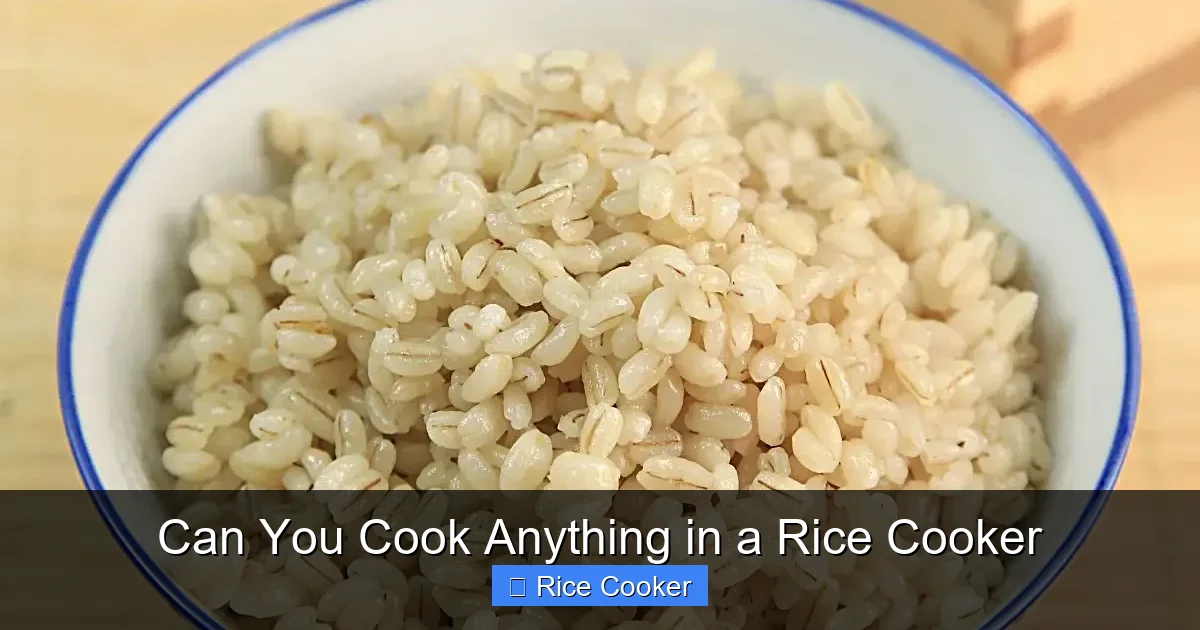
Can you cook anything in a rice cooker? Absolutely — with a little creativity, your rice cooker transforms into a multi-cooker that handles everything from oatmeal to chocolate cake. This handy appliance isn’t just for rice anymore; it’s a secret weapon for busy home cooks.
Key Takeaways
- Versatility: A rice cooker can prepare more than just rice—think oats, quinoa, beans, stews, and even desserts.
- Convenience: Set it and forget it—no constant stirring or babysitting required.
- Healthy Options: Cook whole grains, legumes, and steamed vegetables without added fats.
- Time-Saving: Perfect for meal prepping or making large batches with minimal effort.
- Budget-Friendly: One appliance replaces multiple tools, saving money and counter space.
- Beginner-Friendly: Simple controls make it ideal for new cooks or those with limited kitchen experience.
- Limitations: Not suitable for high-heat searing, deep frying, or dishes requiring precise temperature control like sous-vide.
📑 Table of Contents
- Can You Cook Anything in a Rice Cooker? The Ultimate Guide to Unlocking Its Hidden Potential
- Understanding How a Rice Cooker Works
- Cooking Grains and Cereals Beyond Rice
- Meal Prep Made Easy: Stews, Soups, and Braises
- Steaming and One-Pot Dishes
- Desserts and Baked Goods: Yes, Really!
- Fermentation and Yogurt: The Unexpected Uses
- Tips for Maximizing Your Rice Cooker’s Potential
- What a Rice Cooker Can’t Do (And Why)
- Conclusion: A Kitchen Essential Worth Rediscovering
Can You Cook Anything in a Rice Cooker? The Ultimate Guide to Unlocking Its Hidden Potential
If you’ve ever stood over a hot stove, stirring a pot of soup or watching a pan sear, wondering if there’s an easier way, you’re not alone. Enter the humble rice cooker—once thought of as a one-trick pony designed solely for boiling white rice. But today, millions of home cooks swear by their rice cookers for so much more. So, can you really cook anything in a rice cooker? The short answer is yes — but with some caveats. Let’s explore what your rice cooker can (and can’t) do, and how to get the most out of this surprisingly versatile kitchen companion.
From fluffy oatmeal in the morning to savory jambalaya at dinner, the rice cooker has quietly become a staple in kitchens around the world. Thanks to advanced models with settings like slow cook, steam, and delay timers, these appliances are no longer limited to simple grain cooking. Whether you’re a college student on a budget, a parent juggling meals, or a foodie looking to experiment, understanding the full range of what a rice cooker can do unlocks a world of culinary possibilities. In this guide, we’ll walk through practical examples, tips, and tricks to help you turn your rice cooker into your go-to kitchen tool.
Understanding How a Rice Cooker Works
Before diving into recipes, it helps to understand the science behind your rice cooker. Most basic models use a simple heating element and a thermostat to maintain a consistent internal temperature—typically around 212°F (100°C), which is the boiling point of water. When you add liquid and heat it, the water evaporates until the temperature rises above 212°F, triggering the thermostat to shut off the heat. Once the temperature drops back down, the cycle repeats. This creates a “keep warm” function that maintains food at a safe serving temperature without overcooking.
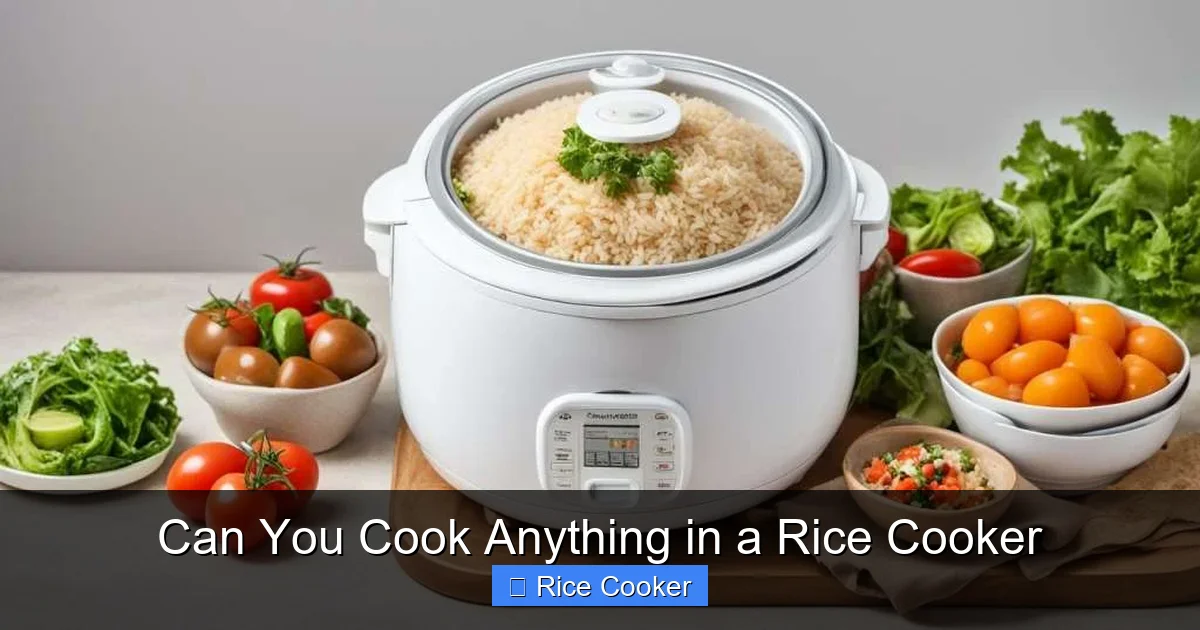
Visual guide about Can You Cook Anything in a Rice Cooker
Image source: ricearray.org
The Keep Warm Cycle: Your Secret Weapon
This cycling mechanism is what makes rice cookers so useful beyond rice. Because they regulate temperature automatically, they’re perfect for foods that need gentle, steady heat rather than high flame or active stirring. That means you can safely leave food cooking overnight, come back the next day, and find a perfectly done meal waiting for you. It’s especially helpful for people with busy schedules or those who want to prepare breakfast the night before.
Types of Rice Cookers: What You Need to Know
Not all rice cookers are created equal. Understanding the differences helps you choose the right model for your needs:
- Basic Rice Cookers: Simple, affordable models with just “Cook” and “Warm” buttons. Great for beginners or those who only cook rice occasionally.
- Fuzzy Logic Rice Cookers: Use sensors to detect moisture and adjust cooking time automatically. Ideal for achieving consistently fluffy rice every time.
- Multi-Cookers: Include additional functions like slow cook, pressure cook, steam, and sauté. These are the closest to a one-stop kitchen appliance.
- Sous Vide Rice Cookers: Specialized models that maintain precise low temperatures—perfect for cooking eggs, custards, or delicate proteins.
For this article, we’ll focus on general-purpose rice cookers, including both basic and multi-function models, since they represent the majority of what’s available to consumers.
Cooking Grains and Cereals Beyond Rice
Let’s start with the obvious: rice cookers excel at cooking grains. But did you know you can make far more than just jasmine or basmati rice? With the right ratio of water to grain, your rice cooker can handle a wide variety of cereals and ancient grains.
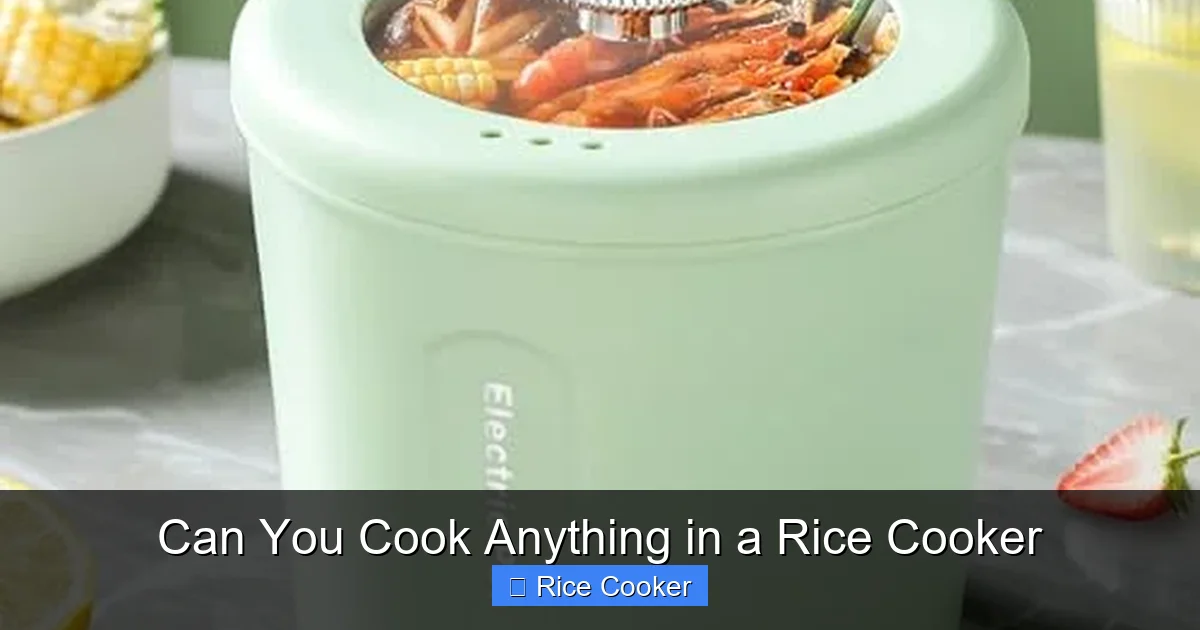
Visual guide about Can You Cook Anything in a Rice Cooker
Image source: m.media-amazon.com
Perfect Oatmeal Every Time
Instead of boiling oats on the stove and risking scorching, try cooking them in your rice cooker. For steel-cut or rolled oats, use a 2:1 ratio of water to oats. Add a pinch of salt, a dash of cinnamon, and optional sweeteners like honey or maple syrup. Press “Cook,” and within 20–30 minutes, you’ll have creamy, evenly cooked oatmeal ready to top with fruit, nuts, or seeds.
Quinoa, Farro, and Millet
These nutrient-dense grains thrive in a rice cooker. Use the same 1:2 ratio (grain to water) as you would for rice. Quinoa, in particular, benefits from rinsing before cooking to remove bitterness. Farro and millet may take slightly longer, so check after 20 minutes and add a splash of water if needed.
Rice Cooker Porridge
Want a hot breakfast without standing over the stove? Combine oats, milk, a pinch of salt, and your favorite spices (like cardamom or nutmeg). Cook on the “Porridge” setting (if available) or manually set a longer cook time. The result is rich, velvety porridge that rivals store-bought versions—without the preservatives.
Meal Prep Made Easy: Stews, Soups, and Braises
One of the best-kept secrets about rice cookers is their ability to cook hearty stews and soups. Because they maintain consistent heat and don’t require stirring, they’re perfect for dishes where ingredients slowly meld together over time.
Chicken and Vegetable Stew
Brown chicken thighs in a skillet first for flavor, then transfer to the rice cooker with diced carrots, celery, potatoes, onions, garlic, and broth. Season with herbs like thyme, bay leaf, and black pepper. Cook for 45–60 minutes on the “Slow Cook” or manual setting. The result is tender meat and deeply flavored vegetables—all hands-off.
Bean-Based Meals
Beans like lentils, chickpeas, and black beans can be tough on stovetop pots, often sticking or burning. Not in a rice cooker! Soak dried beans overnight, drain, and combine with water, onion, garlic, and spices. Cook on high for 60–90 minutes until tender. You’ll never go back to boiling beans the old way.
Vegetarian Chili
Ditch the burner for this one. Sauté onions, peppers, and tomatoes briefly, then add canned beans, corn, diced tomatoes, chili powder, cumin, and oregano. Cook on high for 45 minutes. The rice cooker’s sealed environment locks in flavors without evaporation.
Steaming and One-Pot Dishes
If your rice cooker has a steaming tray (most do), you can cook entire meals in one vessel. Steaming preserves nutrients better than boiling and requires no added oil.
Steamed Fish with Ginger and Scallions
Place fish fillets in the steamer basket, season with soy sauce, ginger, and scallions. Add ½ cup water to the inner pot and place the tray inside. Cover and cook on high for 10–15 minutes, depending on thickness. The result is moist, flavorful fish with no mess.
One-Pot Pasta Primavera
Boil pasta in the rice cooker with water, olive oil, garlic, and chopped vegetables. Drain excess water, stir in Parmesan, and serve. It’s quick, easy, and uses just one pot.
Vegetable Medley
Steam broccoli, cauliflower, carrots, and zucchini together with a splash of lemon juice and olive oil. No chopping required—just toss everything into the steamer and let the machine do the work.
Desserts and Baked Goods: Yes, Really!
You read that right. With the right recipe and patience, your rice cooker can bake cakes, custards, and even cookies. The key is using the “Keep Warm” function carefully and ensuring proper mixing.
Rice Cooker Chocolate Cake
Mix flour, sugar, cocoa powder, baking soda, salt, eggs, milk, oil, and vanilla in the inner pot. Stir well, then cover and cook on high for 30–35 minutes. Let it cool for 10 minutes before opening—the cake will rise beautifully. Top with whipped cream or frosting.
Pudding and Custard
Combine milk, sugar, cornstarch, and egg yolks in the pot. Whisk until smooth, then cook on high for 20–25 minutes, stirring occasionally. The rice cooker’s consistent heat prevents curdling and ensures a silky texture.
Porridge Popsicles
Make oatmeal or quinoa porridge, pour into popsicle molds, and freeze. The rice cooker’s warmth helps thicken the mixture to the right consistency for easy filling.
Fermentation and Yogurt: The Unexpected Uses
Some advanced rice cookers come with insulated inserts or yogurt-making features. Even basic models can be used for fermentation with a little ingenuity.
Homemade Yogurt
Heat milk to 180°F (82°C) to kill bacteria, then cool to 110°F (43°C). Add starter culture, pour into a clean container, and place inside the rice cooker. Turn on “Warm” and let sit for 6–12 hours. The residual heat keeps the milk at the right temperature for culturing.
Kombucha SCOBY Cultivation
Maintain the right temperature for kombucha fermentation by placing the SCOBY jar inside the rice cooker with the “Warm” setting on. Monitor temperature with a thermometer to stay between 75–85°F (24–29°C).
Tips for Maximizing Your Rice Cooker’s Potential
To get the most out of your rice cooker, follow these pro tips:
- Don’t Overfill: Never exceed the max water line—too much liquid can overflow and damage the unit.
- Use the Right Pot: Only use the inner pot that came with your model. Other materials may warp or scratch the non-stick surface.
- Preheat for Baking: For cakes or bread, preheat the inner pot with a bit of water for 5 minutes before adding batter.
- Check Manual First: Some models have specific instructions for non-rice recipes. Always consult your user guide.
- Clean Promptly: Rinse the inner pot after each use to prevent staining or odors.
- Experiment Gradually: Start with simple recipes before attempting complex dishes.
What a Rice Cooker Can’t Do (And Why)
While impressive, rice cookers do have limitations. Understanding these boundaries helps set realistic expectations.
No High-Heat Sear or Brown Meat
Most rice cookers can’t reach temperatures high enough to sear meat or develop browning. For that, you still need a skillet or Dutch oven.
Not Ideal for Deep Frying
Deep frying requires rapid oil circulation at high temps—far beyond what a rice cooker can provide. Stick to shallow frying or air frying for crispy textures.
Limited Precision for Sous Vide
While some models claim “sous vide” capability, they lack the accuracy of dedicated immersion circulators. For serious precision cooking, invest in a separate device.
Small Capacity Limits Large Batches
A typical 6-cup rice cooker holds about 1.5 cups of uncooked rice—roughly 3 servings. Large families may need multiple batches.
Conclusion: A Kitchen Essential Worth Rediscovering
So, can you cook anything in a rice cooker? While there are limits, the truth is that a good rice cooker can handle a remarkable variety of tasks—from breakfast porridge to dinner stew to dessert cake. Its simplicity, reliability, and automation make it ideal for everyday cooking, meal prep, and even creative experiments.
Whether you’re looking to save time, reduce cleanup, or simply expand your cooking repertoire, your rice cooker is already sitting in your kitchen, waiting to do more than just cook rice. With a little knowledge and imagination, it can become your most trusted cooking companion. Next time you open your cabinet, give that rice cooker a second look—you might just discover a whole new way to feed yourself and your family.
Frequently Asked Questions
Can I cook pasta in a rice cooker?
Yes, but not directly in the pot—use the steamer basket. Boil pasta in the basket while the inner pot holds water. Once pasta is al dente, drain and mix with sauce. Alternatively, cook pasta with water and salt in the pot, then drain excess liquid before adding sauce.
Is it safe to cook meat in a rice cooker?
Absolutely. Just ensure meat reaches a safe internal temperature (165°F for poultry, 145°F for beef). Brown meat first on a stovetop if you want flavor, then transfer to the rice cooker with liquids and cook until tender.
Can a rice cooker replace a slow cooker?
Partially. Multi-cooker models with slow cook functions can mimic slow cookers, but traditional rice cookers lack the low-heat duration needed for long braises. For extended cooking, a dedicated slow cooker is better.
Do I need special ingredients for rice cooker recipes?
Nope. Standard pantry staples like rice, water, beans, spices, and common meats work perfectly. Some recipes call for specific ratios, but nothing exotic is required.
Can I leave food in the rice cooker all night?
Yes, but only if it was fully cooked before turning to “Warm.” The keep-warm function is safe for several hours, but avoid leaving raw ingredients cooking unattended overnight.
Will my rice cooker break if I use it for non-rice dishes?
Not unless you misuse it. As long as you follow manufacturer guidelines and don’t overload or use incompatible pots, your rice cooker can safely handle soups, stews, and even cakes. Always refer to your manual for model-specific advice.