
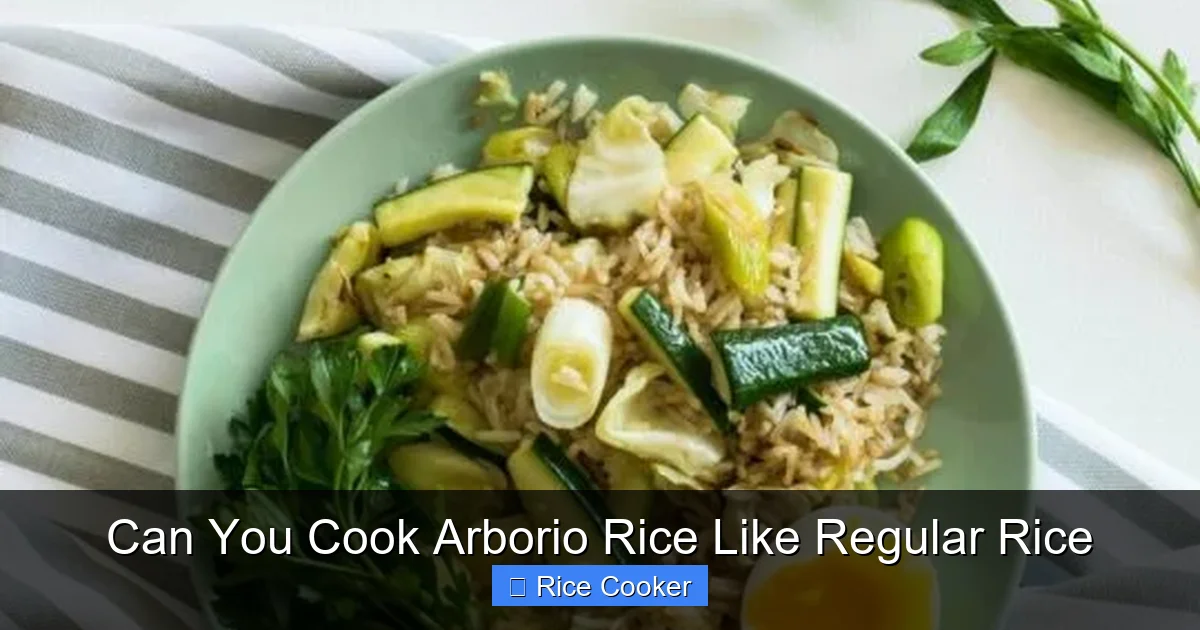
Arborio rice cannot be cooked exactly like regular rice, but with the right approach, you can achieve excellent results in a rice cooker. Its high starch content makes it ideal for creamy risottos, but it requires careful water ratios and timing to avoid mushiness. Understanding these differences ensures foolproof meals every time.
# Can You Cook Arborio Rice Like Regular Rice?
You just pulled out your favorite Arborio rice—the same one you’ve used to make rich, velvety risotto—and reached for your trusty rice cooker. After all, isn’t that what they’re for? But then you pause: *Can you really cook Arborio rice like regular rice in a rice cooker?* It feels like a simple question, but the answer is surprisingly nuanced. And honestly, getting this right can mean the difference between a restaurant-quality dish and a sticky, gluey mess.
In this deep dive, we’ll explore whether Arborio rice can mimic the fluffy, separate-grain texture of basmati or jasmine rice when cooked in a rice cooker. We’ll look at why Arborio behaves so differently, how to adapt traditional risotto techniques for appliance use, and practical tips for beginners and seasoned cooks alike. Whether you’re aiming for a classic carbonara risotto or a vegetarian wild mushroom version, understanding Arborio’s quirks will save you time, frustration, and wasted ingredients.
## Understanding Arborio Rice vs. Regular Rice
Before we talk about cooking methods, let’s clear up what makes Arborio rice special—and why it doesn’t play well with others in the rice world.
### The Science Behind Starch Content
Arborio rice belongs to the short-grain variety native to Italy’s Piedmont region. Unlike long-grain rice such as Jasmine or Basmati, which are low in amylose and high in amylopectin, Arborio contains nearly 75% amylopectin—a type of starch that breaks down easily when heated. This gives Arborio its signature creamy, almost buttery mouthfeel when properly cooked.
Regular white rice, on the other hand, typically has a balanced starch ratio that allows individual grains to stay distinct even after boiling. That’s why you can fluff up jasmine or basmati rice with a fork without turning it into porridge.
So while both types absorb water and expand during cooking, their structural responses are fundamentally different. Cooking them the same way defeats Arborio’s purpose and ruins regular rice’s integrity.
### Common Rice Types Compared
| Rice Type | Grain Length | Amylose % | Best Use Case |
|—————–|————–|———–|————————|
| Arborio | Short | ~20% | Creamy risotto, pudding |
| Jasmine | Long | ~18% | Fluffy stir-fry, fried rice |
| Basmati | Long | ~25% | Pilaf, biryani |
| Sushi | Short | ~20–25% | Sushi rolls |
This table shows why matching cooking methods across categories rarely works. Trying to turn Arborio into fluffy fried rice is like trying to use spaghetti noodles in a stir-fry—possible, but not ideal.
## Why Standard Rice Cooker Settings Don’t Work
Most rice cookers come pre-programmed with settings for common rice varieties. These presets assume standard absorption rates and gelatinization temperatures typical of long- or medium-grain rices.
When you throw Arborio into a machine set for jasmine rice, two things usually happen:
– The grains become overly soft and clump together.
– Or the center remains undercooked while edges turn mushy.
That’s because Arborio needs slower heat transfer and more controlled moisture release—conditions hard to replicate with automatic timers alone.
### Heat Distribution Challenges
Rice cookers rely on consistent bottom heating. But Arborio benefits from gentle, even warmth applied throughout the pot. Sudden temperature spikes cause uneven starch breakdown, leading to inconsistent textures.
Additionally, Arborio’s high starch content means it releases more paste-like compounds when agitated. Stirring too much or too soon disrupts the creamy layer that forms naturally during slow cooking.
## How to Cook Arborio Rice in a Rice Cooker (The Right Way)
Yes—you *can* cook Arborio rice in a rice cooker! But it takes a few tweaks. Here’s how to do it successfully:
### Step 1: Rinse and Soak (Optional)
Start by rinsing Arborio under cold water until the water runs clear. This removes excess surface starch that could cloud your dish or lead to clumping.
Soaking is optional but helpful. Let the rinsed rice sit in water for 15–30 minutes. This softens the outer starch layer slightly, reducing cooking time and improving grain definition.
### Step 2: Adjust Water Ratio
For regular white rice, the standard ratio is 1 cup rice to 2 cups water. For Arborio, aim closer to **1:2.2** (e.g., 1 cup rice to 2¼ cups liquid). You’ll also add warm broth instead of plain water—this builds deeper flavor.
If your rice cooker has no “risotto” mode, choose the “white rice” setting, but expect to monitor closely.
### Step 3: Add Broth Gradually (Even in Auto Mode)
Even though you’re using a rice cooker, treat it like an active risotto process. After sautéing onions in butter (optional), add Arborio and toast it lightly for 1–2 minutes. Then pour in hot broth bit by bit, allowing each addition to absorb before adding more.
Many modern rice cookers now have a “keep warm” function that lets you simmer uncovered for extra creaminess. If yours does, use it after the auto-cook cycle finishes.
### Step 4: Stir Once Before Serving
After the rice cooker switches off, give everything a gentle fold with a wooden spoon. Don’t stir aggressively—just break up any stubborn clumps. Cover and let rest for 5 minutes. This final step ensures even moisture distribution without overmixing.
## Tips for Perfect Arborio in Any Rice Cooker
Not all rice cookers are created equal. Some have advanced sensors; others are basic electric pots. Here’s how to adapt based on your model:
### For Smart Rice Cookers with Multiple Functions
Use the dedicated “risotto” or “creamy rice” setting if available. These programs often include extended simmer phases and lower heat profiles ideal for Arborio.
### For Basic Rice Cookers
Switch to manual mode: after the initial boil, reduce heat to low and cover tightly. Simmer gently for 18–22 minutes, checking occasionally. Finish with a 5-minute rest.
### Temperature Control Tricks
Place a kitchen thermometer inside the lid vent to monitor steam buildup. If steam escapes too quickly, reduce heat further. Too little steam, and the rice dries out.
### Flavor Enhancement Hacks
– Toast Arborio in olive oil before adding liquid—it adds nutty depth.
– Use homemade vegetable or chicken broth instead of water.
– Stir in a knob of butter and grated Parmesan at the end for authentic Italian richness.
## What Happens If You Cook Arborio Like Regular Rice?
Trying to treat Arborio like basmati or jasmine rice leads to predictable failures:
– **Mushiness**: Overcooked, gluey centers with no bite.
– **Loss of creaminess**: Liquid evaporates too fast, leaving dry grains.
– **Clumping**: Aggressive stirring or insufficient rinsing causes starch bonds to form prematurely.
Imagine serving guests a bowl of oatmeal instead of risotto. Not ideal!
That said, some adventurous chefs do repurpose leftover Arborio into fried rice or rice salads—but only after ensuring proper cooling and fluffing.
## Alternatives to Traditional Risotto Techniques
If your rice cooker lacks versatility, consider these compromises:
### Slow Cooker Method
Sauté Arborio with aromatics, then transfer to a slow cooker with hot broth. Cook on low for 1–2 hours, stirring every 30 minutes. This mimics traditional risotto preparation with less effort.
### Instant Pot Option
Use the sauté function to toast rice, then switch to manual pressure cook for 6 minutes (quick release). Finish with a 10-minute natural release for tender-but-firm grains.
### No-Appliance Hack
Boil Arborio in broth for 10 minutes, then reduce heat and cover for 15 minutes. Remove from stove and let stand covered for 10 minutes. Stir gently before serving.
Each method yields slightly different results—experiment to find your preference!
## Troubleshooting Common Mistakes
Even experienced cooks slip up. Here’s how to fix common issues:
### Too Watery?
Drain excess liquid with a colander. Return to low heat and stir vigorously to evaporate. Alternatively, spread grains on a baking sheet and broil briefly for a firmer finish.
### Too Dry?
Add warm broth incrementally, 1 tablespoon at a time, stirring constantly until absorbed.
### Grains Stuck to Bottom?
Prevent scorching by deglazing the pan with broth or wine before adding more liquid.
### Underseasoned?
Finish with a splash of lemon juice, salt, or herbs. A pinch of sugar balances acidity beautifully.
## Serving Suggestions Beyond Risotto
Don’t limit yourself! Arborio shines in many dishes:
– **Rice Pudding**: Simmer with milk, cinnamon, and sugar for a comforting dessert.
– **Arancini**: Form into balls, coat in breadcrumbs, and fry until golden.
– **Stuffed Peppers**: Mix with ground meat and bake for a hearty meal.
– **Cold Salads**: Chill with vegetables and vinaigrette for summer sides.
## Final Thoughts: Is It Worth the Effort?
Cooking Arborio in a rice cooker requires attention and slight adjustments—but the payoff is worth it. You get creamy, flavorful rice without constant stirring or babysitting. Modern appliances make this easier than ever, especially with programmable models.
Just remember: Arborio isn’t meant to be “regular” rice. Embrace its unique nature, respect its starch behavior, and you’ll never look back. Next time you open a bag of Arborio, smile—because now you know exactly how to bring it to life.
Key Takeaways
- Understanding can you cook arborio rice like regular rice: Provides essential knowledge
Quick Answers to Common Questions
Can you cook Arborio rice in a rice cooker?
Yes, but not with standard settings. Use adjusted water ratios, gradual broth additions, and possibly manual monitoring for best results.
Why does Arborio rice behave differently from regular rice?
Arborio has high amylopectin content, which creates a creamy texture when cooked slowly—unlike long-grain rices that stay separate and fluffy.
Do I need to soak Arborio rice before cooking?
Soaking is optional. It can reduce cooking time and improve grain clarity, but rinsing alone is sufficient for most recipes.
What liquid should I use for cooking Arborio rice?
Use warm broth instead of water for richer flavor. Chicken, vegetable, or mushroom broth all work well depending on your dish.
How do I fix mushy Arborio rice?
Spread grains on a tray and broil briefly, or drain excess liquid and return to heat while stirring vigorously to evaporate moisture.
Frequently Asked Questions
Is Arborio rice the same as regular white rice?
No. While both are short-grain rices, Arborio has a higher starch content that produces a creamier texture ideal for risotto, unlike standard white rice designed for fluffiness.
Can I substitute Arborio for jasmine rice in a recipe?
Not recommended. Substituting Arborio for jasmine may result in overly sticky or mushy dishes due to differing starch properties and optimal cooking methods.
How much water do I use per cup of Arborio rice?
Aim for approximately 2¼ cups of liquid per 1 cup of Arborio rice, slightly more than the 2:1 ratio used for regular white rice.
Should I rinse Arborio rice before cooking?
Yes. Rinsing removes excess surface starch that could cause clumping or cloudiness in your finished dish.
Can I cook Arborio rice in a slow cooker?
Absolutely. Sauté the rice first, then transfer to the slow cooker with hot broth and cook on low for 1–2 hours, stirring occasionally.
What’s the secret to preventing burnt rice at the bottom?
Deglaze the pan regularly with broth or wine to scrape up fond, and ensure adequate liquid coverage throughout cooking.