
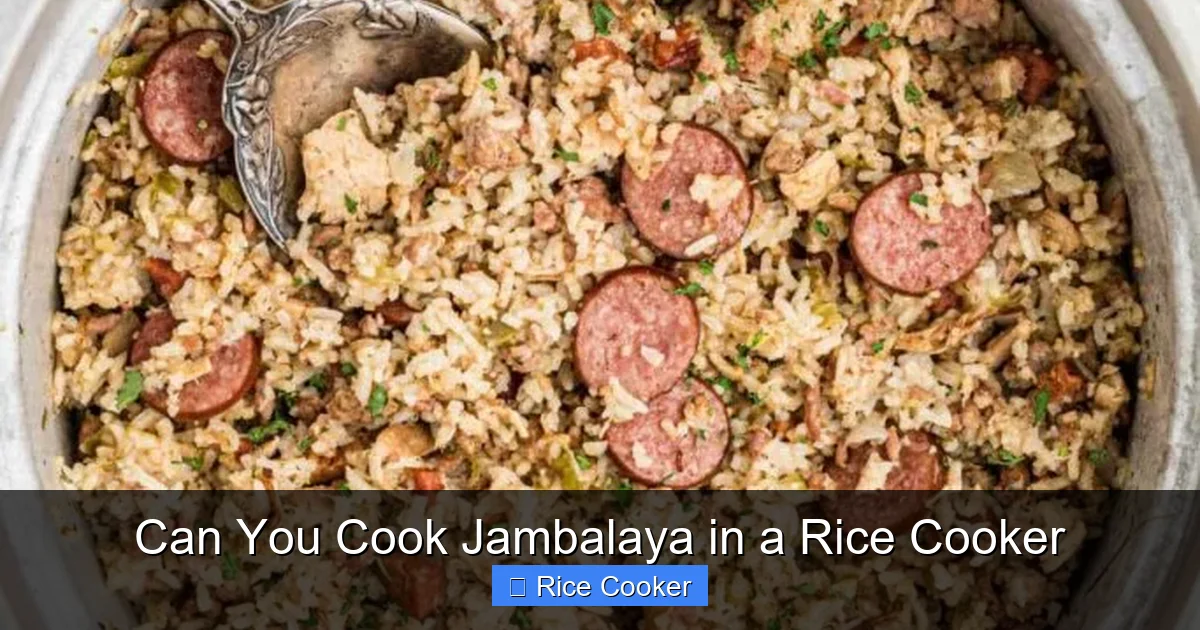
Can you cook jambalaya in a rice cooker? Absolutely—and it’s easier than you think! With the right ingredients and technique, your rice cooker can create a rich, smoky jambalaya full of sausage, chicken, shrimp, and rice. This hands-off method saves time and effort while delivering authentic Southern flavor.
## Can You Cook Jambalaya in a Rice Cooker?
Picture this: It’s Friday night, you’ve had a long week, and all you want is a warm, hearty meal that doesn’t require constant attention. Enter the rice cooker—your trusty kitchen companion that’s evolved far beyond just making fluffy white rice. And if you love Southern cuisine, you’re in luck because yes, you absolutely can cook jambalaya in a rice cooker. In fact, this method might just become your new favorite way to enjoy one of Louisiana’s most iconic dishes.
Jambalaya is more than just food—it’s tradition. A one-pot wonder born from French, Spanish, and African roots, it combines rice with meat (usually sausage and chicken), vegetables, and a bold blend of spices. Traditionally cooked on the stovetop, jambalaya relies on careful timing to balance tender proteins, flavorful stock, and perfectly absorbed grains. But what if you could simplify the process without sacrificing taste? That’s where the humble rice cooker shines.
With modern models offering advanced settings like “brown” or “slow cook,” even beginners can whip up restaurant-quality jambalaya at home. No stirring required. No watching the pot every five minutes. Just layer your ingredients, press start, and let science do the work. Whether you’re feeding a family or meal-prepping for the week, cooking jambalaya in a rice cooker checks all the boxes: convenience, flavor, and ease.
In this guide, we’ll walk you through everything you need to know—from selecting the right equipment to mastering ingredient ratios and seasoning tricks. By the end, you’ll feel confident preparing jambalaya that tastes like it came straight from a New Orleans kitchen.
## What Is Jambalaya?
Before diving into the how-to, let’s quickly cover the what. Jambalaya comes in two main styles: Creole and Cajun. Creole jambalaya includes tomatoes and often uses chicken, sausage, and sometimes seafood. Cajun jambalaya skips the tomato and focuses on a darker, spicier base with andouille sausage and smoked meats. Both versions share the same core principle: rice cooked in seasoned broth with diced meats and vegetables.
Unlike gumbo—another Louisiana staple—jambalaya doesn’t use a thickener like roux or okra. Instead, the rice absorbs the flavorful liquid, creating a dish that’s both satisfying and aromatic. The magic lies in the harmony of textures: chewy sausage, juicy chicken, soft peppers, and fluffy rice—all tied together with smoky, spicy notes.
Now, here’s the kicker: traditional stovetop methods demand vigilance. You must stir occasionally to prevent scorching, monitor liquid levels, and time the seafood addition carefully. But with a rice cooker? You get consistent results every single time.
## Choosing the Right Rice Cooker
Not all rice cookers are created equal when it comes to cooking jambalaya. While basic models work fine for plain rice, tackling a complex dish like jambalaya requires extra features. Here’s what to look for:
### Browning or Sauté Function
This is non-negotiable. Browning meats before adding rice helps develop deep umami flavors and prevents them from becoming rubbery during long cook cycles. If your rice cooker has a dedicated “Brown” setting, even better—it usually includes a heating element that mimics a stovetop’s high heat.
### Timer and Delay Settings
Want breakfast jambalaya ready by 8 a.m.? A programmable timer lets you prep ingredients the night before and have dinner pop up automatically. Ideal for busy schedules!
### Non-Stick Inner Pot
Look for stainless steel or ceramic-coated pots that are dishwasher-safe. They make cleanup a breeze and help achieve even heat distribution—critical for preventing burnt bottoms.
### Capacity Matters
Standard 6-cup uncooked rice capacity works well for 4–6 people. Larger families may benefit from an 8-cup model. Just remember: too many ingredients can overwhelm the cooker’s airflow system.
Popular brands like Zojirushi, Cuckoo, and Instant Pot dominate the market, but even budget-friendly options from Oster or Black+Decker can handle jambalaya with the right settings.
## Essential Ingredients for Jambalaya
Authenticity starts with quality ingredients. While you can swap in substitutes based on availability, keeping these staples will elevate your dish:
### Rice Selection
Long-grain white rice is essential. Converted rice (like Uncle Ben’s) resists mushiness, while parboiled types absorb more flavor. Avoid instant rice—it breaks down too easily.
### Proteins
– **Andouille sausage**: Smoky, slightly spicy pork sausage (try Aidells or Johnsonville brands)
– **Chicken thighs**: Dark meat stays juicy longer than breast
– **Shrimp**: Peeled and deveined, added near the end
### Aromatics & Vegetables
– Onion, celery, green bell pepper (the holy trinity!)
– Garlic, fresh thyme, bay leaves
– Optional: mushrooms, okra, or tomatoes (for Creole style)
### Liquids & Seasonings
– Chicken or vegetable broth (low-sodium preferred)
– Worcestershire sauce
– Hot sauce or cayenne pepper
– Smoked paprika, garlic powder, onion powder, black pepper
Pro tip: Toast your spices in the browning cycle for deeper flavor. Add a pinch of sugar if using tomatoes to balance acidity.
## Step-by-Step Guide: Cooking Jambalaya in Your Rice Cooker
Ready to roll? Follow this foolproof process for foolproof results.
### Step 1: Prep Your Ingredients
Chop onions, celery, and peppers into bite-sized pieces. Dice chicken into cubes. Slice andouille into half-moons. Keep everything ready before starting—this dish moves fast once you hit “start.”
### Step 2: Brown the Meats (Optional but Recommended)
Add oil to the inner pot. Select the “Brown” or “Sauté” setting. Once hot, toss in the sausage and chicken. Cook until lightly golden—about 3–5 minutes per side. Remove and set aside.
### Step 3: Sauté the Trinity
No need to wash the pot! Add a bit more oil if needed, then toss in onions, celery, and peppers. Sauté for 4–5 minutes until softened. Stir in garlic, thyme, and bay leaf. Push veggies to the sides and add rice in the center—this helps toast the grains slightly.
### Step 4: Add Liquids and Seasonings
Pour in broth, Worcestershire sauce, hot sauce, and spices. Give it a good stir. Return browned meats to the pot. Don’t worry if it looks dry now—the rice will absorb the liquid as it cooks.
### Step 5: Cook on White Rice Setting
Close the lid and select the standard “White Rice” program. Most cookers take 20–30 minutes. Avoid opening the lid frequently—each time you lift it, steam escapes and extends cooking time.
### Step 6: Fold in Seafood
About 5–7 minutes before the cycle ends, open the lid gently. Scoop out shrimp, crab, or crawfish and fold them in. Close the lid again—no need to reset the timer unless your model allows it.
### Step 7: Rest and Serve
Once done, turn off the cooker and let the jambalaya sit for 10 minutes. This allows residual heat to finish cooking the rice evenly and lets flavors settle. Fluff with a fork, discard bay leaf, and serve immediately.
## Common Mistakes to Avoid
Even seasoned cooks slip up sometimes. Watch out for these pitfalls:
– **Using too much liquid**: Stick to a 1:1 ratio (e.g., 2 cups liquid for 2 cups rice). Overdoing it leads to mushy, soupy jambalaya.
– **Skipping the browning step**: Raw meats add little flavor and risk toughness after hours of cooking.
– **Adding seafood too early**: Shrimp turns gray and rubbery if cooked beyond 5 minutes.
– **Rushing the rest period**: Skipping the 10-minute hold means unevenly cooked rice.
– **Over-seasoning initially**: Taste as you go! Salt affects perception more than other spices.
## Tips for Customization and Variations
Jambalaya is incredibly versatile. Swap ingredients based on preference or dietary needs:
– **Vegetarian version**: Use mushrooms, chickpeas, and extra veggies. Replace broth with vegetable stock.
– **Low-carb option**: Substitute cauliflower rice (cook separately due to different absorption rates).
– **Extra spicy**: Double cayenne or add ghost pepper flakes.
– **Smoky twist**: Use liquid smoke in the broth for deeper flavor without browning meats.
– **Leftovers**: Reheat gently on stovetop with splash of water to refresh texture.
## Nutritional Benefits and Serving Suggestions
One cup of cooked jambalaya packs protein, fiber, and vitamins from veggies and whole grains. Pair it with crusty bread, cornbread, or a simple green salad. For drinks, try sweet tea, lemonade, or a light beer. Garnish with chopped parsley or green onions for brightness.
## Frequently Asked Questions
Can I use any type of rice for jambalaya?
Stick to long-grain white rice like converted or parboiled. Short-grain varieties (like sushi or arborio) become gluey and don’t absorb flavors as well. Avoid instant rice—it falls apart during cooking.
How do I prevent my jambalaya from being too wet?
Measure liquids precisely—use a liquid measuring cup. If it’s still soupy after resting, transfer to a saucepan and simmer uncovered for 5–10 minutes to reduce. Alternatively, cook a second batch of plain rice separately and mix it in for fluffiness.
Can I make jambalaya ahead of time?
Absolutely! Let it cool completely, store in airtight containers, and refrigerate for up to 4 days or freeze for 3 months. Reheat gently on the stove or in the microwave with a splash of broth.
What if my rice cooker doesn’t have a brown setting?
You can still brown meats on the stovetop in a skillet first, then transfer everything to the rice cooker. It’s an extra step but worth the flavor payoff.
Is jambalaya healthy?
Moderately! It’s rich in protein and fiber but can be high in sodium and saturated fat due to sausage. Choose low-sodium broths, lean chicken, and limit processed meats for a lighter version.
Can I add beans or lentils to jambalaya?
Yes! Kidney beans, black-eyed peas, or lentils work great. Add them with the meats during the browning step so they soak up flavor. Just note that legumes increase cooking time slightly.
## Final Thoughts
Cooking jambalaya in a rice cooker isn’t just possible—it’s revolutionary. This method strips away the guesswork while preserving the soul of the dish. Whether you’re a novice cook or a seasoned home chef, you’ll appreciate the simplicity, consistency, and delicious outcomes.
So next time you crave something warm, comforting, and authentically Southern, reach for your rice cooker instead of the stove. With the right tools, ingredients, and a little know-how, you’ll impress yourself (and maybe even your guests) with restaurant-caliber jambalaya made entirely hands-off.
Remember: flavor doesn’t come from complexity—it comes from care. Take time to season thoughtfully, respect ingredient timing, and always let your dish rest before serving. Then dig in and savor every bite.
And hey—once you master jambalaya, try your hand at red beans, gumbo, or even dirty rice. The possibilities are endless in your trusty rice cooker.
Key Takeaways
- Yes, jambalaya cooks perfectly in most rice cookers—especially those with a sauté or browning function.
- You need equal parts liquid and rice for proper texture; too much liquid makes it soupy.
- Sautéing meats first adds depth and prevents sticking during long cooking times.
- Use long-grain rice like converted or basmati—they absorb flavors better than short-grain.
- Add seafood last to avoid overcooking and ensure tender shrimp and crab.
- Season smartly: use smoked paprika, cayenne, and Cajun seasoning for that classic kick.
- Rest before serving lets flavors meld and rice settle for ideal consistency.
Frequently Asked Questions
What is can you cook jambalaya in a rice cooker?
can you cook jambalaya in a rice cooker is an important topic with many practical applications.