
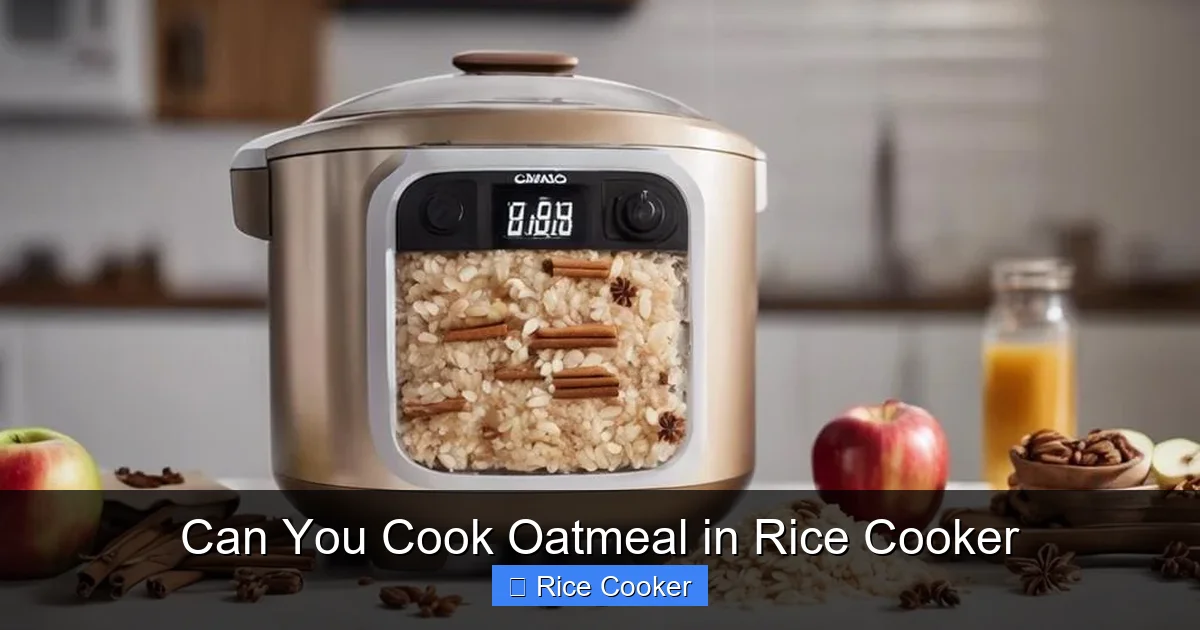
Yes, you can absolutely cook oatmeal in a rice cooker—it’s simple, foolproof, and saves time. With just a few ingredients and your trusty appliance, you can make creamy, delicious oatmeal without constant stirring. Whether you’re a breakfast newbie or a kitchen pro, using a rice cooker for oatmeal opens up a world of convenience and flavor options.
Key Takeaways
- It’s possible and practical: Rice cookers are designed to handle grains like oats, making them ideal for oatmeal.
- Minimal effort required: Add water and oats, press start, and walk away while it cooks perfectly.
- Customizable flavors: Add fruits, nuts, spices, or sweeteners during or after cooking for variety.
- Bigger batches made easy: Cook large quantities at once—great for meal prep or family breakfasts.
- Consistent results: The automated process ensures even cooking every time, no burnt edges.
- Clean-up is simple: Non-stick inner pots make washing up a breeze.
- Saves counter space: Use your rice cooker instead of the stove, freeing up kitchen real estate.
[FEATURED_IMAGE_PLACEHOLDER]
Introduction: The Rise of Smart Breakfast Cooking
We’ve all been there—waking up early, scrambling for a quick breakfast, only to find yourself staring blankly at the stove, wondering how long it’ll take to boil water and stir oatmeal. Stirring on the stovetop isn’t just annoying; it’s time-consuming and often leads to uneven cooking or scorched milk. But what if we told you that your rice cooker, a humble kitchen workhorse, could do the job just as well—if not better?
Cooking oatmeal in a rice cooker is not just a clever trick; it’s a game-changer for anyone looking to simplify their morning routine. Whether you’re feeding one person or ten, this method delivers consistent, creamy results with zero babysitting. Plus, it frees up your stove and keeps your kitchen cooler during hot summer months. In this article, we’ll walk you through everything you need to know about making perfect oatmeal in your rice cooker—from basic recipes to creative twists, troubleshooting tips, and even why this method might just become your new favorite way to start the day.
Why Choose a Rice Cooker for Oatmeal?
The Science Behind the Magic
Rice cookers operate using precise temperature control and automated timing. They heat water to a specific point, maintain it, and then switch to “warm” mode when done. This is exactly what oatmeal needs—gentle, sustained heat to break down the starches in oats and create that creamy texture we love. Unlike boiling, which can overcook the edges or require constant attention, the rice cooker does it all hands-free.
Oats are a type of grain, and rice cookers are built to handle grains. Whether it’s white rice, brown rice, quinoa, or steel-cut oats, these appliances have the capacity to soften the grains evenly and release their natural starches into the liquid. That means your oatmeal will come out thick, smooth, and satisfying—no lumps, no sticking, no guesswork.
Time-Saving Benefits
Imagine waking up, adding ingredients to the pot, pressing a button, and going back to bed—or at least to scroll through your phone without worrying about burning your breakfast. That’s the power of using a rice cooker for oatmeal. Most electric rice cookers have a timer function, so you can set it the night before and wake up to hot, ready-to-eat oatmeal.
This is especially helpful for people with busy schedules, parents juggling multiple kids, or anyone who wants to reduce morning chaos. You don’t need to stand over the stove, stir every few minutes, or worry about forgetting to turn off the burner. Just set it and forget it.
Energy Efficiency
Rice cookers use less energy than stovetops, especially electric burners. Once the oatmeal reaches the right consistency, the unit automatically switches to “keep warm,” using minimal power to maintain the temperature. This makes it an eco-friendly option for daily use, too.
Consistency Every Time
One of the biggest complaints about stovetop oatmeal is inconsistency—some batches are too runny, others too thick, and many end up with a dry layer on top from uneven heat. The rice cooker eliminates this variability. It follows the same ratio of oats to liquid every time, ensuring reliable results.
Easy Clean-Up
Most rice cooker inner pots are non-stick and dishwasher-safe. After cooking, you can rinse it out quickly or pop it in the dishwasher. No scrubbing stuck-on oats from the bottom of a heavy pot. This simplicity is a major win for anyone tired of post-breakfast messes.
Versatility Beyond Basic Oatmeal
While the classic method works great, you can also use your rice cooker to make savory oatmeal (yes, really!), overnight oats-style preparations, or even dessert-like versions with chocolate and fruit. The possibilities are endless once you get the basics down.
Basic Steps to Cook Oatmeal in a Rice Cooker
Choosing the Right Oats
Not all oats are created equal when it comes to rice cooker cooking. Here’s a quick guide:
- Steel-cut oats: These take the longest but yield the chewiest texture. Expect 30–40 minutes of cooking time.
- Rolled oats: The most common choice. Cook in about 15–20 minutes for creaminess.
- Quick oats: Similar to rolled but pre-cut, so they cook faster—around 10–12 minutes.
- Instant oats: Not ideal for rice cookers since they’re already partially cooked; they tend to become mushy.
For best results, stick with rolled or steel-cut oats. Quick oats work too, but may not give the same heartiness.
Essential Ingredients
At minimum, you’ll need:
- 1 cup rolled oats
- 2 cups water (or milk for richer flavor)
- A pinch of salt (to enhance taste)
Optional additions include honey, maple syrup, cinnamon, vanilla extract, or fresh fruit. You can add sweeteners before or after cooking—but keep in mind that some liquids (like juice) may increase cooking time slightly due to evaporation.
Step-by-Step Instructions
- Prepare your rice cooker: Make sure the inner pot is clean and dry. If your model has a measuring cup, use it for accuracy.
- Add ingredients: Pour in the liquid first (usually 2 parts liquid to 1 part oats), then add oats and salt. Stir gently to combine.
- Close the lid: Ensure the sealing ring is properly placed and the vent is open if required by your model.
- Select the right setting: Use the “white rice” or “grain” setting unless your cooker has a specific “oatmeal” mode (rare but possible).
- Let it cook: The cycle usually takes 15–25 minutes. Avoid opening the lid frequently—this releases steam and extends cooking time.
- Check consistency: When the cycle ends, stir the oatmeal. If it’s too thick, add a splash more liquid and let it sit for 2–3 minutes to absorb.
- Serve immediately or keep warm: Transfer to bowls and top with your favorite toppings.
Pro Tips for Success
- Use the right ratio: Start with 2:1 liquid-to-oat ratio. Adjust later if needed.
- Pre-soak oats (optional): Soaking steel-cut oats overnight can cut cooking time by half.
- Don’t overfill: Leave at least 1 inch of space between the top of the oats and the rim to allow for expansion.
- Stir once halfway through: If you notice sticking, give it a gentle stir at the 7–8 minute mark.
- Keep a lid handy: Some models have a “warm” function that can be used after cooking to prevent drying out.
Creative Recipes Using Your Rice Cooker
Classic Sweet Oatmeal
Ingredients:
- 1 cup rolled oats
- 2 cups milk (dairy or plant-based)
- 1/2 tsp cinnamon
- Pinch of salt
- 1 tbsp maple syrup or honey
- Fresh berries and chopped nuts for topping
Instructions: Combine all ingredients except toppings in the rice cooker. Cook on the standard setting for 20 minutes. Stir, then serve with fruit and nuts.
Overnight Chia Oatmeal (Rice Cooker Style)
If you usually make chia pudding in the fridge, try this version in the rice cooker for a warmer, fluffier texture.
Ingredients:
- 1/2 cup rolled oats
- 1/2 cup chia seeds
- 2 cups almond milk
- 1 tbsp honey
- Zest of 1 lemon
Cook on low for 25 minutes. Let sit 5 minutes before serving. Top with pomegranate seeds.
Spiced Savory Oatmeal
Surprise your family with a hearty, protein-rich breakfast that’s anything but boring.
Ingredients:
- 1 cup steel-cut oats
- 3 cups vegetable broth
- 1 small diced onion
- 2 cloves minced garlic
- 1 tsp smoked paprika
- 1/2 tsp turmeric
- Sautéed mushrooms and spinach
- Feta cheese for garnish
Cook oats with broth and spices for 35 minutes. Sauté veggies separately, mix in at the end, and top with crumbled feta.
Banana Chocolate Chip Oatmeal
A crowd-pleaser that tastes like dessert.
Ingredients:
- 1 cup rolled oats
- 2 cups milk
- 1 mashed banana
- 1 tsp vanilla
- 1/2 cup dark chocolate chips
- Pinch of salt
Cook for 20 minutes. Stir in chocolate chips at the end so they melt slightly.
Vegan Coconut Oatmeal
Rich, creamy, and dairy-free.
Ingredients:
- 1 cup oats
- 2 cups coconut milk
- 1/2 cup water
- 1/4 cup shredded coconut
- 1 tbsp agave
- 1/2 tsp cardamom
Cook for 25 minutes. Serve with toasted coconut flakes.
Troubleshooting Common Issues
Too Thick or Dry
If your oatmeal turned out too thick after cooking, don’t panic. Simply add warm water or milk, 1 tablespoon at a time, and let it sit covered for 2–3 minutes. The extra liquid will absorb and loosen the mixture. Avoid adding cold liquid—it disrupts the cooking process.
Still Raw in the Middle
This usually happens with steel-cut oats or if the ratio was off. Try covering the pot loosely with a towel and letting it simmer for another 10 minutes. Alternatively, transfer to a microwave-safe bowl and heat in 30-second bursts until warmed through.
Sticking to the Bottom
To prevent sticking, ensure you’re using enough liquid. Also, stir once during cooking (after 7–8 minutes). For extra insurance, lightly grease the bottom of the pot with oil or butter before adding dry ingredients.
Watery Result
Too much liquid or too short a cooking time causes this. Next time, reduce the water by 1/4 cup or extend cooking time by 5 minutes. Remember, oats continue absorbing liquid even after the cycle ends, so err on the side of slightly thicker before cooking.
Lid Won’t Seal Properly
Check the rubber gasket around the lid. If it’s torn or misaligned, the pressure won’t build correctly, affecting heat distribution. Clean the gasket thoroughly or replace it if damaged.
Unusual Smell or Taste
If your oatmeal smells off or tastes metallic, it could be due to old oats or a dirty rice cooker. Always store oats in airtight containers and clean your appliance regularly. Also, avoid cooking acidic ingredients (like tomatoes) in older models—they can react with aluminum parts.
Advanced Techniques and Hacks
Meal Prep Mastery
Make a big batch on Sunday and enjoy it all week. Portion cooked oatmeal into individual containers and refrigerate for up to 5 days. Reheat in the microwave or by adding a splash of milk and heating on the stove. For best texture, stir well before reheating.
Flavor Infusions Before Cooking
Instead of just sprinkling in spices, steep them in the liquid. For example, toss a cinnamon stick and a few whole cloves into the water with your oats. Remove them before serving for a clean, aromatic flavor.
Using Different Milks
Almond, soy, oat, or coconut milk all work beautifully. Each adds its own richness and subtle flavor. Note that plant-based milks may curdle if heated too aggressively—the rice cooker’s gentle heat avoids this issue.
Adding Protein Powder
Mix in a scoop of unflavored or vanilla protein powder during cooking for a high-protein breakfast. Stir well to avoid clumps.
Freezing Leftovers
Portioned oatmeal freezes well for up to 3 months. Thaw overnight in the fridge and reheat as usual. The texture stays surprisingly good, though it may be slightly softer.
Double-Duty Cooking
Some rice cookers have a “slow cook” or “porridge” setting. While not all do, those that do are perfect for oatmeal. If yours doesn’t, the standard “rice” setting works fine—just adjust cooking time accordingly.
Comparing Methods: Stovetop vs. Rice Cooker
| Feature | Stovetop | Rice Cooker |
|---|---|---|
| Effort Required | High (constant stirring) | Low (set and forget) |
| Consistency | Variable | Very consistent |
| Cooking Time | 15–25 mins | 15–35 mins (auto) |
| Cleanup | Easy (non-stick pot) | |
| Batch Size | Hard to scale up | Easy to double/triple |
| Energy Use | Higher | Lower (once warm) |
In short, while both methods produce edible oatmeal, the rice cooker wins on convenience, safety, and repeatability.
Final Thoughts: Is It Worth It?
Cooking oatmeal in a rice cooker isn’t just a novelty—it’s a practical upgrade to your breakfast routine. It reduces stress, saves time, and gives you more control over portion sizes and ingredients. Whether you’re making it for one or feeding a crowd, this method proves that sometimes, the simplest tools deliver the most satisfaction.
Plus, once you master the basics, you’ll start experimenting with flavors, textures, and combinations you never thought possible. From sweet to savory, traditional to trendy, your rice cooker becomes a versatile partner in your kitchen.
So next time you reach for the oatmeal packet or decide to brave the stovetop, remember: your rice cooker is ready, willing, and able to help. Just measure, mix, press, and enjoy—without lifting a finger after the first step.
Question 1?
Answer: Yes, you can cook oatmeal in a rice cooker! It’s simple, efficient, and produces creamy, consistent results every time.
Question 2?
Answer: Use rolled oats with a 2:1 liquid-to-oat ratio (e.g., 2 cups liquid for 1 cup oats). Add water, milk, or broth, plus a pinch of salt.
Question 3?
Answer: Most rice cookers have a “white rice” or “grain” setting—use that. Cooking time is typically 15–25 minutes depending on oat type.
Question 4?
Answer: Absolutely! Add fruits, nuts, spices, chocolate, or even savory ingredients like vegetables and cheese before or after cooking.
Question 5?
Answer: Stir once around the 7–8 minute mark to prevent sticking. Avoid opening the lid frequently to retain heat and moisture.
This is a comprehensive guide about can you cook oatmeal in rice cooker.
Key Takeaways
- Understanding can you cook oatmeal in rice cooker: Provides essential knowledge
Quick Answers to Common Questions
What is can you cook oatmeal in rice cooker?
can you cook oatmeal in rice cooker refers to essential knowledge and techniques.
Frequently Asked Questions
Can I use instant oats in a rice cooker?
Answer: Not recommended. Instant oats are already partially cooked and may become mushy or overly soft in a rice cooker. Stick to rolled or steel-cut oats for best texture.
Do I need special oats for a rice cooker?
Answer: Rolled oats and steel-cut oats work best. Quick oats are acceptable but may lack the chewy bite of slower-cooked varieties. Avoid instant oats.
How much liquid should I use?
Answer: Start with a 2:1 ratio—2 cups liquid (water or milk) for every 1 cup of oats. Adjust later if needed after cooking, as oats continue absorbing liquid.
Can I make overnight oatmeal in a rice cooker?
Answer: Yes, but not exactly like refrigerator-style overnight oats. Instead, cook oats with liquid on the rice cooker, then let them sit covered for 5–10 minutes before eating. This mimics the soaking effect.
Is it safe to leave oatmeal in the rice cooker on “warm” all day?
Answer: It’s generally safe for a few hours, but quality declines after 2–3 hours. For longer storage, transfer to an airtight container and refrigerate or freeze.
Can I cook other grains in the rice cooker instead of oatmeal?
Answer: Definitely! Quinoa, barley, buckwheat, and farro all cook well in rice cookers. Just follow appropriate liquid ratios and times.