
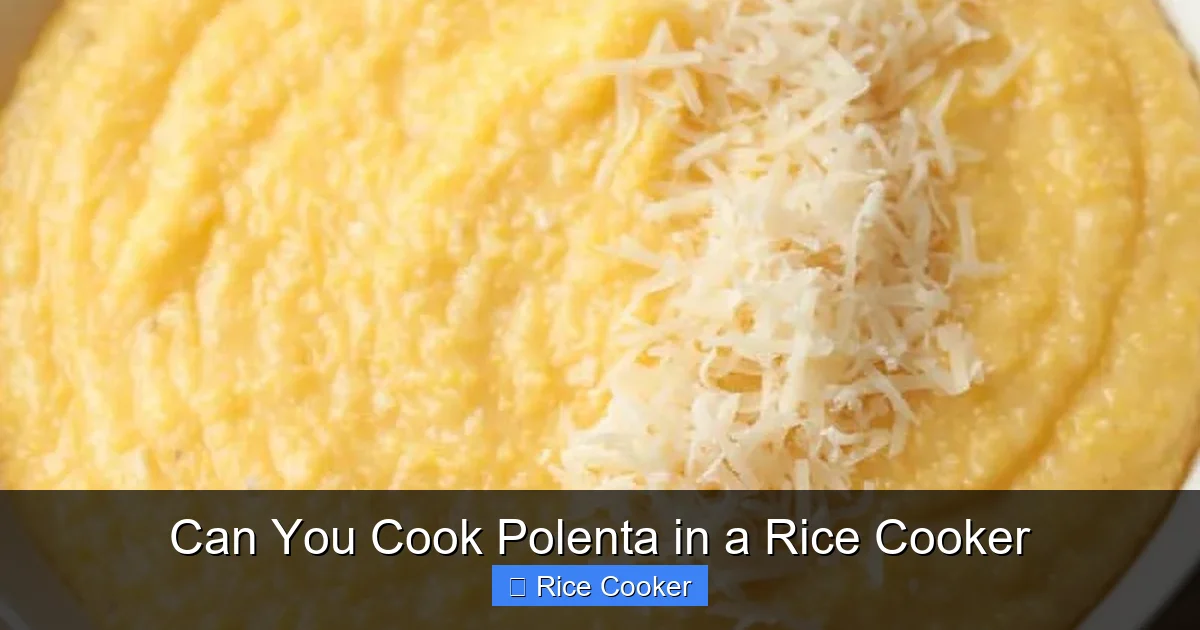
You absolutely can cook polenta in a rice cooker—it’s simple, foolproof, and delivers perfectly creamy results every time. With the right ratio of liquid to grains and a little attention at the end, your rice cooker becomes a polenta-making powerhouse. No stovetop babysitting required!
# Can You Cook Polenta in a Rice Cooker?
So, you’ve got a bag of polenta sitting in your pantry, and you’re craving something warm, comforting, and slightly cheesy. But wait—you don’t own a stovetop, or maybe you just don’t want to stand over a pot all afternoon, stirring constantly. Enter: the humble rice cooker.
Yes, that kitchen appliance you use to make fluffy white rice? It turns out it’s also a surprisingly effective polenta maker. Whether you’re cooking for one or prepping for a dinner party, making polenta in a rice cooker is not only possible—it’s easier than you might think.
In this guide, we’ll walk you through everything you need to know about cooking polenta in a rice cooker: from choosing the right type of polenta to mastering the perfect consistency, flavor pairings, and cleanup tips. By the end, you’ll be ready to ditch the stovetop and embrace your inner polenta pro.
—
## Why Choose a Rice Cooker for Polenta?
Polenta is a staple in Italian cuisine, traditionally made by simmering coarsely ground cornmeal in water or broth until thickened. On the stovetop, this process requires active monitoring—stirring frequently to prevent lumps and sticking to the bottom of the pot. But what if you could skip the constant stirring and let technology do the work?
That’s where rice cookers come in. These countertop appliances are designed to handle grains like rice, quinoa, and even oats with minimal supervision. Many modern models offer multiple settings—like brown rice, quick cook, or porridge modes—which makes them surprisingly versatile.
Cooking polenta in a rice cooker offers several advantages:
– **Hands-off cooking**: Once you add the ingredients, you can set it and forget it.
– **Consistent results**: The internal sensor monitors temperature and automatically switches to warm mode when done.
– **Energy-efficient**: Uses less power than keeping a stovetop burner on.
– **Easy cleanup**: Most rice cooker inner pots are non-stick and dishwasher-safe.
Of course, there are a few caveats. Unlike stovetop cooking, you can’t adjust heat levels mid-process, so timing and ratios become even more critical. But with a little practice, you’ll master the art of rice cooker polenta in no time.
—
## Types of Polenta: Which One Should You Use?
Before you start, it’s important to understand the different types of polenta available. Not all polentas are created equal—and your choice affects both texture and cooking time.
### Instant Polenta
Instant polenta is pre-cooked, dried, and finely ground. It’s designed to absorb liquid quickly and is often labeled as “ready-to-heat” or “microwaveable.” While convenient, instant polenta tends to be grittier and less flavorful than traditional varieties. It’s best suited for quick meals or when you’re short on time.
**Best for:** Quick side dishes, camping, or microwave use.
### Coarse-Grind Polenta
This is the classic, traditional version—coarsely milled cornmeal that takes longer to cook but yields a rich, rustic texture. It’s the gold standard for creamy, velvety polenta when cooked properly.
**Best for:** Rice cooker cooking, especially if you have 30–45 minutes to wait.
### Semi-Fine Grind Polenta
Somewhere between instant and coarse, semi-fine grind offers a balance of speed and texture. It cooks faster than coarse but smoother than instant.
**Best for:** Intermediate cooks who want speed without sacrificing too much quality.
### Gluten-Free & Organic Options
Many brands now offer gluten-free, organic, or stone-ground polentas. These are great for dietary restrictions and health-conscious eaters. Just check labels carefully—some may contain additives or starches that affect cooking behavior.
**Tip:** Always read the package instructions. Some polentas require pre-soaking or specific liquid ratios.
For rice cooker cooking, we recommend **coarse-grind polenta** for the best texture and flavor. If you’re in a hurry, semi-fine works well too.
—
## Essential Tools & Ingredients
To make polenta in your rice cooker, you’ll need just a few basic items:
### What You’ll Need:
– **Rice cooker** (with a standard inner pot)
– **Inner cooking pot** (non-stick preferred)
– **Measuring cup**
– **Whisk**
– **Wooden spoon or silicone spatula**
### Ingredients:
– **Polenta** (1 cup coarse-grind or semi-fine)
– **Liquid** (water, vegetable broth, milk, or a mix)
– **Salt** (to taste)
– **Optional add-ins**: Butter, Parmesan cheese, garlic, herbs
### Recommended Ratios:
| Type of Polenta | Liquid Ratio (per 1 cup) | Cooking Time |
|—————–|————————–|————–|
| Coarse-grind | 3½–4 cups | 30–45 min |
| Semi-fine | 3–3½ cups | 20–30 min |
| Instant | 2½–3 cups | 5–10 min |
Start with 4 parts liquid to 1 part polenta for a creamy consistency. You can thin it later with more liquid if needed.
—
## Step-by-Step Guide: How to Cook Polenta in a Rice Cooker
Now for the fun part—making polenta! Follow these steps for foolproof results every time.
### Step 1: Prepare Your Ingredients
Measure out your polenta and liquid. If using broth instead of water, it adds extra flavor. Warm the liquid slightly (not boiling) before adding to the polenta—this helps prevent clumping.
### Step 2: Add Everything to the Rice Cooker Pot
Pour the liquid into the inner pot first. Then slowly sprinkle in the polenta while stirring gently with a whisk. This helps break up any clumps and ensures even distribution.
Add salt now—about ¾ teaspoon per cup of polenta is a good starting point.
### Step 3: Cook on “Porridge” or “Brown Rice” Setting
If your rice cooker has a “porridge” setting, use that. Otherwise, the “brown rice” mode works well—it uses lower heat and longer cooking time, which is perfect for polenta.
Close the lid and press start. **Do not lift the lid during cooking.** The trapped steam helps create a creamier texture.
### Step 4: Stir After Cooking Completes
Once the rice cooker switches to “warm,” open the lid immediately and stir the polenta thoroughly. It will be very soft and soupy at this stage—that’s normal. Let it sit for 2–3 minutes undisturbed to thicken slightly.
### Step 5: Adjust Consistency & Add Flavor
If your polenta is too thick, stir in a splash of hot water or broth. If it’s too thin, let it rest a bit longer—the residual heat will continue to thicken it.
Now’s the time to add richness: stir in butter, grated Parmesan, chives, or sautéed mushrooms. Everything melts beautifully into warm polenta.
—
## Tips for Perfect Rice Cooker Polenta
Even with the right technique, small details can make a big difference. Here are some pro tips to elevate your polenta game.
### 1. Use a Non-Stick Inner Pot
Sticking is the biggest enemy of polenta. A smooth, non-stick surface prevents the grains from gumming up. If your rice cooker doesn’t come with one, consider purchasing an aftermarket replacement.
### 2. Stir Occasionally During Cooking (If Possible)
Some rice cookers allow manual intervention. If yours does, pause once during cooking (when it starts steaming heavily) and give the polenta a gentle stir. This helps prevent uneven cooking.
### 3. Don’t Rush Instant Polenta
Even though instant polenta cooks fast, resist the urge to open the lid early. Wait for the full cycle to complete—it needs time to fully hydrate.
### 4. Keep a Ladle Handy
After cooking, your polenta will be soft and pourable. Have a ladle ready to serve it straight into bowls or onto plates.
### 5. Serve Immediately
Polenta cools quickly and firms up fast. For the best texture, serve within 10–15 minutes of cooking. Leftovers can be reheated gently on the stove or in the microwave.
—
## Creative Ways to Enjoy Your Rice Cooker Polenta
Polenta isn’t just a side dish—it’s a canvas. Once you’ve mastered the basics, you can turn it into a main course, appetizer, or even dessert.
### Classic Creamy Polenta
Top with melted butter, a sprinkle of Parmesan, and fresh black pepper. Simple, satisfying, and timeless.
### Cheesy Polenta
Mix in shredded fontina or Gruyère cheese while the polenta is still warm. The result? A gooey, melty delight.
### Mushroom & Herb Polenta
Sauté wild mushrooms with garlic and thyme, then fold into polenta. Serve with a drizzle of truffle oil for restaurant-worthy flair.
### Polenta Cakes (Polpette di Polenta)
Let cooled polenta chill in a pan, then slice into squares or patties. Pan-fry in olive oil until crispy on the outside and creamy inside. Serve with marinara sauce.
### Polenta with Tomato & Basil
Fold in crushed tomatoes, basil, and a pinch of red pepper flakes. Top with mozzarella and bake until bubbly—perfect for a light pasta alternative.
### Sweet Polenta (for Dessert!)
Replace half the water with milk, add cinnamon, sugar, and a squeeze of orange zest. Top with honey and chopped walnuts. Yes, polenta can be sweet!
—
## Common Mistakes to Avoid
Even experienced cooks can run into trouble. Here’s what to watch out for:
### Overcrowding the Pot
Don’t try to cook too much polenta at once. Stick to recipes that yield 3–4 servings max. Too much volume can lead to uneven heating.
### Skipping the Whisk
Always mix polenta with a whisk when adding it to liquid. This prevents clumps and ensures smooth texture.
### Opening the Lid Too Early
Steam builds pressure inside the cooker. Opening the lid prematurely releases heat and can ruin the cooking process.
### Using Cold Liquid
Cold liquid slows down hydration. Warm liquids help polenta absorb moisture faster and cook more evenly.
### Adding Salt Late
Salt draws out moisture. Add it early so it distributes throughout the mixture.
—
## Troubleshooting: What If My Polenta Doesn’t Turn Out Right?
No worries—polenta is forgiving. Here’s how to fix common issues.
### Problem: Polenta is too thick
**Solution:** Stir in small amounts of hot water or broth until you reach desired consistency. Heat gently if needed.
### Problem: Polenta is too thin
**Solution:** Let it rest uncovered for 5–10 minutes. The evaporation will thicken it slightly. If still too runny, return to the rice cooker on “warm” for 10 minutes.
### Problem: Sticky or lumpy texture
**Solution:** This usually means insufficient stirring or wrong ratios. Next time, try reducing liquid by ¼ cup and stir more frequently during cooking.
### Problem: Burnt bottom
**Solution:** This happens when the pot isn’t non-stick or when heat is too high. Always use a proper inner pot and avoid opening the lid.
—
## FAQs
Can I use milk instead of water to cook polenta?
Absolutely! Using milk gives polenta a richer, creamier texture. Just be aware it may take slightly longer to thicken. You can also combine milk and water for balanced flavor.
How long does it take to cook polenta in a rice cooker?
Cooking time varies by polenta type. Coarse-grind takes 30–45 minutes, semi-fine 20–30 minutes, and instant just 5–10 minutes. Always follow package instructions.
Can I add cheese to polenta while cooking?
It’s better to add cheese after cooking. Cheese can separate or become stringy if heated too long. Stir it in right before serving for the best results.
Can I cook polenta in a slow cooker instead?
Yes, but it requires constant stirring every 15–20 minutes. Rice cookers are superior because they automate the process and prevent sticking.
Is polenta gluten-free?
Traditional polenta is naturally gluten-free since it’s made from cornmeal. However, always check labels for cross-contamination warnings if you have celiac disease or gluten sensitivity.
Can I freeze leftover polenta?
Yes! Let it cool completely, then store in an airtight container. Reheat gently in the microwave or on the stovetop with a splash of water to restore creaminess.
—
## Final Thoughts
Cooking polenta in a rice cooker isn’t just a clever hack—it’s a game-changer for anyone who loves Italian comfort food but wants simplicity. With minimal effort and maximum flavor, your rice cooker becomes a secret weapon in the kitchen.
Whether you’re making a quick weeknight dinner or preparing a cozy weekend feast, this method delivers consistently creamy, delicious polenta without the hassle. And the best part? Cleanup is a breeze.
So go ahead—grab that bag of polenta, fire up your rice cooker, and get cooking. Your taste buds (and your busy schedule) will thank you.
Key Takeaways
- Rice cookers work great for polenta: They provide consistent heat and automatic shut-off, making them ideal for this grain.
- Use the right ratio: Start with 4 parts liquid to 1 part polenta for creaminess, adjusting as needed.
- Stir occasionally during cooking: Prevents sticking and ensures even texture.
- Let it rest after cooking: Resting allows moisture to distribute evenly and thickens the polenta.
- Customize with flavors: Add cheese, herbs, or butter while the polenta is still warm.
- Clean-up is easy: Most rice cooker bowls are non-stick and dishwasher-safe.
- Saves time and effort: No constant stirring means you can multitask while it cooks.
Frequently Asked Questions
What is can you cook polenta in a rice cooker?
can you cook polenta in a rice cooker is an important topic with many practical applications.