
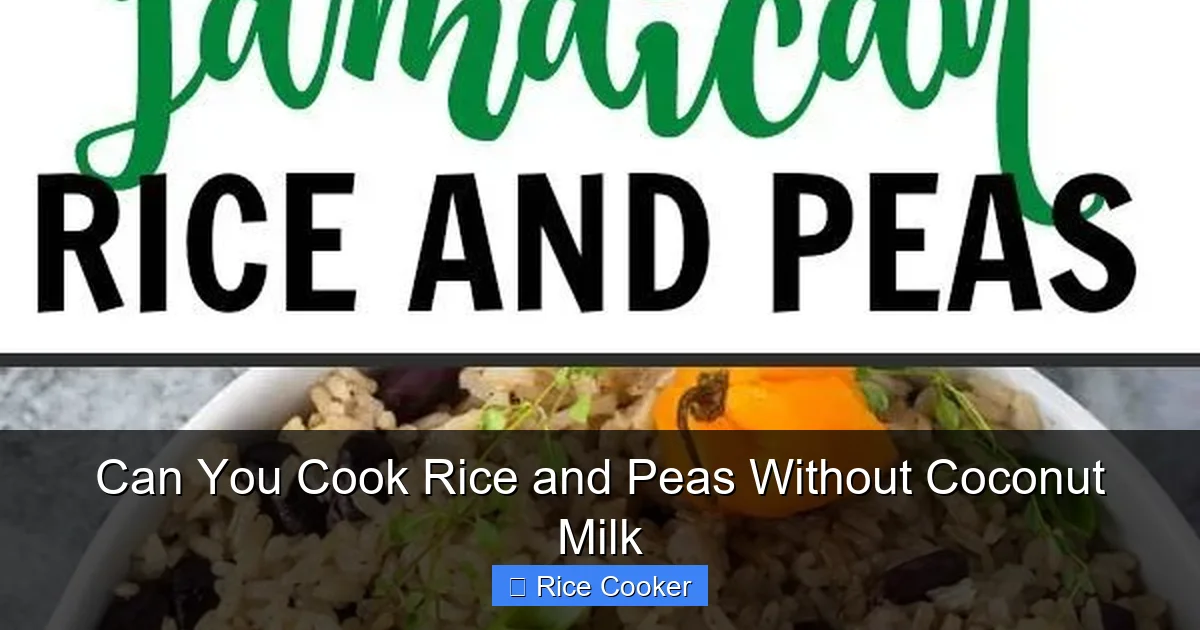
Rice and peas is a beloved dish across the Caribbean, traditionally made with coconut milk, but it’s absolutely possible—and sometimes even better—to cook it without. Whether you’re avoiding dairy, following dietary preferences, or just out of ingredients, there are plenty of flavorful alternatives that maintain authenticity and taste. This guide walks you through easy swaps, step-by-step instructions, and tips for perfect results every time, all using your trusty rice cooker.
Key Takeaways
- You can absolutely cook rice and peas without coconut milk—it’s not required for authenticity, just tradition.
- Substitute with vegetable broth, chicken stock, or water for a lighter, healthier version.
- Traditional recipes vary by island, so flavors may differ slightly from the classic coconut-based version.
- A rice cooker makes the process effortless—no constant stirring needed.
- Add flavor with herbs, spices, and protein like thyme, scallions, and salted cod.
- Soaking dried kidney beans ensures tender texture when cooking from scratch.
- Cooking without coconut milk reduces calories and fat, making it ideal for dietary needs.
📑 Table of Contents
- Can You Cook Rice and Peas Without Coconut Milk?
- The Origins and Cultural Significance of Rice and Peas
- Why People Choose to Skip Coconut Milk
- Essential Ingredients for Coconut-Free Rice and Peas
- Step-by-Step Guide: Cooking Rice and Peas Without Coconut Milk in a Rice Cooker
- Flavor Hacks: Making It Even Better Without Coconut Milk
- Common Mistakes to Avoid
- Pairings and Side Dishes
- Storage and Reheating Tips
- Conclusion: Embrace the Versatility of Rice and Peas
Can You Cook Rice and Peas Without Coconut Milk?
Imagine walking into a cozy Caribbean kitchen on a sunny morning and being greeted by the rich aroma of simmering rice and peas. The golden grains mingle with tender beans, fragrant thyme, and a hint of smoky saltfish—a dish so comforting, it feels like home. For many, this meal is more than food; it’s a cultural cornerstone. But what happens if coconut milk isn’t part of your pantry? Can you still enjoy this iconic dish? The short answer: yes, absolutely.
Rice and peas is traditionally cooked with coconut milk, especially in Jamaican and Trinidadian versions, giving it a creamy texture and subtle sweetness. However, coconut milk isn’t a strict requirement. In fact, some regional variations—like those found in Haiti or parts of Guyana—use water or broth instead. And let’s be honest: life happens. Sometimes you’re out of coconut milk, you’re on a low-fat diet, or you simply prefer a lighter version. The good news? With a few simple swaps and smart techniques, you can still make a delicious, satisfying bowl of rice and peas—without any coconut at all.
The Origins and Cultural Significance of Rice and Peas
To truly understand how to cook rice and peas without coconut milk, we need to look back. This dish has deep roots across the Caribbean, born from a mix of African, Indigenous, and European influences. Enslaved Africans brought their knowledge of grain and legume pairings, while colonizers introduced rice cultivation. Over time, the combination evolved into a symbol of resilience and unity.

Visual guide about Can You Cook Rice and Peas Without Coconut Milk
Image source: i.ytimg.com
A Dish That Binds Communities
In places like Jamaica, rice and peas isn’t just a side dish—it’s a national treasure. It’s served during festivals, Sunday dinners, and even as a breakfast staple. The dish is so central that it inspired the phrase “rice and peas” to mean a harmonious blend of people or things coming together. But while coconut milk gives it its signature richness, it’s the balance of flavors—sweet, savory, earthy—that defines the dish.
Regional Variations
Not all rice and peas use coconut milk. In Haitian cuisine, for example, the dish (known as riz kole) often uses tomato-based sauces and Scotch bonnet peppers. Similarly, in Suriname, a mix of rice, pigeon peas, and palm oil creates a distinct flavor profile. These differences show how adaptable the dish is—and how coconut milk is more of a tradition than a rule.
Why People Choose to Skip Coconut Milk
There are many reasons someone might want to cook rice and peas without coconut milk. Let’s explore the most common ones.

Visual guide about Can You Cook Rice and Peas Without Coconut Milk
Image source: i.ytimg.com
Dietary Restrictions and Health Concerns
For those managing cholesterol, heart health, or saturated fat intake, cutting out coconut milk can be essential. While coconut milk adds creaminess, it’s also high in fat. Replacing it with broth or water slashes calories and fat without sacrificing flavor—especially when enhanced with aromatic ingredients.
Lactose Intolerance or Dairy Allergies
Although coconut milk isn’t dairy, some people confuse it with dairy products or choose to avoid all plant-based milks due to personal preference. Fortunately, the absence of dairy doesn’t compromise the dish’s integrity.
Ingredient Availability
Let’s face it: coconut milk isn’t always in the fridge. Whether you forgot to buy it, ran out mid-recipe, or simply don’t keep it on hand, knowing how to adapt is key. The beauty of rice and peas is its flexibility.
Flavor Preferences
Some chefs argue that water or broth-based versions highlight the natural flavors of the rice and beans more clearly. Without the sweetness of coconut, you get a cleaner, more herbal taste—perfect if you love bold, earthy notes.
Essential Ingredients for Coconut-Free Rice and Peas
Now that we’ve established you can cook rice and peas without coconut milk, let’s talk about what you’ll need. Don’t worry—you won’t miss the creaminess if you follow these guidelines.
Grains and Legumes
The classic pairing is long-grain white rice and red kidney beans or pigeon peas. Pigeon peas (also called gungo peas) are traditional in Jamaica, but kidney beans work beautifully too. If using dried beans, soak them overnight and boil until tender before adding to the rice.
Protein Options
Traditionally, salted cod or smoked fish is added for savory depth. You can also use diced bacon, ham hock, or even plant-based proteins like soy curls for a vegetarian version.
Flavor-Boosting Herbs and Spices
This is where the magic happens. Without coconut milk’s sweetness, you need strong flavor anchors:
- Thyme – Fresh or dried, it’s non-negotiable.
- Scotch bonnet pepper – For heat (add whole and remove before serving).
- Scallions – Adds brightness.
- Salt – Essential for bringing out flavors.
- Garlic and onion – Base for aromatic depth.
Liquid Substitutes
Instead of coconut milk, choose one of these:
- Vegetable broth – Great for vegetarians and adds umami.
- Chicken or beef broth – Warmer, richer flavor.
- Filtered water – Simple and neutral.
Step-by-Step Guide: Cooking Rice and Peas Without Coconut Milk in a Rice Cooker
If you have a rice cooker, you’re in luck. This method is foolproof, hands-off, and delivers consistent results every time. Follow these steps for a perfect batch.
Prep Your Ingredients
- Wash 1 cup of long-grain rice under cold water until the water runs clear.
- If using dried kidney beans, soak them overnight and boil until soft (about 45 minutes). Drain and set aside.
- Mince 1 small onion, 2 cloves garlic, and 3 scallions. Finely chop 1 Scotch bonnet pepper (seeds optional).
- Prepare your protein—dice 6 oz of salted cod or bacon, or crumble vegan sausage.
Layer Ingredients in the Rice Cooker
- Spray the inner pot with non-stick cooking spray.
- Add washed rice to the pot.
- Stir in soaked or pre-cooked beans.
- Toss in onions, garlic, scallions, and Scotch bonnet.
- Add your protein.
- Pour in 2 cups of broth or water.
- Season with 1 tsp salt and 1 tbsp fresh thyme leaves (or 1 tsp dried).
Cook and Serve
- Close the lid and press the “Cook” button. Most rice cookers will automatically switch to “Keep Warm” when done.
- Let it rest for 10 minutes after cooking—this helps absorb any excess liquid.
- Gently fluff with a fork, remove the pepper pod, and serve hot.
Pro Tips
- For extra flavor, sear the onions and garlic in a pan before adding to the rice cooker.
- Add a bay leaf during cooking for a subtle herbal note.
- Top with chopped cilantro or fried plantains for contrast.
Flavor Hacks: Making It Even Better Without Coconut Milk
Just because you’re skipping coconut milk doesn’t mean you can’t elevate your dish. Here are some clever tricks to boost flavor.
Use Aromatics Wisely
Caramelized onions, garlic, and ginger create a deep base flavor. Sauté them in a little oil before adding to the rice cooker for richness.
Infuse Broth with Herbs
Simmer your broth with thyme sprigs, onion skins, and peppercorns before using it to cook the rice. Strain before adding to the rice cooker.
Add Umami Boosters
Miso paste, soy sauce, or nutritional yeast can mimic the savory depth that coconut milk provides in other dishes.
Toast the Rice First
Lightly toast rice in a dry skillet before adding liquid. This enhances nuttiness and prevents mushiness.
Common Mistakes to Avoid
Even seasoned cooks make errors. Here’s how to sidestep them.
Overcooking the Beans
If using dried beans, don’t add them raw unless you’re okay with mush. Pre-cooking ensures tenderness.
Skipping Salt Early
Season at the beginning. Salt helps the rice and beans absorb flavor evenly.
Using Too Much Liquid
Without coconut milk’s thickness, too much water can make the dish soggy. Stick to a 1:2 rice-to-liquid ratio.
Neglecting Heat Control
Even in a rice cooker, don’t overfill. Leave room for steam to circulate.
Pairings and Side Dishes
Rice and peas shine when paired with complementary sides. Try these combos:
- Fried plantains – Sweet and savory balance.
- Steamed callaloo – A leafy green side that’s rich in nutrients.
- Ackee and saltfish – A classic Jamaican breakfast.
- Roti or bread – For scooping up every last bit.
Storage and Reheating Tips
Made too much? No problem. Store leftovers in an airtight container for up to 4 days. To reheat, add a splash of broth and cover while microwaving to prevent drying.
Conclusion: Embrace the Versatility of Rice and Peas
Cooking rice and peas without coconut milk isn’t just possible—it’s a chance to explore new dimensions of flavor. While the traditional version is rich and creamy, the coconut-free alternative offers clarity, lightness, and a chance to spotlight the herbs and spices that define this dish. Whether you’re using a rice cooker, stovetop, or slow cooker, the key is balance: salty, spicy, earthy, and aromatic.
So next time you’re craving this Caribbean favorite, don’t panic if coconut milk is missing. Grab your rice cooker, gather your ingredients, and remember: traditions evolve. And sometimes, the best meals come from adaptation.
Frequently Asked Questions
Can I use instant rice for rice and peas?
Yes, but it may result in a softer texture. Instant rice absorbs liquid quickly, so adjust cooking time and liquid slightly. Long-grain rice is preferred for chewier bites.
How do I make vegetarian rice and peas?
Skip animal proteins and use vegetable broth. Add mushrooms, soy curls, or lentils for texture. Thyme, scallions, and Scotch bonnet still provide depth.
What if I don’t have a rice cooker?
You can make it on the stovetop or in a slow cooker. Simmer covered for 20–25 minutes on low heat, checking occasionally to prevent sticking.
Can I use canned kidney beans?
Absolutely. Rinse and drain them before adding. They add salt, so reduce added salt slightly. No soaking needed!
Is rice and peas healthy without coconut milk?
Yes. Using broth or water reduces fat and calories while keeping fiber, protein, and complex carbs intact. Just watch added salt in broths and processed proteins.
How do I fix bland rice and peas?
Add a pinch of sugar to brighten, more salt for depth, or a dash of vinegar for acidity. Fresh thyme and scallions make a big difference.