
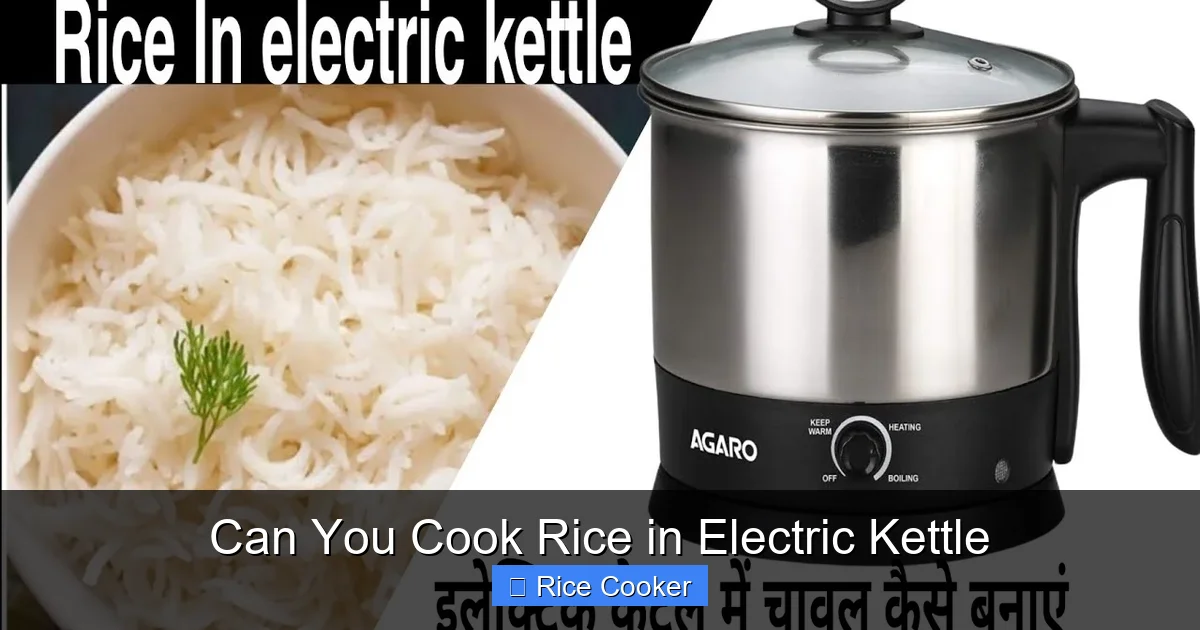
Can you cook rice in an electric kettle? Yes, but with caveats. While some electric kettles are powerful enough to boil water quickly, they lack the precise temperature control and steaming mechanism of a rice cooker. You can make short-grain or instant rice this way, but long-grain types may end up mushy or unevenly cooked. For best results, use a kettle with strong heating power, rinse your rice, and follow a simple 1:1.5 water-to-rice ratio. Always supervise cooking closely—overcooking is easy with kettles due to their rapid boiling.
Key Takeaways
- It’s possible but limited: Only certain types of rice (like instant or short-grain) work well in an electric kettle.
- Water-to-rice ratio matters: Use about 1.5 cups of water per 1 cup of dry rice for most varieties.
- Rinse before cooking: Removing excess starch helps prevent gummy texture.
- Supervise closely: Kettles boil fast and can scorch rice if left unattended.
- Not ideal for all kettles: Small or low-wattage models may not generate enough heat.
- Flavor and texture suffer: Rice cooked in a kettle lacks the gentle simmer and steam retention of a dedicated rice cooker.
- Use as a backup option: Great for emergencies or when your rice cooker breaks down.
📑 Table of Contents
- Introduction: The Curious Case of Cooking Rice in an Electric Kettle
- Understanding Electric Kettles vs. Rice Cookers
- Which Types of Rice Can Be Cooked in an Electric Kettle?
- Step-by-Step Guide: How to Cook Rice in an Electric Kettle
- Tips for Success When Using an Electric Kettle
- Pros and Cons: Is It Worth It?
- Alternative Methods for Cooking Rice Without a Dedicated Cooker
- Conclusion: Should You Cook Rice in Your Electric Kettle?
Introduction: The Curious Case of Cooking Rice in an Electric Kettle
We’ve all been there—rushing to get dinner on the table, only to realize your rice cooker has gone on strike. Or maybe you’re camping, and the only available appliance is that trusty electric kettle you brought along. Suddenly, the question pops up: “Can you cook rice in an electric kettle?” It sounds almost too good to be true—after all, kettles are built to boil water lightning-fast, while rice requires patience, precise hydration, and gentle heat. But hey, necessity is the mother of invention, right?
Before we dive into the details, let’s set realistic expectations. An electric kettle isn’t designed for cooking grains like a rice cooker is. That said, under the right conditions, with the right type of rice, and with a bit of technique, you might just pull off a decent bowl of rice using your kettle alone. Think of it less as a replacement and more as a clever kitchen hack—especially useful when you’re out of options.
In this article, we’ll walk through everything you need to know: which rice varieties actually work, step-by-step instructions, safety tips, comparisons to traditional methods, and even alternatives if the kettle route falls short. By the end, you’ll have a clear answer—and maybe even a new go-to trick for busy nights.
Understanding Electric Kettles vs. Rice Cookers
Visual guide about Can You Cook Rice in Electric Kettle
Image source: i.ytimg.com
Before trying anything, it helps to understand why rice cookers exist in the first place—and why they’re so different from your average kettle.
How Rice Cookers Work
Most modern rice cookers use a combination of thermal sensors and automatic shut-off features. They detect when the water has evaporated and the rice is fully absorbed, then switch to “warm” mode to keep it ready without overcooking. Some even have fuzzy logic that adjusts timing based on rice type. This precision ensures consistent, fluffy results every time.
Limitations of Electric Kettles
Electric kettles, by contrast, are simple machines. Their main job is to heat water rapidly until it reaches boiling point, then shut off automatically. They don’t monitor moisture levels or adjust cooking time. Once the water boils, it stays hot—or cools down if unplugged. This means if you leave rice unattended in a kettle, it can scorch, stick, or turn into a paste.
That said, high-powered kettles (those rated 1500W or above) can generate enough heat to mimic a quick-boil method similar to stovetop rice cooking. And since many people already own one, it makes sense to explore its potential—even if it’s not perfect.
Which Types of Rice Can Be Cooked in an Electric Kettle?
Visual guide about Can You Cook Rice in Electric Kettle
Image source: images.herzindagi.info
Not all rice is created equal—and not all will play nice in your kettle.
Best Options: Instant and Short-Grain Rice
Instant rice (also called quick-cooking or pre-cooked rice) is your best bet. Because it’s partially cooked during processing, it only needs about 5–7 minutes in boiling water to finish. When used in a kettle, it cooks quickly and evenly without much risk of drying out.
Short-grain rice, especially Japanese-style sushi rice, also tends to fare better. Its higher starch content helps bind the grains together, reducing the chance of them turning into mush—though overcooking is still a concern.
Rice That Doesn’t Work Well
Long-grain white rice (like basmati or jasmine) expands significantly during cooking and requires careful monitoring. Without a rice cooker’s auto-switch feature, it’s easy to end up with undercooked centers and dried-out edges. Brown rice is even trickier—it takes longer to absorb water and has a firmer texture, so kettle cooking usually results in inconsistent doneness.
A Note on Wild and Red Rice
These specialty grains absorb water differently and often require extended soaking or specialized ratios. Most home kettles won’t handle them reliably, so skip the experiment unless you’re prepared for trial and error.
Step-by-Step Guide: How to Cook Rice in an Electric Kettle
Ready to give it a try? Follow these steps carefully for the best outcome.
What You’ll Need
- Electric kettle (preferably 1500W or higher)
- Fine-mesh strainer
- Measuring cups
- Pot lid (optional, for covering)
- Type of rice approved for kettle use (e.g., instant or short-grain)
Step 1: Measure and Rinse the Rice
Start by measuring your rice using standard measuring cups—not volume cups meant for flour or sugar. For most recipes, aim for a 1:1.5 ratio of rice to water (e.g., 1 cup rice + 1.5 cups water). Rinse the rice thoroughly under cold running water until the water runs clear. This removes surface starch that can make cooked rice gummy.
Step 2: Add Water and Rice to the Kettle
Pour the rinsed rice and measured water directly into the electric kettle. If your kettle has a removable base, transfer the mixture to a heatproof pot instead—this gives you more control and makes cleanup easier.
Step 3: Heat Until Boiling
Plug in the kettle and turn it on. As soon as the water reaches a rolling boil, reduce the heat slightly if using a pot, or simply monitor closely if using the kettle itself. Let the rice simmer gently for:
- 5–7 minutes for instant rice
- 8–10 minutes for short-grain white rice
Avoid lifting the lid frequently—each time you do, steam escapes and slows cooking.
Step 4: Test for Doneness
After the suggested time, check a few grains by squeezing them between your fingers. They should be tender but not crumbly. If still hard in the center, add another tablespoon of water and continue cooking for 1–2 minutes at a time until done.
Step 5: Drain Excess Moisture (If Needed)
Some kettles allow you to pour out water after boiling, which helps remove excess starch. If your kettle doesn’t have this feature, drain the rice through a strainer once cooked. Then return it to a clean pan, cover, and let it sit for 5 minutes to steam—this mimics the effect of a rice cooker’s warm setting.
Step 6: Fluff and Serve
Use a fork to gently fluff the rice before serving. Avoid pressing down, which compacts the grains and ruins the texture.
Tips for Success When Using an Electric Kettle
Even experienced cooks can run into trouble with kettle rice. Here’s how to avoid common pitfalls.
Choose the Right Kettle
Look for models with high wattage (1500W+) and a wide opening. Small travel kettles or low-power devices won’t generate enough heat to cook rice properly. Also, consider kettles with a detachable base—they’re easier to clean and offer better visibility.
Don’t Overfill
Never fill your kettle past the max line. Rice swells during cooking, so leave at least 1–2 inches of space at the top. Otherwise, boiling water could splash out and create a mess—or worse, cause burns.
Keep an Eye on It
Unlike rice cookers that shut off automatically, kettles don’t pause or reset. That means once boiling starts, you must stay nearby. Set a timer if needed, but don’t rely solely on it—rice can go from perfectly cooked to burnt in under a minute.
Adjust Ratios Based on Experience
Your first attempt might not be perfect. Keep notes! If the rice is too wet, reduce water next time. If it’s dry, increase it slightly. Every grain behaves a little differently depending on origin, age, and storage conditions.
Season After Cooking
Since you can’t add salt or butter during the process (without risking damage to the kettle), season the rice once it’s done. A splash of olive oil or a pat of butter stirred in just before serving enhances flavor and texture.
Pros and Cons: Is It Worth It?
Let’s weigh the advantages against the disadvantages.
Advantages of Cooking Rice in an Electric Kettle
- Speed: Boils water incredibly fast—perfect when you’re short on time.
- Convenience: No extra equipment needed if you already own a kettle.
- Emergency solution: Ideal when your rice cooker breaks or you’re traveling.
- Energy efficient: Uses less electricity than running a full-sized stove burner.
Disadvantages
- Inconsistent results: Harder to achieve fluffy, separate grains.
- Limited rice types: Not suitable for long-grain, brown, or wild rice.
- Cleanup challenges: Sticky residue can build up inside the kettle.
- Safety concerns: Risk of burns from hot steam or splattering liquid.
When to Choose This Method
Use your kettle for:
- Instant rice in a pinch
- Small batches of sushi or short-grain rice
- Campers or travelers with minimal gear
- Quick side dishes when main cooking appliances are busy
- Everyday meals requiring reliable results
- Brown rice, wild rice, or other specialty grains
- Large quantities where consistency matters
- Hands-off cooking while multitasking
When to Stick With a Rice Cooker
Save your rice cooker for:
Alternative Methods for Cooking Rice Without a Dedicated Cooker
If your kettle isn’t cutting it, don’t worry—there are other ways!
Stovetop Simmer Method
This is the classic approach: bring water to a boil, add rinsed rice, reduce heat, cover, and simmer for 15–20 minutes (depending on type). It’s simple, effective, and uses equipment most kitchens already have.
Microwave Rice Cooker
Many modern microwaves have dedicated rice settings. Just measure rice and water, mix in a microwave-safe bowl, cover with a vented lid, and cook according to time instructions. Results are surprisingly good for white rice.
Pressure Cooker or Instant Pot
For brown rice or larger batches, a pressure cooker cuts cooking time dramatically while yielding tender, evenly cooked grains. It’s not as hands-off as a rice cooker, but far more efficient than boiling on the stovetop.
Oven-Baked Rice
Preheat your oven to 375°F (190°C). Combine rice, water, and a pinch of salt in an oven-safe dish, cover tightly with foil, and bake for 30–40 minutes. Flip halfway through for even cooking. Great for making big batches ahead of time.
Conclusion: Should You Cook Rice in Your Electric Kettle?
So, back to the original question: Can you cook rice in an electric kettle? The short answer is yes—but with important limitations. It’s not a perfect substitute for a rice cooker, and it won’t replace your stovetop for every grain type. However, for instant rice or small portions of short-grain varieties, it can work surprisingly well when you’re in a hurry or lack other tools.
The key takeaway is preparation and awareness. Choose the right rice, rinse it well, watch it closely, and accept that results may vary. Don’t expect restaurant-quality fluffiness every time—but do expect edible, nutritious rice when done right.
Ultimately, owning an electric kettle doesn’t mean giving up on rice entirely. It just means learning to adapt. Next time your rice cooker dies or you’re stuck in the wilderness, you’ll know exactly what to do. And who knows? You might even discover a new favorite method for making quick, no-fuss meals.
Frequently Asked Questions
Can I cook any type of rice in an electric kettle?
No, only certain types work well. Instant rice and short-grain white rice are your best options because they cook quickly and don’t require precise timing. Long-grain, brown, and wild rice typically don’t turn out evenly in a kettle due to differences in absorption rates and cooking duration.
How much water do I use per cup of rice in a kettle?
Use about 1.5 cups of water for every 1 cup of dry rice. This is roughly equivalent to the ratio used in most rice cooker recipes. Adjust slightly based on your preferred texture—more water yields softer rice, less creates firmer grains.
Will my electric kettle get damaged if I cook rice in it?
Generally, no—as long as you avoid putting solid foods into the heating chamber. Most kettles aren’t designed for this, but occasional use shouldn’t harm them if cleaned promptly afterward. Never leave rice boiling unattended, as prolonged exposure can cause mineral buildup or unpleasant odors.
Do I need to rinse the rice before cooking it in a kettle?
Yes, always rinse rice under cold running water until the water runs clear. This removes excess surface starch that can lead to clumping and a gummy texture, especially important when using a method like the kettle that lacks the gentle simmer of a rice cooker.
Is rice cooked in a kettle as good as rice from a rice cooker?
Not usually. Rice cookers provide consistent temperature control, automatic shut-off, and steaming retention that produce fluffier, more uniform results. Kettle-cooked rice can be edible and tasty—but it often comes out drier, stickier, or unevenly cooked unless you’re very careful.
Can I cook rice in a travel electric kettle?
Only if it’s large enough and powerful enough (at least 1500W). Small travel kettles usually don’t generate enough heat to cook rice properly and may overflow due to limited capacity. If yours meets those criteria, you can try it—but monitor closely and avoid overfilling.