
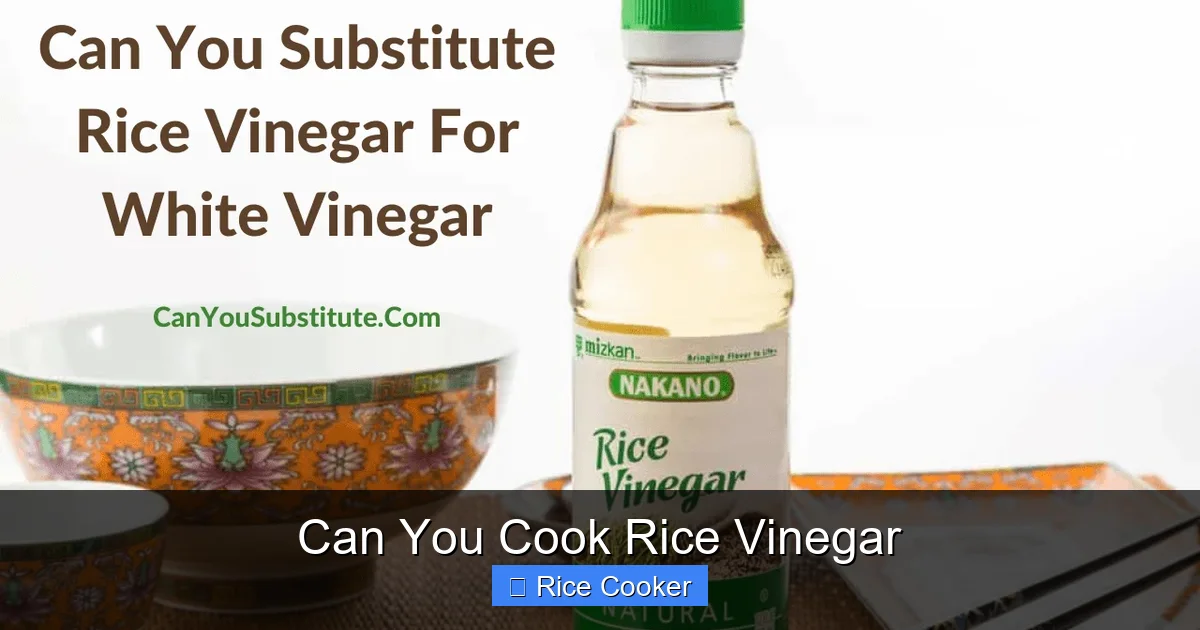
Can you cook rice vinegar? Yes, absolutely—but with some important caveats. Rice vinegar is heat-tolerant and often used in cooking, but prolonged high heat can dull its delicate flavor. For best results, add it toward the end of cooking or use it in sauces, dressings, or marinades where heat isn’t needed.
Key Takeaways
- Rice vinegar is safe to cook with: It has a higher boiling point than other vinegars and can be used in most cooking methods without breaking down completely.
- Heat affects flavor: While rice vinegar won’t burn off entirely, extended high heat can reduce its bright, tangy taste and make it less effective for flavoring.
- Best uses in cooking: Ideal for stir-fries, soups, pickling, braising liquids, and salad dressings—especially when added late in the process.
- Pair it wisely: Combine with soy sauce, garlic, ginger, or sugar to balance its acidity and enhance umami in Asian-inspired dishes.
- Storage matters: Keep unopened rice vinegar in a cool, dark place; once opened, refrigerate to maintain quality and extend shelf life.
- Substitutes if needed: If you don’t have rice vinegar, white wine vinegar or apple cider vinegar work well as alternatives, though flavors will differ slightly.
- Not just for sushi: Beyond Japanese cuisine, rice vinegar shines in slaws, glazes, and even marinades for chicken or tofu.
📑 Table of Contents
- Can You Cook Rice Vinegar? Everything You Need to Know
- Understanding Rice Vinegar: What Is It Made Of?
- Does Rice Vinegar Burn Off When Heated?
- Best Ways to Use Rice Vinegar in Cooking
- Common Mistakes to Avoid
- Creative Recipes Featuring Rice Vinegar
- Alternatives When You’re Out of Rice Vinegar
- Storing Rice Vinegar Properly
- Frequently Asked Questions About Cooking With Rice Vinegar
Can You Cook Rice Vinegar? Everything You Need to Know
Have you ever stared at a bottle of rice vinegar in your pantry, wondering whether it’s actually safe to use in cooking? Or maybe you’ve added it to a simmering pot only to realize the vibrant tang seems muted afterward. If so, you’re not alone. Many home cooks—especially those new to Asian-inspired recipes—wonder if rice vinegar is just for sushi rolls and salads, or if it can truly hold up in the heat.
The short answer? Yes, you can cook with rice vinegar. But like many ingredients, how you use it makes all the difference. Unlike some delicate herbs or fresh citrus juices, rice vinegar is surprisingly stable under moderate heat. In fact, it’s a staple in countless savory dishes across East Asia, from stir-fries to braises. However, understanding its properties helps you get the most out of every drop.
In this guide, we’ll walk through everything you need to know about using rice vinegar in your cooking—whether you’re sautéing vegetables, simmering a soup, or marinating proteins. We’ll cover its chemical behavior when heated, the best techniques for preserving its flavor, and even some creative ways to incorporate it into everyday meals. By the end, you’ll feel confident adding rice vinegar to your culinary toolkit—no chef’s hat required!
Understanding Rice Vinegar: What Is It Made Of?
Before diving into cooking methods, let’s talk about what rice vinegar actually is. Unlike distilled white vinegar (which comes from corn or grain alcohol), rice vinegar is made by fermenting rice starch into alcohol and then converting that alcohol into acetic acid. The result? A mild, slightly sweet vinegar with a subtle floral note—perfect for balancing rich or fatty foods.

Visual guide about Can You Cook Rice Vinegar
Image source: canyousubstitute.com
Types of Rice Vinegar
There are several varieties, each with unique characteristics:
- White rice vinegar: Light in color and neutral in flavor; ideal for pickling and dressings.
- Red rice vinegar: Made from black glutinous rice, slightly sweeter and more robust; great for dipping sauces.
- Black rice vinegar: Fermented longer, giving it a deep hue and complex umami taste; often used in traditional Chinese medicine-style cooking.
For general cooking purposes, white rice vinegar is usually the go-to choice due to its versatility and affordability.
Acidity Levels and pH Balance
Rice vinegar typically has an acidity level between 4% and 5%, which is similar to apple cider vinegar or white wine vinegar. This makes it safe for food preservation (like pickling) and effective at tenderizing meat through acid marinades. Its pH range also means it won’t overpower a dish if used thoughtfully—but too much can leave a sharp aftertaste.
Now that we’ve covered the basics, let’s explore exactly how heat impacts rice vinegar—and why that matters when you’re deciding whether to cook it.
Does Rice Vinegar Burn Off When Heated?
This is probably the biggest question on your mind: “Will cooking destroy my rice vinegar?” The honest answer is yes—some of it will evaporate, especially during long, slow cooking. But here’s the good news: unlike volatile compounds in lemon juice or fresh basil, rice vinegar doesn’t vanish completely. Its core acids remain stable even at boiling temperatures (212°F / 100°C).
Visual guide about Can You Cook Rice Vinegar
Image source: cookingchew.com
What Happens During Cooking?
When exposed to heat, two things happen:
- Evaporation: Water and acetic acid slowly escape into the air, especially if left uncovered.
- Flavor dilution: As liquids reduce, the concentration of vinegar changes—sometimes making the dish too acidic unless balanced with salt or sugar.
But again, rice vinegar’s gentle flavor profile means it rarely becomes “burnt” or bitter like stronger vinegars might. That said, if you boil it aggressively for hours (think bone broth reduction), you’ll notice the tang fading significantly.
So while you can cook with rice vinegar, the key is timing and method. Let’s look at practical examples of how to use it without losing its magic.
Best Ways to Use Rice Vinegar in Cooking
If you want to preserve that bright, clean acidity that rice vinegar is known for, consider these strategies:
Add It Toward the End of Cooking
For stir-fries, noodle bowls, or quick sautés, toss in rice vinegar in the last minute or two. This keeps its aroma intact and prevents over-reduction. Try it in a simple veggie stir-fry with carrots, snap peas, and tofu—just finish with a splash of rice vinegar right before plating.
Use It in Sauces and Glazes
Rice vinegar works beautifully in emulsified sauces. Whisk it into a vinaigrette with sesame oil, honey, and Dijon mustard. Or create a glossy teriyaki glaze by simmering soy sauce, mirin (sweet rice wine), sugar, and a tablespoon of rice vinegar until thickened. The vinegar cuts through the sweetness and adds depth.
Infuse It First
To soften its edge, heat rice vinegar gently with aromatics like garlic slices, star anise, or chili flakes. Let it steep for 10–15 minutes, then strain and use in soups or braised dishes. This technique mellows the acid while infusing your dish with extra flavor.
Pickling and Preserving
Rice vinegar is excellent for pickling because it preserves color better than stronger vinegars. Make quick-pickled radishes, cucumbers, or onions by simmering rice vinegar with water, salt, and spices. Cool before storing in jars—perfect for adding crunch to tacos or burgers.
Even in slow-cooked meals like pork shoulder or eggplant curry, a small amount of rice vinegar added mid-way through helps lift other flavors without dominating the dish.
Common Mistakes to Avoid
Despite its adaptability, there are pitfalls to watch out for:
Overdoing the Amount
A little goes a long way. Too much rice vinegar can overwhelm a dish, especially if you’re already using salty or sugary elements. Start with ½ teaspoon per serving and adjust gradually.
Boiling Without Monitoring
If you’re reducing liquids for a sauce, keep the heat low and stir constantly. Unattended reductions can lead to overly concentrated vinegar notes.
Ignoring Salt and Sweetness
Vinegar needs balance. Always pair it with salt, sugar, or fat to round out the flavor. Think of it as part of a “taste wheel”—not a solo act.
Using Expired Vinegar
Check the expiration date. Once opened, rice vinegar should last 6–12 months in the fridge. If it smells off or tastes flat, toss it.
By avoiding these mistakes, you’ll keep your dishes tasting fresh and zesty—not sour or unbalanced.
Creative Recipes Featuring Rice Vinegar
Ready to put theory into practice? Here are three easy, delicious ideas:
1. Rainbow Cabbage Slaw
Shred red and green cabbage, jicama, and carrots. Toss with rice vinegar, soy sauce, sesame oil, honey, and crushed peanuts. Chill for 30 minutes before serving. Great as a side or topping for grain bowls.
2. Garlic-Herb Marinade for Chicken
Mix rice vinegar, minced garlic, rosemary, olive oil, and a pinch of sugar. Marinate chicken thighs for at least 2 hours (or overnight). Grill or bake until golden. The vinegar tenderizes the meat and adds brightness.
3. Spicy Noodle Soup Base
Sauté ginger and garlic in broth. Add noodles, bok choy, and sliced mushrooms. Simmer 8–10 minutes. Finish with rice vinegar, chili oil, and green onions. Adjust acidity to taste.
These recipes show how versatile rice vinegar really is—even in non-Asian dishes!
Alternatives When You’re Out of Rice Vinegar
Life happens. Sometimes you run out. Don’t panic! Here are smart swaps:
- White wine vinegar: Closest match in flavor and color. Use 1:1.
- Apple cider vinegar: Slightly fruity; works well in slaws or marinades.
- Lemon or lime juice: Only for cold applications—never substitute directly in cooked dishes, as citrus burns easily.
- Mirin (sweet rice wine): Adds acidity plus sweetness—ideal for glazes or braises.
Keep a few backups in your pantry so you’re never stuck.
Storing Rice Vinegar Properly
Proper storage extends shelf life and maintains quality:
- Unopened bottles: Store in a cool, dark cupboard away from heat sources.
- Opened bottles: Refrigerate after first use. Some brands recommend this to prevent oxidation.
- Caps and corks: Ensure seals are tight to avoid evaporation and contamination.
Most rice vinegars last 1–2 years unopened. Check for cloudiness or sediment—it’s normal, but unusual odors mean it’s time to replace it.
Frequently Asked Questions About Cooking With Rice Vinegar
Can I use rice vinegar instead of white vinegar for pickling?
Absolutely! Rice vinegar is commonly used in pickling due to its mild flavor and ability to preserve color. Just ensure it’s at least 4% acidity for safety.
How much rice vinegar should I add to a recipe?
Start small—usually 1–2 tablespoons per quart of liquid. Taste as you go and adjust. Over-acidification ruins dishes quickly.
Is rice vinegar safe for people with sensitive stomachs?
Moderately. Its lower acidity compared to other vinegars may be gentler, but everyone reacts differently. Consult a doctor if concerned.
Can I freeze rice vinegar?
Technically yes, but freezing alters texture and flavor slightly. Best to store in the fridge or pantry.
Does cooking rice vinegar remove all health benefits?
Some nutrients may degrade with heat, but acetic acid remains beneficial. Still, fresh applications (like dressings) offer maximum advantages.
Why does my rice vinegar smell weird after heating?
Old vinegar or poor storage can cause off-odors. Discard if it smells moldy or overly fermented. Fresh batches shouldn’t have strong sulfur-like scents.
Frequently Asked Questions
Can I use rice vinegar instead of white vinegar for pickling?
Yes, rice vinegar is a common choice for pickling because of its mild flavor and ability to retain the natural color of vegetables. Just make sure it has at least 4% acidity for safe preservation.
How much rice vinegar should I add to a recipe?
Start with 1–2 tablespoons per quart of liquid and taste as you go. Acid balances vary by recipe, so gradual adjustment is key to avoiding overpowering flavors.
Is rice vinegar safe for people with sensitive stomachs?
Generally yes—rice vinegar is less harsh than distilled white vinegar. However, individual tolerance varies, and those with GERD or acid reflux should consume it in moderation.
Can I freeze rice vinegar?
While technically possible, freezing isn’t recommended. It can alter texture and slightly change the flavor. Stick to refrigeration or pantry storage for best results.
Does cooking rice vinegar remove all health benefits?
Some heat-sensitive compounds may break down, but the acetic acid remains beneficial. For maximum nutrition, use rice vinegar raw in dressings or marinades.
Why does my rice vinegar smell weird after heating?
Off-odors usually indicate spoilage or old stock. Fresh rice vinegar shouldn’t smell strongly fermented or chemical. If it does, discard it immediately for food safety reasons.