
Yes, you can cook rice in a kettle, but it’s not always the easiest or most reliable method. While some people swear by it for convenience, using a kettle to cook rice often requires extra monitoring and adjustments to achieve fluffy, well-cooked grains. This guide walks you through the process, compares kettle cooking to traditional methods, and shares pro tips to help you decide if this kitchen hack is right for you.
Can You Cook Rice with a Kettle? Let’s Break It Down
Have you ever been craving a warm bowl of perfectly cooked rice—maybe jasmine for stir-fry or short-grain for sushi—but realized your rice cooker is out of order? Or perhaps you’re camping and only have access to a portable kettle? These situations spark the age-old question: Can you actually cook rice in a kettle?
At first glance, it seems simple enough. After all, rice just needs hot water and time, right? But the reality is more nuanced. A kettle is excellent at boiling water, but it wasn’t designed to simmer, evaporate moisture slowly, or maintain consistent steam—key factors in cooking rice properly.
In this comprehensive guide, we’ll explore everything you need to know about cooking rice with a kettle. We’ll walk through step-by-step instructions, discuss which types of rice work best, share pro tips to improve results, compare kettle cooking to other methods, and explain why most chefs still prefer traditional rice cookers. By the end, you’ll know whether attempting this kitchen experiment is worth your time—and how to do it safely and effectively.
Key Takeaways
- Kettle cooking is possible but not ideal: You can boil rice in a kettle, but it demands constant attention and precise timing to avoid scorching or undercooking.
- Not all rice types work well: Short-grain and medium-grain rice (like jasmine or sushi rice) tend to fare better than long-grain varieties in a kettle.
- Safety first: Kettles are designed for boiling water, not cooking grains, so monitor closely to prevent overflow or pressure buildup.
- Time and energy efficiency vary: While kettles heat quickly, the overall cooking time may be longer due to evaporation and uneven heat distribution.
- Alternative methods may be better: Stovetop pot, rice cooker, or Instant Pot often produce more consistent results with less effort.
- Cleanup can be tricky: Sticky rice residues may cling to the kettle’s interior, making cleaning harder than with standard pots.
- Experimentation helps: If you’re curious, try small batches first and adjust water ratios and timing based on your specific kettle and rice type.
📑 Table of Contents
- Understanding the Basics: How Rice Actually Cooks
- Can You Cook Rice in a Kettle? The Short Answer
- Step-by-Step Guide: Cooking Rice in a Kettle
- Which Types of Rice Work Best in a Kettle?
- Common Mistakes and How to Avoid Them
- Kettle vs. Other Cooking Methods: A Comparison
- Pro Tips for Better Kettle Rice
- Safety Considerations When Cooking Rice in a Kettle
- When NOT to Use a Kettle for Rice
- Final Thoughts: Is Kettle Rice Worth It?
Understanding the Basics: How Rice Actually Cooks
Before diving into kettle techniques, let’s clarify what happens when rice cooks. Unlike pasta, which absorbs water and softens over minutes, rice undergoes a more complex transformation. The process involves three main stages:
– **Soaking**: Water penetrates the starchy exterior of rice grains.
– **Gelatinization**: Heat causes starch molecules to swell and absorb more water, turning the rice soft.
– **Evaporation**: Excess water slowly boils off, leaving behind tender, fluffy grains.
This delicate balance depends heavily on temperature control and consistent heat. That’s where a kettle falls short. Most electric kettles heat water to exactly 100°C (212°F) and then shut off—or switch to a keep-warm mode that doesn’t sustain boiling. Without active simmering, the rice can’t properly absorb water or release steam, leading to uneven results.
Additionally, kettles lack the wide, flat bottom found in pots, which allows for even heat distribution across the entire surface. This increases the risk of burning the bottom layer while leaving the top undercooked.
Can You Cook Rice in a Kettle? The Short Answer
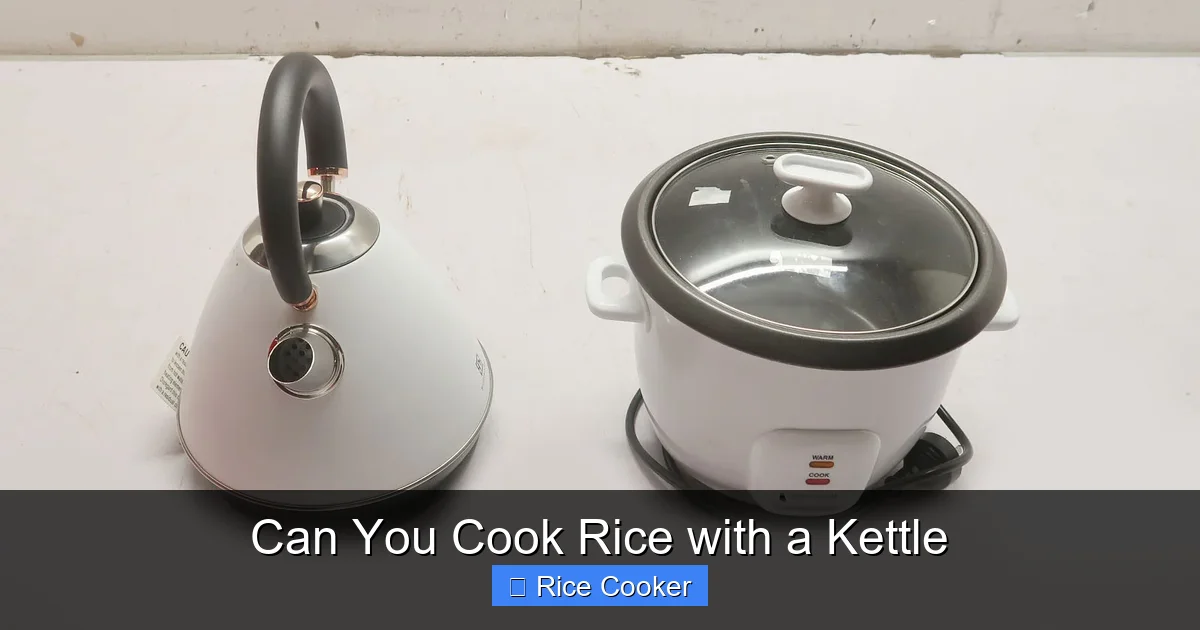
Visual guide about Can You Cook Rice with a Kettle
Image source: hmr.ph
Yes—but with caveats. You *can* cook rice in a kettle, especially if you follow a careful method and use the right rice variety. However, it’s far from foolproof. Success hinges on using a kettle with a wide mouth (to prevent overflow), choosing the correct water-to-rice ratio, and maintaining near-boiling temperatures throughout the process.
For best outcomes:
– Use short- or medium-grain rice.
– Soak the rice briefly before cooking.
– Monitor constantly and stir occasionally.
– Be prepared for longer cooking times than usual.
If you’re trying this for the first time, start with a small batch—just ½ cup of rice—so you can fine-tune your technique without wasting ingredients.
Step-by-Step Guide: Cooking Rice in a Kettle
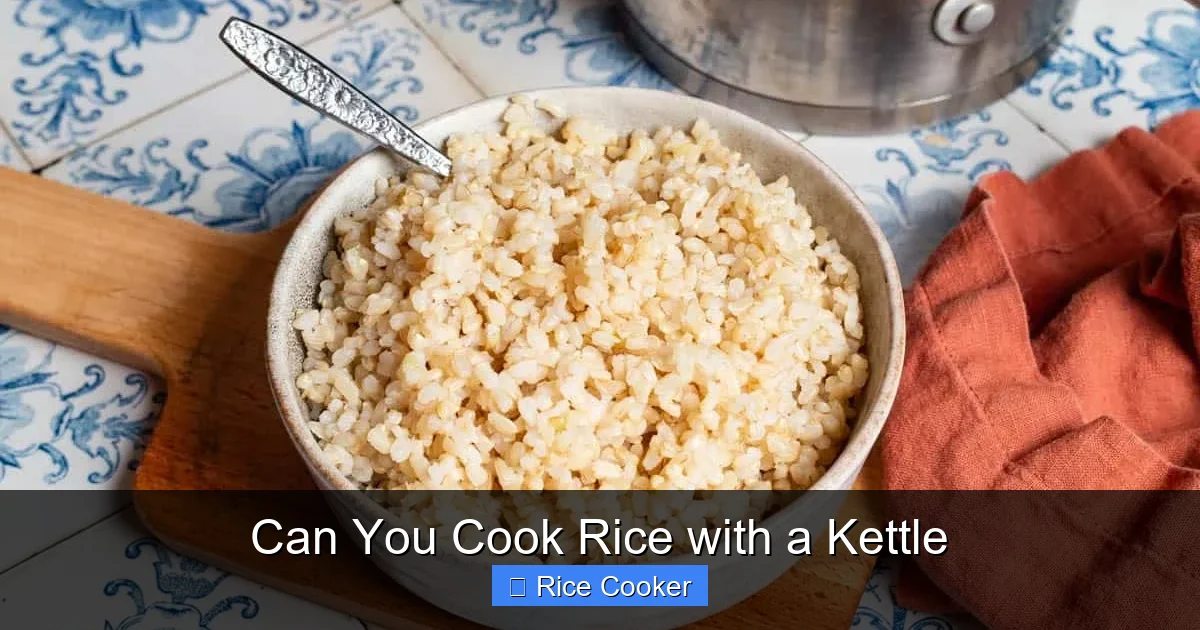
Visual guide about Can You Cook Rice with a Kettle
Image source: themediterraneandish.com
Ready to give it a try? Follow these detailed steps for the most reliable results:
Gather Your Supplies
You’ll need:
– An electric kettle (preferably one with a large capacity and open spout)
– Short- or medium-grain rice (jasmine, sushi, or arborio work well)
– Measuring cup
– Fine-mesh strainer
– Clean kitchen towel or paper towels
Prepare the Rice
Rinse the rice thoroughly under cold running water until the water runs clear. This removes excess starch and prevents gummy texture. Then soak the rinsed rice in room-temperature water for 30 minutes to an hour. Soaking softens the grain and reduces cooking time.
Drain the rice completely using a strainer before proceeding.
Measure Water Accurately
The golden rule for rice is a 1:1.5 to 1:2 ratio of rice to water (depending on desired texture). For example:
– ½ cup dry rice = ¾ to 1 cup water
– 1 cup dry rice = 1.5 to 2 cups water
Use a measuring cup to add the exact amount to your kettle. Too little water leads to dry, hard rice; too much makes it mushy.
Boil the Water
Fill your kettle with fresh, cold water—never use pre-boiled water, as it may contain impurities or affect flavor. Turn on the kettle and bring the water to a rolling boil.
Once boiling, carefully add the drained rice. Stir gently to distribute evenly.
Cook Under Constant Supervision
Cover the kettle loosely with a lid or a clean cloth (to reduce splatter but allow steam to escape). Keep the kettle on a stable surface away from drafts.
Let the rice simmer uncovered, stirring every 5–7 minutes to prevent sticking. Total cooking time varies:
– Short-grain rice: 15–20 minutes
– Medium-grain rice: 18–25 minutes
Avoid lifting the lid frequently, as this releases precious steam.
Check for Doneness
After the estimated time, fluff the rice with a fork. It should be tender with no hard centers. If still firm, cover again and continue cooking in 2-minute increments.
Once done, turn off the kettle and let the rice sit covered for 5 minutes. This final steaming stage improves texture.
Fluff and Serve
Use a fork to gently separate the grains. Drain any excess water if needed, then serve immediately.
Which Types of Rice Work Best in a Kettle?
Not all rice is created equal when it comes to kettle cooking. Long-grain white rice (like basmati or American long grain) has lower starch content and tends to become dry and brittle when boiled aggressively. It also expands more during cooking, increasing the chance of overflow in a narrow-necked kettle.
Instead, opt for:
– **Jasmine rice**: Slightly sticky but manageable with proper water ratios.
– **Sushi rice**: Short-grain, high-starch, and forgiving if soaked beforehand.
– **Arborio rice**: Ideal for risotto-style textures, though it requires even more frequent stirring.
– **Glutinous rice**: Can be used but must be soaked long (at least 2 hours) to prevent clumping.
Avoid wild rice, brown rice, or parboiled varieties in a kettle—they either require specialized soaking times or don’t respond well to rapid boiling.
Common Mistakes and How to Avoid Them
Even experienced cooks stumble when trying new methods. Here are the most frequent pitfalls when cooking rice in a kettle—and how to dodge them:
Mistake #1: Using the Wrong Water Ratio
Using too little water results in chalky, undercooked rice. Too much creates a soupy mess. Always measure precisely, and remember that altitude affects boiling points—add an extra tablespoon of water per cup if you live above 3,000 feet.
Mistake #2: Skipping the Soak
Rushing through soaking leads to uneven cooking. Even 15 minutes helps, but 30–60 minutes yields noticeably better results.
Mistake #3: Not Stirring Enough
Without occasional stirring, rice sticks to the bottom and burns. Set a timer and flip the grains every few minutes.
Mistake #4: Overfilling the Kettle
Kettles aren’t meant for heavy loads. Fill no more than halfway to allow space for expansion and steam release.
Mistake #5: Ignoring Cleanup
Starchy residue hardens inside kettles. Immediately after cooking, rinse with warm water while it’s still slightly warm. For stubborn spots, use baking soda paste and a soft sponge.
Kettle vs. Other Cooking Methods: A Comparison
Let’s put kettle cooking side by side with alternatives to see where it stands:
| Method | Pros | Cons |
|—————–|——————————————-|———————————————-|
| **Kettle** | Portable, fast-heating, minimal cleanup | Inconsistent results, high supervision needed, limited capacity |
| **Stovetop Pot**| Precise control, even heating, large batches possible | Requires stove access, risk of burning if unattended |
| **Rice Cooker** | Automatic, consistent, multiple settings | Bulky, not always available (e.g., camping) |
| **Instant Pot** | Hands-off, versatile, great for risottos | Requires electricity, learning curve |
While a kettle offers unmatched portability and speed, it lacks the adaptability of a rice cooker. If you plan to cook rice regularly, investing in a basic rice cooker ($20–$50) pays off within months.
That said, if you’re hiking, traveling, or in a temporary living situation, mastering kettle rice is a valuable skill. Just manage expectations—it won’t replace your favorite method, but it’ll get the job done.
Pro Tips for Better Kettle Rice
Want to elevate your kettle-cooked rice game? Try these expert tricks:
– **Use filtered water**: Impurities can affect taste and texture.
– **Add a pinch of salt**: Enhances flavor subtly.
– **Place a wooden chopstick over the spout**: Prevents foam from overflowing during early boiling stages.
– **Switch to “keep warm” mode carefully**: Some kettls have this function—only use it briefly, as prolonged low heat won’t cook rice.
– **Keep a thermometer handy**: Ensures water stays near boiling (195–212°F / 90–100°C).
– **Practice with different brands**: Kettle shapes and sizes vary—some handle rice better than others.
Remember: consistency comes from repetition. Dozens of attempts will teach you your kettle’s quirks.
Safety Considerations When Cooking Rice in a Kettle
Cooking rice in a kettle isn’t inherently dangerous, but it introduces unique risks:
– **Overflow**: Starchy rice foam can clog the spout or spray hot water.
– **Burns**: Hot steam and splashes are common if the lid pops off.
– **Electrical hazards**: Never submerge the base of an electric kettle in water.
– **Pressure buildup**: Though rare, sealed kettles with rice can trap steam.
Always stay nearby, use oven mitts, and ensure good ventilation. Never leave unattended—especially overnight.
When NOT to Use a Kettle for Rice
There are scenarios where kettle cooking simply isn’t worth the effort:
– You need a large quantity (over 1 cup dry rice).
– You’re preparing brown rice or wild rice—they need extended soaking and gentle simmering.
– You value perfect texture and don’t mind waiting for your rice cooker to arrive.
– You’re hosting guests and want flawless presentation.
In these cases, opt for a stovetop pot or order takeout instead!
Final Thoughts: Is Kettle Rice Worth It?
At the end of the day, cooking rice in a kettle is a clever workaround—not a replacement. It’s perfect for emergencies, outdoor adventures, or when you’re too lazy to wash another pot. With patience and practice, you can achieve edible, even tasty results.
But don’t expect restaurant-quality rice every time. For daily use, a rice cooker remains king. Still, knowing you *can* cook rice in a kettle adds peace of mind to your culinary toolkit.
So go ahead—try it once. Measure your water, soak your rice, and watch closely. You might surprise yourself. And who knows? Maybe you’ll develop a whole new appreciation for the humble kettle.
Frequently Asked Questions
Is it safe to cook rice in an electric kettle?
Yes, it’s generally safe if you follow precautions like not overfilling, avoiding submersion of the base, and monitoring closely. However, electric kettls aren’t designed for this purpose, so treat it as a temporary solution rather than a primary method.
What type of rice works best in a kettle?
Short- or medium-grain rice such as jasmine, sushi, or arborio rice performs best because they have higher starch content and can tolerate aggressive boiling when properly soaked and stirred.
How much water should I use per cup of rice in a kettle?
Use 1.5 to 2 cups of water per 1 cup of uncooked rice. Adjust based on desired texture—more water yields softer rice, less makes it firmer.
Do I need to soak the rice before cooking it in a kettle?
Yes, soaking for 30–60 minutes significantly improves texture by softening the grains and reducing cooking time. Even a quick 15-minute soak helps.
Why does my kettle rice come out sticky or mushy?
This usually results from using too much water, insufficient stirring, or not draining the rice properly after soaking. Rinse thoroughly and measure water carefully next time.
Can I cook brown rice in a kettle?
It’s possible but challenging. Brown rice requires longer soaking (2+ hours) and gentler heat due to its bran layer. Results are often inconsistent, so a stovetop pot or rice cooker is recommended instead.