
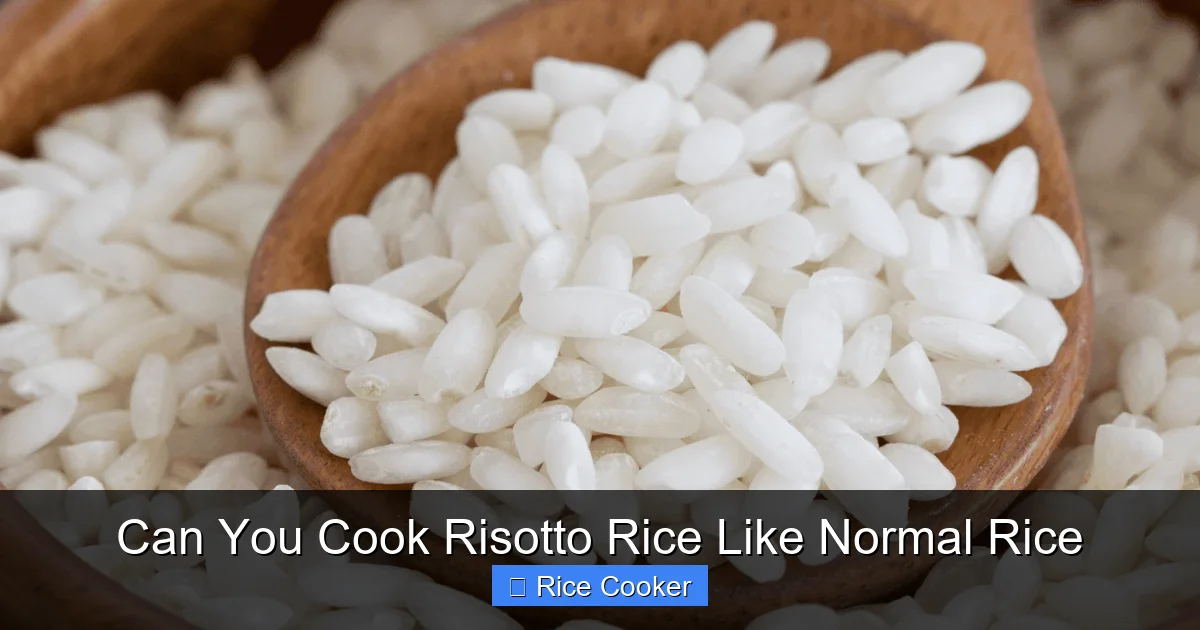
Can you cook risotto rice like normal rice? Yes, but with key differences. While both use similar grains like Arborio or Carnaroli, risotto requires slow, controlled cooking with constant stirring to build creamy texture. A standard rice cooker can work if adjusted—using less water and a manual or delayed-start setting—but traditional stovetop method remains ideal. Understanding these nuances ensures perfect results every time.
# Can You Cook Risotto Rice Like Normal Rice?
You’ve probably heard the question before: “Can you cook risotto rice like normal rice?” It seems simple enough—both are types of rice, right? But when it comes down to the kitchen, the answer isn’t just yes or no. It’s more like *yes, but…* with caveats, adjustments, and a deeper understanding of what makes risotto truly special.
Risotto is one of those dishes that feels fancy, almost ritualistic. There’s something comforting about watching a pot of golden grains slowly come together into a rich, creamy masterpiece. But what if you don’t want to stand at the stove for 20 minutes, constantly adding broth and swirling the pan? What if you just want to pop your risotto rice into the same machine you use for jasmine or basmati?
That’s where rice cookers enter the conversation—and where things get interesting.
In this article, we’ll explore whether you can actually cook risotto rice like normal rice, how to do it safely, and why some methods might leave you disappointed. We’ll also share pro tips so you can enjoy restaurant-quality risotto at home—whether you’re using a traditional pot or modern appliance.
So grab a glass of white wine (because you deserve it), and let’s dive in!
—
## Understanding Risotto Rice vs. Normal Rice
Before we talk cooking methods, it’s important to understand *what* makes risotto rice different from the kind you use for fried rice or pilafs.
Most risotto recipes call for short-grain rice—specifically varieties like Arborio, Carnaroli, or Vialone Nano. These aren’t your average supermarket white rice. They’re bred (or selected) for their high starch content and ability to retain shape while becoming incredibly creamy when cooked properly.
When you cook risotto rice on the stovetop, each grain absorbs liquid slowly, releasing amylopectin—a type of starch that thickens the surrounding liquid into a luxurious sauce. This process happens gradually, thanks to constant stirring and careful monitoring.
On the other hand, “normal” rice—think Jasmine, Basmati, or even long-grain American conversions—is designed to absorb water quickly and evenly. Once fully hydrated, it stops absorbing liquid. That’s why you see those little holes in the center after boiling—they’re air pockets letting steam escape.
This fundamental difference means **you cannot treat risotto rice the same way you treat regular rice**. Using the wrong liquid ratio or skipping stirring will turn your creamy dream into a gummy mess.
But here’s the good news: **with the right approach, your rice cooker *can* handle risotto rice—just not exactly like normal rice**.
—
## Can Rice Cookers Handle Risotto Rice?
Let’s address the elephant in the room: **yes, many rice cookers can cook risotto rice—but with limitations**.
Standard rice cookers operate on a simple cycle: heat water, add rice, wait, then automatically switch to warm mode once the water is absorbed. This works beautifully for plain white rice because it relies on consistent hydration.
However, risotto doesn’t rely solely on passive absorption. Its magic comes from active starch release—something best achieved through agitation and incremental liquid addition.
That said, some advanced models—especially Japanese-style rice cookers (like Zojirushi or Tiger brands)—come with specialized settings like “Porridge,” “Brown Rice,” or even “Manual” modes that allow you to control timing and temperature. These can mimic parts of the risotto process.
Even then, **expectations must be realistic**. A rice cooker won’t replicate the hands-on control of the stovetop method. You won’t get the same level of creamy consistency unless you modify the technique significantly.
—
## How to Cook Risotto Rice Like Normal Rice (Without Sacrificing Quality)
If you insist on using your rice cooker for risotto rice, here’s how to do it—without ending up with a soupy or undercooked disaster.
### Step 1: Choose the Right Rice
Start by selecting a true risotto rice: **Arborio, Carnaroli, or Vialone Nano**. Avoid medium-grain or long-grain varieties—they lack the starch needed for creaminess.
> 💡 *Tip:* Look for packages labeled specifically for risotto. Some grocery stores carry them near the pasta aisle.
### Step 2: Adjust the Liquid Ratio
Unlike normal rice (which uses ~2 cups water per 1 cup rice), risotto needs **less total liquid** but **more frequent additions**.
For rice cooker risotto, try:
– **1 cup risotto rice**
– **1.5 cups warm broth**
– **Optional:** ½ cup reserved pasta water or white wine for extra depth
Do NOT double the water! Too much liquid = weak, soupy risotto.
### Step 3: Use the Manual or Delay Timer Setting
If your rice cooker has a “Manual” or “Delayed Start” function, activate it. This lets you begin the process manually—adding oil, sautéing onions, and deglazing—before triggering the cook cycle.
Here’s a quick workflow:
1. Sauté diced onion in olive oil until soft.
2. Add rice and toast for 1–2 minutes.
3. Pour in ½ cup warm broth; stir gently.
4. Transfer mixture to rice cooker.
5. Add remaining broth and start the “Manual” mode for 20–25 minutes.
6. Stir halfway through.
This mimics the stovetop method while leveraging automation.
### Step 4: Stir During Cooking (Yes, Even in a Machine!)
Even with a rice cooker, **stirring is non-negotiable**. Pause the machine every few minutes to mix everything. This helps distribute heat and encourages starch release.
> ⚠️ Warning: Don’t skip stirring! Without it, your risotto will be uneven—some grains sticky, others dry.
### Step 5: Finish with Butter and Parmesan
Once done, remove the rice cooker from heat. Add a knob of butter and a generous shaving of Parmigiano-Reggiano. Cover with a lid and let sit for 2–3 minutes. This final step locks in moisture and creates that glossy finish.
—
## Why Traditional Stovetop Method Still Reigns Supreme
Despite the convenience of a rice cooker, most chefs agree: **the classic stovetop method delivers superior results**.
Why? Because it allows real-time feedback. You can taste, adjust seasoning, and control texture precisely. The gradual addition of warm broth, combined with constant stirring, builds complexity and creaminess that machines struggle to match.
Plus, the caramelization of aromatics (onions, garlic, maybe even pancetta) happens faster on direct flame—enhancing flavor depth.
That said, if you’re short on time or mobility issues prevent standing at the stove, a well-adjusted rice cooker method is still better than giving up entirely.
—
## Common Mistakes When Cooking Risotto Rice Like Normal Rice
People often fail at risotto because they assume it’s just “rice + water.” Here are the top mistakes—and how to avoid them.
### Mistake #1: Using Too Much Water
As mentioned earlier, risotto needs less liquid overall. Using the same ratio as white rice turns it into a mushy porridge.
✅ Fix: Stick to 1.5–2 cups broth per cup of rice, added gradually.
### Mistake #2: Skipping the Toast
Toasting the rice in fat before adding liquid helps coat each grain, preventing clumping and enhancing flavor.
✅ Fix: Always sauté rice for 1–2 minutes before introducing liquid.
### Mistake #3: Not Using Warm Broth
Cold broth shocks the rice, slowing absorption and disrupting texture.
✅ Fix: Keep broth simmering nearby—add it warm every few minutes.
### Mistake #4: Overcooking
Risotto should be al dente—still slightly firm in the center. Overcooking makes it gluey.
✅ Fix: Taste frequently toward the end. It should be creamy but not soupy.
### Mistake #5: Ignoring Resting Time
Just like pasta, risotto benefits from resting off heat.
✅ Fix: Let it sit covered for 2–3 minutes after cooking. It finishes perfectly.
—
## Best Practices for Perfect Risotto Every Time
Want consistent success? Follow these pro-level tips.
### Tip 1: Preheat Your Broth
Keep broth at a gentle simmer throughout cooking. This maintains even heat transfer.
### Tip 2: Measure Accurately
Use measuring cups for rice and broth. Volume varies by brand and humidity.
### Tip 3: Stir Gently but Consistently
Avoid aggressive scraping—you want to release starch, not tear apart grains.
### Tip 4: Season Strategically
Add salt early (in broth), but finish with fresh herbs or citrus zest for brightness.
### Tip 5: Experiment with Flavors
Try mushroom, saffron, seafood, or roasted vegetable risottos. The base technique stays the same.
—
## FAQs
Is risotto rice the same as arborio rice?
Yes, arborio rice is one of the most common risotto varieties. Others include carnaroli and vialone nano—all short-grain types prized for their creamy texture when cooked properly.
Can I use a rice cooker for risotto?
Yes, but only if it has a manual or delay timer setting. Even then, expect slightly less creamy results than stovetop cooking. Adjust liquid ratios carefully and stir during the process.
How much liquid do I need for risotto?
Typically, 1.5 to 2 cups of broth per cup of rice. Unlike regular rice, risotto uses less total liquid because it’s added incrementally rather than all at once.
Why is my risotto too runny?
This usually happens from using too much liquid or not stirring enough. Make sure you’re adding broth gradually and tasting regularly. If it’s still soupy, let it cook a bit longer—but don’t overdo it!
Can I make risotto in advance?
Technically yes, but quality drops quickly. Risotto reheats best the next day when chilled and warmed with a splash of broth. For immediate serving, serve immediately after resting.
What’s the secret to creamy risotto?
The secret lies in constant stirring, warm broth, and patience. Each grain releases starch slowly, building a velvety sauce. Don’t rush the process!
Key Takeaways
- Understanding can you cook risotto rice like normal rice: Provides essential knowledge
Frequently Asked Questions
What is can you cook risotto rice like normal rice?
can you cook risotto rice like normal rice is an important topic with many practical applications.