
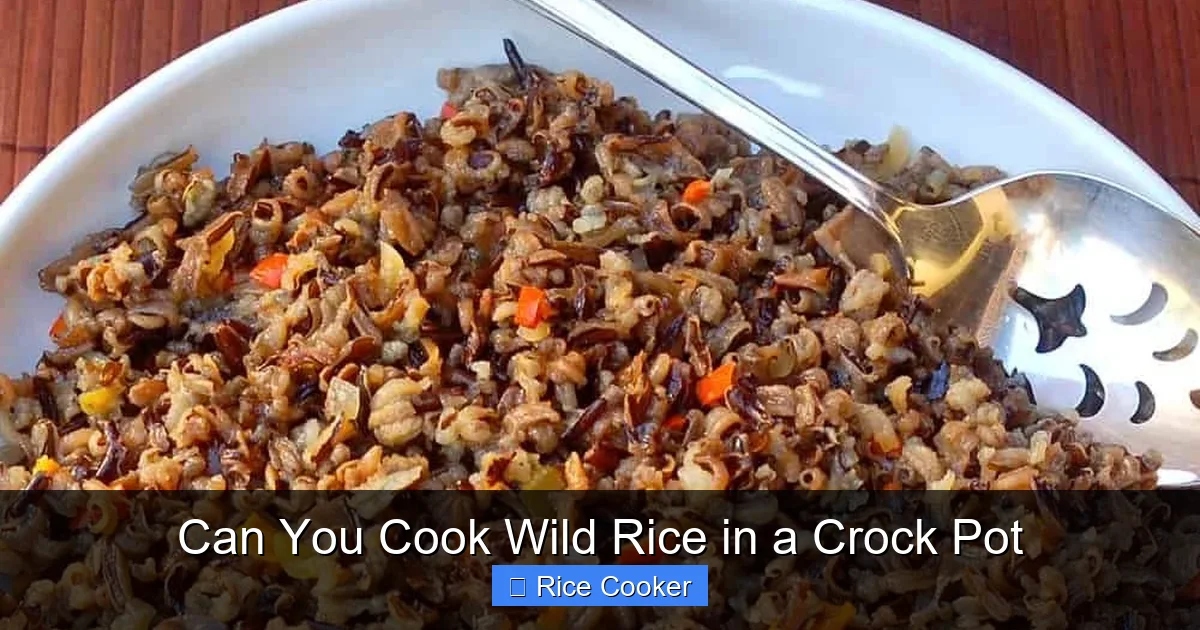
Wild rice takes time to cook properly—but your crock pot makes it simple. Unlike quick-cooking white rice, wild rice needs longer soaking and simmering to reach the perfect texture. Using a slow cooker not only saves you from watching the stove but also infuses the rice with subtle flavors from added broth or herbs. With just a few extra minutes of prep, you’ll have fluffy, nutty-tasting wild rice ready to serve as a side dish or base for salads and bowls.
Key Takeaways
- Wild rice expands when cooked: It triples in volume, so use 1 cup uncooked per 3 cups cooked—ideal for meal prep or feeding a crowd.
- Soaking is optional but helpful: While some recipes skip soaking, a quick soak helps reduce cooking time and ensures even tenderness.
- Crock pot settings matter: Low heat over 4–6 hours usually works best; high heat risks drying out the rice or creating mush.
- Add liquid carefully: Use broth instead of water for deeper flavor, and don’t exceed a 2:1 liquid-to-rice ratio (by dry measure).
- Season after cooking: Salt, butter, or fresh herbs taste better added at the end since they won’t dissolve into the starchy grains.
- Store leftovers wisely: Cool completely, then refrigerate for up to 5 days or freeze for up to 3 months—great for future grain bowls!
📑 Table of Contents
- Can You Cook Wild Rice in a Crock Pot?
- Why Choose a Crock Pot for Wild Rice?
- What Is Wild Rice, Anyway?
- How Long Does It Take to Cook Wild Rice in a Crock Pot?
- Step-by-Step Guide: Cooking Wild Rice in Your Crock Pot
- Tips for Perfect Wild Rice Every Time
- Common Mistakes to Avoid
- Serving Ideas and Recipe Pairings
- Storing and Reheating Leftovers
- Frequently Asked Questions About Cooking Wild Rice in a Crock Pot
Can You Cook Wild Rice in a Crock Pot?
If you’ve ever stared at a bag of wild rice wondering how long it’ll take to cook, you’re not alone. Wild rice isn’t actually rice—it’s the seed of several species of aquatic grasses native to North America. Its rich, earthy flavor and chewy texture make it a favorite in soups, stews, and pilafs. But unlike instant white rice, wild rice demands patience. Traditionally, it simmers on the stove for 45 minutes to an hour. That sounds doable—until you’re juggling dinner prep, kids, and work emails. Enter the crock pot.
Using a slow cooker to prepare wild rice might sound unconventional, but it’s actually one of the gentlest ways to achieve perfectly cooked grains without babysitting the pot. The low-and-slow method allows starches to break down evenly, resulting in tender kernels with just the right bite. Plus, once you toss everything in the pot, you can forget about it until mealtime. Whether you’re making a Thanksgiving side dish or prepping lunches for the week, this hands-off approach delivers consistent results every time.
Why Choose a Crock Pot for Wild Rice?
You might be thinking, “Isn’t wild rice too delicate for a slow cooker?” Not necessarily. While traditional stovetop methods give you precise control, the crock pot offers unique advantages. First, it eliminates constant stirring and checking. Second, the enclosed environment helps retain moisture, which is crucial for preventing dry, chalky grains. Third, you can build layers of flavor by adding aromatics like onions, garlic, or bay leaves directly into the pot.
Another benefit? Batch cooking. Wild rice keeps well in the fridge or freezer, so making a big pot in your crock pot means you’ve got backup sides for days. Just remember that wild rice expands significantly when cooked—about three times its original volume—so plan accordingly. A single 1-cup serving becomes three generous cups of finished rice.
What Is Wild Rice, Anyway?
Before we dive into the how-to, let’s clarify what wild rice really is. Botanically speaking, true wild rice (Zizania palustris) grows naturally in lakes and rivers across Canada and the northern United States. It’s harvested by hand or with small boats, making it more labor-intensive than farmed varieties. Today, most wild rice sold commercially is actually cultivated—still grown in paddies rather than natural wetlands—but it retains the same nutritional profile and distinctive flavor.
Wild rice stands out because it’s packed with fiber, protein, and antioxidants. One cup of cooked wild rice provides roughly 8 grams of protein and 3.5 grams of fiber—more than brown rice or white rice. It’s also gluten-free and low on the glycemic index, making it a smart choice for health-conscious eaters. When shopping, look for whole-grain kernels labeled “black,” “brown,” or “red” wild rice, depending on the variety. Each has slightly different textures and colors, but all work beautifully in a crock pot.
How Long Does It Take to Cook Wild Rice in a Crock Pot?
Timing is everything when it comes to wild rice. On the stovetop, expect 45–60 minutes of active simmering. In a crock pot, the process takes longer—typically 4 to 6 hours on LOW or 2.5 to 3.5 hours on HIGH. Why such a difference? Slow cookers operate at lower temperatures, which allows the hard outer hull of wild rice kernels to soften gradually without bursting apart.
For best results, start with raw, unrinsed wild rice. Rinsing removes surface starch but can leach away some nutrients and natural oils that contribute to flavor. Instead, give the rice a quick rinse under cold water before adding it to the crock pot. Then combine it with liquid—usually water or broth—at a ratio of 2 parts liquid to 1 part rice (dry measure). For example, if you’re using 1 cup of wild rice, add 2 cups of broth.
Here’s a simple timeline:
– Preparation: Rinse rice (optional), chop aromatics, gather ingredients.
– Cooking Time: 4–6 hours on LOW (recommended); 2.5–3.5 hours on HIGH.
– Finishing Touches: Fluff with fork, stir in butter or seasonings, rest 10 minutes before serving.
Keep in mind that even after cooking, wild rice benefits from a short rest. Letting it sit covered for 10–15 minutes allows steam to redistribute evenly, yielding fluffier grains.
Step-by-Step Guide: Cooking Wild Rice in Your Crock Pot
Ready to try it yourself? Follow these easy steps for foolproof wild rice every time.
Gather Your Ingredients
You’ll need:
– 1 cup uncooked wild rice (raw, not pre-cooked)
– 2 cups liquid (water, vegetable broth, chicken broth, or a mix)
– Optional flavor boosters: 1/4 chopped onion, 2 minced garlic cloves, 1 bay leaf, pinch of salt, 1 tbsp olive oil or butter
Prepare the Rice
Place wild rice in a fine-mesh strainer and rinse briefly under cool running water. Shake off excess water—don’t rub or soak the rice beforehand unless you’re short on time. Overnight soaking isn’t necessary, though a 30-minute soak can help reduce total cooking time by about 30 minutes.
Combine Everything in the Crock Pot
Add rinsed rice and liquid to the slow cooker. If using aromatics, scatter them on top. Drizzle with oil or dot with butter for richness. Stir gently to combine.
Set the Timer
Cover and cook on LOW for 5–6 hours or HIGH for 3–4 hours. Avoid opening the lid frequently—every time you lift it, heat escapes and extends cooking time. Check near the end: grains should be tender but still slightly chewy, with some translucent tips.
Test for Doneness
Use a fork to test a few kernels. They should yield easily when pinched between fingers but shouldn’t be mushy. If still firm, replace lid and cook another 30 minutes.
Fluff and Season
Once done, remove any bay leaves or large aromatics. Fluff the rice with a fork, then stir in butter, salt, or fresh herbs like parsley or chives. Cover again and let rest 10 minutes before serving.
Pro tip: For creamier texture, mash a few cooked kernels against the side of the bowl before mixing back in.
Tips for Perfect Wild Rice Every Time
Even experienced cooks hit snags with wild rice—it’s finicky by nature. Here are insider tricks to keep things smooth.
Don’t Overcrowd the Pot
Crock pots vary in size, but aim to use no more than 1.5 cups of dry wild rice per standard 6-quart model. Too much rice competes for heat and moisture, leading to uneven cooking.
Use Quality Broth
Water works fine, but broth adds depth. Vegetable or mushroom broth pairs especially well with wild rice’s earthy notes. Avoid salty broths if you plan to add extra salt later.
Resist Opening the Lid
Each time you lift the lid, you lose 10–20 minutes of cooking time. Only peek during the last 30 minutes to check doneness.
Adjust Liquid if Needed
If rice looks dry after cooking, add 1–2 tablespoons of hot water, cover, and simmer 5 minutes. Conversely, if too wet, transfer to a baking sheet lined with parchment, spread thin, and broil 3–5 minutes to evaporate excess moisture.
Cool Quickly After Cooking
To prevent sogginess, cool cooked rice within 2 hours. Spread it on a rimmed baking sheet while still warm to speed evaporation.
Reheat Smartly
Never microwave cold wild rice straight from the fridge. Instead, place it in a saucepan with a splash of water or broth, cover, and warm over low heat, stirring occasionally.
Experiment with Add-ins
Try mixing dried cranberries, toasted almonds, or sautéed mushrooms into the final dish for extra dimension. Wild rice holds onto flavors beautifully!
Common Mistakes to Avoid
Despite its reputation, wild rice doesn’t have to be intimidating. Most failures come from common oversights.
Mistake #1: Skipping the Rinse
While not mandatory, a quick rinse removes dirt and debris. Some brands are cleaner than others, so it never hurts to rinse.
Mistake #2: Using Pre-Cooked Wild Rice
Pre-cooked wild rice is meant for quick recipes like salads or casseroles. It breaks apart easily and won’t hold shape in a slow cooker.
Mistake #3: Adding Salt Before Cooking
Salt draws out moisture during cooking, potentially making rice gummy. Always season after it’s done.
Mistake #4: Ignoring Expansion
Remember: 1 cup becomes 3 cups. Plan portions accordingly to avoid waste or disappointment.
Mistake #5: Cooking on High All the Way
High heat can scorch the bottom or dry out the top before the center finishes. Stick to LOW unless you’re in a real hurry.
Mistake #6: Storing in the Crock Pot
Leftovers belong in airtight containers, not the slow cooker itself. Clean the insert immediately to prevent lingering odors.
Serving Ideas and Recipe Pairings
Wild rice shines as a versatile side dish, but its nutty flavor also elevates main courses and even desserts (yes, really!). Here are creative ways to enjoy your crock pot creation.
Classic Wild Rice Pilaf
Sauté diced onions and celery in butter until soft. Add cooked wild rice, thyme, sage, and a splash of apple cider vinegar. Warm through and garnish with toasted pecans.
Hearty Soup Base
Use leftover cooked wild rice as the foundation for minestrone, gumbo, or creamy mushroom soup. The grains absorb broth wonderfully and add satisfying heft.
Grain Bowls
Layer wild rice with roasted sweet potatoes, black beans, avocado, and tahini dressing. Top with pickled red onions and pumpkin seeds.
Stuffed Bell Peppers
Mix cooked wild rice with ground turkey, tomatoes, corn, and spices. Stuff into halved peppers and bake until tender.
Dessert Twist
Combine wild rice with coconut milk, cinnamon, dates, and toasted walnuts for a warm breakfast porridge or snack.
No matter how you serve it, wild rice brings warmth and nutrition to any plate. And thanks to your crock pot, preparing it feels less like a chore and more like magic.
Storing and Reheating Leftovers
Wild rice keeps exceptionally well—if handled correctly. Once cooled to room temperature (within 2 hours), transfer to an airtight container. Refrigerate for up to 5 days or freeze for up to 3 months. Frozen rice maintains quality best when stored in portion-sized bags to minimize repeated thawing.
When reheating, never use the microwave on high for more than 1 minute at a time. Instead, place rice in a saucepan with a tablespoon of water or broth, cover tightly, and warm over medium-low heat, stirring halfway through. Alternatively, steam in a colander over boiling water for 5–7 minutes.
Avoid reheating in the crock pot unless it’s still warm from initial cooking. Cold rice can introduce bacteria into the appliance’s heating element.
Frequently Asked Questions About Cooking Wild Rice in a Crock Pot
Do I need to soak wild rice before cooking in a crock pot?
Soaking isn’t required, but a 30-minute soak can reduce cooking time by about 30 minutes and promote even tenderness. Simply place rice in a bowl, cover with cold water, and let sit for 30 minutes before draining.

Visual guide about Can You Cook Wild Rice in a Crock Pot
Image source: eatingonadime.com

Visual guide about Can You Cook Wild Rice in a Crock Pot
Image source: cookingtipsblog.com
Can I substitute vegetable broth for water?
Absolutely! Broth adds rich flavor without altering texture. Use unsalted broth if you’re sensitive to sodium, and adjust final seasoning as needed.
Why did my wild rice turn out mushy?
Mushiness usually results from overcooking or too much liquid. Ensure you’re using the correct 2:1 liquid-to-ratio and avoid lifting the lid frequently. Test doneness early if needed.
Is pre-cooked wild rice okay in a crock pot?
Not ideal. Pre-cooked wild rice is designed for cold dishes like salads. In a slow cooker, it breaks apart and loses structural integrity.
Can I add other grains to the crock pot with wild rice?
Yes, but adjust timing. Quinoa cooks faster (15–20 mins), so add it during the last 30 minutes. Barley or farro may need longer and could require pre-soaking.
How do I prevent wild rice from sticking to the crock pot?
Use enough liquid (minimum 2 cups per 1 cup rice) and avoid stirring too often. Non-stick inserts help, but gentle folding with a wooden spoon is usually sufficient.
Frequently Asked Questions
Do I need to soak wild rice before cooking in a crock pot?
Soaking isn’t required, but a 30-minute soak can reduce cooking time by about 30 minutes and promote even tenderness. Simply place rice in a bowl, cover with cold water, and let sit for 30 minutes before draining.
Can I substitute vegetable broth for water?
Absolutely! Broth adds rich flavor without altering texture. Use unsalted broth if you’re sensitive to sodium, and adjust final seasoning as needed.
Why did my wild rice turn out mushy?
Mushiness usually results from overcooking or too much liquid. Ensure you’re using the correct 2:1 liquid-to-ratio and avoid lifting the lid frequently. Test doneness early if needed.
Is pre-cooked wild rice okay in a crock pot?
Not ideal. Pre-cooked wild rice is designed for cold dishes like salads. In a slow cooker, it breaks apart and loses structural integrity.
Can I add other grains to the crock pot with wild rice?
Yes, but adjust timing. Quinoa cooks faster (15–20 mins), so add it during the last 30 minutes. Barley or farro may need longer and could require pre-soaking.
How do I prevent wild rice from sticking to the crock pot?
Use enough liquid (minimum 2 cups per 1 cup rice) and avoid stirring too often. Non-stick inserts help, but gentle folding with a wooden spoon is usually sufficient.