
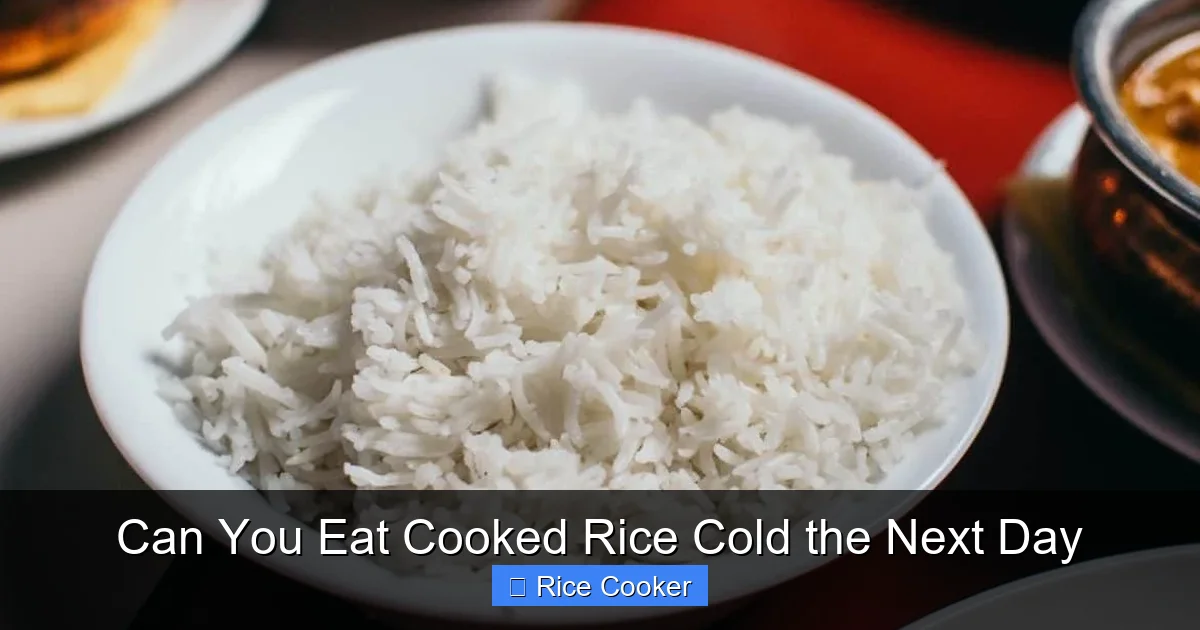
Can you eat cooked rice cold the next day? Absolutely—but only if handled correctly. Cold rice is safe to consume as long as it’s cooled quickly and refrigerated promptly to prevent bacterial growth. With proper storage, cold rice becomes a convenient, tasty addition to salads, stir-fries, or snacks.
Key Takeaways
- Safety First: Eating cold rice the next day is generally safe when stored at 40°F (4°C) or below within two hours of cooking.
- Bacillus Cereus Risk: Raw rice contains spores of Bacillus cereus, which can survive cooking and multiply in warm, moist environments.
- Proper Cooling: Cool rice quickly by spreading it on a shallow pan or dividing into smaller portions to avoid condensation buildup.
- Storage Tips: Store cold rice in airtight containers, label with date, and use within 3–5 days for best quality and safety.
- Reheating Matters: While cold rice is fine to eat straight from the fridge, reheating it kills any potential bacteria and improves texture.
- Uses for Cold Rice: Cold rice works great in fried rice, rice bowls, sushi rolls, salads, and casseroles.
- Freezing Option: For longer storage, freeze rice in portions and thaw as needed—ideal for meal prep.
[FEATURED_IMAGE_PLACEHOLDER]
Key Takeaways
- Understanding can you eat cooked rice cold the next day: Provides essential knowledge
📑 Table of Contents
- Can You Eat Cooked Rice Cold the Next Day?
- Understanding the Science Behind Stored Rice
- Safe Storage Practices for Cooked Rice
- How to Tell If Cold Rice Has Gone Bad
- Reheating Cold Rice Safely
- Creat Ways to Use Cold Rice
- Special Considerations: Brown vs. White Rice
- Common Myths About Cold Rice
- Tips for Meal Preppers and Busy Families
- Final Thoughts: Cold Rice Is Convenient and Delicious
Can You Eat Cooked Rice Cold the Next Day?
Have you ever had leftover rice sitting in your fridge, wondering if it’s still good? Or maybe you’re meal prepping for the week and want to know if cold rice is safe to eat? If so, you’re not alone. Many home cooks and busy families rely on leftover rice as a quick, affordable staple—but there’s often confusion about whether eating cold rice the next day is safe or even tasty.
The short answer? Yes, you can eat cooked rice cold the next day—but only if it’s been stored properly. In this guide, we’ll break down everything you need to know: how to store rice safely, how to tell if it’s gone bad, how to reheat it without drying it out, and creative ways to use cold rice in your favorite dishes. Whether you’re using a rice cooker, stovetop, or microwave, these tips will help you enjoy every last grain—cold, warm, or anywhere in between.
Understanding the Science Behind Stored Rice

Visual guide about Can You Eat Cooked Rice Cold the Next Day
Image source: webstaurantstore.com
Before diving into tips and recipes, let’s talk about why rice becomes a potential food safety concern when left out too long.
Rice, especially white rice, is commonly contaminated with spores of Bacillus cereus before it’s cooked. These spores are heat-resistant, meaning they survive the boiling process. Once cooked rice is allowed to sit at room temperature—especially in warm environments—these spores can begin to grow and produce toxins that cause food poisoning. Symptoms typically appear 6 to 18 hours after eating contaminated rice and include nausea, vomiting, and diarrhea.
This is why the “danger zone” for food (between 40°F and 140°F or 4°C and 60°C) is so critical. Bacteria thrive in this temperature range. So, the key to safe cold rice isn’t just refrigeration—it’s cooling it quickly and keeping it consistently chilled.
How Long Is Cold Rice Safe?
When stored in an airtight container in the refrigerator at 40°F (4°C) or below, cooked rice remains safe to eat for up to 5 days. After that, flavor and texture may degrade, though it’s not necessarily unsafe. For optimal taste and safety, aim to consume cold rice within 3 to 5 days.
If you freeze rice, it can last up to 6 months, but quality starts to decline after a few weeks. Frozen rice should be thawed in the refrigerator or under cold running water before use.
Safe Storage Practices for Cooked Rice
Visual guide about Can You Eat Cooked Rice Cold the Next Day
Image source: m.media-amazon.com
Proper storage is the most important factor in determining whether your cold rice is safe to eat. Follow these steps to minimize risk and keep your rice fresh:
Cooling Rice Quickly
After cooking, rice should not sit at room temperature for more than two hours. The longer it stays warm and moist, the higher the chance of bacterial growth. To cool rice rapidly:
– Spread it out in a shallow baking sheet or divide it into small, flat layers.
– Use a fan or place the tray near an open window to speed airflow.
– Stir occasionally to release heat evenly.
Avoid leaving rice in a large pot or bowl—this traps steam and creates ideal conditions for bacteria.
Using Airtight Containers
Once cooled, transfer rice to clean, airtight containers or resealable plastic bags. Make sure the container is dry before adding rice—moisture promotes mold and spoilage.
Label each container with the date so you can track how long it’ve been stored. This helps prevent accidentally eating older rice.
Refrigeration Tips
Place containers in the coldest part of your fridge—usually the back shelves, away from the door. Avoid storing rice near raw meat or fish to prevent cross-contamination.
Never leave rice out overnight or during parties. If you’re serving rice at a picnic or event, use a chafing dish with ice underneath to keep it cold.
How to Tell If Cold Rice Has Gone Bad
Even with proper storage, rice can spoil over time. Here’s how to spot signs of spoilage:
Smell and Texture
Fresh cold rice should have a neutral, slightly starchy smell. If it smells sour, fermented, or off, discard it immediately. Mold is another red flag—look for fuzzy spots or discoloration.
Cold rice should also feel firm and not slimy. Sliminess indicates bacterial growth and is never safe to eat.
Check for Odors
Trust your nose. If the rice smells like vinegar, ammonia, or something unpleasantly sweet, it’s likely spoiled. Don’t risk eating it.
Visual Inspection
Inspect the surface and edges of the rice. Discoloration (green, black, or gray patches) suggests mold. Also, if the rice has separated into liquid and solids, it’s best to toss it.
Reheating Cold Rice Safely
While you *can* eat cold rice straight from the fridge, many people prefer it warmed up. Reheating kills any remaining bacteria and brings back a better texture.
Microwave Method
For best results, add a splash of water to the rice before microwaving to prevent drying. Cover the dish with a damp paper towel or lid to trap moisture.
Heat in 30-second intervals, stirring between each, until steaming hot throughout. Make sure no cold spots remain.
Stovetop or Oven
In a saucepan, heat cold rice with a bit of oil or broth over low-medium heat, stirring frequently. This prevents sticking and ensures even warming.
Ovens work well for larger batches—spread rice on a baking sheet, cover with foil, and heat at 350°F (175°C) for 10–15 minutes.
Avoid the Danger Zone
Never reheat rice more than once. Each reheating cycle increases the risk of bacterial growth. Instead, portion rice when storing and only reheat what you plan to eat.
Creat Ways to Use Cold Rice
One of the best things about cold rice is its versatility. It holds its shape better than warm rice, making it perfect for many dishes.
Fried Rice
Cold rice is the secret ingredient in restaurant-style fried rice. The grains stay separate, absorbing flavors from soy sauce, garlic, and vegetables. Sauté rice in oil with beaten eggs, diced veggies, and protein for a quick, satisfying meal.
Rice Bowls and Salads
Add cold rice to grain bowls with roasted vegetables, grilled chicken, avocado, and tahini dressing. For a salad, toss rice with cucumbers, cherry tomatoes, herbs, and a vinaigrette.
Sushi and Sashimi Rolls
If you’re making sushi at home, cold rice is essential. Vinegar-seasoned, chilled rice clings together perfectly when rolled. Use a bamboo mat and a light touch to form neat, tasty rolls.
Stuffings and Casseroles
Use cold rice in stuffing for poultry, shepherd’s pie, or baked ziti. Its firm texture holds up well in baked dishes without turning mushy.
Snacks and Appetizers
Make rice balls (onigiri) with fillings like tuna, pickled plum, or cheese. Roll them in nori or sesame seeds for a crunchy snack.
Special Considerations: Brown vs. White Rice
Not all rice behaves the same when stored. Brown rice, because it retains its bran layer, has a shorter shelf life and is more prone to rancidity. It should always be stored in the refrigerator and used within 3 days.
White rice, on the other hand, lasts longer due to its refined nature. Still, follow the same storage rules to ensure safety.
Both types benefit from being cooked with a bit more water—about 1.5 cups per cup of rice—to compensate for moisture loss during storage.
Common Myths About Cold Rice
There are plenty of myths floating around about eating cold rice. Let’s clear them up:
Myth: Cold rice is always unsafe
False. Cold rice is safe if stored properly. The danger comes from improper cooling or storage, not the temperature itself.
Myth: You must reheat rice every time
Not true. While reheating reduces risk, eating cold rice directly from the fridge is perfectly fine—and often preferred in dishes like sushi or rice salads.
Myth: Freezing ruins rice forever
Not necessarily. While texture may change slightly upon thawing, frozen rice is safe and convenient for meal prep.
Myth: All leftover rice causes food poisoning
No. Only improperly handled rice leads to illness. Follow food safety guidelines, and you’ll be fine.
Tips for Meal Preppers and Busy Families
If you’re relying on cold rice for quick meals, here are some pro tips:
– Batch Cook and Portion: Cook a large batch of rice on Sunday, divide into meal-sized portions, and freeze for later.
– Use Ice Baths: After cooking, plunge the pot in an ice bath to cool rice fast—ideal for large quantities.
– Invest in Good Containers: Glass or BPA-free plastic containers with tight seals make storage easy and safe.
– Rotate Stock: Use older rice first. Keep a mental or written log of what you’ve stored.
Final Thoughts: Cold Rice Is Convenient and Delicious
So, can you eat cooked rice cold the next day? Yes—absolutely. With the right techniques, cold rice is not only safe but also incredibly useful in the kitchen. It’s a pantry staple that saves time, reduces waste, and adds texture to countless dishes.
Whether you’re making a quick lunch, prepping for dinner, or crafting homemade sushi, knowing how to handle and store rice properly gives you peace of mind. Remember: speed, temperature control, and cleanliness are your best friends when it comes to rice safety.
Next time you have leftover rice, don’t toss it. Refrigerate it, use it creatively, and enjoy every grain—warm or cold.
Frequently Asked Questions
Is it safe to eat cold rice from the day before?
Yes, cold rice is safe to eat the next day as long as it was cooled within two hours of cooking and stored in the refrigerator at or below 40°F (4°C). Proper storage prevents bacterial growth.
How long does cold rice last in the fridge?
Stored correctly, cold rice lasts 3 to 5 days in the refrigerator. After that, quality declines, though it’s not necessarily unsafe—use your senses to check for spoilage.
Should I reheat cold rice before eating?
It’s not required, but reheating kills bacteria and improves texture. If you’re eating it cold, make sure it’s been stored properly and hasn’t exceeded the 5-day mark.
Can I freeze cooked rice?
Yes, cooked rice freezes well for up to 6 months. Portion it into containers or freezer bags, label with the date, and thaw in the fridge before use.
Why does my cold rice smell sour?
A sour odor indicates spoilage. Discard rice that smells off, slimy, or shows signs of mold. Never eat rice with an unpleasant smell.
Is brown rice safer than white rice for cold storage?
No, brown rice has a shorter shelf life and is more prone to rancidity due to its bran layer. Both types require proper storage, but brown rice should be used within 3 days when refrigerated.