

Yes, you can often fix undercooked rice in a rice cooker, but timing matters. The key is adding just the right amount of water or steam to help the grains finish cooking without becoming mushy. With a few smart techniques, even slightly undercooked batches can be salvaged into fluffy, delicious rice.
Key Takeaways
- Timing is crucial: Fixing undercooked rice works best within 5–10 minutes of turning off the rice cooker.
- Add small amounts of water: Use a teaspoon at a time to avoid making the rice soggy.
- Steam method helps: Covering with a damp cloth or lid traps moisture and finishes cooking gently.
- Avoid over-stirring: Stirring too much breaks apart the grains and ruins texture.
- Prevention beats repair: Proper water ratios, rinsing, and using the correct settings reduce undercooking.
- Rice type affects results: Different grains (white, brown, jasmine, basmati) have unique cooking needs.
- Some rice is irreparable: If rice has been sitting cold or cooked too long, reheating won’t fix it.
📑 Table of Contents
- Can You Fix Undercooked Rice in Rice Cooker?
- Understanding Why Rice Might Be Undercooked
- Quick Fixes for Undercooked Rice in a Rice Cooker
- Preventing Undercooked Rice: Pro Tips for Perfect Results
- What Not to Do When Fixing Undercooked Rice
- When Undercooked Rice Can’t Be Fixed
- Advanced Techniques for Specialty Rices
- Frequently Asked Questions
- Conclusion: Mastering the Art of Rice
Can You Fix Undercooked Rice in Rice Cooker?
We’ve all been there—you press the button on your rice cooker, walk away to get ready for work, come back, and find that your rice is still hard and crunchy at the center. It’s frustrating, especially when you’re trying to feed a family or prepare a meal in a hurry. The good news? Most undercooked rice can be fixed in a rice cooker, but only if you act quickly and use the right technique. In this comprehensive guide, we’ll walk you through everything you need to know about rescuing undercooked rice, preventing future mishaps, and mastering the art of perfectly cooked grains every single time.
Whether you’re dealing with a batch of white rice that’s still chewy or a pot of brown rice that didn’t absorb enough water, we’ll show you step-by-step methods to bring your rice back to life. We’ll also explain why rice sometimes undercooks in the first place and how to avoid common mistakes. By the end of this article, you’ll feel confident handling any rice-related crisis and turning it into a success story. So grab your rice cooker, and let’s fix that undercooked rice!
Understanding Why Rice Might Be Undercooked
Before we dive into fixing undercooked rice, it’s important to understand what causes it in the first place. Rice cookers are designed to automate the cooking process, but they’re not magic machines. They rely on precise measurements and timing to do their job well. When something goes wrong—like using too little water, not rinsing the rice, or interrupting the cycle—the result can be rice that’s still firm or gummy at the core.
Visual guide about Can You Fix Undercooked Rice in Rice Cooker
Image source: ricecookerjunkie.com
Common Causes of Undercooked Rice
Lack of Water: This is the most frequent reason rice doesn’t cook fully. Each type of rice has a specific water-to-rice ratio. For example, white rice typically uses a 1:1.5 ratio (1 cup rice to 1.5 cups water), while brown rice needs more because it has a harder outer layer. Using too little water leaves the center dry and hard.
Unrinsed Rice: Rice sold in stores often contains excess starch from milling. Without rinsing, this starch coats the grains and prevents proper absorption of water, leading to uneven cooking. Rinsing removes the surface starch and helps each grain cook evenly.
Old or Low-Quality Rice: Stale rice or rice that’s been stored improperly may not absorb water as well. Old rice can also clump together, creating pockets that resist cooking.
Interrupted Cooking Cycle: If the rice cooker is unplugged, opened too soon, or left unattended during the warming phase, the rice may stop cooking before reaching full doneness. Some models have a keep-warm function, but it doesn’t actually cook the rice—it just maintains temperature.
Incorrect Settings: Many modern rice cookers have multiple settings (e.g., white rice, brown rice, quick cook). Choosing the wrong setting can lead to undercooked results. For instance, using the “quick cook” setting on brown rice will likely leave it crunchy inside.
How to Tell If Rice Is Undercooked
It’s easy to spot undercooked rice once it’s done. Look for these signs:
- Hard center: When you bite into a grain, it feels firm or chewy instead of soft.
- White spots in the middle: These indicate uncooked starch that never absorbed moisture.
- Gummy or doughy texture: Sometimes, especially with brown rice, the outside may be soft while the inside remains tough.
- Steam escaping unevenly: During cooking, you might notice steam coming out from the sides or lid rather than steadily from the center—a sign the rice isn’t absorbing water properly.
If you catch these signs early—before the rice cools completely—you have a good chance of fixing it. But once the rice sits for more than 10–15 minutes, the starches set, and reheating won’t help much.
Quick Fixes for Undercooked Rice in a Rice Cooker
The secret to fixing undercooked rice lies in adding just enough moisture and heat to finish the cooking process. The longer the rice sits after being turned off, the less effective these fixes become. Here are several tried-and-true methods you can try immediately after opening the lid.
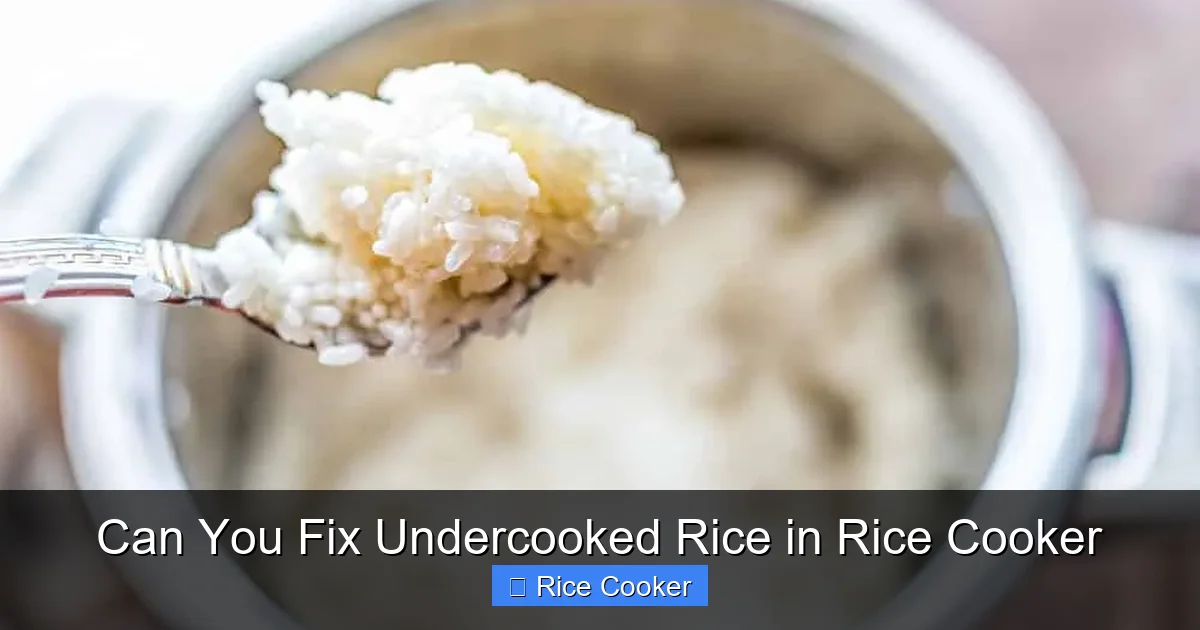
Visual guide about Can You Fix Undercooked Rice in Rice Cooker
Image source: missvickie.com
Method 1: Add Hot Water Gradually
This is the most direct approach. If your rice is still warm and moist but undercooked, you can add small amounts of hot water to help it finish cooking.
Steps:
- Turn off the rice cooker and unplug it for safety.
- Open the lid carefully—steam may escape.
- Check the rice. If it’s still slightly damp and warm, proceed.
- Add 1 teaspoon of hot tap water (not boiling, to avoid shocking the grains).
- Stir gently with a fork, then close the lid and plug the cooker back in.
- Cook for 3–5 minutes on the “cook” setting.
- Check again. If still undercooked, repeat with another teaspoon of water.
Pro Tip: Never add cold water. Cold water can cause the outer layers of the rice to over-absorb moisture while the inner part stays hard. Always use warm or hot water.
Method 2: Steam It Gently
This method uses ambient steam to finish cooking the rice without disturbing the grains too much.
Steps:
- After turning off the rice cooker, remove the inner pot.
- Dampen a clean kitchen towel or paper towel with hot water.
- Place the damp cloth over the top of the rice.
- Return the pot to the rice cooker base (or place it on a trivet above a saucepan of simmering water).
- Cover with a tight-fitting lid.
- Let sit for 5–10 minutes. The trapped steam will soften the remaining uncooked starch.
- Fluff with a fork and test a grain.
This method works especially well for small batches or when you want to preserve the shape of the rice.
Method 3: Re-cook with More Water
If the rice is already dry and crumbly, you may need to restart the cooking cycle with additional water.
Steps:
- Transfer the rice to a heatproof bowl.
- Add ½ to 1 cup of fresh, hot water per cup of rice.
- Mix gently to distribute the water.
- Return to the rice cooker (or use a pot on the stove).
- Cook on high heat for 5–7 minutes, stirring occasionally.
- Check frequently to prevent burning.
Caution: This method risks making the rice mushy if overdone. Monitor closely.
Method 4: Use the Keep-Warm Setting (Short-Term Only)
Some rice cookers have a “keep-warm” mode that maintains a low temperature. While this won’t actively cook the rice, it can help soften slightly undercooked grains if used briefly.
Best Practice:
- Only use this method if the rice was recently cooked and still warm.
- Leave it on keep-warm for no more than 10 minutes.
- Do not leave rice on keep-warm for hours—this leads to sogginess and bacterial growth.
Preventing Undercooked Rice: Pro Tips for Perfect Results
Fixing undercooked rice is better than preventing it, but let’s be honest—nobody wants to deal with that mess in the first place. Fortunately, following a few simple guidelines can dramatically improve your chances of getting perfect rice every time.
Use the Right Water Ratio
Different types of rice require different amounts of water. Here’s a quick reference:
| Type of Rice | Water Ratio (per 1 cup rice) | Notes |
|---|---|---|
| White Rice | 1.5 cups | Most common; cooks quickly |
| Brown Rice | 2 cups | Higher fiber content = longer cook time |
| Jasmine Rice | 1.5 cups | Slightly sticky; use measuring cup for accuracy |
| Basmati Rice | 1.25 cups | Long-grain; rinse well before cooking |
| Sushi Rice | 1.1 cups | Very precise; soak for 30 minutes first |
Tip: Always measure both rice and water using a dry measuring cup. Level off the rice so you’re not adding extra starch.
Rinse Your Rice Before Cooking
Rinsing removes excess starch and prevents clumping. Here’s how:
- Place rice in a fine-mesh strainer.
- Run cold water over it, gently agitating with your fingers.
- Continue until the water runs clear (usually 30–60 seconds).
- Drain thoroughly before adding to the cooker.
Note: Do not rinse sushi rice, as it needs some starch to hold together.
Don’t Open the Lid During Cooking
Every time you open the lid, heat escapes, and the cooking process slows down. Let the rice cook undisturbed until the cycle completes.
Use Fresh Rice
Store rice in an airtight container in a cool, dry place. Avoid keeping it in the pantry near heat sources or spices that could affect flavor. Most rice lasts 6–12 months when stored properly.
Clean Your Rice Cooker Regularly
Mineral buildup or old food residue can interfere with heating elements. Clean the inner pot and lid after each use with mild soap and warm water. Avoid abrasive scrubbers that can damage nonstick coatings.
Follow Manufacturer Instructions
Each rice cooker model may have slight variations in performance. Read your manual for recommended settings and maintenance tips.
What Not to Do When Fixing Undercooked Rice
Even experienced cooks make mistakes when trying to rescue undercooked rice. Here are some common errors to avoid:
- Adding too much water: Too much liquid turns rice into soup. Always start with tiny increments.
- Stirring aggressively: Breaking apart grains creates a mushy texture. Use gentle motions only.
- Using cold water: As mentioned earlier, cold water disrupts the cooking process.
- Leaving rice uncovered: This allows moisture to evaporate, making the problem worse.
- Microwaving directly from the pot: Metal lids or handles can melt or warp. Transfer to a microwave-safe dish.
When Undercooked Rice Can’t Be Fixed
Despite our best efforts, some situations simply can’t be rescued. Here’s when you should cut your losses:
- Rice has cooled completely: Once starches have set, reheating won’t restore softness.
- It’s been sitting for hours: Bacteria multiply rapidly in warm, moist environments. Discard if left out too long.
- Severely dry or crumbly: If the rice feels like sand and won’t absorb more water, it’s past saving.
- Burnt or charred spots: These indicate overheating and can’t be reversed.
In these cases, it’s better to compost the rice and start over. Food waste happens—but it’s better than risking illness from improperly handled grains.
Advanced Techniques for Specialty Rices
While basic white rice is forgiving, specialty rices like arborio (for risotto), black rice, or glutinous rice require extra care—and sometimes special methods to fix if undercooked.
Arborio Rice (Risotto Base)
Arborio rice must be stirred constantly to release starch and create creaminess. If it’s undercooked:
- Continue stirring while adding hot broth gradually until creamy and al dente.
- Never add plain water—use chicken or vegetable stock instead.
Black Rice
Black rice takes longer to cook and can remain hard even after the timer goes off. Try:
- Soaking for 30 minutes before cooking to reduce cook time.
- Adding an extra ¼ cup of water if still undercooked.
Glutinous Rice (Mochi Rice)
This sticky rice is tricky to fix once cooled. Best solution:
- Reheat in a steamer basket over boiling water for 5 minutes.
- Sprinkle with a little water as needed.
Frequently Asked Questions
Can I microwave undercooked rice instead of using the rice cooker?
Yes, but transfer the rice to a microwave-safe dish first. Add 1 tablespoon of water per cup, cover with a damp paper towel, and heat in 30-second intervals, checking after each round. Stir between bursts to ensure even cooking.
Does soaking rice help prevent undercooking?
Absolutely. Soaking rice for 30 minutes allows it to absorb more water and cook faster and more evenly. This is especially helpful for brown rice and other whole grains.
Can I freeze undercooked rice to save it?
Not really. Frozen rice will remain hard and unpalatable. It’s better to discard or repurpose it into a dish where texture isn’t critical, like fried rice.
Why does my rice cooker keep saying “cook” instead of switching to “warm”?
This usually means the rice isn’t fully cooked yet. Check if it’s still hard inside. If so, add a teaspoon of water and continue cooking. Some models are sensitive to altitude or water levels.
Can I use milk instead of water to fix undercooked rice?
Only if you’re making sweet rice dishes like risotto or rice pudding. For savory rice, stick to water or broth to maintain flavor balance.
Is it safe to eat slightly undercooked rice?
Yes, if it’s warm and moist, it’s generally safe to eat. However, if it’s been sitting at room temperature for more than 2 hours, discard it to avoid foodborne illness.
Conclusion: Mastering the Art of Rice
Fixing undercooked rice in a rice cooker isn’t just about saving dinner—it’s about building confidence in the kitchen. With practice and attention to detail, you’ll learn to anticipate issues before they happen and respond effectively when they do. Remember, rice is forgiving if treated with care, but impatient handling leads to disaster.
The best strategy combines preparation and prevention. Rinse your rice, measure accurately, respect cook times, and never rush the process. And when things go sideways? Don’t panic. Most undercooked batches can be saved with a little patience and the right technique.
Now that you know how to fix undercooked rice in your rice cooker, you’re equipped to handle almost any culinary hiccup. Whether you’re cooking for one or feeding a crowd, perfect rice is within reach. Happy cooking—and remember, even chefs mess up sometimes. That’s how we learn!
Frequently Asked Questions
Can I microwave undercooked rice instead of using the rice cooker?
Yes, but transfer the rice to a microwave-safe dish first. Add 1 tablespoon of water per cup, cover with a damp paper towel, and heat in 30-second intervals, checking after each round. Stir between bursts to ensure even cooking.
Does soaking rice help prevent undercooking?
Absolutely. Soaking rice for 30 minutes allows it to absorb more water and cook faster and more evenly. This is especially helpful for brown rice and other whole grains.
Can I freeze undercooked rice to save it?
Not really. Frozen rice will remain hard and unpalatable. It’s better to discard or repurpose it into a dish where texture isn’t critical, like fried rice.
Why does my rice cooker keep saying “cook” instead of switching to “warm”?
This usually means the rice isn’t fully cooked yet. Check if it’s still hard inside. If so, add a teaspoon of water and continue cooking. Some models are sensitive to altitude or water levels.
Can I use milk instead of water to fix undercooked rice?
Only if you’re making sweet rice dishes like risotto or rice pudding. For savory rice, stick to water or broth to maintain flavor balance.
Is it safe to eat slightly undercooked rice?
Yes, if it’s warm and moist, it’s generally safe to eat. However, if it’s been sitting at room temperature for more than 2 hours, discard it to avoid foodborne illness.