
Can you keep a rice cooker on warm overnight? The short answer is yes—most modern rice cookers are designed to maintain a low temperature that keeps food safely warm without burning or drying out. However, leaving rice in the cooker for extended periods may affect texture and flavor, and safety depends on how you store and reheat it later. For best results, limit “warm” mode to 12 hours max and always check temperature and freshness before eating.
Key Takeaways
- Safety First: Most rice cookers have built-in warm settings that maintain a temperature between 160°F–170°F (71°C–77°C), which is within the USDA-safe zone for holding cooked food.
- Time Limit: While some models allow overnight warming, experts recommend not exceeding 12 hours to preserve texture and reduce bacterial risk.
- Quality Matters: Rice left on warm too long may dry out, become mushy, or develop off-flavors due to moisture loss and starch breakdown.
- Cleanliness Is Key: Always ensure the inner pot and lid are clean before cooking and before switching to warm mode to prevent contamination.
- Storage Tip: If you must leave rice on warm, transfer it to an airtight container after 4–6 hours and refrigerate within 2 hours of cooking for longer storage.
- Reheating Matters: Never reheat rice at room temperature; always boil or steam it thoroughly before serving to kill any potential bacteria like Bacillus cereus.
- Model Differences: Not all rice cookers are created equal—some high-end models offer advanced temperature control and longer safe warm cycles, so check your manual.
📑 Table of Contents
- Can You Keep a Rice Cooker on Warm Overnight? What You Need to Know
- How Does the Warm Setting Work in a Rice Cooker?
- Is It Safe to Leave Rice Cooker on Warm Overnight?
- How Long Can You Safely Leave Rice on Warm Mode?
- Risks of Leaving Rice on Warm Too Long
- Best Practices for Using the Warm Setting
- Alternatives to Leaving Rice on Warm Overnight
- How to Reheat Rice Safely
- Conclusion: Yes, But with Caution
Can You Keep a Rice Cooker on Warm Overnight? What You Need to Know
Imagine this: you’re preparing dinner for a big family gathering or meal prepping for the week ahead. You cook a large batch of rice, and there’s enough left over for tomorrow’s lunch. But now comes the question—can you keep your rice cooker on warm overnight? It sounds convenient, right? Just set it and forget it. But before you plug it in and walk away, let’s break down what really happens when you leave your rice cooker in warm mode for hours—or even through the night.
Rice cookers are amazing kitchen gadgets. They do more than just cook rice—many models offer multiple settings for porridge, steaming vegetables, slow cooking, and yes, keeping food warm. The “warm” function is designed to hold cooked food at a consistent, safe temperature until you’re ready to serve. But convenience comes with responsibility. Understanding how this feature works—and its limits—is essential for both food safety and taste.
In this guide, we’ll explore whether leaving your rice cooker on warm overnight is safe, what risks might be involved, and how to do it the right way. Whether you’re a busy parent, a student living off instant meals, or someone who loves meal prep, knowing how to handle leftover rice properly can save you time, money, and health concerns.
How Does the Warm Setting Work in a Rice Cooker?
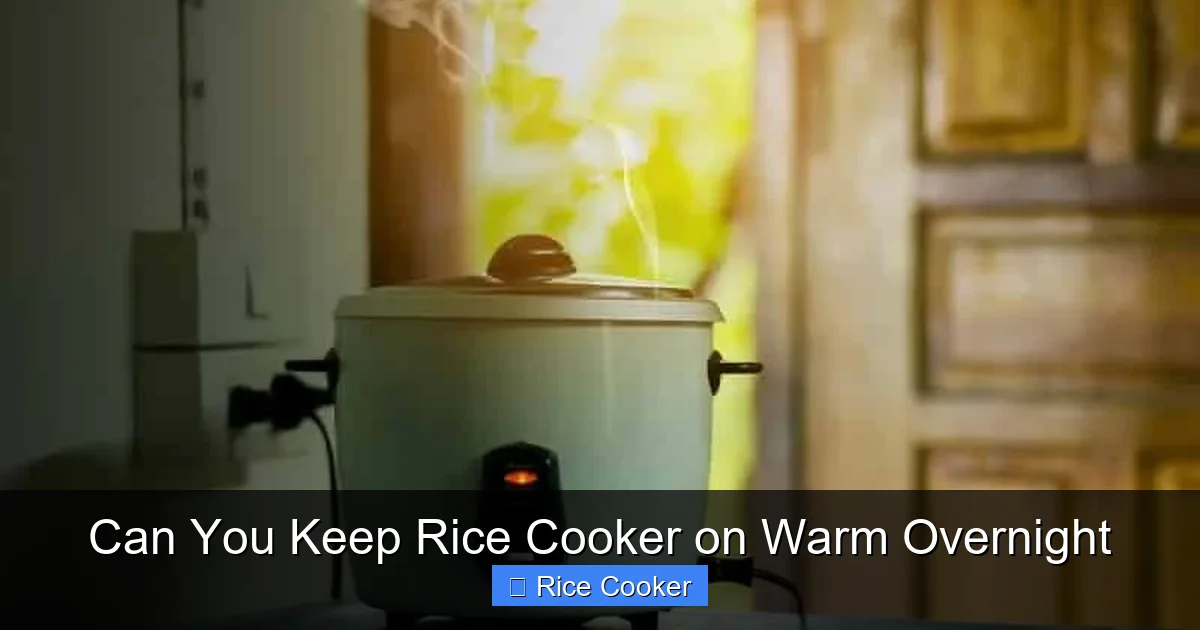
Most modern rice cookers come with a “warm” or “keep-warm” setting. This isn’t just a light that stays on—it’s an active heating element that maintains a low but steady temperature. Typically, this setting keeps the internal temperature between 160°F and 170°F (71°C to 77°C). That’s well above the danger zone (40°F–140°F or 4°C–60°C) where bacteria multiply rapidly.
Visual guide about Can You Keep Rice Cooker on Warm Overnight
Image source: missvickie.com
The Science Behind Safe Holding Temperatures
The U.S. Department of Agriculture (USDA) recommends that perishable foods like cooked rice should either be cooled quickly and refrigerated within two hours or held at 140°F (60°C) or higher to remain safe. Since most rice cooker warm settings exceed 160°F, they technically fall into the safe holding range. This means, under ideal conditions, rice can stay on warm without spoiling immediately.
However, it’s important to note that “safe” doesn’t always mean “ideal.” Even if the temperature is correct, rice left on warm for too long can lose moisture, become sticky, or develop a gummy texture. Plus, if the rice was already sitting in the cooker for several hours before being switched to warm, it may have spent time in the danger zone.
Why Some People Avoid Leaving Rice on Warm
Many home cooks avoid leaving rice on warm for more than a few hours because of past experiences. Rice that’s been on warm too long often dries out or forms a hard crust on top. Some also worry about bacterial growth, especially if the rice wasn’t freshly cooked. While the warm setting helps, it doesn’t eliminate all risks—especially if the rice has been sitting for more than 6–8 hours.
Another concern is the buildup of condensation inside the pot. When hot rice cools slightly and then gets reheated repeatedly on warm mode, moisture can accumulate and create a humid environment—perfect for mold or bacterial spores like Bacillus cereus, which can survive brief heating and cause food poisoning.
Is It Safe to Leave Rice Cooker on Warm Overnight?
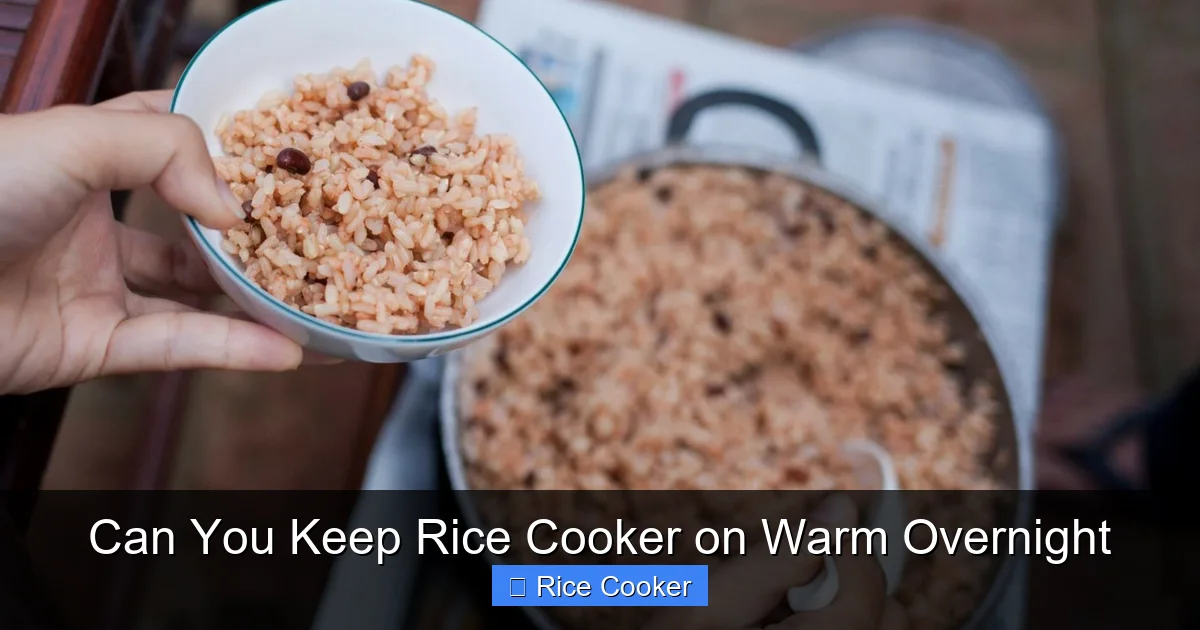
Technically, yes—you can leave your rice cooker on warm overnight, provided a few conditions are met. Your rice should be freshly cooked, the cooker is clean, and the ambient kitchen temperature isn’t extremely cold (which could drop the internal temperature below safe levels). Most manufacturers design their warm functions to run continuously for 12–24 hours without damage.
Visual guide about Can You Keep Rice Cooker on Warm Overnight
Image source: ricecookeradvice.com
What the Experts Say
The FDA and USDA don’t explicitly forbid leaving rice cookers on warm overnight, but they do emphasize proper food handling practices. The key is timing. According to food safety guidelines, perishable foods should not sit at room temperature for more than two hours. Once rice is cooked, it should ideally be refrigerated within that window—unless it’s being actively served or kept on warm immediately.
If you plan to leave rice on warm overnight, make sure:
- The rice was cooked recently (within the last 2 hours)
- The rice cooker’s warm setting is functioning correctly (test occasionally)
- The kitchen isn’t freezing cold, as that could lower the internal temperature
- You don’t open the lid frequently, which lets heat escape and invites contaminants
Practical Example: A Nighttime Dinner Prep
Let’s say you’re making jasmine rice for stir-fry tonight. You cook a full pot, serve half, and put the other half back into the cooker on warm mode while you finish cooking. You go to bed, and the rice stays on warm until morning. In this case, assuming the rice was cooked within the last hour and the warm setting is working, it should be safe to eat—though the texture might not be perfect.
But if you cooked rice 5 hours ago, then turned on warm mode, and left it overnight, you’ve already crossed into questionable territory. The rice may still be safe to eat, but it’s no longer ideal for consumption.
How Long Can You Safely Leave Rice on Warm Mode?
This is one of the most common questions among rice cooker users. While many models advertise “up to 24 hours” of warm capability, that doesn’t mean it’s always recommended.
Recommended Maximum Time on Warm
For best results, most food safety experts suggest limiting warm mode to **no more than 12 hours**. After that, the risk of texture degradation increases significantly, and the chance of bacterial growth becomes harder to control—even in a heated environment.
Here’s a quick reference table based on expert recommendations:
| Time on Warm Mode | Texture & Quality | Safety Risk |
|---|---|---|
| 0–4 hours | Excellent | Low |
| 4–8 hours | Good, slight drying | Moderate |
| 8–12 hours | Dry, possibly gummy | Moderate to High |
| 12+ hours | Poor, crusty, uneven | High |
Note: These are general guidelines. Individual rice types (like sushi rice vs. basmati) and cooker models may vary.
Factors That Affect How Long Rice Can Stay on Warm
Several variables influence how long rice can safely stay on warm mode:
- Type of Rice: Sticky rice (like sushi rice) tends to dry faster than long-grain varieties.
- Cooker Model: Some premium models (e.g., Zojirushi, Panasonic) have better insulation and precise temperature control, making them safer for longer warm cycles.
- Kitchen Environment: Cold rooms can lower internal temperatures; warm kitchens help maintain heat.
- Lid Seal: A tight-fitting lid prevents moisture loss and keeps heat in.
- Frequency of Opening: Every time you open the lid, heat escapes and contaminants enter.
Risks of Leaving Rice on Warm Too Long
While the warm setting is helpful, prolonged exposure to heat—even low heat—can cause problems. Let’s look at the main risks.
Foodborne Illness Risk
Cooked rice is a known carrier of Bacillus cereus, a bacterium that produces toxins causing vomiting or diarrhea. These spores survive normal cooking but can grow if rice is left at room temperature for too long. While the warm setting heats the rice above 160°F, repeated temperature fluctuations (from opening the lid or ambient changes) can create microenvironments where bacteria thrive.
Additionally, if the rice was improperly cooled before being placed on warm mode, harmful bacteria could already be present and multiplying slowly.
Texture and Flavor Degradation
Rice contains starch, which breaks down when exposed to heat over time. This leads to a gummy, clumpy, or overly soft texture. Moisture evaporates, leaving behind a dry, crusty layer on top. The flavor also dulls, losing its fresh aroma and becoming bland.
Imagine serving guests a bowl of rice that’s been on warm since yesterday morning. Even if it’s technically edible, it won’t taste great—and that defeats the purpose of having leftovers.
Energy Use and Safety Concerns
Leaving any appliance plugged in for extended periods uses electricity and poses a minor fire hazard, especially if the warm setting malfunctions. While modern rice cookers have safety shut-offs, it’s still wise to unplug it overnight unless you’re confident it’s safe.
Best Practices for Using the Warm Setting
If you want to use your rice cooker’s warm function—whether for a few hours or overnight—follow these best practices to ensure safety and quality.
Use Freshly Cooked Rice
Never place old or partially cooled rice into warm mode. Always cook rice just before switching to warm. If you’re meal prepping, cook rice, divide into portions, and store one portion in the fridge while leaving another on warm for immediate serving.
Keep the Lid Closed
Every time you open the lid, heat escapes and cool air enters. This fluctuation can lower the internal temperature and promote condensation, which encourages bacterial growth. Only open the lid when necessary—ideally, not at all during the warm cycle.
Check Temperature Occasionally
If you’re leaving rice on warm overnight, consider using a kitchen thermometer to verify the internal temperature stays above 160°F. Some digital rice cookers display this, but if yours doesn’t, a probe thermometer can help.
Transfer to Airtight Containers After 6 Hours
For peace of mind, move rice from the cooker to an airtight container once it’s been on warm for 6 hours. This allows you to refrigerate it properly while preserving freshness. Just remember to reheat thoroughly before eating.
Clean the Inner Pot Regularly
Starchy residue left in the pot can attract pests or foster bacterial growth. Clean the inner pot and lid after each use, especially if you’ve been using the warm function frequently.
Unplug When Not in Use
Even though most rice cookers have auto shut-off features, unplugging it reduces energy use and eliminates any risk of electrical issues during the night.
Alternatives to Leaving Rice on Warm Overnight
If you’re hesitant about leaving rice on warm all night, consider these safer alternatives.
Refrigerate Immediately
The safest method is to cool rice quickly and refrigerate it within two hours of cooking. Divide large batches into shallow containers to speed up cooling. Rice can be stored in the fridge for up to 4 days.
Freeze for Long-Term Storage
For longer storage (up to 6 months), freeze rice in portion-sized bags or containers. Thaw in the fridge overnight and reheat thoroughly before eating.
Use a Food Warmer or Chafing Dish
If you need to keep rice warm for a party or event, use a chafing dish or insulated food warmer instead. These maintain safe temperatures without relying on a rice cooker’s warm setting.
How to Reheat Rice Safely
Whether rice was left on warm or refrigerated, proper reheating is crucial.
Boil or Steam Method
The safest way to reheat rice is to add it to boiling water or steam it in a covered pot for 5–10 minutes. Stir occasionally and ensure it reaches 165°F throughout. This kills any potential bacteria.
Avoid Microwaving Without Liquid
Microwave alone can leave cold spots. Always add a tablespoon of water per cup of rice and cover loosely to allow steam to escape. Stir halfway through reheating.
Never Reheat at Room Temperature
Do not leave reheated rice sitting out. Serve immediately or return to the fridge within two hours.
Conclusion: Yes, But with Caution
So, can you keep a rice cooker on warm overnight? The answer is **yes—but only under certain conditions**. If you cook fresh rice, use a clean cooker, keep the lid sealed, and monitor the situation, it’s generally safe for up to 12 hours. However, for the best texture and safety, it’s smarter to refrigerate rice within two hours of cooking and reheat it thoroughly before eating.
Modern rice cookers are designed with convenience in mind, and the warm function is a useful tool—when used responsibly. But remember: food safety isn’t just about avoiding illness; it’s also about enjoying good-tasting meals. Leaving rice on warm all night may keep it “safe,” but it won’t keep it delicious.
Ultimately, the choice is yours. If you prefer the convenience of having rice ready to serve anytime, go ahead and use the warm setting—just don’t expect perfection after 10 hours. And if you’d rather play it safe, stick to refrigeration and reheating. Either way, you’ll be making a smart decision for your health and your taste buds.
Frequently Asked Questions
Can you leave rice on warm all night?
Yes, but not recommended beyond 12 hours. Most rice cookers keep food at a safe temperature, but rice may dry out or lose quality. For best results, refrigerate within 2 hours.
Is it safe to leave rice cooker on overnight?
It can be safe if the rice was freshly cooked and the warm setting is working properly. However, for optimal safety and taste, it’s better to refrigerate rice after 2 hours and reheat before eating.
How long can rice stay on warm mode?
Experts recommend no more than 12 hours on warm mode. After that, texture degrades and bacterial risk increases, even at safe temperatures.
Does warm mode kill bacteria?
No, warm mode doesn’t kill bacteria—it only keeps food at a safe holding temperature. Bacteria like Bacillus cereus can survive if rice was improperly cooled before warming.
Should I unplug my rice cooker after use?
Yes, especially if left on warm overnight. Unplugging saves energy and reduces any risk of electrical issues, even with safety shut-offs.
What’s the best way to store leftover rice?
Cool rice quickly, divide into shallow containers, and refrigerate within 2 hours. Store for up to 4 days or freeze for longer storage. Always reheat thoroughly before eating.