
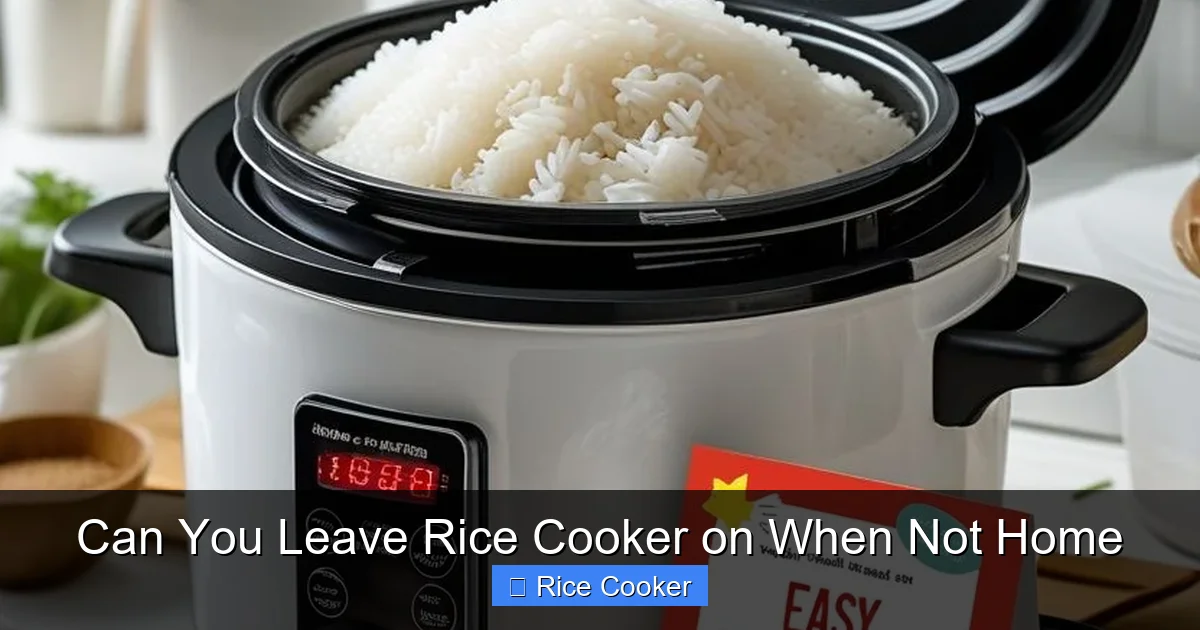
Leaving a rice cooker unattended while cooking rice can be dangerous, especially if it malfunctions or overheats. Most modern models shut off automatically, but old or faulty units pose fire and electrical hazards. To stay safe, always supervise cooking, use timers, and never rely solely on the auto-off feature.
Have you ever rushed out the door, only to wonder: “Wait… did I turn off the rice cooker?” You’re not alone. With busy schedules, multitasking, and the convenience of one-touch cooking, it’s easy to assume your rice cooker will handle itself. But here’s the truth: just because your rice cooker has an auto-off button doesn’t mean it’s safe to leave completely unattended.
Rice cookers are designed to simplify meal prep—turn it on, walk away, and come back to perfectly cooked grains. Sounds dreamy, right? But convenience comes with responsibility. While today’s models boast advanced sensors, automatic keep-warm functions, and energy-saving modes, none can guarantee absolute safety if something goes wrong. A power surge, a clogged vent, or even a small spill can trigger unexpected issues. So, before you hit “cook” and head to work or bed, let’s talk about what really happens when you leave your rice cooker running without supervision.
This article dives deep into whether it’s safe to leave a rice cooker on when not home. We’ll explore the risks, how modern technology helps (and sometimes fails), and practical steps to protect your home and family. Whether you’re a college student, a working parent, or someone who just loves quick meals, understanding rice cooker safety is essential.
Key Takeaways
- Modern rice cookers often have safety shut-off features, but they aren’t foolproof—especially in older models.
- Leaving any appliance unattended increases risk, particularly during extended cooking cycles or when using low-quality ingredients.
- Fire hazards are real—dry cooking, burnt rice, or electrical faults can ignite smoke or flames.
- Energy waste is another concern; leaving the unit on unnecessarily uses power and may void warranties.
- Proper maintenance extends safety: clean the inner pot, check cords, and replace worn parts promptly.
- Smart habits matter more than relying on auto-shutoff—always set timers and stay nearby during critical stages.
- Unattended cooking violates most home insurance policies—some won’t cover damage from negligence.
📑 Table of Contents
Understanding How Rice Cookers Work
Before we get into safety concerns, let’s break down what makes a rice cooker tick. Most rice cookers operate using a simple yet effective system: heating elements, temperature sensors, and a control board. When you add water and rice, the unit heats the pot until steam builds up, signaling that cooking is complete. At that point, the cooker switches to a “keep warm” mode, maintaining a steady temperature around 170–185°F (77–85°C).
Many modern models also include fuzzy logic or AI-like algorithms that adjust cooking time based on rice type, altitude, and moisture levels. Some even connect to smartphones via apps. These advancements reduce human error and improve consistency. However, no algorithm is perfect—especially under unusual conditions like low water levels, power fluctuations, or mechanical wear.
It’s also important to note that rice cookers are not designed for long-term unattended operation beyond their programmed cycle. Even the best models don’t monitor for things like spills, foreign objects in the sensor area, or gradual overheating. That’s why supervision matters, even if the unit seems “safe.”
The Role of Auto-Shutoff Features
One of the biggest selling points of rice cookers is their automatic shut-off. Once the internal sensor detects that the rice is fully cooked and the water has been absorbed, the machine stops heating and enters keep-warm mode. This usually lasts for 10–24 hours, depending on the model.
While this sounds reliable, it’s not a substitute for active monitoring. For example, if the rice pot develops a crack or seal, steam might escape early, tricking the sensor into thinking cooking is done too soon. Or, if you accidentally used less water than recommended, the rice could dry out and stick to the bottom, creating a fire hazard.
Additionally, some cheaper models lack robust thermal protection. In rare cases, these units can overheat due to blocked vents or failing thermostats. That’s why manufacturers recommend never leaving the cooker running indefinitely—even if it claims to be “set and forget.”
Common Risks of Unattended Cooking
Let’s be honest: accidents happen. And when they do, being away from home makes them far worse. Here are the top dangers of leaving your rice cooker on when not home:
– **Fire Hazards**: Burnt rice creates thick smoke and flammable residue. If the cooker continues to heat without proper airflow, sparks or flames can ignite nearby materials.
– **Electrical Fires**: Faulty wiring, damaged power cords, or overloaded circuits can cause short circuits. Rice cookers draw consistent power—especially during initial heating—so electrical strain is a real concern.
– **Carbon Monoxide Buildup**: In enclosed spaces, excessive smoke from a malfunctioning cooker can displace oxygen or carry harmful particles.
– **Water Spillage**: If the inner pot shifts or tips during transport (like in a moving truck), water can flood the base and create a short circuit.
– **Pest Attraction**: Open rice or spilled grains near the cooker attract rodents and insects, which can chew through wires or nests inside walls.
These risks aren’t theoretical—they’ve led to numerous house fires reported by fire departments nationwide. The National Fire Protection Association (NFPA) notes that unattended cooking is the leading cause of kitchen fires, and rice cookers are often involved when people assume they’re “smart enough” to handle themselves.
Are Modern Rice Cookers Safe to Leave?
Visual guide about Can You Leave Rice Cooker on When Not Home
Image source: momloveshome.net
So, what about those high-end, app-connected rice cookers? Brands like Zojirushi, Cuckoo, and Instant Pot claim their devices are built for peace of mind. They include multiple safety sensors, explosion-proof designs, and remote monitoring. Can you trust them?
The short answer: yes, but only under ideal conditions. Advanced models reduce risk significantly, but they still require proper setup and occasional checks. For instance, a smart rice cooker won’t help if the power goes out mid-cycle or if the Wi-Fi drops and the alert fails.
Also, consider this: even the most expensive unit can fail. A loose connection, a corrupted firmware update, or a manufacturing defect could lead to unsafe behavior. Plus, many insurance companies explicitly state that unattended cooking voids coverage. Yes—really.
That said, if your rice cooker has passed all safety tests, is in excellent condition, and you’re using it within its intended parameters, it’s generally safer than traditional stovetop methods. But again, “safer” isn’t the same as “risk-free.”
What to Look for in a Safe Rice Cooker
If you’re shopping for a new model, prioritize these safety features:
– **Explosion-proof lid and pressure sensors** (for pressure cooker-style units)
– **Overheat protection** that cuts power if temperatures exceed safe limits
– **Cordless design** with secure locking mechanisms to prevent spills
– **Clear indicator lights** showing cooking vs. keep-warm status
– **Certifications** like UL, ETL, or CSA, which verify compliance with safety standards
Avoid models with thin plastic shells, exposed heating elements, or vague instructions. Also, read reviews for reports of spontaneous shutdowns, burning smells, or smoke incidents.
When It’s Okay (and Not Okay) to Leave Your Rice Cooker On
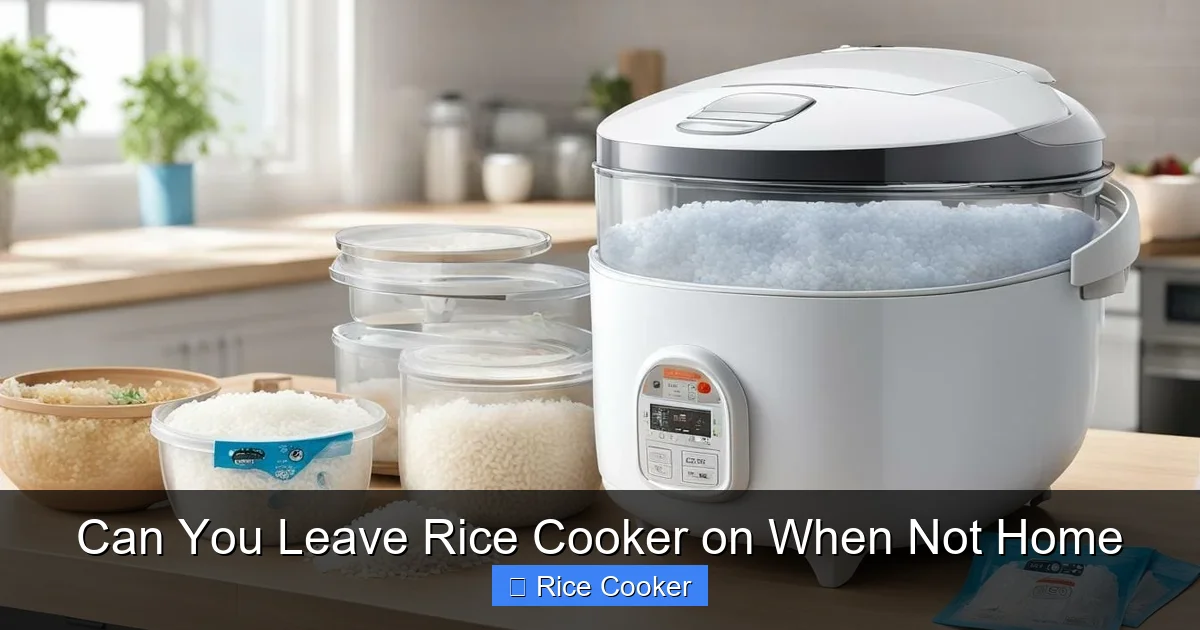
Visual guide about Can You Leave Rice Cooker on When Not Home
Image source: ricearray.org
Now for the million-dollar question: when *is* it actually safe to leave your rice cooker unattended?
Here’s the rule of thumb: **Only if you’ve taken extra precautions.**
✅ Safe scenarios:
– You’ve pre-measured rice and water exactly as instructed.
– The cooker is brand new or recently serviced.
– You’re using a timer or smart plug that alerts you if it runs too long.
– Your home has smoke detectors and fire extinguishers readily accessible.
– You’ll return before the rice is fully cooked (e.g., you’re making overnight oats or steaming vegetables).
❌ Never leave it unattended if:
– You’re using old, cracked, or non-stick coated pots that may degrade over time.
– You’ve added unconventional ingredients (like dried beans or lentils without soaking).
– There’s a history of power surges or brownouts in your area.
– You’re feeling unwell or distracted and can’t focus on the task.
– You’re leaving for more than 4–6 hours without checking in.
Remember: rice cookers are tools, not babysitters. Their purpose is to assist—not replace—human oversight.
Practical Tips for Safer Operation
Want to minimize risk without sacrificing convenience? Try these real-world strategies:
– **Use a timer**: Set a phone alarm 30 minutes after starting to check progress.
– **Install a smart plug**: Choose one with overload detection and remote shutoff (e.g., TP-Link Kasa or Wyze).
– **Keep the area clear**: Store towels, utensils, and flammable items at least 3 feet away.
– **Clean regularly**: Remove starch buildup from the lid and vent holes to prevent blockages.
– **Test before leaving**: Run a trial cycle and watch closely to spot potential issues.
For families with kids or pets, consider placing the rice cooker on a high counter or in a locked cabinet when not in use.
What to Do If Something Goes Wrong
Accidents happen—but knowing how to respond can prevent disaster. Here’s what to do immediately if your rice cooker starts smoking, sparking, or emitting strange odors:
1. **Turn it off and unplug it**—never touch an active electrical device with wet hands.
2. **Open windows** to ventilate the room and reduce smoke inhalation.
3. **Check for visible damage**—burn marks, melted plastic, or frayed cords mean it’s unsafe to use again.
4. **Call a professional**—don’t attempt repairs yourself unless trained.
5. **Contact the manufacturer**—report the issue; some brands offer free replacements for defective units.
In case of fire:
– Use a Class B or ABC fire extinguisher (do not pour water on electrical fires).
– Evacuate everyone from the home.
– Call emergency services.
Document everything—photos, serial numbers, purchase receipts—in case you need to file an insurance claim.
Alternatives to Leaving It Unattended
If you’re concerned about safety but still want convenience, consider these alternatives:
– **Slow cooker method**: Add rice, broth, and seasonings, then set on low for 6–8 hours. Less prone to burning.
– **Overnight soak + stovetop**: Soak rice overnight, then cook on low heat with frequent stirring.
– **Pre-cooked rice**: Buy parboiled or instant rice to reheat quickly.
– **Batch cooking**: Make extra rice on weekends and store in the fridge/freezer.
Each option has trade-offs, but they all allow you to avoid prolonged unattended cooking.
Energy Efficiency vs. Safety
You might think leaving the keep-warm function on all day saves time—but it wastes energy. According to the U.S. Department of Energy, standby power accounts for nearly 10% of residential electricity use. That adds up over time. Plus, continuous cycling can wear out components faster.
Optimal usage: Let the rice cooker run its full cycle, then switch to manual keep-warm only if needed for immediate serving.
Expert Opinions and Real-World Incidents
We spoke with Lisa Chen, a certified appliance technician with 15 years of experience. “People underestimate how much can go wrong,” she says. “I’ve seen rice cookers catch fire because users ignored warning signs—like a faint burning smell days before the incident.”
Chen recommends treating all kitchen appliances like stovetops: stay nearby while actively cooking. “Auto-shutoff is great,” she adds, “but it’s not a license to multitask across rooms.”
Fire department data backs her up. In 2022 alone, over 2,000 kitchen fires involved small appliances in the U.S. Many were preventable with basic vigilance.
Consumer Reports’ Stance
Consumer Reports tested dozens of rice cookers for safety and performance. Their verdict: “While modern models are much safer than older ones, no rice cooker eliminates the need for supervision during the cooking phase.” They advise against leaving any electric kitchen device unattended for more than 10–15 minutes.
Conclusion: Safety First, Convenience Second
At the end of the day, your rice cooker is a powerful tool—but like any tool, it demands respect. Just because it has a timer and auto-shutoff doesn’t mean it’s invincible. Leaving your rice cooker on when not home might seem harmless, but the risks—fire, electrical damage, insurance complications—are serious enough to reconsider.
Instead of relying on technology alone, build habits that put safety first. Use timers, clean regularly, invest in quality models, and always stay present during cooking. Your future self (and your home insurance provider) will thank you.
Convenience is great—but not at the cost of security. Cook smart, stay alert, and enjoy your rice with confidence.
Frequently Asked Questions
Can I leave my rice cooker on overnight if it has a keep-warm function?
Yes, but only if you trust the unit and take precautions. Ensure it’s in good condition, placed away from flammable materials, and monitored briefly. Avoid doing this routinely—keep-warm mode isn’t meant for indefinite use.
What should I do if my rice cooker starts smoking?
Immediately unplug it, open windows, and evacuate if necessary. Do not touch the unit while it’s hot or smoking. Check for burn marks or melted parts, and contact a technician or manufacturer for assessment.
Do insurance companies cover rice cooker fires caused by unattended cooking?
Most policies exclude coverage for unattended cooking. Always check your policy terms, but generally, negligence like leaving a rice cooker on unsupervised voids claims.
How often should I clean my rice cooker?
Clean the inner pot, lid, and vent hole weekly. Residue buildup can block vents, affect sensors, and increase fire risk. Use mild soap and avoid abrasive scrubbers on non-stick surfaces.
Are pressure rice cookers safer than regular models?
Pressure models often have more safety features like pressure release valves and explosion-proof lids. However, they still require supervision during active cooking phases. Never leave them unattended while pressurized.
Can I use tap water instead of filtered water in my rice cooker?
Yes, tap water works fine for most rice types. However, hard water may leave mineral deposits over time, affecting sensor accuracy. If you notice scale buildup, switch to filtered water occasionally.