
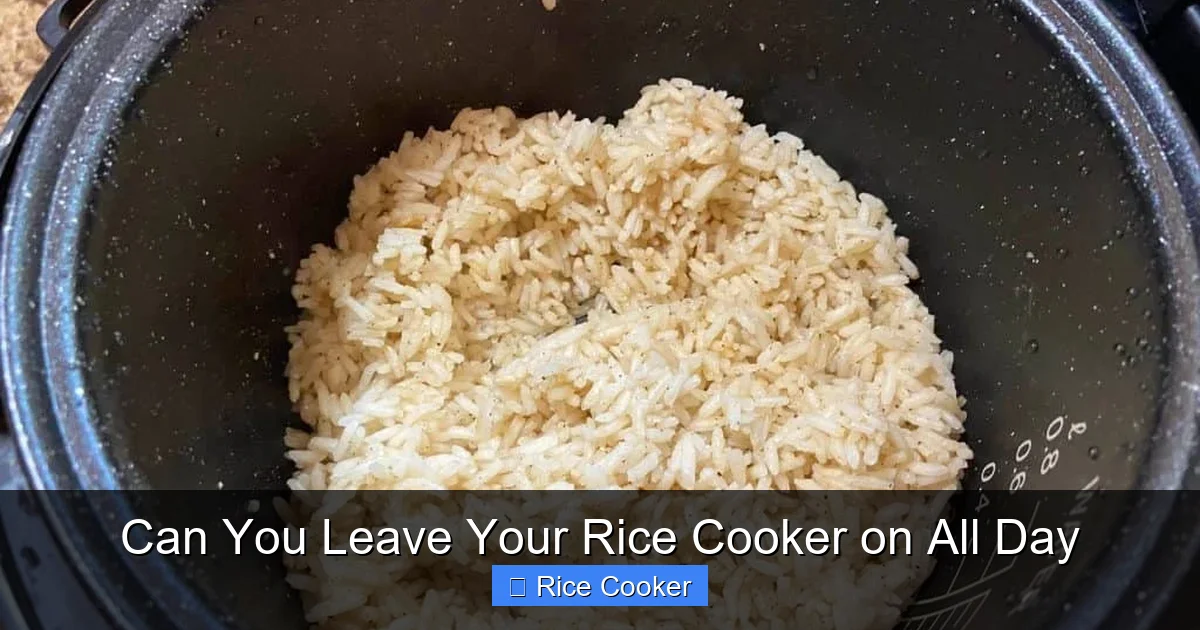
Leaving a rice cooker on all day is generally safe if it’s designed with modern auto-shutoff features, but doing so continuously can waste energy and wear out internal components. Most modern rice cookers automatically turn off after cooking, but older models may lack this protection, making prolonged use risky. To stay safe and efficient, always check your model’s manual and avoid leaving it unattended for extended periods.
Key Takeaways
- Safety First: Modern rice cookers typically have automatic shut-off features that prevent overheating, but older models may not. Always verify your unit’s safety mechanisms before leaving it on.
- Energy Efficiency: Leaving your rice cooker plugged in all day uses unnecessary electricity, especially if it cycles between heating and warming repeatedly.
- Warranty & Longevity: Continuous operation may void warranties and shorten the lifespan of the heating element or internal electronics.
- Fire Risk: While rare, faulty wiring or overheating in outdated models can pose a fire hazard if left unattended for long periods.
- Best Practice: Use the “warm” setting sparingly—most rice cookers are designed to keep food warm for only 10–12 hours max.
- Unattended Operation: Never leave your rice cooker on overnight or during vacations unless it’s specifically rated for continuous use and monitored occasionally.
- Alternative Solutions: For large batches or meal prep, consider using a slow cooker or planning meals in advance to reduce reliance on constant rice cooker usage.
📑 Table of Contents
- Can You Leave Your Rice Cooker on All Day?
- How Rice Cookers Work: A Quick Science Lesson
- Is It Safe to Leave Your Rice Cooker On All Day?
- Risks of Leaving Your Rice Cooker On All Day
- When It’s Okay to Leave Your Rice Cooker On
- Tips for Safe and Efficient Rice Cooker Use
- Alternatives to Leaving Your Rice Cooker On All Day
- Signs Your Rice Cooker Needs Replacement
- Conclusion: Can You Leave Your Rice Cooker on All Day?
Can You Leave Your Rice Cooker on All Day?
You’re probably wondering: can you leave your rice cooker on all day? It’s a common question, especially among busy families, college students, or anyone who loves freshly cooked rice every morning. After all, rice cookers are convenient—plug them in, add water and rice, and walk away. But what happens when you step away for longer than usual? Is it safe to leave your rice cooker running nonstop? The short answer is: it depends on the model and how you use it. Most modern rice cookers are built with safety features like automatic shut-offs and temperature controls, but not all are created equal. Let’s dive deep into what makes a rice cooker tick, how it manages heat, and whether leaving it on all day is really safe or just tempting fate.
Rice cookers have come a long way since their invention in Japan in the early 20th century. What started as simple electric pots has evolved into smart kitchen appliances with digital displays, multiple cooking modes, and even smartphone connectivity. Today’s rice cookers can handle everything from white rice to sushi-grade short grain, quinoa, oatmeal, and more. But with all these advanced features comes responsibility. Just because your rice cooker can do more doesn’t mean it should run forever. Understanding how your appliance works—and what risks lurk when you leave it unattended—is key to using it safely and effectively.
How Rice Cookers Work: A Quick Science Lesson
Before we answer the big question—can you leave your rice cooker on all day—let’s break down how these handy devices actually function. At its core, a rice cooker is a sealed pot with a heating element at the bottom and a thermostat or thermal sensor on top. When you press the “cook” button, the heating element turns on, boiling the water inside. As the water evaporates, the rice absorbs it, transforming from hard grains into fluffy, perfectly cooked rice.
Visual guide about Can You Leave Your Rice Cooker on All Day
Image source: ricearray.org
The Role of the Thermal Sensor
Here’s where things get interesting: most rice cookers don’t rely on timers alone. Instead, they use a thermal sensor (or bimetallic switch) that detects when the temperature inside reaches around 212°F (100°C), which signals that all the water has been absorbed. Once that happens, the sensor triggers the cooker to switch from “boiling” mode to “warming” mode. This is why rice doesn’t burn—because once the water is gone, the heat stops rising.
The Warming Cycle
After cooking, the rice cooker enters a low-temperature warming cycle. The heating plate stays on, but at a much lower wattage—usually between 50–100 watts—to maintain a cozy 160–170°F (71–77°C). This keeps your rice from drying out or turning into a crusty brick. But here’s the catch: the warming function isn’t meant to last indefinitely. Most manufacturers design the warming plate to run for up to 10–12 hours before shutting off completely.
Auto-Shutoff vs. Manual Models
Modern rice cookers almost always have an auto-shutoff feature, meaning they turn off automatically after a set time. Older models, however, might only have a simple on/off switch without any internal timing mechanism. If your rice cooker lacks this feature, leaving it on could lead to overheating, dry rice, or worse—a fire hazard.
Is It Safe to Leave Your Rice Cooker On All Day?
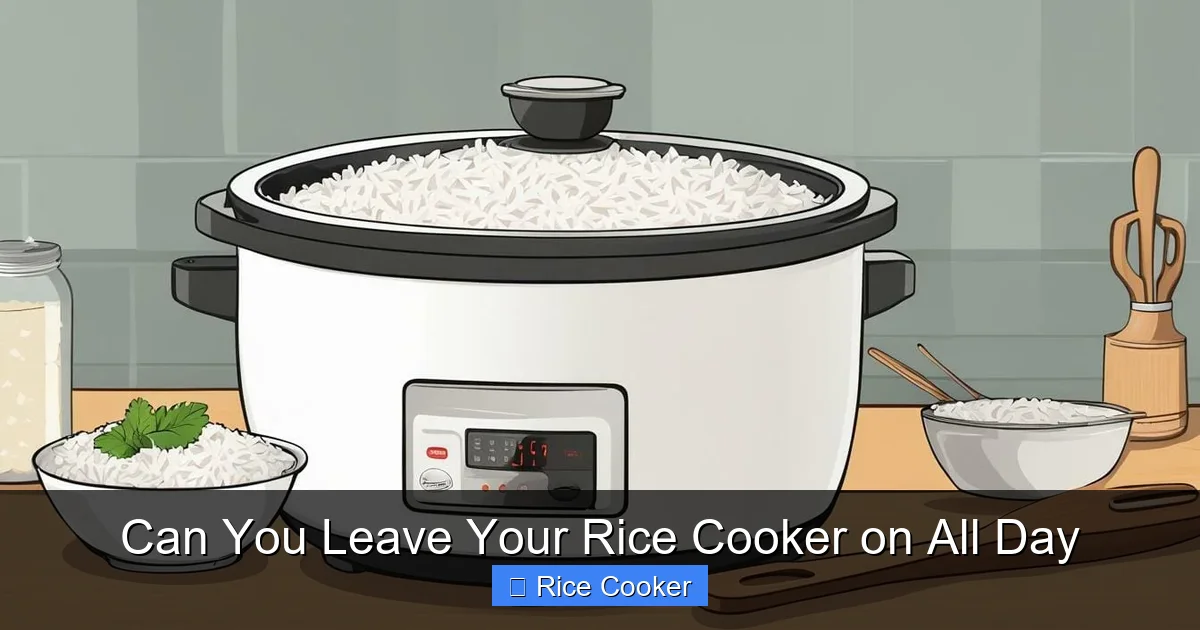
Now, let’s get to the heart of the matter: can you leave your rice cooker on all day? The honest answer is: sometimes yes, sometimes no. It all comes down to your rice cooker’s design, age, and usage patterns.
Visual guide about Can You Leave Your Rice Cooker on All Day
Image source: ricearray.org
Modern Rice Cookers: Generally Safe for Short Periods
If you own a recent model—especially one with a stainless steel inner pot and digital controls—you’re likely in the clear for short-term unattended use. These units are engineered with multiple safety layers: thermal fuses, overheat protection, and automatic shutoffs. For example, Zojirushi, Tiger, and Panasonic brands are known for their reliability and safety standards. If your rice cooker finishes cooking and switches to warm mode, you can feel confident leaving it for a few hours—even overnight—without worry.
But What About All Day?
Even with safety features, running your rice cooker continuously for 24 hours is not recommended. Here’s why:
- Energy Waste: The warming plate draws power even when it’s not actively heating. Over 24 hours, that adds up—sometimes costing you $10+ in electricity annually just for rice.
- Component Wear: Constant cycling between high and low heat stresses the thermostat and heating element, potentially shortening the appliance’s life.
- Food Safety Concerns: Rice left at room temperature too long can grow bacteria like Bacillus cereus, which causes food poisoning. The American Academy of Pediatrics recommends discarding rice that’s been sitting out for more than 1 hour (less in hot weather).
What About the “Keep Warm” Setting?
Many rice cookers have a “keep warm” button labeled “WARM” or “KEEP WARM.” This mode is perfect for serving dinner, but don’t expect it to keep rice edible for a full day. Most manufacturers state that the warm setting is effective for up to 10–12 hours. After that, the rice dries out, develops off-flavors, or becomes unsafe to eat.
Risks of Leaving Your Rice Cooker On All Day
While modern rice cookers are safer than ever, there are still risks associated with leaving them on continuously. Let’s explore the potential dangers.
Fire Hazards
Although rare, rice cooker fires do happen. According to the National Fire Protection Association (NFPA), electrical malfunctions account for thousands of home fires each year. Common causes include:
- Faulty wiring in older models
- Overheated heating plates due to blocked vents or debris buildup
- Plugging multiple high-wattage appliances into one outlet
If your rice cooker is over 5–7 years old and shows signs of wear—like a cracked lid, unusual smells, or inconsistent heating—it’s time to replace it. Never assume “it hasn’t happened yet” means it won’t happen at all.
Electrical Overload
Running your rice cooker all day increases the chance of electrical overload, especially if it’s sharing an outlet with a microwave, toaster, or space heater. Overloads can trip breakers, damage outlets, or even start fires. Always plug your rice cooker directly into a wall socket—not a power strip or surge protector—unless the device is specifically designed for extension cords.
Dry Rice and Burned Food
If your rice cooker runs out of water or gets interrupted mid-cycle, the heating plate can scorch the bottom of the pot. This creates burnt residue that’s tough to clean and can release smoke or toxic fumes if reheated. Plus, burned rice tastes terrible—and eating it regularly isn’t great for your health.
When It’s Okay to Leave Your Rice Cooker On
So, under what circumstances can you leave your rice cooker on all day? While we advise against continuous 24/7 use, there are safe scenarios where brief unattended operation is acceptable.
For Up to 8–12 Hours
If you’re cooking a large batch of rice and plan to serve it later that day, leaving it on the warm setting for up to 12 hours is usually fine—as long as the cooker is modern and functioning properly. Just make sure:
- The rice is fully cooked before switching to warm mode
- The inner pot isn’t empty
- There’s no visible smoke or burning smell
During Power Outages (With Caution)
Some people use rice cookers as emergency food preppers. If the power goes out and you’ve already cooked rice, you might wonder if it’s safe to leave it on once power returns. In this case:
- Avoid using the warm setting if the rice has been sitting cold for more than 2 hours
- Reheat rice to 165°F (74°C) before serving to kill any potential bacteria
- Don’t rely on rice cookers as primary emergency food sources—they’re not designed for that
If You’re Using a Smart Rice Cooker
Smart rice cookers like the Instant Pot Duo Crisp or certain Zojirushi models allow remote monitoring via apps. These can send alerts if something goes wrong—like overheating or a full pot. If your smart rice cooker has a “monitor” mode that lets you check status remotely, you can leave it on for short periods with peace of mind.
Tips for Safe and Efficient Rice Cooker Use
Even if your rice cooker is safe for occasional unattended use, there are ways to maximize both safety and performance. Follow these best practices:
1. Read the Manual
Every rice cooker is different. Some have longer warm cycles; others shut off after 6 hours. Check your user manual to understand your model’s limits. Don’t assume all rice cookers behave the same way.
2. Clean the Heating Plate Regularly
Dirt, rice starch, or moisture buildup on the heating element can cause uneven heating or even sparking. Wipe the base with a damp cloth monthly and ensure the area is dry before plugging in.
3. Avoid Overfilling
Never exceed the max water line. Too much rice increases cooking time and pressure, raising the risk of overflow—which can damage the cooker or create a mess.
4. Use the Right Amount of Water
Too little water = dry, hard rice. Too much = mushy rice. Stick to the 1:1.5 to 1:2 rice-to-water ratio for most types. For sushi rice, use less water.
5. Unplug When Not in Use
Even in standby mode, rice cookers draw a small amount of power. For maximum efficiency and safety, unplug it when you’re not cooking—especially overnight.
6. Invest in a Timer or Smart Plug
Want rice ready when you wake up? Use a programmable timer or a smart plug (like TP-Link Kasa) to schedule your cooker to turn on automatically. No need to leave it running all night!
Alternatives to Leaving Your Rice Cooker On All Day
If you’re tempted to leave your rice cooker on all day but want to play it safe, consider these alternatives:
Cook Rice in Advance
Cook a big batch on Sunday and store portions in the fridge for up to 4 days. Reheat individual servings in a microwave or stovetop. This saves energy and ensures consistent quality.
Use a Slow Cooker
Some slow cookers can mimic rice cooker results for dishes like jambalaya or risotto. They’re better suited for long, unattended cooking—and they use less energy per meal.
Meal Prep on Weekends
Dedicate 30 minutes on Saturday to cook rice for the week. Portion it into containers, freeze some, and enjoy hassle-free meals all week long.
Signs Your Rice Cooker Needs Replacement
Knowing when to retire your rice cooker prevents accidents and ensures reliable performance. Watch for these warning signs:
- It takes unusually long to cook rice
- You smell burning or see smoke
- The inner pot scratches easily or warps
- The display flickers or buttons stop responding
- It frequently trips the circuit breaker
If you notice any of these, it’s time for a new unit. Don’t risk a fire or injury over convenience.
Conclusion: Can You Leave Your Rice Cooker on All Day?
To wrap things up: can you leave your rice cooker on all day? For most modern models, a few hours on the warm setting is safe—but 24/7 operation is not. While today’s rice cookers are packed with safety features, they’re not immune to wear, energy waste, or food safety issues. The best approach is to treat your rice cooker like any other appliance: respect its limits, use it wisely, and unplug it when possible.
Instead of leaving it on all day, try meal prepping, using a timer, or upgrading to a smart rice cooker. These small changes make a big difference in safety, taste, and energy savings. Remember: convenience shouldn’t come at the cost of safety or sustainability. With proper care and awareness, your rice cooker can be a reliable kitchen companion for years—without needing to run nonstop.
Frequently Asked Questions
Can I leave my rice cooker on overnight?
Yes, if your model has an auto-shutoff and finishes cooking, it’s generally safe to leave it on the warm setting overnight—up to 10–12 hours. However, unplugging it saves energy and extends the appliance’s life.
Will leaving my rice cooker on damage it?
Occasional use of the warm setting won’t harm most modern rice cookers. But continuous operation can stress the heating element and thermostat, potentially shortening the appliance’s lifespan.
Is it dangerous to leave rice in a rice cooker all day?
Yes, especially after 12 hours. Rice left at room temperature too long can harbor bacteria. For food safety, discard rice that’s been sitting out for more than 1 hour (less in summer).
Should I unplug my rice cooker when not in use?
Absolutely. Even in standby mode, rice cookers draw standby power. Unplugging reduces energy waste and eliminates fire risks from minor electrical faults.
Do all rice cookers have auto-shutoff features?
No. Older or budget models may lack automatic shut-off. Check your manual or look for labels like “UL Listed” or “Safety Certified” to confirm your model meets modern safety standards.
Can I use my rice cooker as a heater?
Technically, yes—but it’s inefficient and unsafe. Rice cookers aren’t designed for space heating, and doing so voids warranties and increases fire risks. Stick to cooking rice!