

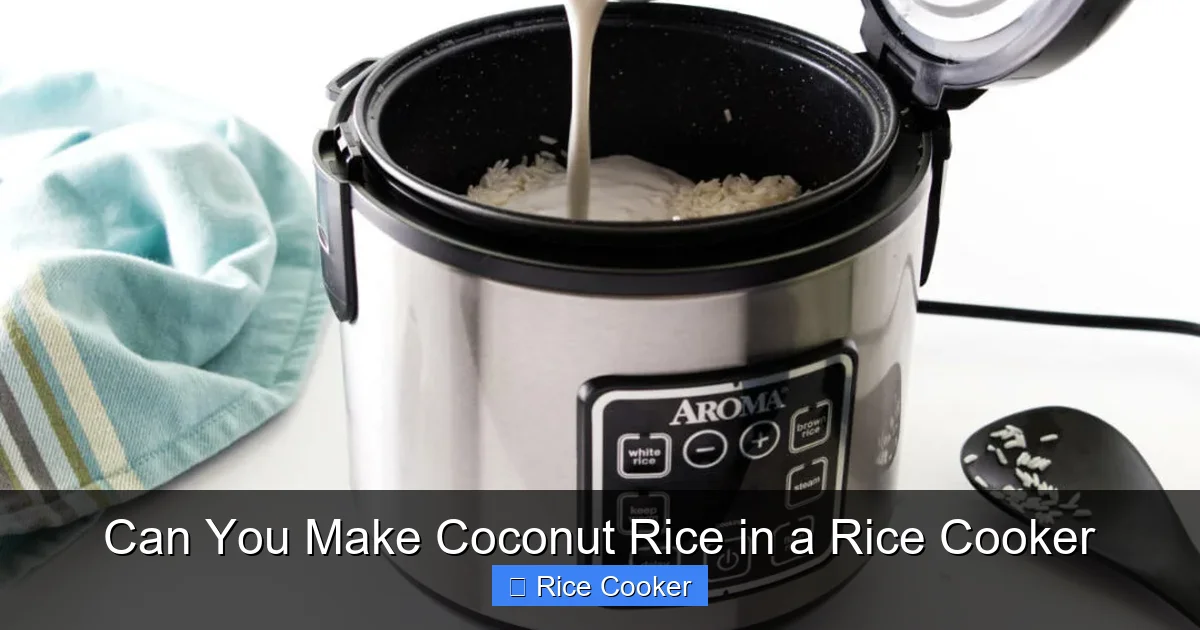
Can you make coconut rice in a rice cooker? Absolutely! With just a few ingredients—white or brown rice, coconut milk, water, and a pinch of salt—you’ll get tender, flavorful rice that pairs perfectly with bold dishes like Thai curry or Mexican street corn. Using your rice cooker is not only convenient but also ensures even cooking and consistent results every single time.
Key Takeaways
- Yes, it’s possible: Coconut rice cooks beautifully in any standard rice cooker without special equipment.
- Simple ingredients: You only need rice, coconut milk, water, and salt—no exotic spices or complicated steps.
- Flavor infusion: The rice absorbs the rich taste of coconut milk, creating a subtly sweet and nutty profile.
- Texture control: Adjust liquid ratios to achieve fluffier or creamier results based on your preference.
- Perfect pairings: Goes wonderfully with curries, grilled meats, stir-fries, and tropical-inspired meals.
- Time-saving: One-pot cooking means fewer dishes and hands-off preparation.
- Customizable: Add herbs, garlic, or lime zest for extra depth and personalization.
Quick Answers to Common Questions
Can you make coconut rice in a rice cooker?
Yes, absolutely! Simply combine rinsed rice, coconut milk, water, and salt in your rice cooker and press start. It’s that easy.
How much coconut milk should I use?
For 1 cup of rice, use about ¾ cup full-fat coconut milk plus ½ to ¾ cup water. Adjust to taste—more milk = creamier rice.
Will coconut rice make my rice cooker smell weird?
Temporarily, yes! Coconut has a strong scent that lingers. Run a vinegar-water cycle afterward to neutralize odors.
Can I substitute water for part of the liquid?
Definitely! Replace up to half the water with broth or vegetable stock for extra flavor depth.
Is brown rice okay for coconut rice?
Yes, but it requires more liquid and longer cooking time. Expect a chewier texture compared to white rice.
📑 Table of Contents
- Introduction: Why Coconut Rice Belongs in Your Meal Rotation
- Understanding Coconut Rice: What Is It and Why Does It Taste So Good?
- Choosing the Right Coconut Milk: Full-Fat vs. Light
- Step-by-Step Guide: Making Perfect Coconut Rice in Your Rice Cooker
- Common Mistakes and How to Fix Them
- Creative Variations: Make It Your Own
- Storage and Reheating Tips
- Frequently Asked Questions About Coconut Rice in Rice Cookers
- Conclusion: Your New Favorite Side Dish Is Just a Button Press Away
Introduction: Why Coconut Rice Belongs in Your Meal Rotation
If you’ve ever craved that warm, fragrant bowl of coconut-infused rice that tastes like a mini vacation in Southeast Asia, you’re in luck. Coconut rice isn’t just a staple in Thai, Filipino, or Caribbean cuisine—it’s also shockingly easy to make at home using something most people already own: a rice cooker. No fancy gadgets, no hours of babysitting the stove. Just rice, coconut milk, water, and a little patience.
What makes this dish so appealing? It’s more than just flavor—it’s texture, aroma, and versatility rolled into one comforting bowl. Whether you’re serving it alongside spicy red curry, topping it with seared fish, or enjoying it as a light lunch with black beans and mango salsa, coconut rice elevates any meal. And because rice cookers handle everything from soaking to steaming to warming automatically, making it is both beginner-friendly and foolproof.
In this guide, we’ll walk you through everything you need to know—from choosing the right rice and coconut milk to adjusting ratios for different textures and dietary needs. You’ll learn pro tips, troubleshoot common issues, and even discover creative twists to keep things exciting. By the end, you’ll be confident turning your trusty rice cooker into a coconut rice powerhouse.
Understanding Coconut Rice: What Is It and Why Does It Taste So Good?
At its core, coconut rice is simply rice cooked in a mixture of coconut milk and water. Unlike plain steamed rice, which relies solely on starch hydration, coconut rice gets its signature richness from full-fat coconut milk. This gives each grain a soft sheen, a subtle sweetness, and a creamy mouthfeel that lingers pleasantly on the palate.
Visual guide about Can You Make Coconut Rice in a Rice Cooker
Image source: savorthebest.com
The Magic Behind the Flavor
Coconut milk contains natural fats and proteins that coat the surface of each rice grain during cooking. As the heat penetrates, these compounds release aromatic compounds called lactones—responsible for that unmistakable “coconutty” scent. When combined with the starch gelatinization process (where rice grains absorb liquid and swell), you get a harmonious balance of creaminess and structure.
Fun fact: In many cultures, coconut rice is considered a comfort food. Its mild sweetness complements savory dishes without overpowering them, making it an ideal canvas for bold seasonings like lemongrass, ginger, or chili flakes.
Types of Rice That Work Best
While you *can* use any rice variety, some work better than others for coconut rice:
- Jasmine Rice: Fragrant, slightly sticky, and naturally sweet—ideal for authentic Thai-style versions.
- Basmati Rice: Long-grain, low-starch, and less likely to clump; keeps grains separate and light.
- Arborio or Creamy Short-Grain Rice: Creates ultra-creamy results, though it may be too sticky for some palates.
- Brown Rice: Nutty, fiber-rich, and takes longer to cook—requires extra liquid and time.
For beginners, jasmine or basmati are excellent starting points. They offer great texture and don’t require advanced techniques.
Choosing the Right Coconut Milk: Full-Fat vs. Light
Not all coconut milks are created equal—and your choice directly impacts the final outcome.

Visual guide about Can You Make Coconut Rice in a Rice Cooker
Image source: wandercooks.com
Full-Fat Coconut Milk (Canned)
This is the gold standard for coconut rice. Look for cans labeled “full-fat” or “thick.” The fat content (around 17–20%) provides richness, prevents dryness, and enhances mouthfeel. Always shake the can well before opening—the cream rises to the top and needs mixing back in.
Lighter Options: Coconut Cream & Water Mix
For a lighter version, you can blend half coconut cream (the thick layer at the top of canned milk) with water. Or dilute regular coconut milk with equal parts water. This reduces calories and fat while still delivering noticeable coconut flavor.
Avoid Low-Fat or “Light” Canned Varieties
These often contain added water and stabilizers that dilute flavor and compromise texture. Skip them unless you’re strictly watching calories and accept a thinner result.
Dietary Considerations
For those avoiding dairy or soy, coconut milk is naturally vegan and gluten-free. Just double-check labels for hidden additives if you have sensitivities.
Step-by-Step Guide: Making Perfect Coconut Rice in Your Rice Cooker
Ready to try it yourself? Follow this foolproof process for restaurant-quality results at home.
Gather Your Ingredients
Here’s what you’ll need (serves 4):
- 1 cup long-grain white or brown rice (rinsed)
- ¾ cup full-fat coconut milk (chilled works best)
- ½ to ¾ cup water (adjust based on rice type)
- ¼ teaspoon salt (optional but recommended)
- Optional add-ins: 1 clove minced garlic, ½ tsp turmeric, 1 kaffir lime leaf
Preparation Tips
Before adding liquids, rinse your rice under cold water until the water runs clear. This removes excess starch and prevents gummy textures. Drain thoroughly—excess moisture throws off the rice-to-liquid ratio.
Cooking Process
- Add rice to the inner pot. Use a measuring cup for accuracy.
- Pour in coconut milk first, then water. Stir gently to distribute flavor.
- Add salt and optional aromatics.
- Close the lid and select “White Rice” or “Normal” mode. Avoid “Quick Cook” or “Congee” modes—they’re too aggressive.
- Let it cook undisturbed. Don’t peek! Opening the lid lets steam escape, affecting texture.
- Wait 5–10 minutes after cooking ends. This allows residual heat to finish steaming and firms up the grains.
- Fluff gently with a fork. Avoid crushing delicate grains.
Pro Tip: Brown Rice Requires More Time
Brown rice takes about 45–50 minutes total (vs. 20 for white). Increase water by ¼ cup and let sit longer post-cooking. Some advanced models have a “Brown Rice” setting—use that for best results.
Common Mistakes and How to Fix Them
Even experienced cooks run into hiccups—but they’re usually fixable with a quick adjustment.
Mistake #1: Too Much Liquid → Mushy Rice
Symptoms: Sticky clumps, soupy bottom layer.
Solution: Next time, reduce water by 1–2 tablespoons. Always measure precisely. If already cooked, spread it out on a tray to cool faster and absorb excess moisture.
Mistake #2: Not Rinsing the Rice → Gummy Texture
Symptoms: Gluey, unpleasantly chewy grains.
Solution: Rinse jasmine or basmati rice until water is clear. For arborio or short-grain, skip rinsing to preserve stickiness—but note it won’t be coconut-flavored like jasmine.
Mistake #3: Skipping Salt → Bland Flavor
Salt balances sweetness and enhances overall taste. Don’t skip it unless making a very mild version.
Mistake #4: Peeking During Cooking → Uneven Results
Steam loss disrupts temperature control. Trust the machine—it knows what to do.
Mistake #5: Using Warm Coconut Milk → Poor Emulsification
Chilled coconut milk separates less and distributes fat evenly. Shake can well, but refrigerate beforehand for best consistency.
Creative Variations: Make It Your Own
Once you master the basics, experiment! Here are five delicious ways to customize your coconut rice.
1. Spicy Coconut Lime Rice
Add grated lime zest, ½ tsp red pepper flakes, and a squeeze of fresh lime juice after cooking. Garnish with cilantro.
2. Herbed Coconut Rice Pilaf
Sauté diced onions and garlic in a bit of oil before adding rice and liquids. Toss in chopped parsley, cilantro, or basil at the end.
3. Sweet Coconut Rice Pudding
Use 1½ cups water instead of ½ cup. Add 1 tbsp sugar, a cinnamon stick, and a pinch of cardamom. Simmer longer for pudding-like texture (though rice cookers aren’t ideal for this—stovetop preferred).
4. Turmeric-Infused Golden Rice
Stir in ½ tsp turmeric with salt. Adds anti-inflammatory benefits and a vibrant color—great with roasted vegetables.
5. Coconut Black Bean & Mango Rice Bowl
Layer cooked coconut rice with black beans, diced mango, red onion, and avocado. Drizzle with lime-cilantro dressing.
Storage and Reheating Tips
Got leftovers? No problem.
Refrigeration
Store covered in the fridge for up to 4 days. Fluff before reheating—it may seem dry but will rehydrate.
Freezing
Portion into freezer-safe containers. Thaw overnight in the fridge, then warm in the microwave with a splash of water or coconut milk.
Reheating Methods
- Microwave: Cover with damp paper towel to retain moisture.
- Stovetop: Add 1 tbsp water per cup, cover, and heat on low while stirring occasionally.
- Rice cooker (again): Select “Warm” mode and add 1 tbsp liquid. Let sit 5 minutes.
Avoid reheating multiple times—it degrades texture and nutrients.
Frequently Asked Questions About Coconut Rice in Rice Cookers
Can I use instant rice for coconut rice?
Yes, but results vary. Instant white rice cooks quickly and absorbs flavor well, but may turn mushy if overcooked. Stick to regular long-grain rice for best texture.
Do I need to drain the coconut milk?
Only if using light coconut milk with added water. Full-fat canned milk should be shaken and poured as-is. No draining needed.
How do I prevent the rice from sticking together?
Use the correct water-to-rice ratio, avoid over-stirring, and ensure your inner pot is clean and dry. A non-stick coating helps, but gentle fluffing post-cooking is key.
Can I make coconut rice ahead of time for a party?
Absolutely! Cook extra and keep it warm in the rice cooker on “Keep Warm” mode for up to 2 hours. Add 1 tbsp water if it starts to dry out.
Is coconut rice healthy?
It’s lower in carbs than butter or oil-based rice, thanks to plant-based fats. Moderate portions are fine for most diets. Opt for unsweetened coconut milk and whole grains like brown rice for added fiber.
Conclusion: Your New Favorite Side Dish Is Just a Button Press Away
Making coconut rice in a rice cooker isn’t just convenient—it’s transformative. In under 30 minutes, you go from pantry staples to a dish that feels gourmet, comforting, and deeply satisfying. Whether you’re feeding a crowd, prepping for meal prep, or simply craving something new, this recipe delivers on all fronts.
Remember: consistency comes with practice. Start simple, tweak as you like, and soon you’ll have a go-to technique that impresses guests and delights family. Your rice cooker isn’t just for plain white rice anymore—it’s your secret weapon for bold, aromatic sides that steal the show.
So next time you open that can of coconut milk, think beyond curries. Think fluffy grains, golden hues, and the promise of something delicious waiting just around the corner. Your taste buds will thank you.
Frequently Asked Questions
How long does coconut rice take to cook in a rice cooker?
White rice takes about 20–25 minutes; brown rice takes 45–50 minutes. Always check manufacturer instructions for your specific model.
Can I make vegetarian or vegan coconut rice?
Yes! Coconut milk is naturally plant-based. Just ensure all other ingredients (like broth or sauces) are also vegan-friendly.
Why is my coconut rice too dry?
You likely used too little liquid. Try increasing water by 1 tablespoon next time, or add a splash while reheating.
Do I need to soak the rice before cooking?
No, but soaking can help reduce cooking time and improve texture—especially useful for brown rice or older grains.
Can I freeze leftover coconut rice?
Yes, up to 3 months. Thaw in the refrigerator overnight and reheat with a little water or coconut milk to restore moisture.
What’s the difference between coconut milk and coconut cream?
Cream is thicker and richer, found at the top of canned coconut milk. Use cream for extra decadence or mix it with water for balance.