
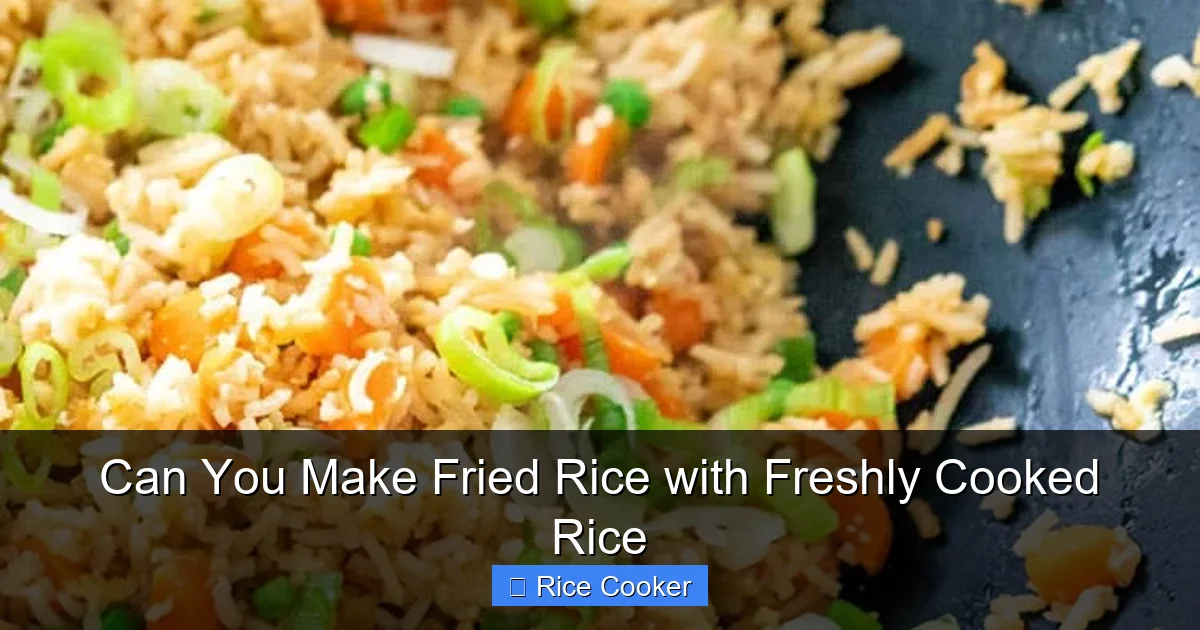
Making fried rice with freshly cooked rice is not only possible but often yields better results than leftover rice. When done right, the tender grains absorb flavors beautifully while maintaining a satisfying bite. With the right technique and a few simple tricks, your homemade fried rice will be restaurant-quality every time.
Key Takeaways
- Freshly cooked rice works great for fried rice: Contrary to popular belief, fresh rice fries up well if handled correctly—just let it cool slightly before cooking.
- Cooling prevents mushiness: Allow freshly cooked rice to sit uncovered for 10–15 minutes after steaming; this helps evaporate excess moisture and improves texture.
- Stir-frying at high heat is essential: Use medium-high to high flame with enough oil to create quick browning and prevent sticking without making the rice greasy.
- Add proteins and veggies early: Cook meats and vegetables first so they’re ready by the time the rice hits the pan, ensuring even distribution of flavors.
- Season as you go: Incorporate soy sauce, oyster sauce, or fish sauce gradually during the final stir-fry stage for balanced umami depth.
- A rice cooker simplifies the process: Using a quality rice cooker ensures perfectly cooked base rice, which is the foundation of great fried rice.
- Restaurant-style tricks boost flavor: Add a splash of sesame oil at the end, a pinch of sugar, or scrambled egg ribbons for authentic taste and visual appeal.
📑 Table of Contents
- Can You Make Fried Rice with Freshly Cooked Rice?
- The Science Behind Fried Rice Texture
- Step-by-Step Guide: Making Fried Rice with Freshly Cooked Rice
- Flavor Hacks to Elevate Your Fried Rice
- Common Mistakes to Avoid
- Can You Use Different Types of Rice?
- Storage Tips for Future Meals
- Why Your Rice Cooker Makes Everything Easier
- Final Thoughts: Yes, You Can Do It!
Can You Make Fried Rice with Freshly Cooked Rice?
You might have heard that the best fried rice comes from day-old rice—the kind sitting on your kitchen counter after last night’s dinner. But what if you just finished cooking a pot of steamed jasmine or basmati rice? Can you still whip up a delicious fried rice dish right then and there? The short answer: yes, absolutely!
While many chefs swear by cold rice for its dry, flaky texture, freshly cooked rice isn’t off-limits. In fact, with a few adjustments in technique, freshly cooked rice can produce equally—if not more—delicious results. The key lies in how you handle the rice immediately after it comes out of the rice cooker. A little cooling time, proper seasoning, and the right wok-heat strategy can transform tender, warm grains into a savory, fragrant stir-fry that rivals any takeout version.
This article dives deep into everything you need to know about turning freshly cooked rice into mouthwatering fried rice. Whether you’re using a standard stovetop wok, non-stick skillet, or even an electric griddle, we’ll walk you through step-by-step methods, common pitfalls, flavor-enhancing hacks, and why your rice cooker might just become your new best friend in the kitchen.
The Science Behind Fried Rice Texture
Why People Prefer Cold Rice
It’s true—many professional kitchens use leftover rice because starch molecules break down over time, creating a drier, less sticky grain ideal for high-heat frying. Cold rice also resists clumping, allowing each kernel to crisp slightly at the edges. This creates that signature “fried” texture where individual grains remain distinct yet infused with flavor.

Visual guide about Can You Make Fried Rice with Freshly Cooked Rice
Image source: png.pngtree.com
However, this doesn’t mean fresh rice is inferior. Modern rice cookers often produce fluffy, evenly cooked rice that’s perfect for frying when treated properly. The main challenge with fresh rice is moisture content. Too much water can lead to soggy, mushy fried rice—something no one wants.
How Moisture Affects Cooking Results
Rice absorbs water during cooking, and once it’s done, that moisture lingers inside the grains. If you toss hot, wet rice directly into a hot pan, steam builds up instead of searing, leading to a soupy mess rather than crispy perfection. That’s why letting rice cool slightly after cooking is crucial.
Think of it like this: you wouldn’t grill a burger straight from the fridge—you’d pat it dry first. Same principle applies here. By giving your rice a brief rest uncovered, excess surface moisture evaporates, setting the stage for better browning.
Step-by-Step Guide: Making Fried Rice with Freshly Cooked Rice
Prepping Your Rice Properly
Start by cooking your rice according to package instructions—or using your rice cooker’s default setting. Once the cycle completes, avoid flipping the switch off immediately. Instead, let the rice sit for 5–10 minutes with the lid open. This allows steam to escape and reduces internal humidity.
Next, gently fluff the rice with a fork. Don’t mash it—just separate any clumps. If your rice feels too moist, spread it out on a baking sheet lined with parchment paper and let it sit for another 10–15 minutes. This extra drying step makes a surprising difference in texture.
Choosing the Right Oil and Pan
For frying rice, choose an oil with a high smoke point like vegetable, canola, or peanut oil. Heat your wok or large skillet over medium-high to high heat until shimmering—you should see wisps of smoke but not flames. Add enough oil to coat the bottom lightly; too little causes sticking, too much makes the rice greasy.
A carbon steel wok or heavy-bottomed stainless steel pan distributes heat evenly and gets hotter than non-stick options, which helps achieve that coveted sear on the rice’s exterior.
Cooking Proteins and Vegetables First
Before adding rice, cook your protein (chicken, shrimp, tofu, etc.) until nearly done. Remove it temporarily. Then sauté aromatics—garlic, ginger, scallions—until fragrant. Add harder vegetables like carrots or broccoli first since they take longer to soften.
Return the protein to the pan and stir-fry everything together for 1–2 minutes. This layered approach ensures each component cooks properly without overcrowding the pan or overcooking delicate ingredients.
Adding the Rice and Seasonings
Now comes the rice. Break apart any remaining clumps gently with your spatula. Spread it evenly across the pan and press down lightly to create contact with the hot surface. Let it sit undisturbed for 30–60 seconds—this forms a fond (browned bits) at the bottom, adding depth of flavor.
Toss everything together, incorporating soy sauce, oyster sauce, or a dash of fish sauce. A sprinkle of white pepper and a pinch of sugar balances saltiness and enhances umami. For added richness, drizzle a teaspoon of sesame oil over the top just before serving.
Flavor Hacks to Elevate Your Fried Rice
Sesame Oil and Scallions
Never skip the finishing touches! A few drops of toasted sesame oil give fried rice its signature nutty aroma. Scatter chopped green onions over the top right before plating for color and freshness.
Egg Ribbons
For a classic Chinese restaurant vibe, scramble a couple eggs in the same pan after removing the rice. Slide the egg mixture onto the rice, fold it in, and serve. The eggs add protein and a creamy contrast to chewy rice.
Miso Paste or Doubanjiang
For adventurous palates, try swiping miso paste or Sichuan doubanjiang (broad bean paste) into the mix. These fermented ingredients pack intense umami that elevates even plain rice.
Vinegar or Lime Juice
A splash of rice vinegar or lime juice at the end brightens the dish and cuts through richness—especially helpful if you used lots of soy sauce or meat.
Common Mistakes to Avoid
Using Too Much Sauce
Over-seasoning drowns the rice in saltiness and turns it soggy. Taste as you go and adjust gradually. Remember, you can always add more, but you can’t take it away.
Skipping the Rest Period
Jumping straight to frying hot, wet rice leads to a sticky, soupy disaster. Always let it breathe for at least 10 minutes post-cooking.
Overcrowding the Pan
Packing too much into one pan lowers the temperature and steams the rice instead of frying it. Work in batches if needed.
Neglecting Heat Control
Low heat = soft, sad rice. Keep your flame steady and high enough to sear quickly without burning.
Can You Use Different Types of Rice?
Absolutely! While long-grain varieties like jasmine, basmati, or American long grain work best due to their low starch content, short-grain rice (like sushi or glutinous rice) can also be used—just be mindful of stickiness. Brown rice takes longer to cook and may require extra drying time since it holds more moisture.
Experimentation is part of the fun. Try wild rice for earthy notes or purple rice for antioxidants and striking color.
Storage Tips for Future Meals
If you end up with leftover freshly cooked rice (which happens!), store it properly to preserve quality. Cool it completely, transfer to an airtight container, and refrigerate within two hours. Use within 24–48 hours for optimal texture and safety. Reheat by spreading thinly on a tray and microwaving in intervals, stirring between bursts.
Pro tip: Freeze portions in silicone molds for easy grab-and-go meals. Defrost overnight in the fridge before frying.
Why Your Rice Cooker Makes Everything Easier
Modern rice cookers do more than just boil water and rice. Many models offer settings for brown rice, porridge, or even steam vegetables. Some even have keep-warm functions that maintain ideal eating temperature without overcooking.
Investing in a good rice cooker means consistent, reliable base rice every time—the unsung hero behind countless delicious meals. Pair it with a trusty wok, and you’ve got a home kitchen setup rivaling professional restaurants.
Final Thoughts: Yes, You Can Do It!
So, can you make fried rice with freshly cooked rice? Without a doubt. While cold rice has its merits, fresh rice offers simplicity and immediate gratification—perfect for busy weeknights or spontaneous cravings. With the right prep, timing, and flavor layering, you’ll never look back.
Forget waiting days for leftovers. Grab that bowl of warm, fragrant rice from your cooker, follow these steps, and enjoy a restaurant-worthy meal in under 20 minutes. Your taste buds—and your schedule—will thank you.
Frequently Asked Questions
Is it better to use day-old rice or freshly cooked rice for fried rice?
Both work well, but freshly cooked rice can yield excellent results with proper handling. Day-old rice is drier and less sticky, which helps achieve a crispier texture, but fresh rice becomes perfect once cooled and seasoned correctly.
How long should I let freshly cooked rice sit before frying?
Let freshly cooked rice sit uncovered for 10–15 minutes after the rice cooker shuts off. This allows excess moisture to evaporate and improves fryability by reducing sogginess.
What type of oil should I use for frying rice?
Use oils with high smoke points like vegetable, canola, or peanut oil. These withstand high heat without breaking down or imparting off-flavors, ensuring clean, crisp frying.
Can I add frozen vegetables to fried rice?
Yes, but add them earlier in the process so they thaw and cook through. Pat them dry before adding to reduce steam buildup and maintain texture.
Do I need a special pan for fried rice?
A wok or large, flat-bottomed skillet works best because they distribute heat evenly and get very hot. Non-stick pans can work but won’t develop the same sear unless preheated well.
Can I make fried rice vegetarian or vegan?
Absolutely! Use tofu, mushrooms, bell peppers, peas, and plenty of garlic and ginger. Swap animal-based sauces for tamari or liquid aminos, and finish with sesame oil for depth.