
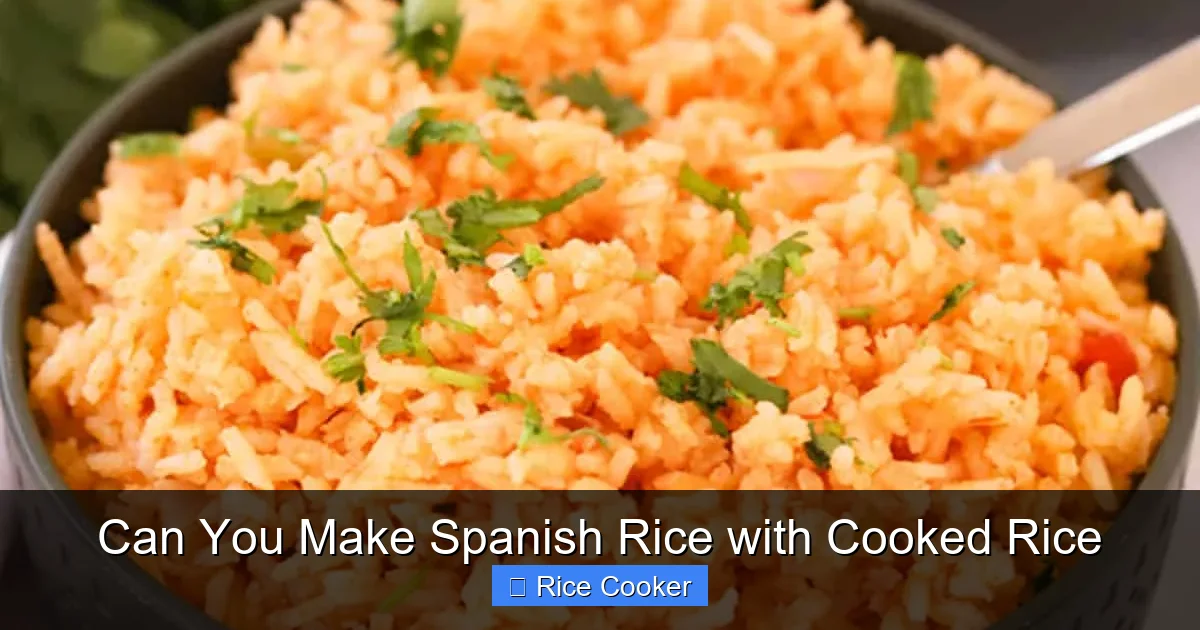
Can you make Spanish rice with cooked rice? Absolutely! With just a few extra ingredients and a little prep time, you can turn leftover white rice into a vibrant, savory dish that tastes just like it came from your favorite Mexican restaurant. Using cooked rice not only saves time but also helps create the perfect texture for absorbing bold spices and sauces.
Whether you’re short on time or looking to reduce food waste, repurposing cooked rice is a smart and tasty solution. In this guide, we’ll walk you through everything you need—from ingredient swaps to step-by-step instructions—so you can enjoy homemade Spanish rice anytime.
Key Takeaways
- Yes, it’s possible: You can definitely make Spanish rice using pre-cooked rice instead of starting from scratch.
- Texture matters: Slightly chilled or day-old rice works best because it holds its shape and absorbs flavors evenly.
- Flavor is key: The magic of Spanish rice comes from sautéing onions, garlic, tomatoes, and spices before adding the rice—don’t skip this step!
- Use a rice cooker: A rice cooker simplifies the process by automatically combining heat and moisture for perfectly fluffy results.
- Customize freely: Add peas, corn, bell peppers, or even shredded chicken to boost nutrition and make it a complete meal.
- Time-saving tip: Prep your sauce and aromatics while the rice heats up to streamline cooking.
- Storage & reheating: Leftover Spanish rice keeps well in the fridge for up to 4 days and reheats beautifully when warmed gently on the stove.
📑 Table of Contents
- Introduction: Why Make Spanish Rice with Cooked Rice?
- Understanding Spanish Rice: What Makes It Special?
- Ingredients You’ll Need (And Why They Matter)
- Step-by-Step Guide: Making Spanish Rice with Cooked Rice in a Rice Cooker
- Troubleshooting Common Issues When Using Cooked Rice
- Creative Variations and Meal-Prep Tips
- Health Benefits and Nutritional Considerations
- Frequently Asked Questions (FAQs)
Introduction: Why Make Spanish Rice with Cooked Rice?
Have you ever looked at a bag of leftover white rice and thought, “Ugh, what do I do with this?” Or maybe you’re hosting a dinner party and realize you’re out of time—but you still want something impressive yet simple? Enter: Spanish rice made with cooked rice. Yes, you read that right—you can absolutely turn yesterday’s leftovers into today’s star side dish.
Spanish rice, also known as arroz rojo or red rice, isn’t actually red at all. It gets its name from the rich, deep color it develops after being simmered with tomato sauce, saffron (sometimes), and warm spices like cumin and paprika. Traditionally, it’s cooked fresh from raw rice, but here’s the secret most home cooks don’t know: **you can make Spanish rice with cooked rice** without sacrificing flavor or texture.
In fact, using pre-cooked rice can be an advantage—especially if you’re using slightly cooled or refrigerated rice. That’s because dry, firm grains absorb liquids better and maintain their integrity during the reheating process. Plus, skipping the initial boiling step saves time and energy, making this method ideal for busy weeknights or last-minute meals.
Whether you’re working with a rice cooker, stovetop, or microwave, transforming leftover rice into Spanish rice is easier than you think. And the best part? No special equipment beyond what you already own. So grab that container of cooked rice, and let’s get cooking!
Understanding Spanish Rice: What Makes It Special?
Before we dive into the “how,” let’s talk about the “what.” Spanish rice is more than just rice with tomato sauce—it’s a cornerstone of Latin American cuisine, especially in dishes like paella, tacos al pastor, or classic Mexican burritos. Its signature golden-orange hue and fragrant aroma come from a careful balance of ingredients and cooking techniques.
Traditionally, long-grain white rice is first toasted or lightly browned in oil with onions and garlic. Then tomato-based sauce (often store-bought or homemade) is added along with broth, salt, and sometimes saffron for authentic color and taste. The mixture simmers until the rice absorbs the liquid and becomes tender but not mushy.
Now, here’s where things get interesting: **can you make Spanish rice with cooked rice** without losing that depth of flavor? The answer is yes—but with one critical adjustment. Instead of toasting fresh rice, you’ll sauté the aromatics (onions, garlic, tomatoes) first, then add your pre-cooked rice and let it absorb the seasoned liquid over gentle heat.
This method skips the raw-to-cooked phase but still delivers that beloved fusion of savory, tangy, and slightly smoky notes. And since modern rice cookers handle moisture control so well, you won’t end up with soggy or dry rice—even when reusing leftovers.
The Role of Texture in Reusing Cooked Rice
One common concern is whether cooked rice will become gummy or clumpy when reheated with sauce. But here’s the truth: **not all cooked rice is created equal**. Freshly boiled rice tends to be soft and sticky, which can lead to uneven absorption and a pasty texture.
On the other hand, slightly chilled or day-old rice—especially if it was stored properly in the fridge—has a firmer bite and less starch release. This makes it ideal for recipes like Spanish rice, where each grain should stand up to bold flavors without falling apart.
If your rice feels too wet, spread it out on a baking sheet and let it air-dry for 10–15 minutes before using. Alternatively, you can fluff it with a fork and press out any clumps. Remember: the goal isn’t to mimic raw rice, but to build layers of flavor around sturdy grains.
Ingredients You’ll Need (And Why They Matter)
Making Spanish rice with cooked rice requires fewer ingredients than the traditional version, but quality still counts. Here’s what you’ll need:
1. Cooked White Rice
Any type of long- or medium-grain white rice works—jasmine, basmati, or even instant. Aim for rice that’s been cooked al dente (slightly firm) and cooled slightly. Day-old rice is your best friend here.
2. Olive Oil or Vegetable Oil
Olive oil adds a subtle fruitiness, while neutral oils like canola or vegetable oil keep the flavor clean. Use about 2 tablespoons for sautéing.
3. Onion and Garlic
Finely chopped yellow or white onion and 2–3 cloves of minced garlic form the aromatic base. Sauté them until translucent and fragrant—this step builds the foundation of flavor.
4. Tomato Sauce or Diced Tomatoes
Store-bought tomato sauce is convenient and consistent. If using fresh tomatoes, blanch and peel them first. For extra richness, try crushed tomatoes with a splash of tomato paste.
5. Chicken Broth or Water
Liquid is essential for steaming the rice. Chicken broth adds depth; water works fine if you prefer simplicity. Use equal parts liquid to rice (about 1 cup liquid per 1 cup rice).
6. Spices and Seasonings
Cumin, smoked paprika, salt, and black pepper are non-negotiable. Some recipes call for oregano, bay leaf, or a pinch of sugar to round out the taste.
7. Optional Add-Ins
Peppers, peas, corn, diced carrots, or cooked beans can elevate your dish. Feel free to experiment based on dietary preferences or available ingredients.
Step-by-Step Guide: Making Spanish Rice with Cooked Rice in a Rice Cooker
Using a rice cooker makes the entire process foolproof. Follow these steps for restaurant-quality results every time.
Step 1: Prepare Your Ingredients
Chop your onion and garlic finely. If using fresh tomatoes, dice them into small pieces. Measure out your cooked rice and liquid. Having everything ready ensures smooth cooking.
Step 2: Sauté the Aromatics
Heat oil in your rice cooker pot over medium heat. Add onions and garlic, stirring frequently until soft and golden—about 5 minutes. Don’t rush this; caramelized onions add sweetness and complexity.
Step 3: Add Tomato Base and Spices
Stir in tomato sauce or diced tomatoes. Sprinkle in cumin, paprika, salt, and pepper. Cook for another 2–3 minutes until fragrant and slightly thickened. This concentrated flavor burst will coat every grain later.
Step 4: Combine Rice and Liquid
Add your cooked rice to the pot. Pour in chicken broth or water. Gently mix everything together so the rice is evenly distributed. Don’t stir too hard—just enough to combine.
Step 5: Cook in the Rice Cooker
Close the lid and select the “Cook” or “White Rice” setting. Most rice cookers will take 15–20 minutes. Once done, let it sit for 5 minutes with the lid closed—this allows residual steam to finish cooking the rice evenly.
Step 6: Fluff and Serve
Open the lid and gently fluff the rice with a fork. Taste and adjust seasoning if needed. Top with fresh cilantro, lime wedges, or avocado slices for brightness.
Troubleshooting Common Issues When Using Cooked Rice
Even experienced cooks run into hiccups now and then. Here’s how to fix the most common problems:
Problem: Rice Is Too Dry or Undercooked
This usually happens if there’s not enough liquid or if the rice was too old and absorbed excess moisture. Solution: Add a splash of broth or water, cover, and cook on the “Keep Warm” setting for 10 minutes.
Problem: Rice Is Mushy or Sticky
Overcooking or using freshly boiled rice can cause this. To prevent it, use chilled rice and avoid stirring too much. Also, ensure your liquid ratio is correct.
Problem: Flavor Is Weak
If the sauce lacks punch, increase the amount of tomato paste or add a pinch of smoked paprika for depth. A dash of lime juice at the end can brighten things up too.
Problem: Rice Clumps Together
Break up clumps gently with a fork before adding to the rice cooker. You can also rinse the rice briefly under cold water to remove excess starch (though this reduces stickiness slightly).
Creative Variations and Meal-Prep Tips
Once you master the basics, the possibilities expand! Try these ideas to keep your Spanish rice exciting:
Vegetarian or Vegan Version
Skip meat-based broths and use vegetable stock. Add sautéed mushrooms, zucchini, or black beans for protein.
Spicy Kick
Mix in diced jalapeños or a teaspoon of chipotle powder. Serve with sour cream or Greek yogurt to cool it down.
Meal Prep Friendly
Make a big batch on Sunday and store portions in airtight containers. Reheat individual servings in the microwave with a damp paper towel to retain moisture.
Fusion Twist
Try coconut milk instead of broth for a tropical flavor. Or swap tomatoes for roasted red peppers and sun-dried tomatoes for a smoky profile.
Health Benefits and Nutritional Considerations
Spanish rice isn’t just delicious—it can also be nutritious! By choosing whole-grain rice (like converted brown rice) and loading it with veggies, you boost fiber, vitamins, and antioxidants.
However, be mindful of sodium levels if using canned tomato products. Opt for low-sodium versions or rinse them briefly before use. Also, portion control matters—rice is calorie-dense, so pair it wisely with grilled proteins and plenty of greens.
Frequently Asked Questions (FAQs)
Can I use brown rice instead of white rice?
Yes! Brown rice has a nuttier flavor and more fiber. Just note that it may take longer to heat through. Increase liquid slightly and check for doneness halfway through cooking.
Visual guide about Can You Make Spanish Rice with Cooked Rice
Image source: currytrail.in
Visual guide about Can You Make Spanish Rice with Cooked Rice
Image source: barefeetinthekitchen.com
Do I need saffron to make authentic Spanish rice?
Saffron gives the classic golden hue and unique aroma, but it’s optional. Smoked paprika or turmeric can substitute for color if unavailable.
How long does Spanish rice stay fresh?
Stored in an airtight container in the refrigerator, it lasts up to 4 days. Reheat gently on the stove or in the microwave with a splash of water.
Can I make this in the Instant Pot?
Absolutely! Use the “Steam” or “Manual” setting. Follow the same liquid-to-rice ratio and allow natural pressure release for 5 minutes.
Is it okay to freeze Spanish rice?
Yes! Portion into freezer-safe bags or containers. Thaw overnight in the fridge and reheat thoroughly.
Why does my Spanish rice taste bland?
Blandness often stems from insufficient seasoning or not letting the aromatics develop flavor. Always toast onions and garlic until fragrant, and don’t skimp on spices.
Frequently Asked Questions
Can I use brown rice instead of white rice?
Yes! Brown rice has a nuttier flavor and more fiber. Just note that it may take longer to heat through. Increase liquid slightly and check for doneness halfway through cooking.
Do I need saffron to make authentic Spanish rice?
Saffron gives the classic golden hue and unique aroma, but it’s optional. Smoked paprika or turmeric can substitute for color if unavailable.
How long does Spanish rice stay fresh?
Stored in an airtight container in the refrigerator, it lasts up to 4 days. Reheat gently on the stove or in the microwave with a splash of water.
Can I make this in the Instant Pot?
Absolutely! Use the “Steam” or “Manual” setting. Follow the same liquid-to-rice ratio and allow natural pressure release for 5 minutes.
Is it okay to freeze Spanish rice?
Yes! Portion into freezer-safe bags or containers. Thaw overnight in the fridge and reheat thoroughly.
Why does my Spanish rice taste bland?
Blandness often stems from insufficient seasoning or not letting the aromatics develop flavor. Always toast onions and garlic until fragrant, and don’t skimp on spices.