

Can you put stock in a rice cooker? Absolutely—and it’s easier than you think. This humble kitchen gadget isn’t just for rice; with the right settings and techniques, it can cook nutritious stocks, broths, and even hearty one-pot meals. Whether you’re meal prepping or cutting down on dishes, using your rice cooker for stock is a smart, efficient choice that saves time and preserves flavor.
Key Takeaways
- Rice cookers are versatile: While designed for rice, many models can handle soups, stews, and even stock thanks to their slow-cooking capabilities.
- Stock-making is simple: Add bones, vegetables, herbs, and water to your rice cooker and let it simmer—no constant stirring required.
- Energy-efficient option: Using a rice cooker for stock uses less energy than a stove-top pot and reduces cleanup.
- Best rice cooker features: Look for models with “slow cook,” “soup,” or “broth” settings for optimal results.
- Storage and usage: Cool stock properly, strain it, and store in airtight containers for future use in soups, sauces, or gravies.
- Safety first: Always ensure your rice cooker lid seals tightly and follow manufacturer guidelines to avoid spills or pressure buildup.
- Customize flavors: Experiment with different herbs, spices, and ingredients to create unique, personalized stock varieties.
📑 Table of Contents
- Can You Put Stock in a Rice Cooker? The Surprising Truth
- The Versatility of Modern Rice Cookers
- How to Make Stock in a Rice Cooker: Step-by-Step Guide
- Types of Stock You Can Make in a Rice Cooker
- Tips for Perfect Stock Every Time
- Common Mistakes to Avoid
- Frequently Asked Questions About Making Stock in a Rice Cooker
- Conclusion: Embrace the Power of Your Rice Cooker
Can You Put Stock in a Rice Cooker? The Surprising Truth
Have you ever looked at your rice cooker and wondered, “Is this thing just for rice?” If so, you’re not alone. For years, rice cookers were seen as glorified pots with automatic shut-off timers—perfect for fluffy white rice, but limited in culinary scope. But what if I told you that your trusty rice cooker could do more than just cook grains? Yes, you can put stock in a rice cooker, and doing so might just revolutionize the way you approach home cooking.
Whether you’re making bone broth from scratch, preparing vegetable stock for soups, or simply trying to reduce dishwashing, the rice cooker offers a convenient, low-maintenance solution. With its consistent heat and programmable settings, it’s an ideal tool for slow-simmering recipes that traditionally require hours on the stovetop. In this article, we’ll explore everything you need to know about using your rice cooker to make delicious, nutritious stock—without any guesswork.
The Versatility of Modern Rice Cookers
Beyond Rice: What Rice Cookers Can Actually Do
Modern rice cookers have evolved far beyond their original purpose. While early models were basic, today’s appliances come with multiple settings—including soup, broth, steam, keep warm, and even slow cook. These functions make them suitable for a wide range of dishes. Some advanced models even include pressure cooking or induction heating, expanding their culinary potential even further.
Visual guide about Can You Put Stock in a Rice Cooker
Image source: clipground.com
For example, many users now use their rice cookers to prepare oatmeal, bake cakes, cook quinoa, and yes—make stock. The key lies in understanding your machine’s capabilities. Check the manual for specific instructions, but most rice cookers can handle liquids up to 2–3 cups above the maximum rice measurement mark. That means there’s plenty of room for simmering stock without overflowing.
Why Use a Rice Cooker Instead of a Pot?
Cooking stock on the stove requires attention—you have to monitor the level of liquid, stir occasionally, and watch for boil-overs. It’s easy to forget about it and end up with burnt bottom notes or a dried-out pot. A rice cooker eliminates those concerns. Once you add your ingredients and press start, the appliance does the rest. The sealed environment also helps retain flavors and aromas, resulting in richer stock.
Additionally, rice cookers are typically smaller than standard pots, which means they use less energy. Since stock simmers slowly over several hours, even small energy savings add up. Plus, fewer dishes mean less cleanup—another win for busy cooks.
How to Make Stock in a Rice Cooker: Step-by-Step Guide
Gathering Your Ingredients
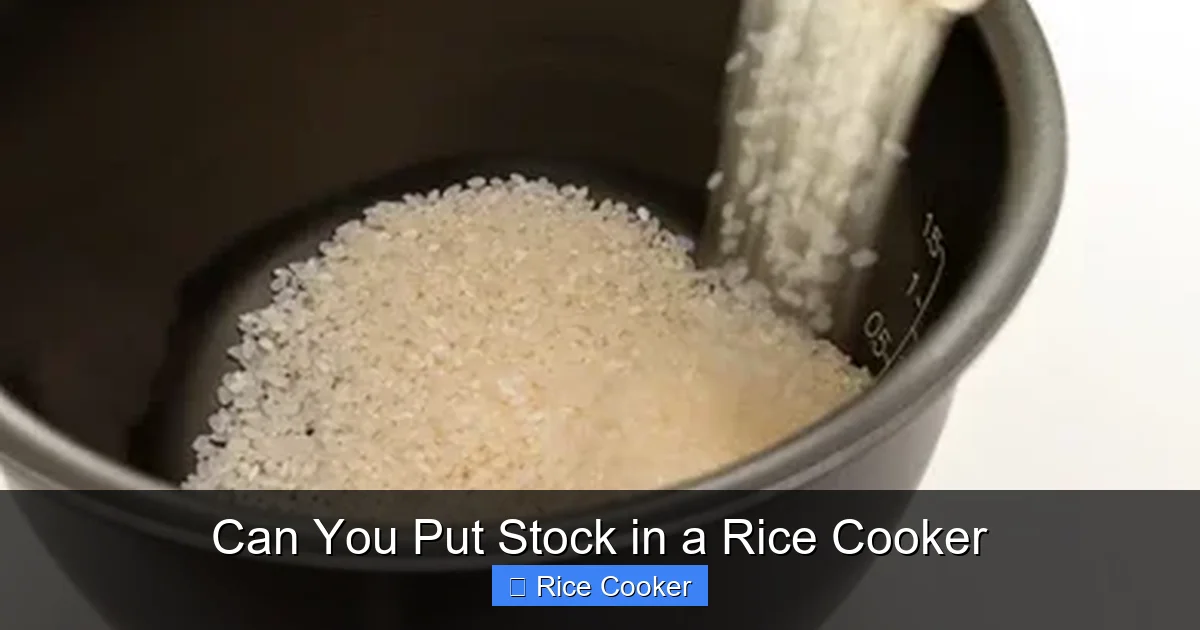
Making stock in a rice cooker starts with quality ingredients. For best results:
Visual guide about Can You Put Stock in a Rice Cooker
Image source: shutterstock.com
- Bones: Use chicken, beef, pork, or fish bones. Roast them first (in the oven at 400°F for 30–45 minutes) to deepen flavor.
- Vegetables: Onions, carrots, celery, garlic, and herbs like parsley, thyme, and bay leaves add complexity.
- Liquid: Water or wine (red or white) works well. Avoid adding salt until the end—you can always adjust flavor later.
- Aromatics: Ginger, peppercorns, or fennel seeds enhance depth without overpowering.
Pro tip: Freeze leftover vegetable scraps (onion skins, herb stems, carrot tops) in a container and use them when making veggie stock.
Preparing the Rice Cooker
Before adding ingredients, clean your rice cooker thoroughly. Remove any residue from previous use, especially if you’ve cooked sticky or sugary foods. Line the inner pot with parchment paper or cooking spray to prevent sticking during long cook times.
Next, measure the capacity of your cooker. Most standard models hold 1–2 cups of uncooked rice, which corresponds to about 3–4 cups of liquid. Since stock requires more liquid than rice, ensure you don’t exceed the safe fill line. Overfilling increases the risk of spills and steam leaks.
Layering Ingredients Properly
To maximize extraction of collagen and minerals from bones, layer ingredients carefully:
- Place bones at the bottom.
- Add chopped vegetables and aromatics on top.
- Pour in enough liquid to cover all ingredients by at least 1 inch.
This setup allows gentle, even heat distribution and prevents burning. Avoid overcrowding—leave space near the lid for steam to circulate.
Choosing the Right Setting
If your rice cooker has a dedicated soup or broth setting, use it. These programs usually run for 2–4 hours at a low temperature, mimicking traditional stock-making methods. If no such setting exists, use the keep warm or cook function and manually set a timer. Most rice cookers will maintain a steady simmer once boiling begins.
Note: Unlike pressure cookers, rice cookers don’t build pressure, so don’t expect rapid stock preparation. Patience pays off—the slower method yields clearer, cleaner-tasting stock.
Types of Stock You Can Make in a Rice Cooker
Chicken Stock
Chicken stock is the backbone of countless soups, risottos, and sauces. To make it in a rice cooker:
- Use 1–2 lbs of chicken bones (from roasted chicken carcasses).
- Add 1 onion, 2 carrots, 2 celery stalks, 4 garlic cloves, and a handful of parsley.
- Cook on soup setting for 3–4 hours.
- Strain through a fine-mesh sieve or cheesecloth.
Result: A golden, savory base perfect for gravies or pasta dishes.
Beef Bone Broth
Beef bones—especially marrow bones and knuckle bones—yield rich, gelatinous broth ideal for soups and stews. Roast 2 lbs of bones at 400°F for 45 minutes before adding to the cooker. Include onion, garlic, and a sprig of rosemary. Simmer for 4–6 hours on low heat.
Tip: Skim foam that rises to the top during the first hour—it contains impurities.
Veggie Stock
For plant-based cooking, combine onion, leeks, carrots, celery, mushrooms, and herb stems. Add 6 cups of water and a teaspoon of salt. Cook on soup mode for 2–3 hours. Strain and enjoy!
Fish Stock
While delicate, fish stock can be made in a rice cooker using heads, tails, and frames from firm-fleshed fish like cod or snapper. Add white wine, onions, and bay leaves. Simmer gently for 1–2 hours. Be sure to strain immediately after cooking to avoid bitter flavors.
Tips for Perfect Stock Every Time
Don’t Rush the Process
True stock benefits from slow cooking. While you can speed things up slightly, aim for at least 3–4 hours to extract maximum flavor and nutrients. Shorter times may result in weaker, thinner stock.
Skim Regularly
Even though rice cookers reduce splatter, foam can still form. Use a spoon to remove scum every 30 minutes during the first hour. This step ensures clarity and purity in your final product.
Cool and Store Correctly
Once done, transfer hot stock to shallow containers and refrigerate within 2 hours. Refrigerated stock lasts 3–5 days. For longer storage, freeze in ice cube trays or glass jars for up to 6 months.
Reuse Leftovers Creatively
Use cooled stock in risotto, mashed potatoes, braised meats, or homemade ramen noodles. It’s also great for cooking grains like barley or farro.
Common Mistakes to Avoid
Overfilling the Cooker
Exceeding the max fill line causes overflow and potential electrical issues. Always leave at least 1 inch of headspace between liquid and lid.
Using Too Much Salt Too Soon
Salting too early can draw out moisture and toughen proteins. Add salt after straining and adjust to taste.
Neglecting to Clean the Lid Seal
A damaged or dirty rubber seal compromises heat retention and safety. Inspect regularly and replace if cracked.
Frequently Asked Questions About Making Stock in a Rice Cooker
Can you make stock in any rice cooker?
Most modern rice cookers can handle stock, especially those with soup or keep-warm settings. Older models without liquid capacity markers may pose risks. Always check your manual first.
How long does it take to make stock in a rice cooker?
Typically 3–6 hours, depending on the recipe and desired richness. Chicken stock usually takes 3–4 hours; beef bone broth may need 5–6 hours.
Do I need to add salt?
Not necessarily. Stock concentrates flavors during cooking, so you can add salt later. Taste before serving and adjust as needed.
Can I reuse leftover stock?
Absolutely! Use it in soups, sauces, or as a cooking liquid for grains. Frozen stock cubes are convenient for portion control.
What if my rice cooker doesn’t have a soup setting?
Use the regular cook function and set a timer. The cooker will maintain a gentle simmer once boiling starts.
Is it safe to leave the rice cooker unattended overnight?
No. Even with auto-shutoff, prolonged unattended cooking poses fire hazards. Monitor the process, especially during the first hour.
Conclusion: Embrace the Power of Your Rice Cooker
So, can you put stock in a rice cooker? The answer is a resounding yes—and it’s one of the simplest, most rewarding upgrades you can make to your kitchen routine. With minimal effort and maximum convenience, your rice cooker becomes a multi-tool capable of producing restaurant-quality broths, stocks, and even light stews.
Whether you’re feeding a family, meal prepping for the week, or simply craving a warm cup of bone broth, this appliance delivers consistent results without the hassle. And since it’s compact, energy-efficient, and easy to clean, it fits seamlessly into any lifestyle.
Next time you reach for the stove, pause and consider your rice cooker instead. You might just discover a whole new world of flavor—one that starts with a simple question: “What else can this thing do?”
Frequently Asked Questions
Can you make stock in any rice cooker?
Most modern rice cookers can handle stock, especially those with soup or keep-warm settings. Older models without liquid capacity markers may pose risks. Always check your manual first.
How long does it take to make stock in a rice cooker?
Typically 3–6 hours, depending on the recipe and desired richness. Chicken stock usually takes 3–4 hours; beef bone broth may need 5–6 hours.
Do I need to add salt?
Not necessarily. Stock concentrates flavors during cooking, so you can add salt later. Taste before serving and adjust as needed.
Can I reuse leftover stock?
Absolutely! Use it in soups, sauces, or as a cooking liquid for grains. Frozen stock cubes are convenient for portion control.
What if my rice cooker doesn’t have a soup setting?
Use the regular cook function and set a timer. The cooker will maintain a gentle simmer once boiling starts.
Is it safe to leave the rice cooker unattended overnight?
No. Even with auto-shutoff, prolonged unattended cooking poses fire hazards. Monitor the process, especially during the first hour.