
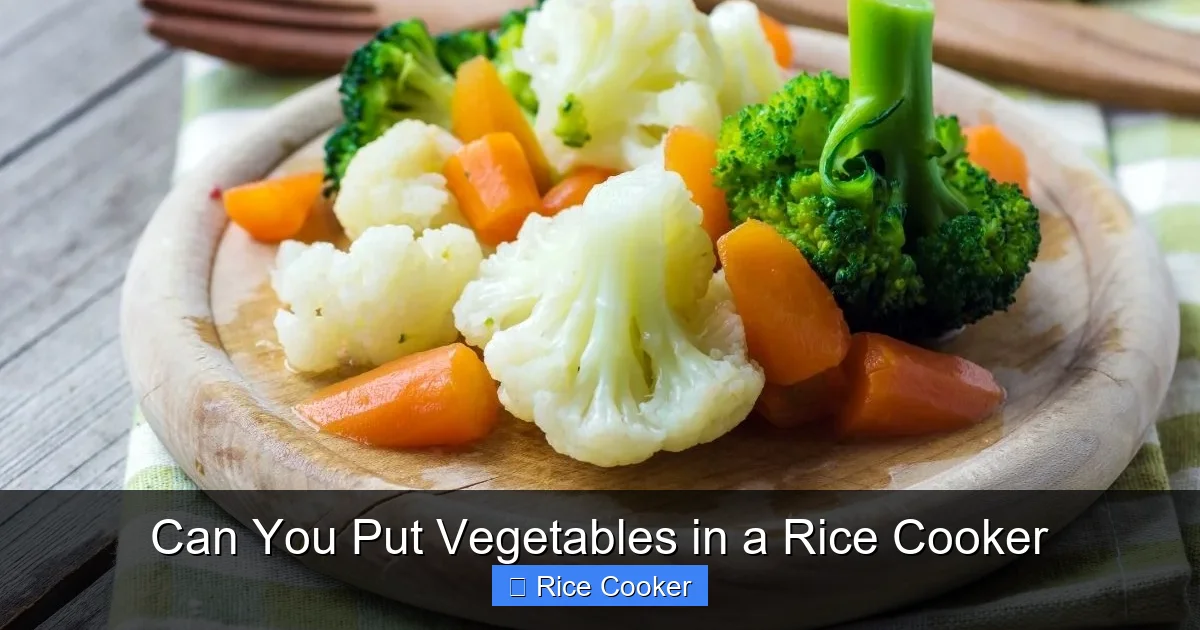
Yes, you can absolutely put vegetables in a rice cooker! It’s a quick, hands-off way to create balanced one-pot meals that are both nutritious and delicious. With the right techniques, your rice cooker becomes a versatile kitchen tool for steaming, sautéing, and simmering veggies alongside grains or proteins.
Key Takeaways
- Vegetables can be safely cooked in a rice cooker—it’s not just for rice! Most veggies steam beautifully during the cooking cycle.
- Prep matters: Cut vegetables into uniform sizes so they cook evenly with the grain.
- Cooking time varies: Dense veggies like carrots take longer; leafy greens cook fast—add them toward the end.
- Layering strategy: Place heavier ingredients (like potatoes or meat) at the bottom and delicate ones (like peas or spinach) on top.
- Flavor boosters: Add herbs, garlic, or broth to enhance taste without extra effort.
- Cleaning is easy: Non-stick inner pots make cleanup simple after cooking mixed dishes.
📑 Table of Contents
- Can You Put Vegetables in a Rice Cooker? The Answer Is Yes – And Here’s Why
- Why Use a Rice Cooker for Vegetables?
- Which Vegetables Work Best in a Rice Cooker?
- How to Prepare Vegetables for Rice Cooker Cooking
- Step-by-Step Guide: Cooking Veggies + Rice Together
- Creative Rice Cooker Veggie Recipes to Try Today
- Common Mistakes to Avoid When Adding Veggies
- Can You Steam Vegetables Alone in a Rice Cooker?
- Cleaning and Maintenance Tips
- Conclusion: Unlock New Culinary Possibilities
Can You Put Vegetables in a Rice Cooker? The Answer Is Yes – And Here’s Why
Imagine coming home after a long day, tossing a handful of chopped veggies and some leftover chicken into your rice cooker along with a cup of rice. Press start, relax, and wake up to a perfectly cooked, nutrient-packed meal ready to eat—no stirring, no watching, no burnt bottoms. Sounds too good to be true? Not quite. Your humble rice cooker is far more versatile than you might think.
The short answer: yes, you can definitely put vegetables in a rice cooker. In fact, it’s one of the best ways to cook them when you want minimal cleanup and maximum convenience. Whether you’re meal prepping for the week or whipping up dinner in under 30 minutes, adding veggies to your rice cooker opens up a world of healthy, fuss-free possibilities. From hearty grain bowls to savory stews, this kitchen appliance can do it all—with just one button press.
Why Use a Rice Cooker for Vegetables?
You might wonder why bother with an extra pot or pan when boiling or steaming veggies separately? There are several compelling reasons to use your rice cooker as a multi-use cooking vessel:

Visual guide about Can You Put Vegetables in a Rice Cooker
Image source: weknowrice.com
1. Saves Time and Energy
Instead of using multiple burners and appliances, you can cook rice, beans, and vegetables simultaneously in one device. This reduces energy consumption and speeds up your cooking process. For busy families or solo diners, that’s a win-win.
2. Retains Nutrients
Because vegetables cook quickly and don’t require submersion in water (as much as boiling), their vitamins and minerals—especially water-soluble ones like vitamin C and B-complex—are better preserved. Steaming gently in the rice cooker helps maintain texture and color while locking in nutrition.
3. Minimal Cleanup
With only one pot to wash, you’ll spend less time scrubbing and more time enjoying your food. Many modern rice cookers have removable, non-stick inner pots that come straight out of the unit for easy washing.
4. Hands-Off Cooking
Set it and forget it. No need to monitor the stove or stir constantly. Just add your ingredients, set the timer, and let science do the work.
Which Vegetables Work Best in a Rice Cooker?
Not all vegetables behave the same way under heat. Some hold up well during prolonged cooking, while others wilt or lose flavor if overdone. Understanding which veggies shine in a rice cooker helps you plan smarter meals.

Visual guide about Can You Put Vegetables in a Rice Cooker
Image source: ricearray.org
Dense Root Vegetables
- Carrots – Sweet and tender when cooked with rice; pair well with cumin or turmeric.
- Potatoes – Ideal for chunky salads or side dishes; cut into even cubes for consistent cooking.
- Sweet Potatoes – Naturally sweet and creamy; great with cinnamon or black pepper.
- Turnips & Parsnips – Earthy flavors complement brown rice or quinoa nicely.
Cruciferous Veggies
- Broccoli – Best added near the end of cooking to prevent mushiness.
- Cauliflower – Cuts into florets and absorbs spices beautifully.
- Brussels Sprouts – Halved and tossed with olive oil before cooking adds crispness.
Leafy Greens (Add Last)
- Spinach – Will wilt almost instantly; stir in after cooking for a vibrant green sauce or topping.
- Kale – Can handle longer cook times but benefits from being blanched first.
- Swiss Chard – Similar to spinach; add at the end for best results.
Legumes & Pods
- Green Beans – Trimmed and added mid-cycle for al dente perfection.
- Peas – Sweet and bright; toss in during the last 5 minutes.
- Snow Peas – Delicate pods that soften quickly—don’t overcook.
How to Prepare Vegetables for Rice Cooker Cooking
Proper preparation ensures even cooking and prevents disappointment. Follow these simple steps before tossing your veggies into the cooker:
Cut Uniformly
Chop all vegetables into similar-sized pieces. A mix of tiny dice and large chunks leads to uneven results—some veggies will be raw while others turn to mush.
Blanch Delicate Greens First (Optional)
If using kale or collard greens, consider blanching them briefly in boiling water for 30–60 seconds before adding to the cooker. This reduces bitterness and makes them easier to digest.
Layer Strategically
Place denser items like potatoes or carrots at the bottom since they take longest to cook. Lighter ingredients like zucchini or mushrooms go on top. If including meat, layer it between veggies and rice to prevent burning.
Add Liquid Wisely
Most rice cookers require liquid to function properly. Use vegetable broth instead of plain water for deeper flavor. A splash of coconut milk or soy sauce can also elevate the dish.
Step-by-Step Guide: Cooking Veggies + Rice Together
Ready to try your first veggie-rice combo? Here’s a foolproof method for beginners:
Ingredients You’ll Need
- 1 cup rinsed rice (white, brown, or wild)
- 1½ cups water or low-sodium vegetable broth
- 2 cups chopped mixed vegetables (see suggestions above)
- Optional: 1 cup cooked beans, cubed tofu, or shredded chicken
- Seasonings: salt, pepper, garlic powder, paprika, fresh herbs
Instructions
- Prepare the Inner Pot: Rinse the rice thoroughly. Add it to the inner pot of your rice cooker.
- Add Liquid: Pour in water or broth according to your rice type (typically 1:1.5 ratio for white rice).
- Layer Ingredients: Arrange vegetables around the rice, then add any protein. Sprinkle with seasonings.
- Close and Cook: Secure the lid and select “Normal” or “White Rice” mode. Avoid “Quick” settings unless specified.
- Let It Rest: After cooking completes, let the pressure release naturally for 10 minutes before opening. Fluff with a fork.
Pro Tips
- For brown rice, increase cooking time by 10–15 minutes or use “Brown Rice” setting if available.
- If your rice cooker has a “Steam” function, use it for delicate greens after the main cycle finishes.
- To prevent sticking, lightly grease the inner pot with cooking spray or oil.
Creative Rice Cooker Veggie Recipes to Try Today
Once you master the basics, the possibilities are endless. Experiment with global flavors and seasonal produce to keep things exciting.
Mediterranean Grain Bowl
Combine farro, cherry tomatoes, cucumber, Kalamata olives, red onion, and chickpeas. Season with oregano, lemon juice, and olive oil. Cook for 25 minutes. Top with feta cheese before serving.
Asian-Inspired Fried Rice
Sauté diced carrots, peas, corn, and bell peppers in a little oil using the rice cooker’s “Sauté” function (if available). Remove, then cook jasmine rice with soy sauce and ginger. Mix everything back together before serving.
Vegan Lentil Curry
Layer lentils, sweet potatoes, cauliflower, and spinach with coconut milk, curry powder, and turmeric. Cook for 30 minutes. Serve over quinoa or basmati rice.
Herb-Roasted Vegetable Medley
Toss zucchini, eggplant, bell peppers, and onions with rosemary, thyme, salt, and pepper. Spread over cooked rice. Bake in the rice cooker for 20 minutes until tender.
Common Mistakes to Avoid When Adding Veggies
Even experienced cooks occasionally run into issues. Learn from these pitfalls to ensure success every time.
Overloading the Pot
Packing too many ingredients blocks steam circulation, leading to uneven cooking. Stick to filling the pot no more than halfway.
Using Too Much Water
Excess liquid dilutes flavors and makes rice soggy. Always measure carefully based on your grain type.
Neglecting Texture Differences
Cooking everything together means some veggies will overcook while others stay crunchy. Adjust timing or add types strategically.
Skipping Seasoning
Rice cookers can be bland if left unseasoned. Don’t rely solely on salt—use spices, acids (lemon, vinegar), and umami-rich ingredients like mushrooms or soy sauce.
Can You Steam Vegetables Alone in a Rice Cooker?
Absolutely! Many rice cookers have a dedicated “Steam” function that uses residual heat or a built-in steam tray. This is perfect for preparing greens, fish, or dumplings without needing another appliance. Simply fill the bottom with water, place a trivet inside, add your veggies in a steamer basket, and cover. Steam for 8–12 minutes depending on the vegetable.
Cleaning and Maintenance Tips
After cooking mixed meals, keeping your rice cooker in top shape is easy:
- Always unplug the unit before cleaning.
- Remove the inner pot and wash with warm, soapy water. Avoid abrasive sponges on non-stick surfaces.
- Wipe the exterior and lid with a damp cloth. Never submerge electrical components.
- Check the sealing ring regularly and replace if cracked or stuck.
- Run a cycle with just water once a month to prevent odor buildup.
Conclusion: Unlock New Culinary Possibilities
So, can you put vegetables in a rice cooker? Without a doubt—and now you know how to do it like a pro. By understanding which veggies work best, how to prep them, and when to add each ingredient, you transform your rice cooker from a single-purpose gadget into a dynamic kitchen ally.
This simple upgrade saves time, enhances nutrition, and reduces cleanup—all while delivering delicious, wholesome meals. Whether you’re feeding a family or cooking for one, embracing the versatility of your rice cooker empowers you to eat healthier without extra stress.
Next time you open your fridge and see a bunch of colorful produce, don’t reach for the microwave. Head straight to your rice cooker and turn those veggies into something extraordinary.
Frequently Asked Questions
Can I cook frozen vegetables directly in a rice cooker?
Yes, but add them about 10 minutes before the cooking cycle ends. Frozen veggies need extra time to defrost and cook through. Make sure there’s enough liquid since frozen foods release moisture during heating.
Do I need to peel vegetables before cooking in a rice cooker?
It depends on the vegetable. Carrots, potatoes, and turnips usually benefit from peeling to remove dirt and improve texture. However, skins on sweet potatoes or bell peppers can be left on for added fiber and nutrients.
Will my rice cooker burn if I add oil or butter?
Most modern rice cookers with non-stick coatings handle small amounts of oil or butter without burning. Just avoid excessive fat—too much can smoke or create residue. A light coating is safe and even helps prevent sticking.
Can I cook meat and vegetables together in a rice cooker?
Absolutely! Layer raw meat (like chicken thighs or ground turkey) beneath the rice and veggies. The meat cooks through during the rice cycle. For safety, ensure internal temperatures reach 165°F (74°C). Consider browning meat first if your model has a sauté function.
What happens if I add too many vegetables?
Overcrowding blocks steam flow, causing uneven cooking. Some veggies may remain raw while others become mushy. Stick to filling the pot no more than halfway and choose compatible textures.
Is it okay to leave cooked veggie-rice mixture in the rice cooker overnight?
Not recommended. Bacteria can grow in perishable foods left at room temperature for too long. Refrigerate leftovers within two hours and reheat thoroughly before eating. Always store in airtight containers.