
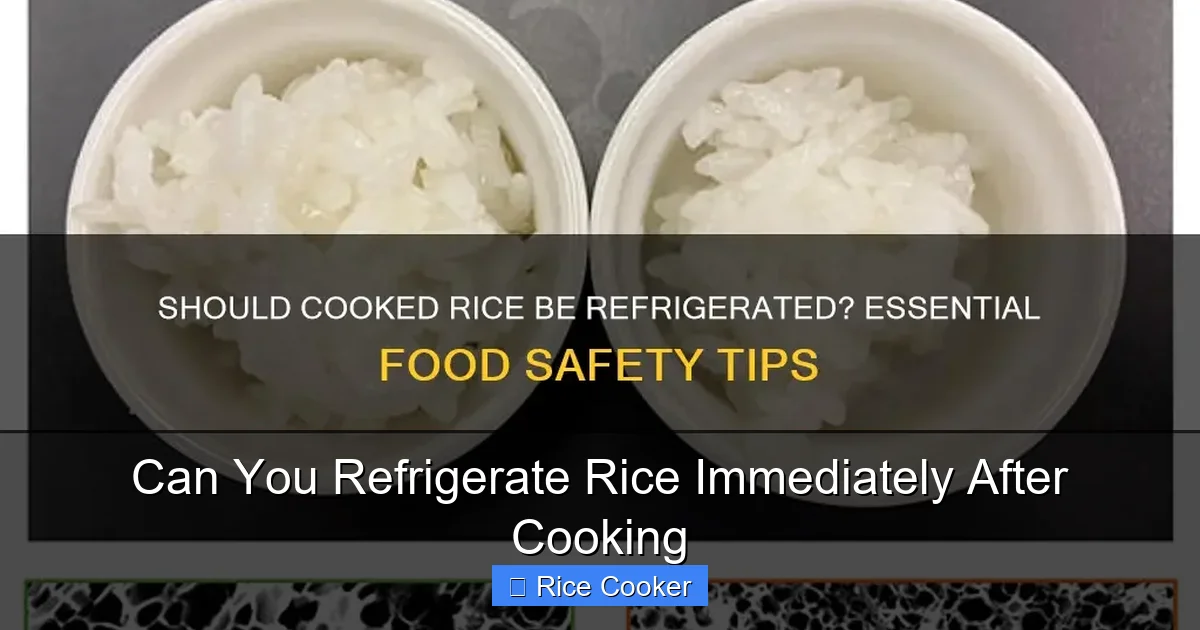
You absolutely can refrigerate rice right after cooking, and doing so helps prevent the growth of harmful bacteria like Bacillus cereus. The key is cooling it quickly and storing it properly in shallow containers to maintain quality and safety.
Key Takeaways
- Refrigeration is safe: Storing cooked rice in the fridge within 1–2 hours of cooking is completely safe and recommended.
- Cooling matters: Pouring hot rice into shallow containers speeds up cooling and reduces bacterial risk.
- Reheating kills bacteria: When reheating refrigerated rice, ensure it reaches an internal temperature of at least 165°F (74°C).
- Use within a day or two: For best taste and texture, consume refrigerated rice within 3–4 days.
- Freezing extends shelf life: You can freeze rice for up to 6 months if vacuum-sealed or portioned properly.
- Never leave rice at room temperature too long: Keep cooked rice out of the “danger zone” (40°F–140°F) for more than 2 hours.
- Wash your hands and tools: Always use clean utensils and containers to avoid cross-contamination.
[FEATURED_IMAGE_PLACEHOLDER]
Can You Refrigerate Rice Immediately After Cooking?
You’ve just finished cooking a perfect pot of fluffy white rice or a vibrant jasmine rice, and now comes the question: can you refrigerate rice immediately after cooking? If you’re like most home cooks, you might be tempted to let it cool on the counter before putting it away—but that could be risky. In fact, the safest and smartest move is to refrigerate rice as soon as possible after it’s done cooking. But how soon? What’s the best way to do it? And what happens if you don’t follow the rules?
In this comprehensive guide, we’ll walk you through everything you need to know about refrigerating rice right after cooking. Whether you’re meal-prepping for the week or saving leftovers for tomorrow’s stir-fry, understanding proper rice storage is essential for both food safety and flavor. We’ll cover why cooling speed matters, how to store rice correctly, whether freezing is better, and even how to reheat it safely later. By the end of this article, you’ll feel confident every time you reach for that rice cooker.
The Science Behind Rice and Bacteria
Why Rice Is a Bacterial Risk
Rice is often grown in warm, moist environments—like paddies in Southeast Asia—making it naturally susceptible to contamination with spores from Bacillus cereus. This bacterium isn’t harmful itself, but its spores can survive normal cooking temperatures. When cooked rice is left at room temperature, these spores can germinate, multiply, and produce toxins that cause food poisoning. Symptoms include nausea, vomiting, and diarrhea—sometimes within 30 minutes to 6 hours after eating.
This is why experts strongly advise against letting cooked rice sit out for too long. The “danger zone” for bacterial growth is between 40°F and 140°F (4°C and 60°C). Anything left in this range for more than two hours becomes unsafe, especially in humid or warm conditions. That’s where immediate refrigeration comes in.
How Refrigeration Slows Growth
Refrigeration keeps the temperature below 40°F (4°C), which significantly slows down bacterial reproduction. While Bacillus cereus can still grow slowly in the fridge, it won’t reach dangerous levels if the rice is stored properly and consumed within a few days. Freezing goes even further—it halts bacterial activity entirely until thawing occurs.
So yes, you can refrigerate rice immediately after cooking. In fact, doing so is one of the best ways to protect yourself and your family from foodborne illness. The key is making sure the rice cools fast enough to get out of the danger zone quickly.
Best Practices for Cooling and Storing Rice
Step-by-Step: How to Safely Refrigerate Rice Right After Cooking
If you’re wondering whether you should refrigerate rice immediately after cooking, the answer is a clear yes—with a few important steps:
- Pour hot rice into shallow containers. Wide, shallow dishes allow heat to escape faster than deep pots. Aim for containers no deeper than 2 inches.
- Stir occasionally while cooling. This helps distribute heat evenly and speeds up the process.
- Cover loosely at first, then securely. A loose lid lets steam escape without trapping moisture. Once cooled slightly, switch to an airtight container.
- Place in the refrigerator within 1–2 hours. Ideally, aim for under 30 minutes if the room is warm or humid.
- Label and date the container. This helps you track how long it’ve been stored.
Using a rice cooker’s inner pot directly isn’t ideal because it’s too deep and retains heat. Instead, transfer the rice to a metal or glass baking sheet or divide it into multiple smaller containers. Avoid plastic bags unless they’re freezer-safe and leak-proof.
How Long Can You Store Refrigerated Rice?
Most food safety authorities recommend using refrigerated rice within 3–4 days. Beyond that, the risk of spoilage increases, and flavor may degrade. Here’s a quick reference:
- Day 1–3: Best quality; safe to eat.
- Day 4: Acceptable if stored properly, but texture may become dry.
- After Day 4: Not recommended unless frozen.
Always smell and look at the rice before eating. If it smells sour, has mold, or feels slimy, discard it immediately—even if it looks fine.
Freezing Rice: A Great Option for Long-Term Storage
Can You Freeze Rice Immediately After Cooking?
Absolutely! Freezing rice right after cooking is not only safe—it’s excellent for meal prep. Just like refrigeration, freezing stops bacterial growth and preserves nutrients and texture. Most types of rice freeze well, including white, brown, jasmine, basmati, and even instant rice.
Tips for Freezing Cooked Rice
- Portion it out. Divide rice into single-serving or meal-sized portions before freezing. This makes thawing easier and prevents repeated warming/cooling cycles.
- Use freezer-safe containers or bags. Glass jars, silicone trays, or heavy-duty zip-top bags work best. Leave a little headspace for expansion.
- Label clearly. Include the date and contents—freezer burn is less likely if you use it within 6 months.
- Thaw safely. Move frozen rice to the fridge overnight or reheat directly from frozen (add a splash of water to prevent drying).
Frozen rice maintains good quality for up to 6 months. When reheated properly, it should retain its original texture and flavor.
Reheating Refrigerated and Frozen Rice Safely
The Dangers of Improper Reheating
Even if rice has been refrigerated or frozen safely, improper reheating can reintroduce risks. Cold spots in reheated rice can harbor bacteria that survived the initial cooling phase. That’s why thorough reheating is critical.
Safe Reheating Methods
Follow these methods to ensure your rice is both delicious and safe:
- Microwave: Transfer rice to a microwave-safe dish, cover with a damp paper towel, and heat on high in 1-minute intervals, stirring between each. Check internal temperature reaches 165°F (74°C).
- Stovetop: Place rice in a saucepan with a tablespoon of water or broth. Cover and simmer over medium heat, stirring occasionally, until heated through.
- Oven: Spread rice on a baking sheet, add a sprinkle of water, cover tightly with foil, and bake at 350°F (175°C) for 10–15 minutes.
Avoid leaving reheated rice sitting at room temperature for more than 1 hour. If you’re serving it to children, elderly individuals, or people with weakened immune systems, double-check that it’s piping hot throughout.
Meal Prep and Batch Cooking with Rice
Why People Love Batch-Cooking Rice
Many busy families and meal preppers rely on batch-cooking rice because it’s quick, affordable, and versatile. One pot can last for multiple meals—overnight oats, fried rice, burrito bowls, salads, and more. But without proper storage, batch-cooked rice can go bad fast.
Smart Strategies for Meal Prepping Rice
- Cook once, store twice: Make extra rice on Sunday and rotate through different recipes during the week.
- Divide into labeled containers: Use clear containers so you can see how much you have left.
- Pair with fresh ingredients: Add vegetables, proteins, and sauces just before eating to keep everything crisp and flavorful.
- Keep a rice journal: Track when you cooked it, how you stored it, and what you used it for. This helps avoid waste.
Some people even cook rice ahead and freeze it in ice cube trays for easy portioning. Each cube can be popped into soups or stir-fries later.
Common Myths About Rice Storage Debunked
Myth #1: “Rice Should Be Left to Cool Naturally Before Refrigerating”
This is outdated advice. Letting rice sit on the counter allows it to linger in the danger zone, increasing bacterial risk. Modern food safety guidelines emphasize rapid cooling and prompt refrigeration.
Myth #2: “All Rice Types React the Same Way”
While general rules apply, brown rice has more oil content and may spoil faster than white rice if not stored properly. Always refrigerate or freeze brown rice within 1–2 hours.
Myth #3: “You Can Leave Rice Out Overnight”
Nope. Even if it smells fine, bacteria and toxins may already be present. When in doubt, throw it out.
Myth #4: “Plastic Bags Are Fine for Short-Term Storage”
Not recommended. Plastic bags aren’t airtight and can leach chemicals when exposed to hot food. Use glass or BPA-free containers instead.
Special Considerations: Baby Food and Vulnerable Populations
Baby Rice Cereal and Infant Safety
Rice cereal is a common first food for babies, but it’s also rich in arsenic and requires careful handling. If you’re making homemade baby food with rice, always cook it thoroughly, cool rapidly, and store in sterilized jars or containers. Never leave it out—not even for a few minutes.
Food Safety for Elderly and Immunocompromised Individuals
People with weakened immune systems are more susceptible to foodborne illness. For them, it’s especially important to refrigerate rice immediately, use it within 24 hours, and reheat to boiling.
Environmental and Economic Benefits of Proper Rice Storage
Wasting food isn’t just bad for your wallet—it’s bad for the planet. Rice production uses significant water and land resources. By storing and using rice properly, you reduce food waste and save money. Plus, efficient meal planning means fewer trips to the grocery store and less packaging waste.
Final Thoughts: Your Rice, Your Rules—But Do It Safely
So, can you refrigerate rice immediately after cooking? Yes—without hesitation. It’s not only safe but highly recommended by food safety experts worldwide. The key lies in speed, cleanliness, and proper containers. Whether you’re using a traditional pot, an electric rice cooker, or a multi-cooker, the principles remain the same: cool fast, store tight, reheat hot.
Remember, rice is more than just a side dish—it’s a foundation for countless meals. Taking a few extra seconds to store it correctly ensures those meals stay delicious, nutritious, and safe. Next time you turn off your rice cooker, don’t pause. Grab a shallow pan, pour in that steaming rice, and send it straight to the fridge. Your future self (and your stomach) will thank you.
This is a comprehensive guide about can you refrigerate rice immediately after cooking.
Key Takeaways
- Understanding can you refrigerate rice immediately after cooking: Provides essential knowledge
Frequently Asked Questions
Can you put hot rice directly in the fridge?
Yes, you can refrigerate hot rice immediately after cooking, but it’s better to cool it quickly first. Pour it into shallow containers and let it cool for about 20–30 minutes before refrigerating. This helps it leave the danger zone faster and prevents condensation.
Is it safe to refrigerate rice the same day it’s cooked?
Absolutely. In fact, it’s safer to refrigerate rice within 1–2 hours of cooking rather than leaving it at room temperature. Doing so minimizes the risk of bacterial growth like Bacillus cereus.
How long does cooked rice last in the refrigerator?
Cooked rice can last 3–4 days in the refrigerator if stored properly in an airtight container. Always check for signs of spoilage—such as a sour smell or slimy texture—before eating.
Should I wash my hands before handling cooked rice?
Yes! Always wash your hands thoroughly with soap and water before touching any food, especially after handling raw ingredients or touching surfaces that may carry bacteria.
Can you freeze cooked rice immediately after cooking?
Yes, you can freeze cooked rice right after cooking. Portion it into containers or bags, label them, and freeze for up to 6 months. Thaw in the fridge or reheat directly from frozen.
Does refrigerating rice affect its nutritional value?
No significant loss occurs when refrigerating or freezing rice. In some cases, cooling enhances certain nutrients like resistant starch, which supports digestion and blood sugar control.