
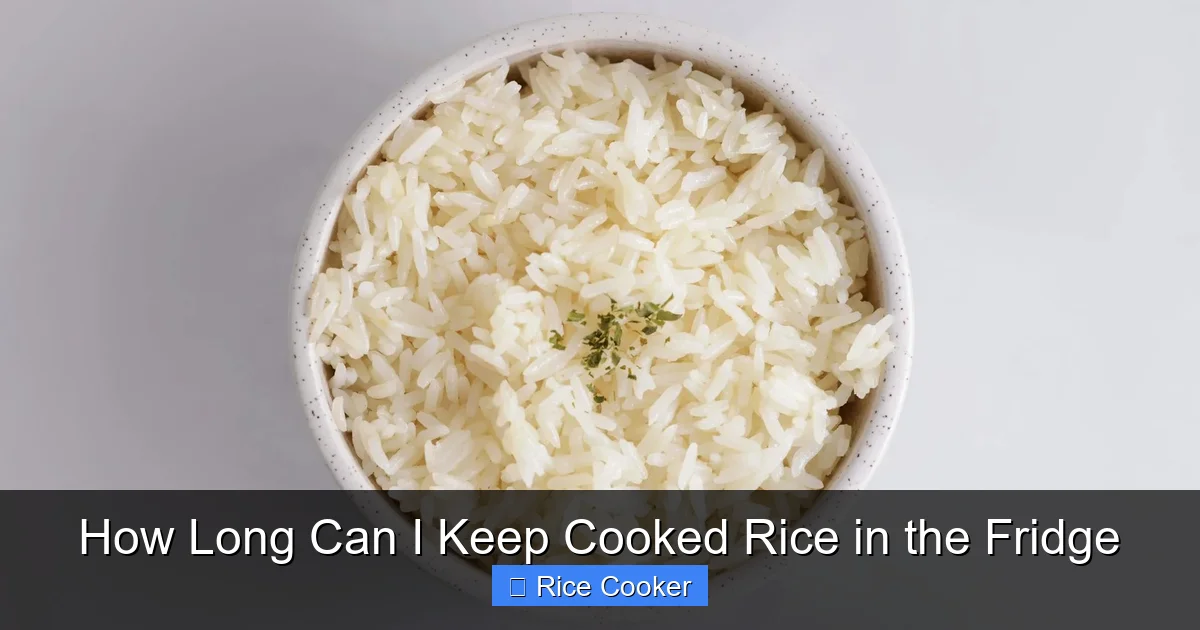
How long can I keep cooked rice in the fridge? Generally, cooked rice lasts 3–4 days when stored properly in an airtight container. However, improper storage can lead to rapid bacterial growth, especially from *Bacillus cereus*, which causes food poisoning. To stay safe, cool rice quickly, refrigerate it within 2 hours of cooking, and reheat thoroughly before eating.
**How Long Can I Keep Cooked Rice in the Fridge?**
You’ve just finished a delicious meal—maybe a stir-fry, fried rice, or a simple side dish. But now you’re left with leftover rice. Instead of tossing it out, you’re thinking, “Can I save this for later?” And more importantly, **how long can I keep cooked rice in the fridge?**
This is a question many home cooks ask, and for good reason. Rice is a staple in so many cuisines, and knowing how to store it properly means less waste and safer meals. The short answer? You can keep cooked rice in the refrigerator for **3 to 4 days**, provided you follow basic food safety rules. But there’s more to it than just timing. Let’s dive into everything you need to know about storing, handling, and reheating cooked rice like a pro.
—
### Why Rice Needs Special Care When Stored
Unlike other cooked grains such as quinoa or oats, rice—especially when cooked—is particularly vulnerable to a bacterium called *Bacillus cereus*. This spore-forming bacteria is naturally found in soil and can survive the cooking process because it produces heat-resistant spores. While harmless in its dormant form, these spores can grow rapidly in warm, moist environments—like a bowl of leftover rice sitting on the counter overnight.
When rice is left at room temperature for too long, the spores can multiply and produce toxins that cause food poisoning. Symptoms typically include nausea, vomiting, diarrhea, and stomach cramps—usually within 6 to 18 hours of eating contaminated rice.
That’s why proper cooling and refrigeration are so critical. The U.S. Department of Agriculture (USDA) recommends that perishable foods, including cooked rice, be refrigerated within **2 hours** of cooking. If your kitchen is unusually hot (above 90°F/32°C), that window drops to just **1 hour**.
—
### How to Safely Store Cooked Rice in the Fridge
Storing rice correctly isn’t rocket science, but it does require attention to detail. Here’s how to do it right:
#### 1. Cool It Quickly
After cooking, let the rice sit for no more than 30 minutes before transferring it to the fridge. The best method is to spread it out in shallow containers or place portions in smaller dishes. This increases the surface area, allowing heat to escape faster and reducing the risk of bacterial growth.
Avoid leaving large batches of rice in the pot or deep bowl—this traps heat and creates a perfect breeding ground for bacteria.
#### 2. Use an Airtight Container
Once cooled, move the rice to an airtight container. Glass or BPA-free plastic containers work well. Make sure the lid fits snugly to prevent cross-contamination from fridge odors or other foods.
If you don’t have a container handy, you can cover the bowl with plastic wrap, pressing it directly onto the surface of the rice. This minimizes air exposure and keeps moisture in.
#### 3. Label and Date Your Containers
It’s easy to forget what’s in your fridge after a few days. Label each container with the date you cooked the rice. This helps you track freshness and ensures you use it before it goes bad.
For example: “Fried Rice – Oct 10” or “Jasmine Rice – Oct 8”.
#### 4. Place It in the Coldest Part of the Fridge
The back of the refrigerator—away from the door—is usually the coldest spot. Placing your rice container here helps maintain a consistent, low temperature, slowing down bacterial growth.
Avoid stacking heavy items on top of the rice container, as this can compromise airflow and insulation.
—
### Signs That Your Cooked Rice Has Gone Bad
Even with perfect storage, rice doesn’t last forever. Watch out for these warning signs:
– **Unpleasant Odor:** Fresh cooked rice should smell neutral or slightly starchy. If it smells sour, fermented, or “off,” it’s time to toss it.
– **Slimy Texture:** Fresh rice should feel soft but not sticky or slimy. A slimy coating indicates bacterial or mold growth.
– **Mold Growth:** White, green, or black fuzzy spots mean mold has developed. Never taste rice with visible mold.
– **Discoloration:** Yellowish or grayish hues can signal spoilage.
– **Unusual Taste:** If the rice tastes bitter, metallic, or simply “wrong,” discard it immediately.
When in doubt, throw it out. Better safe than sorry!
—
### Reheating Cooked Rice Properly
Reheating rice is simple, but it must be done carefully to kill any bacteria that might have grown during storage.
#### 1. Bring It to a Full Boil
Place the rice in a microwave-safe dish and add a tablespoon of water to prevent drying out. Cover with a vented lid or damp paper towel. Microwave on high for **2–3 minutes**, stirring halfway through. Alternatively, bring rice to a boil on the stovetop in a saucepan with a splash of water.
The goal is to reach an internal temperature of **at least 165°F (74°C)** throughout.
#### 2. Let It Rest
After heating, let the rice sit covered for 1–2 minutes. This allows heat to distribute evenly and ensures any remaining bacteria are killed.
#### 3. Stir Well Before Serving
Give the rice a good stir before serving. This helps redistribute moisture and improves texture.
💡 **Pro Tip:** Never reheat rice more than once. Each cycle increases the risk of contamination and nutrient loss.
—
### Freezing Cooked Rice for Long-Term Storage
Want to stretch your rice further? Freezing is an excellent option.
Cooked rice freezes beautifully and can last up to **6 months** when stored properly. Here’s how to freeze it:
1. Spread cooled rice in a single layer on a baking sheet lined with parchment paper.
2. Freeze for 1–2 hours until firm.
3. Transfer to a freezer-safe bag or container, removing as much air as possible.
4. Label with the date and contents.
When ready to use, thaw overnight in the fridge or reheat directly from frozen—just add a bit of water to prevent drying.
Frozen rice works great in soups, casseroles, or stir-fries. Just remember to reheat it thoroughly.
—
### Does Rice Type Affect How Long It Lasts?
You might wonder whether jasmine, basmati, brown, or sushi rice has different shelf lives. The truth is, **no**. All types of cooked rice follow the same refrigeration timeline because they’re all starch-based and equally susceptible to *Bacillus cereus*.
However, brown rice contains more oil and nutrients, which can make it slightly more prone to rancidity over time. Still, in the fridge, it behaves similarly to white rice. The key factor remains proper storage, not the grain variety.
That said, **sushi rice** is often cooked with vinegar, which adds acidity. This can slightly extend its shelf life, but it’s still best consumed within 3–4 days.
—
### Common Mistakes People Make With Leftover Rice
Even experienced cooks slip up sometimes. Here are the most common mistakes—and how to avoid them:
– **Leaving Rice Out Overnight:** Never let cooked rice sit at room temperature for more than 2 hours.
– **Using the Same Utensils:** Always use clean utensils when scooping rice to avoid introducing bacteria.
– **Skipping Cooling:** Don’t rush the cooling process. Use shallow containers to speed things up.
– **Not Reheating Fully:** Partial reheating leaves cold spots where bacteria can survive.
– **Storing in the Rice Cooker:** The inner pot of a rice cooker isn’t designed for long-term storage. Transfer rice to a proper container instead.
—
### How to Prevent Food Poisoning From Rice
To minimize risk, follow these best practices:
– **Always cook rice thoroughly**—it should be fluffy and dry, not mushy.
– **Cool rice fast**—within 2 hours max.
– **Refrigerate immediately**—don’t wait.
– **Use rice within 3–4 days**.
– **Reheat to boiling** every time.
– **Trust your senses**—if it looks or smells wrong, don’t eat it.
Remember: **Bacillus cereus doesn’t change the taste or smell of rice**, so even perfectly stored rice can be unsafe. Rely on time limits, not appearance.
—
### Fun Fact: Why Isn’t Rice Considered “Dangerous” Like Potatoes or Eggs?
You might notice that rice isn’t listed among foods that commonly cause foodborne illness like raw chicken, eggs, or undercooked beef. Yet, it’s one of the top culprits. The difference lies in preparation. Raw rice isn’t risky, but **cooked rice becomes dangerous** if mishandled. It’s not the grain itself—it’s what happens after cooking.
So while rice isn’t inherently toxic, its storage conditions make it a high-risk food when left unrefrigerated.
—
### Final Thoughts: Rice Is Safe—If You Handle It Right
Cooked rice can absolutely be saved and enjoyed safely—just follow the rules. With proper cooling, quick refrigeration, and careful reheating, you can enjoy leftovers for up to four days without worry.
Think of it like this: rice is a blank canvas. As long as you treat it with respect (cool it fast, store it tight, reheat it hot), it stays fresh, tasty, and safe.
Next time you make a big batch, plan ahead. Freeze extras for busy nights, or turn leftovers into new dishes—fried rice, rice bowls, or rice pudding. The possibilities are endless.
And remember: when it comes to food safety, **when in doubt, throw it out**. Your stomach will thank you.
—
Key Takeaways
- Safe Refrigeration Time: Cooked rice can be safely kept in the fridge for 3 to 4 days, but no longer than that to avoid contamination.
- Cooling Matters: Cool rice quickly within 2 hours of cooking to prevent bacterial growth—never leave it at room temperature too long.
- Airtight Storage: Store rice in a sealed container or wrapped tightly with plastic wrap to reduce exposure to air and moisture.
- Reheat Thoroughly: Always reheat rice to at least 165°F (74°C) to kill any potential bacteria that may have formed during storage.
- Watch for Spoilage Signs: Discard rice if it smells off, feels slimy, has mold, or develops an unusual color or texture.
- Freezing Extends Life: For longer storage, freeze cooked rice for up to 6 months—just thaw and reheat properly when ready to eat.
- Rice Type Doesn’t Affect Shelf Life Much: Whether white, brown, jasmine, or basmati, all cooked rice follows similar refrigeration guidelines.
Quick Answers to Common Questions
Can I eat rice left out overnight?
No, never eat rice left at room temperature for more than 2 hours. Bacteria like *Bacillus cereus* can multiply rapidly and cause food poisoning, even if the rice looks and smells fine.
Is it safe to reheat rice multiple times?
It’s best to avoid reheating rice more than once. Each reheating increases the risk of contamination and nutrient loss. Cook only what you’ll eat in one go.
Does freezing rice change its taste?
Freezing rice won’t ruin its taste if done correctly. Just thaw it slowly in the fridge and reheat thoroughly. It works great in soups and casseroles.
Can I leave rice in the rice cooker?
No, avoid leaving cooked rice in the rice cooker for extended periods. The warm setting isn’t safe for long-term storage—transfer it to an airtight container instead.
Why does my rice smell bad after a few days?
A sour or off smell indicates spoilage. Cooked rice should remain neutral in odor. If it smells strange, it’s likely gone bad and should be discarded.
Frequently Asked Questions
How long does cooked rice last in the fridge?
Cooked rice can safely be stored in the refrigerator for 3 to 4 days. Beyond that, the risk of bacterial growth increases significantly, making it unsafe to eat.
Should I cool rice before putting it in the fridge?
Yes, you should cool rice quickly within 2 hours of cooking. Spread it in shallow containers to speed up cooling and then refrigerate promptly.
Can I leave rice in the pot after cooking?
No, avoid leaving rice sitting in the pot for more than 30 minutes. Heat trapped in the pot encourages bacterial growth—transfer it to a container and cool it faster.
Is it okay to reheat rice in the microwave?
Yes, reheating rice in the microwave is safe and effective. Add a splash of water, cover it, and heat until steaming hot throughout—at least 165°F (74°C).
Does type of rice affect how long it lasts?
No, all types of cooked rice—white, brown, jasmine, basmati—follow the same refrigeration guidelines. Storage conditions matter more than the grain variety.
How can I tell if my rice has gone bad?
Look for signs like a sour smell, slimy texture, mold, discoloration, or an unusual taste. If any of these are present, discard the rice immediately.