
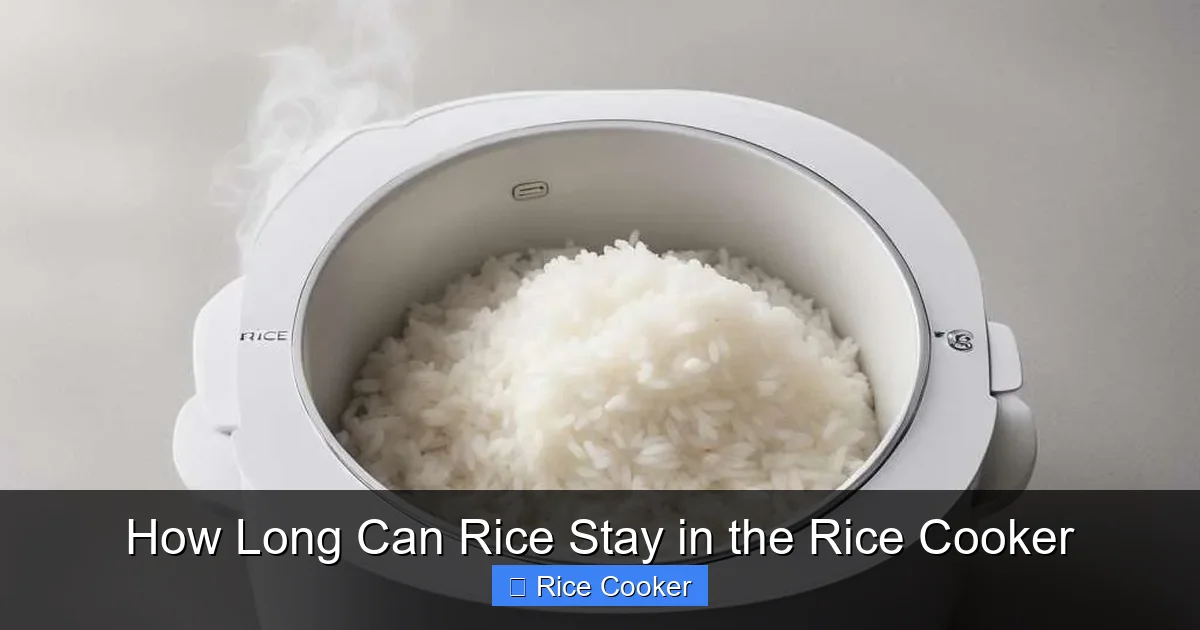
Rice left in a rice cooker can stay warm for up to 10–12 hours without spoiling, but safety depends on temperature and storage. For best taste and food safety, consume rice within 2–3 hours or transfer it to a sealed container. Whether you’re meal prepping or hosting guests, understanding rice cooker timing ensures flavor, texture, and health safety.
Rice is one of the world’s most beloved staple foods—warm, fluffy, and endlessly versatile. Whether you’re cooking jasmine rice for stir-fry, sushi-grade sushi rice, or hearty brown rice for a bowl, knowing how long rice can stay in the rice cooker is essential for both food safety and taste. Many home cooks wonder: *Can I leave my rice cooking overnight?* or *Is it safe to keep rice warm all day?* The answers aren’t always straightforward, because the rice cooker isn’t just a cooking appliance—it’s also a warming device with built-in timers and keep-warm settings.
But here’s the truth: while rice cookers are designed to keep rice warm after cooking, they weren’t made to be long-term storage units. Understanding the science behind food safety, temperature regulation, and bacterial growth helps you make smarter decisions. In this article, we’ll explore how long rice can stay in the rice cooker, what happens when it sits too long, and practical tips to keep your rice fresh, safe, and delicious—whether you’re prepping for a family dinner or hosting a large gathering.
Key Takeaways
- Temperature control matters: Rice cookers maintain 140–170°F (60–77°C), ideal for short-term warmth but not long-term refrigeration.
- Short-term safety: Rice can sit in the cooker for up to 2–3 hours at room temperature without significant bacterial growth.
- Long-term risk: After 4–5 hours, especially above 90°F (32°C), bacteria like Bacillus cereus can multiply rapidly.
- Reheating is key: Always reheat leftover rice to 165°F (74°C) to kill potential pathogens.
- Storage improves longevity: Refrigerate rice within 2 hours and eat within 3–5 days for optimal safety.
- Texture degrades over time: Rice absorbs moisture and becomes gummy or dry if kept too long in the cooker.
- Use insulated pots wisely: Some rice cookers have keep-warm functions—use them only briefly or transfer rice afterward.
Quick Answers to Common Questions
Can I leave rice in the rice cooker overnight?
No, it’s not safe. Leaving rice in the rice cooker overnight allows bacteria like Bacillus cereus to grow, even in the keep-warm mode. Transfer rice to a sealed container and refrigerate within 2 hours.
How long is rice safe in the rice cooker?
Rice is safest in the rice cooker for up to 2–3 hours at room temperature. After that, bacterial growth increases, especially in warm environments. For longer periods, refrigerate instead.
Does rice cooker keep rice cold?
No, rice cookers only keep rice warm—typically between 140°F and 170°F (60°C to 77°C). They do not cool rice or slow bacterial growth effectively.
Can rice go bad in the rice cooker?
Yes, rice can spoil in the rice cooker if left too long. Bacteria multiply in the “danger zone” (40°F–140°F), and even if the rice looks fine, toxins may have formed.
Should I turn off the rice cooker after cooking?
Yes. Once the rice is cooked, unplug the rice cooker or turn off the keep-warm function. This prevents unnecessary wear and reduces the risk of overheating or fire.
📑 Table of Contents
- Understanding Rice Cooker Functionality
- How Long Can Rice Stay in the Rice Cooker?
- What Happens if You Leave Rice in the Rice Cooker Too Long?
- Practical Tips for Keeping Rice Fresh and Safe
- Special Considerations: Different Types of Rice
- Common Myths About Rice and Rice Cookers
- How to Reheat Rice Safely
- Conclusion: Enjoy Rice—Safely and Deliciously
Understanding Rice Cooker Functionality
Modern rice cookers do more than just boil water and steam grains. They use a combination of heat sensors, thermal fuses, and automated shut-off systems to cook rice perfectly every time. Once the rice reaches its target doneness, the cooker switches from the “cook” mode to the “keep-warm” mode. This keeps the rice at a consistent, low heat—typically between 140°F and 170°F (60°C to 77°C)—to prevent burning or drying out.
This keep-warm function sounds convenient, but it’s important to note that it’s not a refrigerator. Unlike refrigeration, which slows bacterial growth to near zero, the warm setting actually supports microbial activity—especially if the environment is warm. So while the rice stays hot, the longer it sits in this temperature zone, the higher the risk of bacterial buildup.
The Science of Food Safety
The danger zone for food safety is defined as temperatures between 40°F and 140°F (4°C to 60°C). Within this range, bacteria reproduce rapidly. When rice is cooked, it’s brought to a rolling boil, which kills most harmful microorganisms. But once it cools slightly and enters the keep-warm phase, it lingers in this critical window—especially if the surrounding air is warm.
One of the biggest concerns is Bacillus cereus, a common bacterium found in soil and grains. It produces heat-resistant spores that survive normal cooking. If rice is left in the rice cooker for too long—particularly in a warm environment—these spores can germinate, multiply, and release toxins that cause food poisoning. Symptoms include nausea, vomiting, and diarrhea.
How Temperature Affects Rice Quality
Beyond safety, temperature also impacts texture and flavor. Rice continues to absorb moisture even after cooking, but when kept at a constant warm temperature, it can become mushy or develop a sticky consistency. Additionally, prolonged exposure to heat can cause the starch to break down unevenly, leading to clumping or dry spots.
That said, short-term warmth (under 3 hours) usually doesn’t ruin the texture significantly. But if you’re planning to serve rice hours later, transferring it to an airtight container and refrigerating it is far better than relying solely on the cooker’s keep-warm feature.
How Long Can Rice Stay in the Rice Cooker?
Visual guide about How Long Can Rice Stay in the Rice Cooker
Image source: ricearray.org
So, back to the original question: How long can rice stay in the rice cooker? The answer depends on several factors—temperature, type of rice, and whether the cooker has a reliable keep-warm mechanism.
Short-Term: Safe for Immediate Serving
If you’re serving rice right away or within 2–3 hours, keeping it in the rice cooker is perfectly fine. Most modern rice cookers maintain a consistent temperature that prevents cold spots and promotes even warmth. For example, if you’re preparing a holiday feast and need to keep rice warm while guests arrive, you can safely leave it in the cooker until ready to serve.
However, even during this short window, it’s wise to avoid opening the lid frequently. Every time you lift the lid, cooler air enters, creating condensation that can make the rice soggy.
Medium-Term: Caution Advised After 3 Hours
Once rice sits in the cooker for more than 3 hours, the risk of bacterial growth increases, especially if the kitchen is warm (above 75°F/24°C). While the rice may still look and smell fine, internal temperatures and moisture levels create a breeding ground for bacteria.
If you must keep rice warm for a few hours (e.g., during a long wedding reception), consider using a chafing dish or insulated warmer instead. These devices provide better airflow and more consistent heat without the risk of condensation.
Long-Term: Not Recommended Beyond 6–8 Hours
Leaving rice in the rice cooker for 6 to 8 hours is generally not recommended. Even with the keep-warm function, the cumulative effect of time and temperature creates unsafe conditions. At this point, the rice should either be consumed immediately or transferred to the refrigerator.
Some high-end models have advanced keep-warm systems with precise temperature control and automatic cooling cycles. If your rice cooker has such features, it may handle longer durations better—but never assume it’s safe to leave rice unattended overnight.
What Happens if You Leave Rice in the Rice Cooker Too Long?
Visual guide about How Long Can Rice Stay in the Rice Cooker
Image source: ricearray.org
You might be wondering: What exactly goes wrong if you leave rice in the cooker too long? Let’s break it down into physical changes and health risks.
Physical Changes in Texture and Appearance
Over time, rice loses its fluffy structure. The grains absorb excess moisture from the air inside the cooker, becoming soft, sticky, or even slimy. This is due to starch retrogradation—where starches recrystallize, changing the texture.
Additionally, the surface of the rice may develop a thin film of condensation. While not harmful, it can affect taste and appearance, making the rice look less appealing.
Health Risks from Prolonged Warmth
As mentioned earlier, the primary concern is bacterial contamination. Bacillus cereus is particularly problematic because it thrives in cooked rice left at room temperature. Its spores are heat-stable, so boiling won’t eliminate them unless the rice is cooled quickly and stored properly.
Even if the rice smells and tastes normal, toxins produced by these bacteria can still cause illness. Unlike many pathogens, B. cereus doesn’t change the smell or color of food—it’s invisible and odorless.
Fire and Electrical Hazards
Another overlooked risk is the potential for electrical issues. Overheating or mineral buildup in older rice cookers can lead to malfunctions. Leaving rice in the cooker for extended periods increases wear and tear on the heating element and internal components.
In rare cases, faulty wiring or a failing thermostat could pose a fire hazard. To prevent this, unplug the rice cooker after use and clean it regularly.
Practical Tips for Keeping Rice Fresh and Safe
Now that we’ve covered the science and risks, let’s talk about what you can do to enjoy rice safely—no matter how long it sits.
Transfer Rice Immediately After Cooking
The best practice is to remove rice from the cooker as soon as it’s done. Spread it on a baking sheet or divide it into shallow containers to cool quickly. This reduces the time it spends in the danger zone and minimizes bacterial growth.
Use Airtight Containers for Storage
Once cooled to room temperature (within 2 hours), store rice in airtight containers. Glass or BPA-free plastic containers work well. Label them with the date so you know when to use them by.
Refrigerate Within 2 Hours
Food safety guidelines recommend refrigerating perishable foods within 2 hours of preparation. If the ambient temperature is above 90°F (32°C), this drops to 1 hour. Refrigeration slows bacterial growth significantly, allowing rice to last 3–5 days.
Reheat Thoroughly Before Eating
Never eat cold or lukewarm leftover rice without reheating. Bring it to a full boil or heat it in the microwave until steaming hot throughout. Use a food thermometer to confirm it reaches at least 165°F (74°C).
Leftover Rice: Best Practices
When storing leftover rice, avoid adding sauces or seasonings until right before eating. These can introduce moisture and promote spoilage. Also, don’t refreeze rice that’s been thawed and partially cooked—this increases the risk of contamination.
Use Rice Cookers for Meal Prep Wisely
If you’re batch-cooking rice for the week, cook it in small portions and store each in separate containers. Then, reheat only what you need. This approach saves time and ensures freshness.
Special Considerations: Different Types of Rice
Not all rice is created equal. The behavior of white rice, brown rice, sushi rice, and wild rice varies slightly when stored.
White Rice
White rice has a shorter shelf life than brown rice because it lacks the protective bran layer. However, it’s also less prone to rancidity. Cooked white rice can be stored in the fridge for up to 5 days.
Brown Rice
Brown rice contains more oil and nutrients, which makes it more susceptible to oxidation and spoilage. Store it in the freezer if you won’t eat it within 3 days. Frozen brown rice lasts up to 6 months.
Sushi Rice
Sushi rice is typically seasoned with vinegar, sugar, and salt, which act as preservatives. Still, it should be used within 24–48 hours of cooking. Never leave it in the rice cooker overnight.
Wild and Mixed Grains
These often contain other ingredients like mushrooms or beans, which can spoil faster. Check labels and store according to package instructions.
Common Myths About Rice and Rice Cookers
There are plenty of misconceptions about rice storage. Let’s clear up some of the most common ones.
Myth: Rice Cookers Automatically Cool Rice Safely
False. Many rice cookers have a “warm” setting, but it doesn’t cool rice—it just maintains warmth. Cooling requires active refrigeration or rapid chilling.
Myth: Rice Can Be Left in the Cooker All Day
Only if you plan to eat it that same day. Even then, transfer it to a cooler, safer environment once served.
Myth: Boiled Rice Is Sterile Forever
No. Cooking kills bacteria, but spores can survive and grow if conditions are right. Proper storage is key.
Myth: Condensation Means the Rice Is Bad
Not necessarily. Condensation forms when warm, moist air meets a cooler surface. Wipe it off before serving—it’s not a sign of spoilage.
How to Reheat Rice Safely
Reheating is one of the most important steps in enjoying leftover rice. Here’s how to do it right:
– **Microwave method:** Place rice in a microwave-safe dish, add a tablespoon of water, cover with a damp paper towel, and heat in 30-second intervals until hot.
– **Stovetop method:** Steam rice over low heat with a lid, stirring occasionally.
– **Oven method:** Bake at 350°F (175°C) for 10–15 minutes, covered with foil.
Always check that the center is steaming hot before eating.
Conclusion: Enjoy Rice—Safely and Deliciously
Knowing how long rice can stay in the rice cooker is more than just a kitchen tip—it’s a matter of food safety and quality. While the keep-warm function offers convenience, it’s not a substitute for proper storage. By transferring rice promptly, refrigerating within two hours, and reheating thoroughly, you protect yourself and your loved ones from potential illness.
Remember, rice cookers are amazing tools—but they’re not magic. With a little awareness and smart habits, you can enjoy perfect rice every time, whether it’s fresh from the pot or warmed up from last night’s leftovers. So next time you ask, “How long can rice stay in the rice cooker?”—the answer is simple: not too long. Plan ahead, store wisely, and savor every bite.
Frequently Asked Questions
How long can cooked rice stay in the rice cooker?
Cooked rice can safely remain in the rice cooker for up to 2–3 hours. Beyond that, the risk of bacterial growth increases, especially in warm kitchens.
Is it safe to reheat rice that was left in the rice cooker?
Yes, but only if it was kept for less than 3 hours and stored properly. Always reheat rice to 165°F (74°C) to ensure any bacteria are killed.
What temperature does a rice cooker keep rice at?
Most rice cookers maintain a keep-warm temperature between 140°F and 170°F (60°C to 77°C), which is warm but not hot enough to sterilize or cool the rice.
Can I use the keep-warm function for more than 4 hours?
It’s not recommended. Extended use increases the risk of foodborne illness. If you need to keep rice warm for a long time, use a chafing dish or insulated warmer instead.
How should I store leftover rice?
Store rice in an airtight container and refrigerate within 2 hours of cooking. Eat within 3–5 days for best quality and safety.
Does the type of rice affect how long it can stay in the rice cooker?
Yes. Brown rice has a shorter shelf life due to higher oil content, while sushi rice should be used quickly due to its seasoning. White rice is more stable but still follows general safety rules.