
How long can you keep rice warm in a rice cooker? Most rice cookers maintain warmth for 1 to 2 hours, but extended heat can compromise texture and safety. To keep rice warm without drying out or growing bacteria, use the “warm” setting properly and avoid lifting the lid frequently. For longer storage, transfer cooked rice to an insulated container. Always follow food safety guidelines to enjoy fluffy, safe rice every time.
Key Takeaways
- Warm Setting Duration: Most rice cookers keep rice warm for 1–2 hours on the “keep-warm” function without drying it out.
- Food Safety Matters: Rice left in the danger zone (40°F–140°F) for over 2 hours may grow harmful bacteria like Bacillus cereus.
- Lid Matters: Keeping the lid closed helps retain moisture and prevents rice from drying or absorbing odors.
- Texture Changes Over Time: Prolonged warming causes starch recrystallization, making rice firmer and less flavorful.
- Best Practices: Stir occasionally and use a clean utensil to avoid contamination; never leave rice on warm mode overnight.
- Alternatives for Longer Storage: Transfer rice to an airtight, insulated container for up to 6–8 hours while retaining quality.
- Cleaning Tip: Clean the rice cooker regularly to prevent residue buildup that affects performance and taste.
Quick Answers to Common Questions
How long can rice stay warm in a rice cooker before it goes bad?
Generally, rice can stay warm in a rice cooker for up to 2 hours on the keep-warm setting without significant risk of bacterial growth. After this time, especially if the temperature drops below 140°F, the rice may enter the danger zone and become unsafe to eat.
Is it safe to leave rice in the rice cooker overnight?
No, it is not safe. Leaving rice in the rice cooker overnight increases the risk of bacterial contamination, particularly from Bacillus cereus. Even if the cooker appears to maintain heat, temperature fluctuations and potential nutrient breakdown make overnight storage risky.
Why does my rice get hard when left in the rice cooker too long?
Rice hardens due to starch recrystallization and moisture evaporation. Prolonged exposure to heat causes the starch molecules to realign, making the rice firmer. Additionally, steam escapes when the lid is opened, leading to a drier texture over time.
Can I use the warm setting to reheat cold rice?
No, the warm setting is not designed to reheat cold rice. It only maintains already-cooked rice at a serving temperature. To reheat rice, use the cook function briefly with added water or reheat on the stovetop.
Does rice type affect how long it stays warm?
Yes. Short-grain rice (like sushi or jasmine) tends to retain moisture better but may become stickier when warmed. Long-grain rice (like basmati or white rice) stays fluffier longer. The difference is due to starch content and grain structure.
📑 Table of Contents
- Introduction: The Warmth Debate – How Long Is Too Long?
- Understanding the Keep-Warm Function
- How Long Can You Safely Keep Rice Warm?
- What Happens When Rice Is Left Too Long in the Cooker?
- Practical Tips for Keeping Rice Warm Without Compromising Quality
- Can You Reheat Rice in the Rice Cooker?
- How to Store Leftover Rice Safely
- Common Myths About Keeping Rice Warm
- Conclusion: Master the Art of Warm Rice
Introduction: The Warmth Debate – How Long Is Too Long?
Have you ever opened your rice cooker after a long day of work, only to find that your perfectly cooked rice has turned into a sticky, dry lump? Or maybe you’ve left rice warming overnight, hoping to save time—only to wake up to something unappetizing and potentially unsafe? These are common experiences for anyone who relies on their rice cooker as a kitchen essential. But here’s the good news: with the right knowledge, you can keep your rice warm, fresh, and delicious for hours without compromising taste or safety.
Rice cookers are designed not just to cook rice, but also to maintain its temperature once it’s done. This “keep-warm” feature is a lifesaver when you’re preparing meals ahead or hosting guests. However, understanding how this function works—and how long it should be used—is key to avoiding common pitfalls. In this article, we’ll dive deep into how long you can keep rice warm in a rice cooker, why certain practices matter, and how to make the most of your appliance.
Whether you’re meal-prepping for the week, cooking for a large family, or simply want to keep dinner ready while you finish chores, knowing the limits of your rice cooker’s warmth function is crucial. Let’s explore everything you need to know so your rice stays fluffy, safe, and delicious—no matter how long it sits in the cooker.
Understanding the Keep-Warm Function
Visual guide about How Long Can You Keep Rice Warm in Rice Cooker
Image source: expertreviewsbestricecooker.com
Most modern rice cookers come equipped with a built-in “keep-warm” or “warm” setting. This feature automatically activates once the rice reaches the desired internal temperature, typically around 195°F (90°C). At this point, the cooker stops boiling but continues to circulate heat gently to maintain warmth without further cooking.
The keep-warm function is not meant to reheat cold rice—it’s designed to preserve cooked rice at an ideal serving temperature. Think of it like a thermos: it keeps things hot without boiling them. However, this doesn’t mean it can run indefinitely. The duration depends on several factors, including the model of your rice cooker, ambient temperature, and how often the lid is opened.
It’s important to note that the keep-warm setting usually cycles between heating and resting phases. Some models turn off completely after a few minutes, while others maintain low heat continuously. Always consult your user manual to understand how your specific rice cooker operates.
How Rice Cookers Maintain Heat
Inside a rice cooker, a heating element and thermostat work together to regulate temperature. Once the rice hits the target temperature, the thermostat signals the heating element to reduce power or cycle on and off. This balance prevents overheating and keeps the rice from drying out or scorching.
Some high-end models include advanced sensors that monitor humidity and adjust heating patterns to prevent condensation buildup. Others have dual heating systems that ensure even warmth across the entire pot. These features help extend the time rice can stay warm without losing quality.
However, even with advanced technology, there’s a physical limit. Heat eventually dissipates, especially if the environment is cool or if the lid is frequently opened. This leads us to the next question: how long can you actually keep rice warm before it starts to degrade?
How Long Can You Safely Keep Rice Warm?
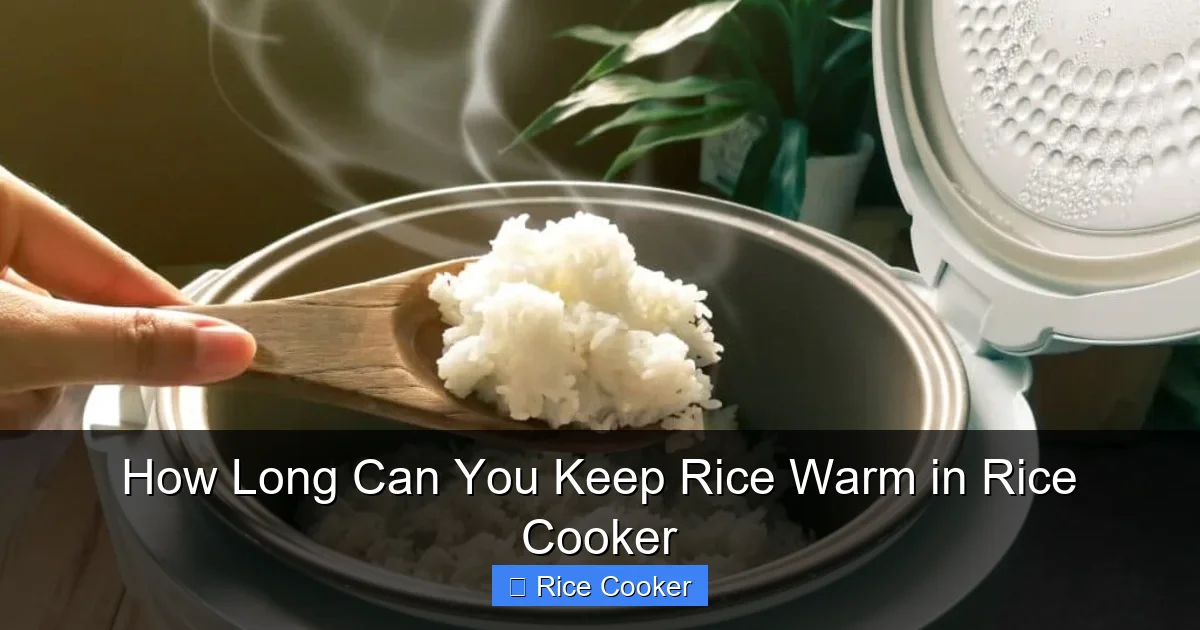
Visual guide about How Long Can You Keep Rice Warm in Rice Cooker
Image source: storables.com
The short answer is: **up to 2 hours** on the keep-warm setting is generally safe and effective. Beyond that, risks increase. Here’s what the science and food safety experts say:
According to the U.S. Food and Drug Administration (FDA), perishable foods like cooked rice should not be left in the “danger zone”—the temperature range between 40°F and 140°F—for more than 2 hours. After this window, bacteria such as *Bacillus cereus* can multiply rapidly, especially in starchy foods like rice. These bacteria produce toxins that can cause food poisoning, even if the rice looks and smells fine.
That said, rice cookers typically maintain temperatures well above 140°F during the keep-warm phase, which helps inhibit bacterial growth. So, if your rice stays within this range, it’s likely safe for up to 2 hours.
But safety isn’t the only concern. Texture, moisture, and flavor also decline over time. Let’s break down the timeline:
– 0–1 hour: Ideal serving conditions. Rice remains moist, fluffy, and aromatic.
– 1–2 hours: Still safe and acceptable. Minor drying may occur, especially if the lid is opened often.
– 2+ hours: Risk increases. Texture becomes firmer, and bacteria may begin to thrive if the temperature dips.
For best results, serve rice within 1–2 hours of cooking. If you need to keep it longer, consider transferring it to an insulated container or using a slow cooker on low heat.
Factors That Affect How Long Rice Stays Warm
Several variables influence how long your rice will stay warm and palatable:
– Model and Quality: High-end rice cookers with better insulation and precise temperature control can keep rice warm longer.
– Ambient Temperature: A cooler room slows heat loss; a warm kitchen may help maintain temperature slightly longer.
– Lid Usage: Opening the lid releases steam and cools the rice. Each time you lift the lid, you lose warmth and moisture.
– Rice Type: Short-grain rice tends to hold moisture better than long-grain varieties.
– Volume of Rice: Larger batches lose heat faster than smaller ones due to greater surface area exposure.
For example, if you’re cooking 4 cups of rice in a standard 6-cup rice cooker versus 2 cups in a 10-cup model, the smaller batch will likely stay warm longer. Also, pre-heating the inner pot can help distribute heat more evenly.
What Happens When Rice Is Left Too Long in the Cooker?
Leaving rice on the keep-warm setting beyond recommended times can lead to several issues:
Drying Out and Starchy Surface
Over time, the continuous gentle heat causes moisture to evaporate slowly. The outer layer of rice grains loses water first, becoming firm and possibly sticky. This is especially noticeable with jasmine or sushi rice, which are naturally stickier to begin with.
Additionally, starches recrystallize—a process where gelatinized starch molecules realign, making the rice firmer and less appealing. This happens more quickly when rice is reheated or left standing too long.
Bacterial Growth and Food Safety Risks
Even if your rice cooker maintains high heat, small temperature fluctuations can occur. If the rice drops below 140°F, it enters the danger zone. *Bacillus cereus*, commonly found in rice, thrives in this range. It produces spores that survive normal cooking and multiply when the rice is held warm for extended periods.
Symptoms of foodborne illness from contaminated rice include nausea, vomiting, and diarrhea. While not always severe, it’s best avoided by following proper food handling practices.
Flavor and Aroma Loss
Heat and moisture play a big role in preserving the aroma of freshly cooked rice. Prolonged exposure to heat can dull flavors and cause the rice to absorb odors from nearby ingredients or the cooker itself. Cleaning the rice cooker regularly helps prevent this.
Practical Tips for Keeping Rice Warm Without Compromising Quality
Want to keep your rice warm and delicious? Follow these practical tips:
Use the Warm Setting Responsibly
Never leave rice on the keep-warm setting for more than 2 hours. Set a timer if needed, especially if you’re busy with other tasks. After 2 hours, either serve it immediately or transfer it to a safe storage method.
Minimize Lid Openings
Every time you open the lid, you release steam and let cool air in. This lowers the internal temperature and speeds up drying. Only open the lid when necessary—such as to stir or check consistency.
Stir Occasionally (Gently)
Lightly stirring rice every 30–60 minutes can redistribute heat and moisture, preventing clumps. Use a wooden or silicone spatula to avoid scratching the non-stick coating.
Cover with a Damp Cloth (Optional)
If you notice the top layer drying out, you can place a clean, damp cloth over the rice before closing the lid. This adds back some moisture. Just make sure the cloth doesn’t touch the rice directly to avoid contamination.
Transfer to an Insulated Container
For rice that needs to stay warm for 3–6 hours (e.g., during a dinner party), transfer it to a thermal rice keeper or an insulated container with a lid. These are designed to maintain temperature without electricity.
Reheat Properly Before Serving
If rice has been sitting too long, don’t rely on the warm setting to fix it. Instead, reheat it on the stovetop with a splash of water or broth. Cover and simmer gently until heated through.
Can You Reheat Rice in the Rice Cooker?
Yes, you can reheat rice in a rice cooker, but with caution. First, add a tablespoon of water to prevent sticking. Press the “cook” button briefly—just enough to warm it through. Avoid full reboiling, as this can make the rice mushy.
Alternatively, use the “warm” setting if the rice hasn’t been sitting too long. But again, limit this to under 2 hours.
Best Methods for Reheating
– Stovetop Method: Bring a pot of water to a simmer, add rice, cover, and steam for 5–7 minutes.
– Microwave Method: Place rice in a microwave-safe dish, cover with a damp paper towel, and heat in 30-second intervals.
– Rice Cooker Method: Add water, press cook for 1–2 minutes, then switch to warm.
Each method has pros and cons. The stovetop offers the most control, while the rice cooker is quick and convenient.
How to Store Leftover Rice Safely
Proper storage extends the life of your rice far beyond the keep-warm function:
Refrigeration (Up to 4 Days)
Cool rice to room temperature within 1 hour of cooking, then refrigerate in airtight containers. Label with the date to track freshness.
Freezing (Up to 6 Months)
Divide rice into portions, wrap tightly, and freeze. Thaw in the fridge overnight or reheat directly from frozen with added liquid.
Room Temperature Storage (Not Recommended)
Avoid leaving rice at room temperature for more than 2 hours, even in a covered bowl. Bacteria multiply fast in the danger zone.
Using a Rice Warmer for Extended Warmth
Some commercial rice warmers or electric rice storage units allow you to keep rice warm for up to 6–8 hours. These are popular in restaurants and large households. They use lower, consistent heat and are not suitable for reheating cold rice.
If you want similar functionality at home, consider investing in a portable rice warmer or using a slow cooker on the lowest setting.
Common Myths About Keeping Rice Warm
Let’s clear up some misconceptions:
Myth 1: “I Can Leave Rice Overnight in the Cooker”
False. Leaving rice on the warm setting overnight is unsafe. Even if the cooker seems to maintain heat, temperature fluctuations and bacterial risk make this practice dangerous.
Myth 2: “More Heat = Better Warmth”
Not necessarily. Higher heat can scorch rice or dry it out. The keep-warm setting is designed for gentle, sustained warmth.
Myth 3: “All Rice Types React the Same Way”
Different grains behave differently. Basmati stays fluffier longer; jasmine gets stickier. Adjust care accordingly.
Myth 4: “Opening the Lid Doesn’t Matter”
Actually, it does. Frequent lid openings disrupt temperature and moisture balance.
Myth 5: “You Can’t Reuse Rice From the Cooker”
You can, but only if handled properly. Cool it fast, store it safely, and reheat thoroughly.
Conclusion: Master the Art of Warm Rice
Keeping rice warm in a rice cooker is easy—but mastering it takes awareness. With the right approach, you can enjoy perfectly textured, safe, and delicious rice for up to 2 hours. Beyond that, it’s better to transfer it or reheat it properly.
Remember: food safety comes first. Never let rice sit in the danger zone for more than 2 hours. And while the keep-warm function is helpful, it’s not a magic solution for long-term storage.
By following simple tips—like minimizing lid openings, stirring gently, and using insulated containers—you can keep your rice warm and wonderful. Whether you’re feeding a family, meal-prepping, or entertaining guests, these strategies ensure every grain tastes as fresh as the first bite.
So next time you cook a big batch of rice, don’t worry about timing. Just set a timer, keep the lid closed, and serve within the safe window. Your taste buds—and your stomach—will thank you.
Frequently Asked Questions
How do I know if rice has gone bad in the rice cooker?
If rice develops an off smell, slimy texture, or mold, discard it immediately. Even if it looks fine, prolonged exposure to the danger zone can allow harmful bacteria to grow, causing foodborne illness.
Can I keep rice warm for a potluck or event?
Yes, but transfer it to an insulated container or use a portable rice warmer. These devices maintain temperature without electricity and are safer than relying on the rice cooker for extended periods.
Should I stir rice while it’s on the warm setting?
Gently stirring every 30–60 minutes can help redistribute heat and moisture, preventing clumping. Use a clean utensil and avoid overmixing, which can damage the rice grains.
What’s the best way to reheat rice that’s been sitting too long?
Bring a small amount of water to a boil, add the rice, cover, and steam for 5–7 minutes. Alternatively, microwave with a damp paper towel to retain moisture. Avoid microwaving without added liquid, as it can dry out the rice.
Can I reuse rice from the rice cooker for another meal?
Yes, if handled properly. Cool the rice within 1 hour of cooking, store it in an airtight container in the refrigerator, and reheat thoroughly within 4 days. Freezing is also a great option for longer storage.
Do all rice cookers have the same keep-warm duration?
No. Models vary in insulation, heating elements, and thermostat precision. Some high-end cookers can maintain warmth for up to 3 hours, while basic models may only last 1–1.5 hours. Always check your user manual for specifics.