
How long can you keep cooked rice in the fridge? Cooked rice should be stored properly and consumed within 3–4 days to avoid bacterial growth that can cause food poisoning. Always cool it quickly, store in clean containers, and reheat thoroughly before eating.
Key Takeaways
- Safe Refrigeration Time: Cooked rice should be eaten within 3 to 4 days when refrigerated at or below 40°F (4°C) to minimize risk of foodborne illness.
- Proper Cooling Is Critical: Never leave cooked rice at room temperature for more than 1 hour—rapid cooling helps prevent bacterial growth.
- Bacillus cereus Risk: This common bacterium thrives in cooked rice and can produce toxins that survive normal cooking and refrigeration.
- Use Airtight Containers: Store rice in shallow, airtight containers to reduce exposure to air and bacteria, speeding up cooling and preserving quality.
- Reheating Matters: Always reheat leftover rice to at least 165°F (74°C) to kill any surviving bacteria—don’t just warm it on the stove.
- Freezing Extends Shelf Life: For longer storage, freeze rice in portions for up to 1 year; thaw overnight in the fridge before reheating.
- Watch for Spoilage Signs: Discard rice if it smells off, feels slimy, or shows mold—never rely solely on appearance since harmful bacteria may not change texture or odor.
Quick Answers to Common Questions
How long can cooked rice stay in the fridge?
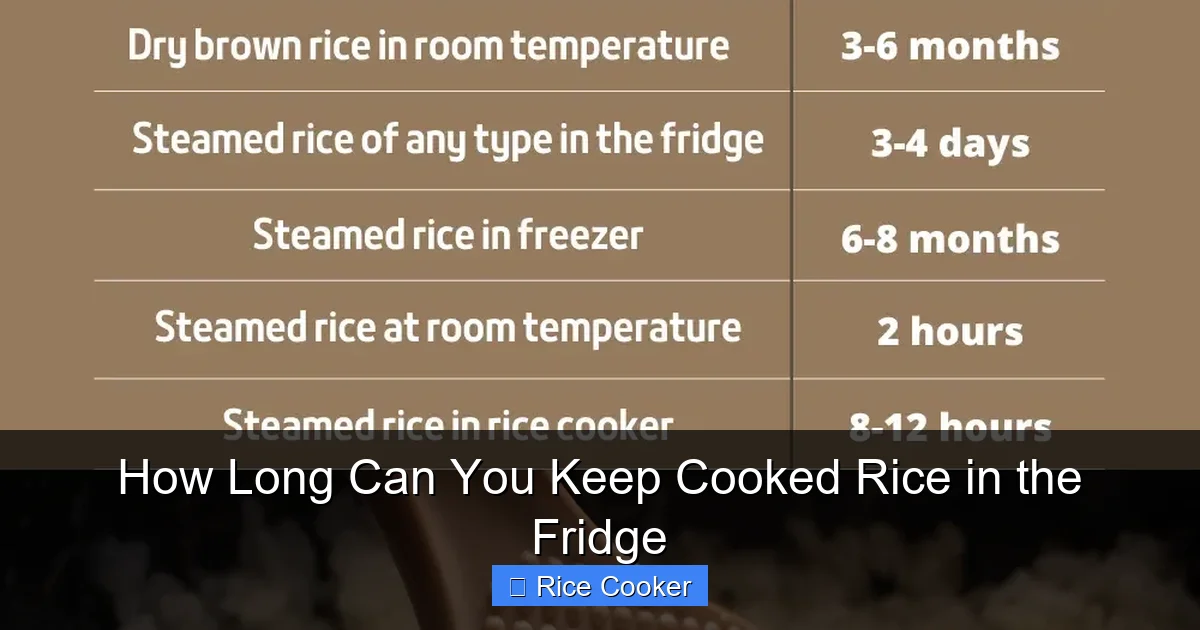
You can safely keep cooked rice in the refrigerator for up to 3 to 4 days when stored at or below 40°F (4°C).
Can you eat rice that’s been in the fridge for a week?
No. Rice older than 4 days is unsafe due to the risk of Bacillus cereus toxin formation, which can cause food poisoning.
Is it safe to reheat rice more than once?
It’s not recommended. Each reheating increases bacterial risk. Cook fresh rice if possible, or consume within 24–48 hours of first reheating.
Does vinegar in sushi rice make it last longer?
Vinegar adds flavor and slight preservation, but it doesn’t eliminate the danger of Bacillus cereus. Sushi rice should still be eaten within 3–4 days.
Can you freeze cooked rice?
Yes, frozen cooked rice can last up to 1 year. Thaw in the fridge and reheat thoroughly before eating.
📑 Table of Contents
- How Long Can You Keep Cooked Rice in the Fridge?
- Why Is Cooked Rice Special When It Comes to Food Safety?
- Best Practices for Storing Cooked Rice
- How to Tell If Your Leftover Rice Has Gone Bad
- Reheating Leftover Rice Safely
- Can You Freeze Cooked Rice?
- Tips for Different Types of Cooked Rice
- Common Myths About Storing Cooked Rice
- Final Thoughts: When in Doubt, Be Cautious
How Long Can You Keep Cooked Rice in the Fridge?
You’re standing in your kitchen after a busy week, surrounded by leftovers from last night’s stir-fry dinner. The plate of perfectly cooked jasmine rice is still full, and you’re wondering: How long can you keep cooked rice in the fridge? It’s a question many of us have asked—especially those who meal prep or cook large batches. While rice is a staple in countless cuisines, it also carries a hidden danger if not handled correctly.
The short answer? You can safely keep cooked rice in the refrigerator for up to 3 to 4 days. But that’s only if you follow proper food safety practices. In this article, we’ll break down everything you need to know—from why rice is risky, how to store it right, signs it’s gone bad, and even how to freeze it for longer use. Whether you’re using a rice cooker or stovetop method, these tips apply to all types of cooked rice.
Why Is Cooked Rice Special When It Comes to Food Safety?
The Hidden Danger: Bacillus Cereus
Cooked rice is a common carrier of Bacillus cereus, a spore-forming bacterium that’s naturally present in soil and grains. When rice is cooked, these spores survive and can begin growing again if the rice is left at room temperature. Even though you’ve already cooked the rice once, the heat doesn’t destroy the spores—they just wait for ideal conditions to activate.
Visual guide about How Long Can You Keep Cooked Rice in the Fridge
Image source: boatbasincafe.com
Once active, Bacillus cereus produces toxins that cause food poisoning. Symptoms usually appear within 6 to 15 hours and include nausea, vomiting, and diarrhea. Unlike many other foodborne illnesses, these toxins are heat-stable, meaning reheating won’t destroy them. So even if you boil leftover rice, you might still get sick if it was contaminated earlier.
Room Temperature Is a Bacteria Magnet
The danger zone for food is between 40°F and 140°F (4°C to 60°C). In this range, bacteria multiply rapidly. If you leave cooked rice sitting out for more than two hours (or one hour above 90°F/32°C), you’re giving Bacillus cereus a chance to grow and produce toxins.
This is why restaurants and food service workers are trained to cool rice quickly using blast chillers or ice baths. At home, we don’t have that luxury—but we can still take steps to reduce risk.
Best Practices for Storing Cooked Rice
Cool It Fast: The 2-Hour Rule
After cooking, rice should never sit at room temperature for more than 2 hours. If your kitchen is hot (above 90°F), that time drops to just one hour. To speed up cooling:

Visual guide about How Long Can You Keep Cooked Rice in the Fridge
Image source: uhkkfeeqacwcyryreuie.supabase.co
- Spread the rice in a thin layer on a baking sheet or shallow container.
- Place it in the fridge immediately or submerge the container in an ice bath.
- Avoid covering it while cooling—this traps heat and slows the process.
Rapid cooling reduces the time rice spends in the danger zone, cutting down bacterial growth significantly.
Store in Shallow, Airtight Containers
Once cooled, transfer rice to clean, airtight containers. Use shallow containers (no deeper than 2 inches) so heat releases evenly during refrigeration. This helps maintain quality and prevents moisture buildup that can lead to spoilage.
Label containers with the date so you remember when you cooked the rice. Glass or BPA-free plastic containers work best—avoid metal, which can react with acidic foods.
Refrigerate Promptly
Keep your fridge at 40°F (4°C) or lower. Place rice on the middle or lower shelf, where temperatures are most consistent. Don’t crowd the fridge—proper airflow keeps everything cold.
If you have a lot of rice, divide it into smaller portions. This reduces the amount of rice exposed to air each time you open the container, minimizing contamination.
How to Tell If Your Leftover Rice Has Gone Bad
Visual and Smell Clues
While some bacteria don’t change the look or smell of rice, others do. Watch for:
- An off or sour odor (like vinegar or ammonia)
- Slimy or sticky texture
- Mold (visible fuzzy spots, especially green or black)
- Discoloration (yellowish or grayish patches)
If you notice any of these, toss the rice immediately. Even if it looks fine, harmful bacteria may still be present.
When in Doubt, Throw It Out
Rice has a high starch content, making it prone to rapid bacterial growth. Unlike meat or vegetables, there’s no reliable way to test for contamination without a lab. So if you’re unsure—especially if someone in your household has a weakened immune system—it’s safer to discard it.
Reheating Leftover Rice Safely
Bring It to a Rolling Boil
To reheat rice, bring it to a full rolling boil for at least 1 minute. This ensures the internal temperature reaches at least 165°F (74°C), killing any surviving bacteria.
Stir occasionally to distribute heat evenly. Microwave-safe containers work well—cover with a damp paper towel to retain moisture and prevent drying out.
Avoid Repeated Reheating
Each time you reheat rice, you increase the risk of bacterial growth. Try to plan meals so you consume rice within 24–48 hours of reheating. If you must reheat multiple times, consider cooking fresh rice instead.
Can You Freeze Cooked Rice?
Yes, and It Lasts Longer
Freezing is an excellent way to extend the shelf life of cooked rice. When properly stored, frozen rice can last up to 1 year. Here’s how to do it right:
- Cool rice completely before freezing.
- Portion into freezer-safe bags or containers.
- Remove as much air as possible to prevent freezer burn.
- Label with the date.
Thawing and Reheating Frozen Rice
Thaw frozen rice overnight in the refrigerator. Then reheat to a rolling boil or microwave until steaming hot throughout. Avoid thawing at room temperature—this can promote bacterial growth.
Frozen rice may become slightly dry upon thawing. Add a splash of water or broth when reheating to restore moisture.
Tips for Different Types of Cooked Rice
White vs. Brown Rice
Both white and brown rice follow the same storage rules. However, brown rice has a higher oil content and shorter shelf life. Store it separately and use within 2–3 days if refrigerated.
Sushi Rice and Other Specialty Rices
Sushi rice often contains vinegar, which can act as a preservative but doesn’t eliminate the risk of Bacillus cereus. Follow the same 3–4 day rule. If sushi rice is mixed with raw fish or other perishables, consume within 24 hours.
Instant or Microwave Rice
These convenience options are pre-cooked and packaged under sterile conditions. Once opened, treat them like regular cooked rice. Store in an airtight container and follow the same guidelines.
Common Myths About Storing Cooked Rice
Myth 1: “If I Reheat It Twice, It’s Fine”
False. Each reheating cycle increases bacterial load. It’s better to cook a fresh batch than risk food poisoning.
Myth 2: “Rice Can Last Weeks in the Fridge”
No. Most experts agree that rice should not be kept beyond 4 days. After that, the risk of toxin production outweighs the convenience.
Myth 3: “Soaking Rice Before Cooking Prevents Spoilage”
Soaking dried rice is optional and mainly affects cooking time. It doesn’t reduce bacterial risks unless done with clean water and proper hygiene.
Final Thoughts: When in Doubt, Be Cautious
Food safety isn’t about perfection—it’s about reducing risk. By cooling rice quickly, storing it properly, and trusting your senses, you can enjoy leftovers with confidence. Remember: if it doesn’t look, smell, or feel right, throw it out.
With these practices, you can make the most of your rice cooker, save money, reduce waste, and still eat safely. Next time you cook a big batch, take a few extra minutes to store it correctly—it could save you from an upset stomach later.
Frequently Asked Questions
Is it safe to leave cooked rice at room temperature overnight?
No. Leaving rice at room temperature for more than 2 hours (1 hour if above 90°F) allows Bacillus cereus to grow and produce harmful toxins.
Why does cooked rice sometimes make people sick even when reheated?
The toxins produced by Bacillus cereus are heat-stable, meaning they survive boiling. Proper cooling and storage are key to preventing illness.
Can you tell if rice is spoiled by just looking or smelling it?
Sometimes. Look for mold, discoloration, or a sour smell. However, harmful bacteria may not alter appearance or odor, so visual cues aren’t always reliable.
What’s the best way to cool cooked rice quickly?
Spread rice thinly in a shallow container, place it in an ice bath, and stir occasionally. Cover only after it’s mostly cooled to allow heat to escape.
Can I reuse rice from the same pot multiple times?
It’s better to portion and store rice in separate containers. Reusing the same pot increases contamination risk and makes proper cooling difficult.
Does type of rice affect how long it lasts in the fridge?
Most types follow the same rule, but brown rice has a shorter shelf life due to its higher oil content. White rice typically lasts 3–4 days when stored properly.