Electric kettles are fast because they use high-powered heating elements that directly transfer heat to water with minimal energy loss. Unlike stovetop kettles that rely on indirect heating, electric models heat water efficiently and precisely, often boiling a full pot in under five minutes.
Key Takeaways
- Direct immersion heating: Electric kettles use heating elements submerged in water, allowing faster and more efficient heat transfer compared to stovetop methods.
- High wattage power: Most electric kettles operate between 1,200 and 3,000 watts, delivering rapid heating that stovetop kettles can’t match.
- Insulated design: Many models feature double-wall insulation or thermal bodies that retain heat and reduce energy waste during boiling.
- Precise temperature control: Advanced kettles allow users to select exact temperatures, optimizing speed and energy use for different beverages like tea or coffee.
- Automatic shut-off and safety features: These not only improve safety but also prevent overheating, ensuring consistent and fast performance every time.
- Compact water volume: Electric kettles typically heat smaller amounts of water at once, which speeds up the boiling process significantly.
- Modern materials and engineering: Stainless steel, borosilicate glass, and advanced coil designs enhance thermal conductivity and durability for faster heating.
📑 Table of Contents
- Why Are Electric Kettles So Fast? The Science Behind the Speed
- How Electric Kettles Work: A Simple Breakdown
- The Power of Wattage: Why Higher Means Faster
- Direct Heating: The Secret to Speed
- Design Features That Boost Speed and Efficiency
- Smart Features and Temperature Control
- Safety Features That Support Fast Performance
- Comparing Electric Kettles to Other Methods
- Tips to Maximize Your Electric Kettle’s Speed
- Conclusion: The Perfect Blend of Speed, Safety, and Simplicity
Why Are Electric Kettles So Fast? The Science Behind the Speed
If you’ve ever stood over a stovetop kettle, tapping your fingers and sighing as the water slowly creeps toward a boil, you’ll appreciate the magic of an electric kettle. In just a few minutes—sometimes less than three—your electric kettle can bring water to a rolling boil, ready for tea, coffee, oatmeal, or instant noodles. But what makes electric kettles so fast? It’s not just convenience; it’s a combination of smart engineering, powerful heating technology, and efficient design.
Unlike traditional kettles that sit on a stove and rely on heat transfer from a burner, electric kettles are built for speed from the ground up. They convert electrical energy directly into heat with remarkable efficiency, minimizing energy loss and maximizing performance. Whether you’re rushing to make morning coffee or need hot water for a quick meal, the electric kettle delivers—fast.
In this article, we’ll dive deep into the mechanics, materials, and technology that make electric kettles lightning-quick. From the heating element to wattage, insulation, and smart features, you’ll understand exactly why these appliances are the fastest way to boil water at home.
How Electric Kettles Work: A Simple Breakdown
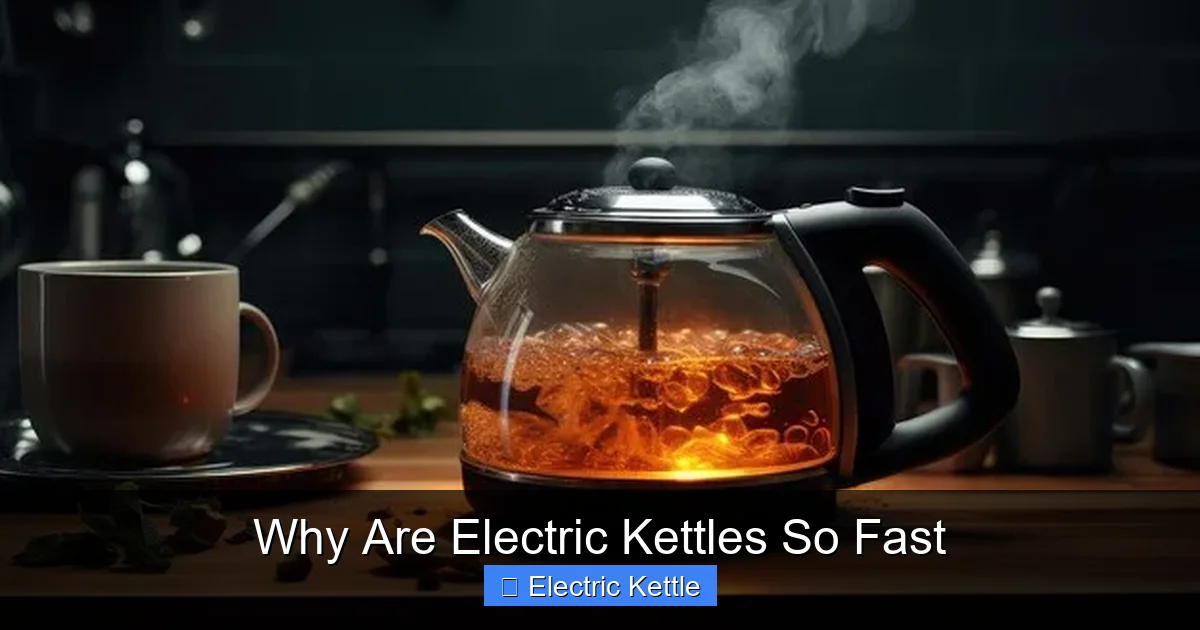
Visual guide about Why Are Electric Kettles So Fast
Image source: img.freepik.com
To understand why electric kettles are so fast, it helps to know how they work. At their core, electric kettles are powered by electricity, which is converted into heat through a component called a heating element. This element is usually located at the base of the kettle and is in direct contact with the water.
When you plug in the kettle and press the boil button, electricity flows through the heating element, causing it to heat up rapidly. Because the element is submerged or positioned directly beneath the water reservoir, the heat transfers almost instantly to the water. This direct contact is a major reason electric kettles outperform stovetop models, which lose heat to the air and require the pot itself to warm up first.
The Role of the Heating Element
The heating element is the heart of the electric kettle. Most modern kettles use either a concealed or exposed coil made from materials like stainless steel, nichrome (a nickel-chromium alloy), or copper. These metals have high electrical resistance, meaning they generate heat efficiently when electricity passes through them.
Concealed heating elements are enclosed under a stainless steel plate at the bottom of the kettle. This design keeps the element protected from mineral buildup and makes cleaning easier. Exposed elements, while less common today, are directly in the water and can heat even faster—though they’re more prone to limescale.
The key advantage of this setup is speed. Because the heat is generated right where the water is, there’s almost no delay. Compare that to a gas stove, where flames heat the bottom of a metal kettle, which then transfers heat to the water—each step introduces energy loss.
Power Source and Electrical Efficiency
Electric kettles are designed to draw a lot of power—typically between 1,200 and 3,000 watts. For context, a standard microwave uses about 1,000 watts, and a toaster around 800–1,500 watts. This high wattage allows the kettle to generate intense heat quickly.
Most homes in the U.S. and Europe have 120V or 230V outlets, respectively, which support these high-power appliances. Because electric kettles are dedicated to one task—heating water—they don’t waste energy on other functions. This specialization makes them incredibly efficient.
Moreover, electric kettles convert over 80% of the electrical energy into heat, with minimal loss to sound or light. Gas stoves, by comparison, are only about 40–55% efficient, losing a lot of heat to the surrounding air.
The Power of Wattage: Why Higher Means Faster
One of the biggest reasons electric kettles are so fast is their high wattage. Wattage measures how much electrical power a device uses—and in the case of kettles, more watts mean faster boiling.
Understanding Wattage and Boiling Time
Let’s break it down with an example. A 1,500-watt kettle will boil one liter of water in about 4–5 minutes, depending on starting temperature and altitude. A 3,000-watt model—common in commercial or high-performance home kettles—can do the same in under 3 minutes.
Why the difference? Higher wattage means more energy is delivered to the heating element per second. This translates to faster temperature rise in the water. Think of it like a car engine: a higher horsepower engine accelerates faster. Similarly, a higher-wattage kettle “accelerates” the boiling process.
Most household electric kettles fall in the 1,200–1,800 watt range, which is a sweet spot between speed and energy consumption. Commercial kettles, like those used in offices or cafes, often go up to 3,000 watts for even faster performance.
Energy Efficiency vs. Speed
You might wonder: doesn’t high wattage mean high energy bills? Not necessarily. While electric kettles use a lot of power, they operate for a very short time. Boiling one liter of water uses about 0.1 kWh of electricity—roughly 1–2 cents in most areas. Even if you boil water multiple times a day, the cost remains low.
In fact, electric kettles are often more energy-efficient than stovetop kettles or microwaves for heating water. A study by the University of Cambridge found that electric kettles use about 25% less energy than gas stoves to boil the same amount of water. This is because they heat water directly and don’t waste energy heating the pot or surrounding air.
Direct Heating: The Secret to Speed
The way heat is transferred in an electric kettle is a game-changer. Unlike stovetop kettles, which rely on conduction from a hot surface, electric kettles use direct immersion heating—or near-direct contact—between the heat source and the water.
Conduction vs. Convection in Heating
In a stovetop kettle, heat moves from the burner to the metal base, then through the metal to the water. This process involves multiple steps, each with potential energy loss. The metal must heat up first, and not all of that heat reaches the water—some escapes into the air.
Electric kettles eliminate this middleman. The heating element is either submerged or placed directly under the water chamber. When electricity flows, the element heats up and immediately transfers that heat to the water molecules around it. This direct transfer is far more efficient.
Additionally, as the water near the heating element warms, it rises due to convection, creating a natural circulation pattern. Cooler water moves down to take its place, ensuring even heating throughout the kettle. This convection current helps distribute heat quickly and prevents hot spots.
Minimizing Heat Loss
Another advantage of direct heating is reduced heat loss. Stovetop kettles often have open tops or thin walls that allow heat to escape. Electric kettles, especially modern models, are designed to retain heat.
Many feature double-wall insulation or thermal bodies made from materials like stainless steel or heat-resistant plastic. These materials don’t conduct heat well, so less energy is lost to the environment. Some premium models even have vacuum insulation, similar to thermos flasks, to keep water hot longer.
This insulation not only improves efficiency but also contributes to faster boiling. Less heat loss means more energy goes into heating the water, not the air around it.
Design Features That Boost Speed and Efficiency
Beyond the heating element and wattage, the overall design of an electric kettle plays a huge role in its speed. Manufacturers use smart engineering to optimize performance, safety, and user experience.
Compact Water Capacity
One often-overlooked factor is water volume. Most electric kettles are designed to hold between 1 and 1.7 liters of water—perfect for a few cups of tea or coffee. Because they heat smaller amounts at a time, they reach boiling point faster than large pots on the stove.
For example, boiling 500ml of water in an electric kettle takes about 2–3 minutes. The same amount on a gas stove might take 4–6 minutes, depending on the burner size and kettle material. The smaller volume means less energy is needed, and the heating element can focus its power on a concentrated area.
This design also supports energy efficiency. You only heat the water you need, reducing waste. Many kettles even have minimum and maximum fill lines to guide users.
Material Matters: Stainless Steel, Glass, and Plastic
The material of the kettle affects both speed and durability. Stainless steel is a top choice because it’s durable, conducts heat well, and resists corrosion. It also helps retain heat, contributing to faster boiling and longer heat retention.
Borosilicate glass kettles are another popular option. They’re non-reactive, easy to clean, and allow you to see the water boiling—a satisfying visual cue. While glass doesn’t conduct heat as well as metal, the heating element’s direct contact compensates for this.
Plastic kettles are lightweight and affordable, but they’re less efficient at retaining heat and may degrade over time. High-quality models use BPA-free, heat-resistant plastics to ensure safety and performance.
Lid and Spout Design
Even small design elements impact speed. A well-sealed lid prevents steam from escaping, which helps maintain pressure and temperature inside the kettle. This can slightly reduce boiling time, especially at higher altitudes where water boils at lower temperatures.
The spout is designed for smooth pouring, but it also affects heat retention. A narrow, well-insulated spout minimizes heat loss during and after boiling.
Some kettles feature a gooseneck spout, popular among pour-over coffee enthusiasts. While not necessarily faster, it allows precise control, which can improve the overall brewing experience.
Smart Features and Temperature Control
Modern electric kettles aren’t just fast—they’re smart. Advanced models come with features that enhance speed, precision, and convenience.
Precise Temperature Settings
Not all beverages need boiling water. Green tea, for example, brews best at 160–180°F (70–80°C), while black tea prefers 200–212°F (93–100°C). Overheating can ruin delicate flavors.
Many electric kettles now offer variable temperature control. You can select the exact temperature you need, and the kettle will heat the water to that point and stop. This not only improves taste but also saves time and energy.
For instance, heating water to 180°F takes less time than boiling it to 212°F. By avoiding unnecessary heating, these kettles are faster and more efficient for specific tasks.
Keep-Warm Function
Some kettles include a keep-warm feature that maintains the water at a set temperature for 30 minutes to an hour. This is great if you’re making multiple cups or need hot water for cooking.
While this doesn’t make the initial boil faster, it eliminates the need to reheat water, saving time in the long run. It’s especially useful in offices or busy households.
Rapid Boil and Quick-Start Modes
Many kettles have a “rapid boil” mode that maximizes power output for the fastest possible heating. This is ideal when you’re in a hurry.
Quick-start features allow the kettle to begin heating as soon as you press the button, without preheating or delays. Some models even have one-touch operation—press once, and it boils automatically.
Safety Features That Support Fast Performance
Speed is great, but safety is essential. Electric kettles are designed with multiple safety mechanisms that not only protect users but also ensure consistent, fast performance.
Automatic Shut-Off
One of the most important features is automatic shut-off. Once the water reaches boiling point, the kettle turns off automatically. This prevents overheating, reduces energy waste, and eliminates the risk of dry boiling (which can damage the heating element).
This feature also contributes to speed. You don’t have to watch the kettle or worry about it boiling over. It does the work and stops precisely when done.
Boil-Dry Protection
If the kettle is turned on without water, boil-dry protection kicks in. Sensors detect the lack of water and cut power to the heating element. This prevents damage and fire hazards.
This safety feature ensures the kettle only operates when it’s safe to do so, maintaining performance and longevity.
Cool-Touch Exterior
Many electric kettles have cool-touch handles and exteriors, even when the water inside is boiling. This is made possible by double-wall construction or insulating materials.
A cool exterior means you can handle the kettle safely, even right after boiling. It also reduces heat loss, helping the kettle boil faster and stay hot longer.
Comparing Electric Kettles to Other Methods
To truly appreciate why electric kettles are so fast, it helps to compare them to other common methods of heating water.
Electric Kettle vs. Stovetop Kettle
Stovetop kettles are classic, but they’re slower. Whether you use gas or electric stoves, the heat must transfer through the kettle’s base before reaching the water. This indirect method takes time.
Gas stoves are particularly inefficient, losing a lot of heat to the air. Electric stovetops are better but still slower than dedicated electric kettles. A typical stovetop kettle takes 5–8 minutes to boil one liter, compared to 3–5 minutes for an electric model.
Electric Kettle vs. Microwave
Microwaves can heat water, but they’re not ideal. They heat unevenly, creating hot spots that can cause superheating—a dangerous condition where water erupts suddenly when disturbed.
Microwaves also take longer for large volumes. Heating one cup might take 1–2 minutes, but scaling up reduces efficiency. Electric kettles heat water more evenly and safely.
Electric Kettle vs. Hot Water Dispenser
Hot water dispensers provide instant hot water, but they’re less versatile. They typically heat water to a fixed temperature (around 190°F) and can’t boil. They’re great for offices but not ideal for tea or cooking.
Electric kettles offer more control, higher temperatures, and faster boiling for full pots.
Tips to Maximize Your Electric Kettle’s Speed
Even the fastest kettle can be slowed down by poor habits. Here are some tips to keep your kettle performing at its best.
Use the Right Amount of Water
Only fill the kettle with the amount you need. Heating excess water wastes time and energy. Most kettles have minimum and maximum markers—use them.
Descale Regularly
Mineral buildup from hard water can coat the heating element, reducing efficiency. Descale your kettle every 1–2 months using vinegar or a commercial descaler.
Preheat with Warm Water
If you’re in a rush, start with warm tap water instead of cold. This reduces the time needed to reach boiling point.
Keep the Lid Closed
Always close the lid while boiling. An open lid lets heat escape, slowing the process.
Choose the Right Kettle
If speed is your priority, look for a kettle with high wattage (1,800W or more), concealed heating element, and good insulation. Read reviews and check energy ratings.
Conclusion: The Perfect Blend of Speed, Safety, and Simplicity
Electric kettles are fast because they’re built for one purpose: heating water quickly and efficiently. From high-wattage heating elements to direct heat transfer, insulated designs, and smart features, every aspect is optimized for speed.
They outperform stovetop kettles and microwaves in both time and energy use, making them the go-to choice for busy households, offices, and tea lovers. With automatic shut-off, temperature control, and safety features, they’re also safer and more convenient.
Whether you’re brewing your morning coffee or preparing instant soup, an electric kettle delivers hot water in minutes—reliably, safely, and efficiently. So the next time you press that boil button and hear the gentle hum of the heating element, remember: it’s not magic. It’s smart engineering at work.
Frequently Asked Questions
Why do electric kettles boil water faster than stovetop kettles?
Electric kettles use high-wattage heating elements that transfer heat directly to the water, minimizing energy loss. Stovetop kettles rely on indirect heating, which is slower and less efficient.
Does higher wattage make an electric kettle faster?
Yes, higher wattage means more power is delivered to the heating element per second, resulting in faster boiling times. A 3,000-watt kettle will boil water faster than a 1,200-watt model.
Can I speed up my electric kettle by using less water?
Absolutely. Heating smaller amounts of water takes less time and energy. Only fill the kettle with the amount you need for the fastest results.
Do electric kettles use a lot of electricity?
While they use high wattage, electric kettles operate for short periods, so their total energy consumption is low. They’re often more efficient than stovetop or microwave methods.
How often should I descale my electric kettle?
Descale every 1–2 months if you have hard water. Mineral buildup can coat the heating element and slow down boiling over time.
Are glass electric kettles as fast as stainless steel ones?
Glass kettles can be just as fast if they have a powerful heating element. However, stainless steel models often retain heat better, which can improve overall efficiency.