
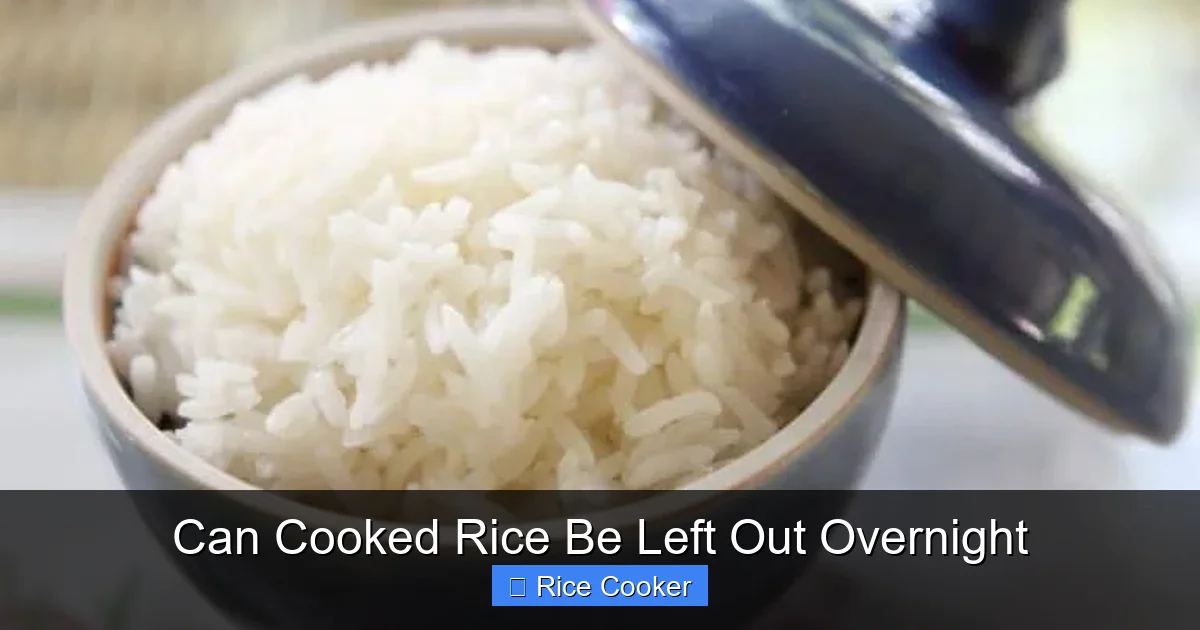
Leaving cooked rice out overnight is unsafe and can lead to bacterial growth. Rice contains spores of Bacillus cereus, which survive cooking and multiply in warm, moist conditions. To stay safe, refrigerate rice within two hours or freeze it for long-term storage. Proper handling ensures your rice remains a tasty and healthy part of your meals.
Key Takeaways
- Understanding can cooked rice be left out overnight: Provides essential knowledge
Quick Answers to Common Questions
Can I leave cooked rice out overnight if I plan to reheat it?
No, you should never leave cooked rice at room temperature for more than two hours, even if you plan to reheat it. Bacteria can produce heat-resistant toxins during the time it’s out, and reheating won’t eliminate them.
Is it okay to leave rice out if the room is very cold?
Even in cool rooms, the “danger zone” applies. While slower bacterial growth occurs below 70°F (21°C), rice should still be refrigerated within two hours to ensure safety. Cold environments reduce but don’t eliminate risk.
Can I save rice from a restaurant and eat it later?
Yes, but treat restaurant leftovers like any other potentially risky food. Refrigerate within two hours of bringing it home and consume within three to four days. Don’t assume commercial kitchens follow perfect storage practices.
Does rinsing rice before cooking reduce the risk?
Rinsing raw rice removes surface starch and some spores, but it doesn’t eliminate Bacillus cereus completely. Cooking and proper storage are far more important for safety than rinsing.
Can I freeze rice in aluminum foil?
It’s better to use airtight plastic or glass containers for freezing rice. Aluminum foil can tear and doesn’t provide a reliable seal, increasing the risk of freezer burn or contamination.
📑 Table of Contents
- Can Cooked Rice Be Left Out Overnight?
- The Science Behind Rice Safety
- What Happens When You Leave Rice Out Overnight?
- Safe Ways to Handle Leftover Rice
- How to Reheat Rice Safely
- Common Misconceptions About Rice Storage
- Practical Tips for Families and Busy Households
- Signs That Rice Has Gone Bad
- Conclusion: Keep It Safe, Keep It Delicious
Can Cooked Rice Be Left Out Overnight?
We’ve all been there—cooking a big batch of rice for dinner, only to find there’s too much for one meal. The leftover rice sits on the counter while you finish eating, and then life gets busy. Before you know it, it’s past midnight and you’re wondering: Can cooked rice be left out overnight?
This question isn’t just about convenience—it’s about food safety. Rice is a common ingredient in kitchens worldwide, but its safety can be tricky if not handled properly. While rice itself is nutritious and filling, the way we store it makes all the difference. In this guide, we’ll walk through everything you need to know about leaving cooked rice out overnight, why it matters, and how to do it safely—or better yet, how to avoid the risk altogether.
The Science Behind Rice Safety
Why Rice Is Different From Other Foods
Unlike meat, vegetables, or pasta, rice has a unique property that affects how it should be stored. Most grains contain spores of a bacterium called Bacillus cereus. These spores are harmless when raw, but they survive the cooking process because rice is typically boiled at temperatures that don’t destroy all microorganisms.
Visual guide about Can Cooked Rice Be Left Out Overnight
Image source: i.pinimg.com
Once cooked, the environment changes. Warm, moist, and neutral pH conditions create an ideal breeding ground for these spores to activate and multiply. That’s why rice behaves differently from other foods when left at room temperature.
The Danger Zone
The “Danger Zone” in food safety refers to temperatures between 40°F (4°C) and 140°F (60°C), where bacteria grow most rapidly. According to the USDA, harmful bacteria can double every 20 minutes in this range. If cooked rice sits out in this window—especially overnight—the number of bacteria can rise to dangerous levels.
This is particularly concerning because Bacillus cereus produces toxins that cause food poisoning. Symptoms include nausea, vomiting, diarrhea, and stomach cramps, usually starting within 6 to 15 hours after eating contaminated rice.
What Happens When You Leave Rice Out Overnight?
Rapid Bacterial Growth
When rice cools slowly at room temperature, especially in a large pile or deep container, the outer layers stay warm while the inside takes time to cool. This creates pockets of warmth ideal for bacterial growth. Within a few hours, Bacillus cereus can begin multiplying, and by morning, you could have hundreds of thousands—if not millions—of bacteria per gram.

Visual guide about Can Cooked Rice Be Left Out Overnight
Image source: m.media-amazon.com
This is why the general rule is simple: Do not leave cooked rice out at room temperature for more than two hours. If you’re in a hot environment (above 90°F/32°C), that time drops to just one hour.
Changes in Texture and Taste
Even if the rice doesn’t spoil immediately, leaving it out overnight can affect its quality. The starch molecules break down over time, making the rice gummy, dry, or clumpy. You might notice a slight sour smell or off-flavor, even if it hasn’t gone bad in the traditional sense.
While these changes aren’t necessarily dangerous, they make the rice unappetizing and less suitable for dishes like fried rice or rice salads.
Safe Ways to Handle Leftover Rice
Cool It Quickly
The key to safe rice storage is cooling it fast. Instead of letting it sit in a pot, spread it out in a shallow container or place the pot in an ice bath. Stirring occasionally helps speed up the process. Aim to get the rice below 40°F (4°C) within two hours.
Using a rice cooker with a keep-warm function can be convenient, but remember—this mode keeps food at around 140°F (60°C), which is still in the danger zone. Avoid using it for more than 20–30 minutes unless you plan to serve the rice immediately.
Refrigeration Best Practices
Once cooled, transfer the rice to airtight containers. Shallow containers help retain moisture without pooling liquid, which can encourage spoilage. Label the container with the date so you know when it was made.
In the refrigerator, properly stored rice stays safe for up to four days. Always check for signs of spoilage before eating—look for mold, a foul smell, or a slimy texture. If in doubt, throw it out.
Freezing for Long-Term Storage
If you won’t eat the rice within four days, freeze it. Portion it into small batches for easy thawing later. Frozen rice can last up to six months in the freezer, though flavor and texture may slightly degrade over time.
When ready to use, thaw rice overnight in the refrigerator or reheat it directly from frozen. Never thaw rice at room temperature, as this reintroduces the danger zone.
How to Reheat Rice Safely
Microwave Method
To reheat rice in the microwave, place it in a microwave-safe dish with a splash of water to prevent drying. Cover the dish with a damp paper towel to trap steam. Heat in 30-second intervals, stirring between each, until the rice is heated through (internal temperature should reach 165°F/74°C).
Stovetop Technique
For stovetop reheating, add a tablespoon of water or broth to the rice and heat over medium-low, stirring frequently. This mimics steaming and helps retain moisture. Make sure the center of the rice is hot before serving.
Avoid Repeated Heating
Never reheat rice more than once. Each time you reheat, there’s a chance bacteria can reactivate if the rice wasn’t cooled properly after the first heating. It’s safer to portion the rice before reheating and only warm what you’ll eat.
Common Misconceptions About Rice Storage
Myth: Rice Can Be Left Out All Night If It Was Cooked Fresh
Some people believe that if rice is freshly cooked and hasn’t been touched, it’s safe to leave out overnight. But the moment rice cools to room temperature, bacteria start growing. Even untouched rice on a countertop becomes unsafe after two hours.
Myth: Boiling Rice Again Makes It Safe
Boiling rice again doesn’t guarantee safety. While high heat kills active bacteria, it doesn’t destroy the toxins produced by Bacillus cereus. So even if you boil suspected bad rice, it could still make you sick.
Myth: Rice From Restaurants Is Safer
Restaurants often cook rice in large batches and may store it at room temperature for hours before serving. They follow strict health codes, but if you take home leftovers, treat them like any other potentially risky food. Don’t assume restaurant rice is safe just because it came from a professional kitchen.
Practical Tips for Families and Busy Households
Portion Control
Cook only what you need, or portion out extras before they cool. This reduces waste and ensures each portion can be cooled and stored quickly.
Use the Rice Cooker Wisely
Many modern rice cookers have a delay timer or keep-warm function. While useful, these features should only be used briefly. After cooking, transfer the rice immediately to a cooler environment.
Label Everything
Take a habit of labeling containers with the date and contents. This helps you track how long the rice has been stored and prevents confusion later.
Make Fried Rice the Next Day
One of the best uses for leftover rice is fried rice. Just make sure the rice is cold and dry before stir-frying. Cold rice absorbs oil better and doesn’t become mushy.
Educate Your Household
Teach kids and family members about food safety basics. A quick reminder like “rice goes in the fridge fast” can prevent accidents.
Signs That Rice Has Gone Bad
Knowing when rice is unsafe is crucial. Here are red flags to watch for:
- Unusual Odor: Sour, rancid, or rotten smells indicate spoilage.
- Visible Mold: Any fuzzy spots or discoloration mean discard immediately.
- Slimy Texture: If the rice feels sticky or slippery, it’s likely contaminated.
- Discoloration: Dark spots or grayish tones suggest bacterial or fungal growth.
- Gassy or Swollen Container: Fermentation or gas production means harmful microbes are active.
Never taste rice to test if it’s bad. Food poisoning symptoms can take hours to appear, and some toxins are heat-stable.
Conclusion: Keep It Safe, Keep It Delicious
So, can cooked rice be left out overnight? The short answer is no. While it might seem harmless to leave rice on the counter while you clean up or catch up on work, doing so puts you at serious risk of foodborne illness. The science is clear: Bacillus cereus thrives in the temperature range between 40°F and 140°F, and rice is a prime target.
By following simple steps—cooling quickly, refrigerating promptly, and reheating thoroughly—you can enjoy leftover rice safely for days. Whether you’re making fried rice, rice bowls, or adding it to soups, proper storage ensures both safety and taste.
Next time you cook rice, think ahead. Portion it, label it, and put it in the fridge within two hours. Your body will thank you, and your taste buds won’t miss out on delicious, safe meals.
Frequently Asked Questions
How long can cooked rice be safely left out at room temperature?
Cooked rice should not be left out for more than two hours at room temperature, especially in warm climates above 90°F (32°C). After that, bacteria can multiply rapidly.
Can I reheat leftover rice multiple times?
No, you should avoid reheating rice more than once. Each reheating increases the risk of bacterial reactivation if the rice wasn’t cooled properly after the first time.
Is brown rice safer than white rice when stored?
Both types carry the same risk if improperly stored. Brown rice has more nutrients and may spoil faster due to higher oil content, but the primary concern for both is Bacillus cereus growth.
Can I use a rice cooker to store rice for later?
Only use the keep-warm function briefly (under 30 minutes) and transfer rice to the fridge afterward. Prolonged use keeps rice in the danger zone and increases bacterial risk.
What’s the best way to cool rice quickly?
Spread rice thinly in shallow containers or place the pot in an ice bath while stirring occasionally. This speeds up cooling and moves rice out of the danger zone faster.
How can I tell if rice is spoiled?
Watch for mold, unusual smells, slimy texture, or discoloration. If rice looks or smells off, discard it immediately—never taste it to test freshness.