
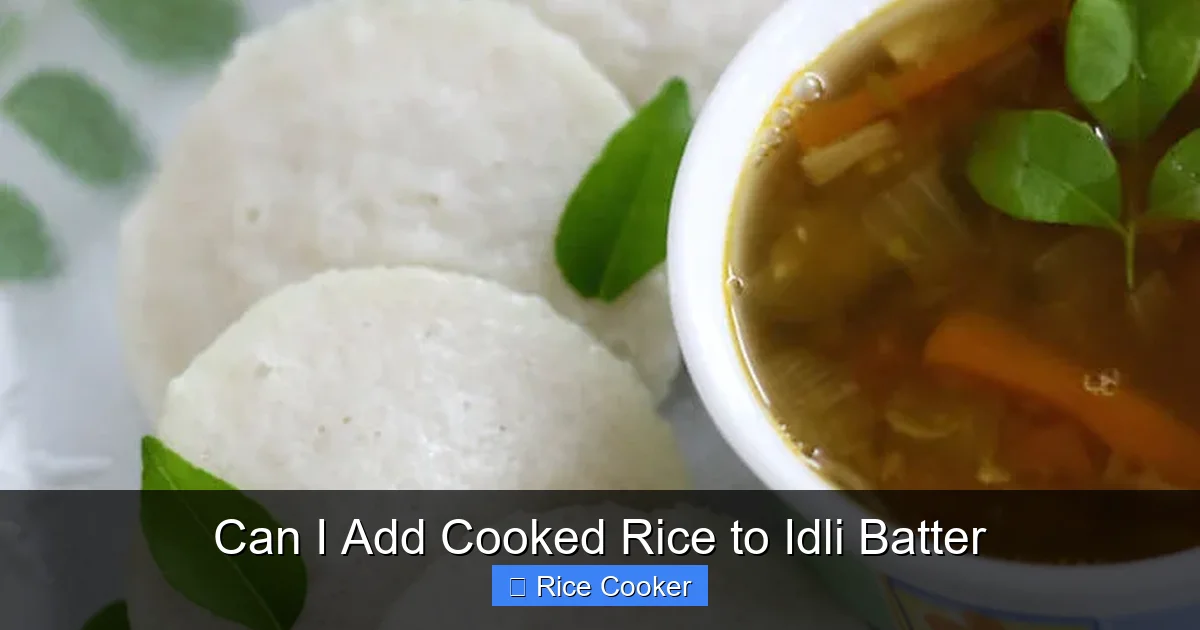
Can I add cooked rice to idli batter? Yes, absolutely! Using cooked rice in place of raw rice is not only possible but also common in many Indian households. It can save time and still produce fluffy, fluffy idlis with proper technique. However, there are important considerations—like adjusting soaking time and fermentation—to ensure your idlis turn out light and airy instead of dense or under-fermented.
Key Takeaways
- Yes, cooked rice works: You can substitute cooked rice for raw rice in idli batter, especially when using leftovers.
- Affects fermentation: Cooked rice ferments differently—soaking may need adjustment, and fermentation time might vary.
- Texture changes: Idlis made with cooked rice can be softer or denser; balancing ratios helps maintain ideal texture.
- Taste remains authentic: When done right, the flavor stays traditional—no compromise on that classic idli taste.
- Saves time and reduces waste: Using leftover rice cuts prep time and minimizes kitchen waste.
- Requires consistency: For best results, cook rice uniformly and let it cool before grinding.
- Experiment safely: Start with small batches to fine-tune your method before making large quantities.
📑 Table of Contents
- Can I Add Cooked Rice to Idli Batter? The Short Answer
- The Science Behind Idli Batter Fermentation
- Benefits of Using Cooked Rice in Idli Batter
- How to Successfully Add Cooked Rice to Idli Batter
- Common Mistakes to Avoid
- Tips for Perfect Cooked Rice Idlis Every Time
- Alternative Uses for Leftover Rice Beyond Idlis
- Frequently Asked Questions About Adding Cooked Rice to Idli Batter
- Conclusion: Embrace Innovation Without Sacrificing Tradition
Can I Add Cooked Rice to Idli Batter? The Short Answer
If you’re a fan of South Indian breakfasts, you know idlis are more than just food—they’re comfort in bite form. Light, fluffy, and steamed to perfection, these soft rice-cakes are a staple in many homes. But what if you’re short on time or have leftover cooked rice lying around? Can you use it to make idlis? The answer is yes, you can add cooked rice to idli batter—but not without understanding how it changes the process.
Using cooked rice instead of raw rice in idli preparation isn’t unheard of, especially among busy homemakers or those looking to reduce kitchen waste. However, because the cooking step alters the starch structure, fermentation dynamics shift too. This means your usual idli-making routine might need a few tweaks. In this article, we’ll explore everything you need to know about incorporating cooked rice into your idli batter—from the science behind it to practical tips for success.
The Science Behind Idli Batter Fermentation
To understand why adding cooked rice works (or doesn’t), let’s first look at how traditional idli batter functions. Idlis rely on two key ingredients: raw rice and urad dal (split black gram). These are soaked separately, then ground together into a smooth slurry. Overnight fermentation allows wild yeasts and bacteria to break down starches and proteins, producing gas bubbles that give idlis their signature spongy texture.
Visual guide about Can I Add Cooked Rice to Idli Batter
Image source: i0.wp.com
How Raw Rice Contributes
Raw rice contains intact starch granules that absorb water during soaking. As they swell, enzymes become active, and when ground, the mixture forms a paste with ideal binding properties. During fermentation, lactic acid bacteria thrive in this environment, creating an acidic medium that further aids in leavening.
What Happens With Cooked Rice?
Cooked rice has already undergone gelatinization—the process where heat breaks down the rice’s cellular structure, making starches accessible. This means less work for soaking and grinding. However, since the grain is no longer “raw,” its ability to hold air during fermentation is reduced. That’s why simply swapping cooked rice for raw rice without adjustments often leads to denser idlis.
Benefits of Using Cooked Rice in Idli Batter
Despite the challenges, there are real advantages to using cooked rice. If you’ve ever wondered whether it’s worth the effort, here’s why many home cooks swear by it.
Time-Saving Magic
Skip the long soaking hours! If your rice is already cooked, you bypass the 6–8 hour soak required for raw rice. This is especially helpful on busy mornings or when you’re preparing last-minute meals.
Waste Reduction
Using leftover rice prevents food from going bad. Instead of tossing out yesterday’s dinner, repurpose it into tomorrow’s breakfast. It’s eco-friendly and economical.
Consistent Texture with Practice
While initial batches might differ slightly, experienced cooks learn to balance ratios and fermentation times. Once mastered, cooked rice idlis can match—or even exceed—the quality of traditionally made ones.
How to Successfully Add Cooked Rice to Idli Batter
So, how do you actually do it? Follow these steps carefully to get the best results.
Step 1: Choose the Right Type of Rice
Not all rice is created equal. Use parboiled or aged basmati rice for better results. Avoid glutinous or sticky varieties like sushi rice, as they won’t ferment well and may result in gummy idlis.
Step 2: Ensure Proper Cooking Method
Steam or boil your rice until fully tender but not mushy. Overcooked rice becomes too soft and loses structural integrity. Let it cool completely before grinding—this prevents clumping and ensures even blending.
Step 3: Adjust Soaking Time
Since cooked rice is pre-hydrated, reduce soaking time for urad dal to prevent over-softening. Soak dal for only 2–3 hours instead of 6–8. This maintains a balanced batter consistency.
Step 4: Grind Consistently
Grind cooked rice first until smooth, then add urad dal slurry gradually. Aim for a batter similar in thickness to traditional recipes—neither too thick nor too runny.
Step 5: Monitor Fermentation Closely
Fermenting cooked rice batter typically takes less time—around 4–6 hours instead of 8–10. Check after 4 hours; if it hasn’t risen enough, give it another hour. The batter should double in volume and have a tangy aroma.
Step 6: Steam with Care
Use a rice cooker with a steaming function or a conventional steamer. Cook on medium heat for 10–12 minutes. Avoid opening the lid frequently during steaming, as this can cause collapse.
Common Mistakes to Avoid
Even with good intentions, things can go wrong. Here are pitfalls to watch out for.
Mistake 1: Not Cooling Cooked Rice
Adding hot rice to the grinder creates steam, which makes the batter lumpy and difficult to mix evenly. Always cool rice to room temperature first.
Mistake 2: Using Too Much Cooked Rice
A 1:1 ratio of cooked to raw rice often yields poor results. Try starting with 70% cooked rice and 30% raw rice, then adjust based on outcome.
Mistake 3: Skipping Urad Dal Soaking
Urad dal needs soaking regardless of rice type. Without it, the batter lacks elasticity and won’t rise properly.
Mistake 4: Ignoring Fermentation Signs
Rushing fermentation leads to flat idlis. Trust the process—check for volume increase and sour smell, not just time elapsed.
Tips for Perfect Cooked Rice Idlis Every Time
Want consistent excellence? These pro tips will elevate your game.
- Pre-soak cooked rice briefly: Even though cooked, a quick 15-minute soak in warm water helps rehydrate any dried-out grains.
- Add a pinch of salt early: Salt enhances fermentation and improves flavor. Mix it into the batter after grinding.
- Use fresh urad dal: Old or stale dal won’t activate properly, so check expiration dates.
- Store batter overnight: If making ahead, refrigerate batter after fermentation. Bring to room temp before steaming.
- Practice portion control: Smaller batches are easier to manage and yield better results than large-scale attempts.
Alternative Uses for Leftover Rice Beyond Idlis
Once you master cooked rice idlis, consider other creative uses. Leftover rice is incredibly versatile!
Dosa Varieties
Make thinner dosas or masala dosas using similar batter techniques. Just reduce liquid slightly for crispier edges.
Vada Preparation
Idli vadas require mashed cooked rice mixed with spices and urad dal. Perfect for repurposing extra rice.
Poori or Poori Masala
Combine cooked rice flour with wheat flour to make soft pooris—great for brunch.
Upma & Porridge
Transform rice into savory upma or sweet kheer. Both require cooked rice as base.
Frequently Asked Questions About Adding Cooked Rice to Idli Batter
Does using cooked rice affect the nutritional value of idlis?
No significant difference arises from using cooked versus raw rice. Both provide similar carbs, fiber, and micronutrients. The main benefit is convenience, not nutrition.
Can I freeze cooked rice batter for later use?
Yes, but thaw slowly in the fridge. Freezing alters texture slightly, so expect minor changes in rise and softness upon reheating.
Will my idlis taste different?
With careful preparation, taste remains nearly identical. Some detect a subtle creaminess due to cooked rice’s texture, but most find it indistinguishable from traditional versions.
Can I mix cooked and raw rice together?
Absolutely! Many recipes blend both to balance fermentation speed and texture. Start with 50/50, then tweak based on results.
What if my idlis turn out flat?
This usually indicates insufficient fermentation or improper grinding. Re-grind batter thoroughly and allow extra fermentation time next batch.
Is it safe to use reheated leftover rice?
Only if stored properly in the fridge within 2 hours of cooking and consumed within 3 days. Never use rice that’s been sitting out or suspected of contamination.
Conclusion: Embrace Innovation Without Sacrificing Tradition
So, can you add cooked rice to idli batter? The answer is a confident yes—with awareness and care. While tradition favors raw rice for its robust fermentation potential, modern kitchens demand flexibility. By understanding the science, adjusting techniques, and learning from each batch, you can enjoy delicious, fluffy idlis made from everyday leftovers.
This approach isn’t just practical—it’s sustainable. Reducing food waste while maintaining culinary excellence is something every home cook should strive for. Whether you’re pressed for time, running low on ingredients, or simply curious, experimenting with cooked rice opens up new possibilities without sacrificing authenticity.
Next time you open your rice cooker, don’t just think about what’s inside—think about what comes out. With a little creativity and attention, even the humblest leftover can become the foundation of a memorable meal.
Frequently Asked Questions
Does using cooked rice affect the nutritional value of idlis?
No significant difference arises from using cooked versus raw rice. Both provide similar carbs, fiber, and micronutrients. The main benefit is convenience, not nutrition.
Can I freeze cooked rice batter for later use?
Yes, but thaw slowly in the fridge. Freezing alters texture slightly, so expect minor changes in rise and softness upon reheating.
Will my idlis taste different?
With careful preparation, taste remains nearly identical. Some detect a subtle creaminess due to cooked rice’s texture, but most find it indistinguishable from traditional versions.
Can I mix cooked and raw rice together?
Absolutely! Many recipes blend both to balance fermentation speed and texture. Start with 50/50, then tweak based on results.
What if my idlis turn out flat?
This usually indicates insufficient fermentation or improper grinding. Re-grind batter thoroughly and allow extra fermentation time next batch.
Is it safe to use reheated leftover rice?
Only if stored properly in the fridge within 2 hours of cooking and consumed within 3 days. Never use rice that’s been sitting out or suspected of contamination.