
Can you add more water to rice after it’s already cooking? The short answer is yes—but with caveats. Adding extra water mid-cook can save undercooked rice if done carefully, but it risks making your dish soggy or mushy. Understanding your rice type, cooker model, and timing is key to avoiding disaster. With the right technique, you can rescue a failed batch without starting over.
Key Takeaways
- Timing matters: Adding water too early or late can ruin your rice’s texture and doneness.
- Rice type affects results: Long-grain, short-grain, and brown rice react differently to added water.
- Use a rice cooker wisely: Some models allow open-lid additions; others require waiting until the cycle ends.
- Measure carefully: Stick to standard ratios unless adjusting for altitude or desired consistency.
- Prevent sogginess: Stir gently, cover properly, and let steam release before fluffing.
- When not to add water: If rice is already dry or overcooked, adding liquid won’t help.
- Alternative solutions: Steam over boiling water or use a lid trick for better control.
📑 Table of Contents
- Can I Add More Water to Rice While Cooking? The Truth Behind Every Home Cook’s Dilemma
- The Science Behind Rice Cooking: Why Water Matters
- When Is It Safe (and Smart) to Add More Water Mid-Cook?
- Types of Rice and Their Response to Added Water
- Practical Tips for Adding Water Safely
- What Happens If You Add Too Much Water?
- Alternative Methods When You Can’t Add Water Mid-Cook
- How to Prevent the Need to Add Water in the First Place
- Conclusion: Master the Art of Responsive Rice Cooking
Can I Add More Water to Rice While Cooking? The Truth Behind Every Home Cook’s Dilemma
There’s nothing quite like the aroma of perfectly steamed rice rising from your kitchen—warm, fluffy, and ready to pair with any meal. But what happens when your rice turns out dry, crunchy, or worse, gummy and stuck to the pot? You reach for the faucet, eyes wide with panic: “Can I add more water to rice while cooking?” It’s a question that haunts countless home cooks, especially those new to rice preparation or using an electric rice cooker for the first time.
The instinct to pour in more water seems logical—after all, rice needs moisture to cook evenly. But here’s the catch: adding water mid-process isn’t as simple as it looks. Too much, too soon, or at the wrong stage can turn a near-perfect grain into a soupy mess. And depending on your rice cooker design, some machines aren’t built for open-lid adjustments during operation. So let’s dive deep into this kitchen conundrum, unpack the science (in simple terms), and arm you with practical tips so your next bowl of rice is always just right.
Whether you’re cooking jasmine for Thai stir-fry, basmati for biryani, or sticky sushi rice, understanding when—and how—to add water can make all the difference between culinary success and frustration. Let’s explore everything you need to know about rescuing and perfecting your rice in real time.
The Science Behind Rice Cooking: Why Water Matters
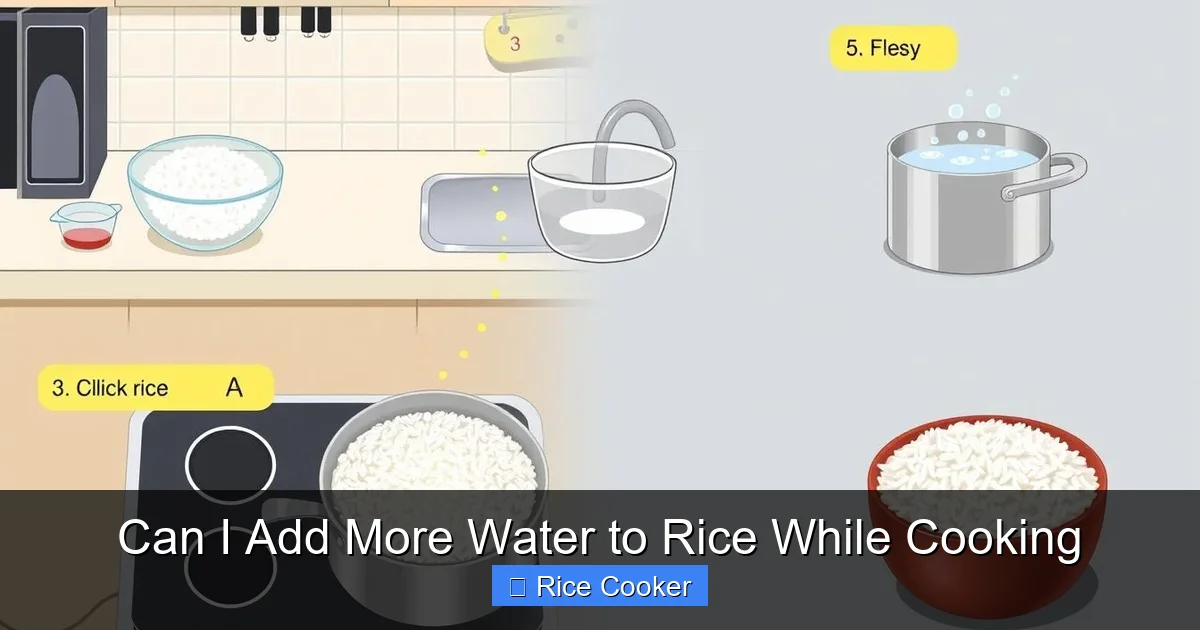
Visual guide about Can I Add More Water to Rice While Cooking
Image source: ricearray.org
Rice is essentially starchy seeds that absorb water and heat to expand and soften. Each grain contains its own internal water content, but external water is what drives the cooking process. As heat penetrates the grain, the starches gelatinize, transforming raw kernels into tender, edible bites. This process requires consistent moisture and steady temperature—usually around 100°C (212°F) at sea level.
But here’s where things get tricky: different rice varieties have unique starch structures. Long-grain rice (like basmati or jasmine) has less amylose and forms looser, fluffier grains when cooked. Short-grain rice (like sushi or arborio) has more amylose, creating stickier, clingier results ideal for rolls or risotto. Brown rice, meanwhile, takes longer because the bran layer slows water absorption.
When you add water during cooking, you’re altering two critical variables: heat distribution and starch release. Too little water, and the bottom layer burns while the top stays hard. Too much, and you risk dilution, loss of flavor, and mushy textures. That’s why sticking to traditional ratios—usually 1½ cups water per 1 cup dry rice—is recommended. But life happens. Sometimes you misjudge, forget to measure, or simply want creamier results. So yes, you can add water—but only under the right conditions.
When Is It Safe (and Smart) to Add More Water Mid-Cook?
Adding water during cooking isn’t forbidden—it’s a skill that requires timing, awareness, and respect for your rice cooker’s mechanics. Here’s when it’s generally safe:
During the Initial Boiling Phase
If you’ve just added rice and water to your pot or rice cooker and haven’t yet reached the full boil, adding a small amount of additional water won’t harm anything. Just stir gently to redistribute heat and ensure even absorption. This works best for stovetop methods where you can monitor closely.
In Certain Electric Rice Cookers
Many modern rice cookers have transparent lids and stay-cool handles, allowing you to peek and adjust without opening the heating element. However, **never open the inner pot** during cooking unless your model explicitly allows it. Most sealed units will automatically shut off if disturbed mid-cycle due to safety sensors.
That said, some high-end models (like Zojirushi or Panasonic) support “add water” functionality through specific modes (e.g., “Quick Cook” or “Partial Cooking”). Check your manual! These systems detect dryness and inject steam or water precisely when needed.
If Your Rice Is Undercooked But Not Dry
Sometimes rice cooks unevenly—the center remains hard while the edges are soft. In this case, adding a splash of hot water (not cold!) and covering tightly can help finish the job. Use a fork to gently poke holes in the surface before adding liquid; this lets steam escape and prevents pressure buildup.
Avoid Adding Water After Full Boil or Steaming Phase
Once rice reaches the steaming stage (when most of the water has been absorbed and bubbling stops), adding more liquid can cause overflow or uneven reheating. The starch structure is already set, so extra water may sit on top instead of being absorbed.
Types of Rice and Their Response to Added Water
Not all rice treats added water the same way. Your choice of grain determines how forgiving the cooking process is—and whether rescue efforts will succeed.
Long-Grain White Rice (Basmati, Jasmine, Texmati)
These varieties thrive on precise hydration. Adding water mid-cook usually works well **if done early**, but too much later on leads to separation. Best paired with rice cookers that maintain gentle heat during the final steaming phase.
Short-Grain Rice (Sushi, Calrose)
Because these stick together easily, adding water during the last few minutes can create a creamy, clingy texture—perfect for desserts or Japanese dishes. But be cautious: overdoing it makes them gluey. Stir once after adding water to avoid clumping.
Brown Rice
Brown rice absorbs water slowly due to its fibrous hull. If it looks undercooked halfway through, adding warm water sparingly can help. However, since it takes longer to cook, rushing with extra liquid often backfires. Patience pays off!
Instant or Parboiled Rice
These are pre-treated and cook faster. Adding water mid-process is risky—they can become slimy if over-hydrated. Stick to package instructions.
Wild or Mixed Rice Blends
Wild rice (actually a grass seed) and blends require longer soaking and higher water ratios. Adding water during cooking is common and often necessary. Just keep stirring occasionally to prevent scorching.
Practical Tips for Adding Water Safely
Even if your rice cooker allows open-lid access, there are universal best practices to follow:
1. Measure Before You Pour
Use a measuring cup—don’t guess! A general rule: add no more than ¼ cup extra liquid at a time. Overfilling defeats the purpose.
2. Use Hot Water
Cold water shocks the system, causing temperature fluctuations that affect texture. Heat leftover broth, filtered water, or even milk for richer results.
3. Stir Gently but Thoroughly
After adding water, fold it in with a wooden spoon or silicone spatula. Avoid vigorous stirring—you’ll break delicate grains.
4. Recover Heat Quickly
Cover the pot or close the rice cooker lid immediately after adjustment. This traps steam and helps redistribute moisture evenly.
5. Monitor Closely
Check every minute or two. If bubbles erupt violently, reduce heat or remove lid slightly to vent excess pressure.
6. Don’t Overcompensate
If your rice was nearly done when you added water, it might still end up too wet. Consider serving it as porridge or using it in fried rice the next day.
What Happens If You Add Too Much Water?
It’s easy to panic and dump in too much liquid. But understanding the consequences helps you avoid repeat mistakes:
– **Sogginess**: Excess water dilutes flavor and leaves rice limp.
– **Starch Leaching**: Starchy water runs off, making rice gluey instead of fluffy.
– **Uneven Texture**: Bottom layers absorb all the liquid, leaving top grains waterlogged.
– **Burn Risk**: When water evaporates rapidly from the bottom, scorched bits form.
– **Wasted Ingredients**: Leftover wet rice must be dried out later (see below).
If this happens, don’t despair! Transfer the rice to a colander, rinse briefly under cold water (to stop cooking), then spread it on a baking sheet and toast in a 375°F oven for 10–15 minutes to evaporate moisture.
Alternative Methods When You Can’t Add Water Mid-Cook
Sometimes your rice cooker doesn’t allow open-lid adjustments, or you’re using a non-stick pan. Here are clever workarounds:
The Lid Trick
Place a clean cloth or paper towel over the rice before closing the lid. As steam builds, it condenses and drips back into the rice—adding just enough moisture without direct pouring.
Steam Over Boiling Water
Transfer partially cooked rice to a steamer basket above simmering water. Cover tightly and cook 5–10 minutes until tender. Ideal for salvaging batches that are slightly dry.
Fluffy-Up Method
After removing from heat, let rice rest covered for 5 minutes. Then fluff with a fork. Resting redistributes steam and evens out texture—even if you added water earlier.
Double Boiler Technique
For delicate preparations like risotto, use a double boiler to gently reheat and rehydrate rice. Stir constantly for creamy results.
How to Prevent the Need to Add Water in the First Place
Prevention beats cure. Follow these habits for consistently perfect rice:
– **Rinse before cooking**: Removes excess starch and prevents gumminess.
– **Soak brown rice overnight**: Speeds up absorption and cuts cooking time.
– **Use a rice paddle, not fingers**: Prevents contamination and uneven packing.
– **Level the rice**: Packing too tightly blocks airflow and creates cold spots.
– **Follow ratio guides**: Adjust only for altitude (add 1 tbsp water per cup above 3,000 ft).
– **Clean your rice cooker**: Mineral deposits alter heat transfer over time.
Conclusion: Master the Art of Responsive Rice Cooking
So, can you add more water to rice while cooking? Absolutely—but only if you understand the nuances. Whether you’re using a basic pot, a fancy electric cooker, or experimenting with exotic grains, responsiveness is key. Don’t fear mistakes; treat them as learning opportunities. Next time your rice calls for extra hydration, do it smartly: measure, stir, cover, and trust the process.
Remember, rice is forgiving—within limits. With practice, you’ll develop an intuitive sense of when and how to intervene. And who knows? You might discover that adding a bit more water transforms a good dish into something extraordinary.
Now go forth, cook boldly, and turn every grain into glory.
Frequently Asked Questions
Is it okay to add cold water to rice while cooking?
It’s best to avoid cold water, as it causes sudden temperature drops that disrupt starch gelatinization. Use room-temperature or hot water instead to maintain steady cooking conditions.
Can I add milk or broth instead of plain water?
Yes! Adding milk, vegetable broth, or chicken stock enhances flavor and richness. Just remember that dairy-based liquids may curdle if added too late—stick to the initial cooking phase.
Will adding water change the cooking time significantly?
Slightly—extra water may extend cooking by 2–5 minutes. Always check doneness toward the end of the original timer to avoid overcooking.
What if my rice cooker has a “keep warm” function—can I add water then?
No. During keep-warm mode, the heating element cycles intermittently. Adding liquid now won’t cook the rice properly and could promote bacterial growth. Wait until the next cooking cycle.
How do I fix overly wet rice without drying it out?
Spread the rice on a large tray, mix in fresh herbs or spices, and refrigerate for 30 minutes. This firms up the texture and adds new dimensions to leftovers—ideal for fried rice.
Does altitude affect how much water I should add?
Yes. At elevations above 3,000 feet, add 1 tablespoon of water per cup of rice to compensate for lower boiling points and faster evaporation.