
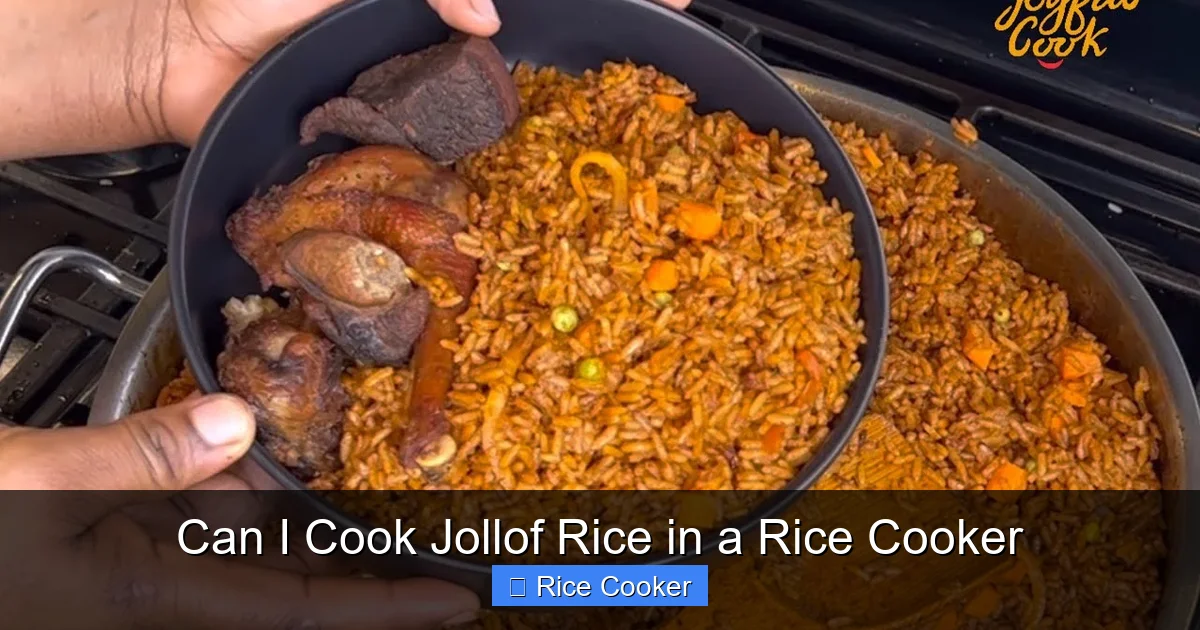
Cooking jollof rice in a rice cooker is not only possible—it’s easy and delivers delicious results. With the right ingredients and technique, your rice cooker can produce tender, smoky, and richly flavored jollof rice just like the traditional stovetop method. Whether you’re new to cooking or short on time, this foolproof method ensures consistent, tasty outcomes with minimal effort.
Key Takeaways
- Yes, jollof rice can be cooked in a rice cooker: The appliance handles boiling, steaming, and keeping warm—perfect for this dish.
- Use the right rice type: Parboiled (pre-cooked) rice works best for authentic texture and absorption.
- Toast the rice first: Browning the rice in oil before adding liquid locks in flavor and prevents mushiness.
- Control spice balance: Adjust tomatoes, peppers, and spices to suit your taste without overpowering the dish.
- Timing matters: Cooking time varies slightly by model, so follow manufacturer instructions closely.
- Warm-up feature is key: Use the “keep warm” function after cooking to maintain moisture and flavor.
- Clean-up is easier: Non-stick rice cooker pots simplify washing compared to heavy pots used on the stove.
📑 Table of Contents
- Can I Cook Jollof Rice in a Rice Cooker? Absolutely!
- The Science Behind Jollof Rice and How It Fits in a Rice Cooker
- Ingredients You’ll Need to Make Jollof Rice in a Rice Cooker
- Step-by-Step Guide: Making Jollof Rice in a Rice Cooker
- Common Mistakes to Avoid When Cooking Jollof Rice in a Rice Cooker
- How to Customize Your Jollof Rice Recipe
- Cleaning and Maintaining Your Rice Cooker After Making Jollof Rice
- Frequently Asked Questions About Cooking Jollof Rice in a Rice Cooker
- Conclusion: Why Everyone Should Try Making Jollof Rice in a Rice Cooker
Can I Cook Jollof Rice in a Rice Cooker? Absolutely!
If you love jollof rice—that bold, tomato-based West African staple known for its vibrant red color and deep, smoky flavor—you might wonder if it’s possible to make it using a rice cooker instead of the traditional stovetop method. The short answer? Yes, you absolutely can cook jollof rice in a rice cooker. In fact, many home cooks swear by this method because it’s hands-off, consistent, and produces reliably tender rice every time. Whether you’re preparing a family dinner or hosting guests, using a rice cooker simplifies the process while still delivering rich, aromatic results.
The beauty of modern rice cookers lies in their precision. They automatically switch from heating to warming mode once the water evaporates and the rice is fully cooked. This feature makes them ideal for dishes like jollof rice, where maintaining the right moisture level is crucial. While traditional recipes call for constant stirring and monitoring on the stove, the rice cooker takes care of that for you—freeing up your attention for other parts of meal prep.
The Science Behind Jollof Rice and How It Fits in a Rice Cooker
Before diving into the recipe, let’s talk about what makes jollof rice special—and why the rice cooker is a surprisingly good fit. Jollof rice gets its signature color and flavor from a base of blended tomatoes, onions, Scotch bonnet peppers, garlic, ginger, and sometimes bell peppers. These ingredients are sautéed until they caramelize slightly, creating a thick, savory sauce that coats each grain of rice.
Traditionally, rice is added to this mixture along with stock or water, brought to a boil, then simmered uncovered until dry. The challenge with this method is controlling the heat—too high, and the bottom burns; too low, and the rice becomes soggy or undercooked.
Rice cookers solve this problem by using precise temperature control. Once you add the rice and liquid, the machine does the rest. Most models come with preset modes for white rice, brown rice, or even risotto—but you can customize settings for jollof rice as well. Some advanced models even allow manual timing adjustments, giving you full control over how long the rice steams.
Why Rice Cookers Are Ideal for One-Pot Dishes
One-pot meals like jollof rice benefit greatly from enclosed cooking environments. A rice cooker seals in steam, ensuring even heat distribution and preventing evaporation too quickly. This means your rice absorbs all the flavors from the sauce without drying out.
Additionally, the non-stick inner pot makes cleanup a breeze. After cooking, you can simply wipe it down with warm, soapy water—no scrubbing required. That’s a huge advantage over cast-iron or heavy stainless steel pots often used on the stove.
Ingredients You’ll Need to Make Jollof Rice in a Rice Cooker
Making great jollof rice starts with quality ingredients. Here’s what you’ll need:
– Rice: Use parboiled (also called converted) rice. It’s partially boiled before milling, which helps it stay firm and fluffy even after absorbing lots of liquid. Avoid regular long-grain white rice—it tends to become mushy.
– Tomatoes: Fresh Roma or plum tomatoes work best. You’ll need about 4–6 medium-sized ones, depending on ripeness.
– Peppers: Scotch bonnet peppers give jollof its classic heat. If unavailable, use habanero or substitute with bird’s eye chili and extra cayenne.
– Onions: Yellow or red onions add sweetness and depth.
– Spices: Bay leaves, thyme, curry powder, smoked paprika, salt, black pepper, and nutmeg are essential.
– Oil: Palm oil is traditional, but vegetable or sunflower oil works fine.
– Liquid: Chicken or vegetable stock enhances flavor, though water can suffice.
– Garnish: Fried plantains, grilled chicken, or boiled eggs pair perfectly.
Prepping Your Base Sauce
The secret to amazing jollof rice is building flavor from the ground up. Start by blitzing your tomatoes, onions, garlic, ginger, and peppers in a food processor until smooth. Heat oil in your rice cooker pot (make sure it’s clean and dry), then add the blended mixture. Let it cook on medium heat (or use the “saute” function if available) for 10–15 minutes, stirring occasionally, until it reduces and darkens slightly. This step concentrates the flavor and removes excess moisture—critical for preventing soggy rice later.
Step-by-Step Guide: Making Jollof Rice in a Rice Cooker
Follow these simple steps for foolproof results:
1. **Prepare the sauce:** As mentioned above, blend tomatoes, onions, peppers, garlic, and ginger. Sauté in oil until fragrant and reduced.
2. **Add rice:** Stir in 2 cups of parboiled rice and toast gently for 2–3 minutes. This helps the grains develop a nutty flavor.
3. **Season well:** Add bay leaves, thyme, curry powder, smoked paprika, salt, black pepper, and a pinch of nutmeg. Mix thoroughly.
4. **Pour in liquid:** Add 3–3.5 cups of hot chicken or vegetable stock. Hot liquid kickstarts the cooking process.
5. **Start the rice cooker:** Close the lid and select the “white rice” or “normal” setting. Most rice cookers take about 25–30 minutes to complete.
6. **Let it rest:** Once done, turn off the heat and let the rice sit for 10 minutes with the lid closed. This allows steam to redistribute evenly.
7. **Fluff and serve:** Gently stir with a fork before serving. Garnish with fried plantains or your favorite protein.
Pro Tips for Perfect Results
– Don’t skip toasting: Browning the rice briefly before adding liquid enhances aroma and texture.
– Adjust seasoning gradually: Taste the sauce before adding rice. Too much salt early on can make the final dish oversalted.
– Use fresh ingredients: Ripe tomatoes and fresh herbs make a noticeable difference in flavor.
– Experiment with heat: Reduce scotch bonnet peppers if you prefer milder jollof rice.
– Keep an eye on first batches: New rice cookers may vary slightly in performance—adjust liquid ratios as needed.
Common Mistakes to Avoid When Cooking Jollof Rice in a Rice Cooker
Even with the right tools, mistakes happen. Here are some common pitfalls and how to fix them:
– Mushy rice: Usually caused by too much liquid or insufficient toasting. Stick to a 1:1.75 ratio of rice to liquid (2 cups rice : 3.5 cups liquid).
– Bitter or overly salty taste: Over-seasoning during the sauce stage leads to imbalance. Season in small increments.
– Rice not absorbing all liquid: Ensure the rice cooker reaches full heat before adding ingredients. Cold pots slow cooking.
– Burnt bottom layer: Some rice cookers have hot spots. Stir once halfway through if your model doesn’t self-stir.
– Undercooked center: Don’t open the lid frequently. Each peek releases steam and extends cooking time unnecessarily.
What If My Rice Cooker Doesn’t Have a Saute Function?
Not all rice cookers come with a browning feature. If yours doesn’t, you can still achieve great results by pre-cooking the sauce in a separate pan. Simply prepare the tomato-pepper-onion blend, reduce it until thickened, then transfer everything to the rice cooker pot along with rice and liquid. This mimics the traditional method while leveraging the convenience of the appliance.
How to Customize Your Jollof Rice Recipe
Jollof rice is incredibly versatile. Here are fun ways to adapt it:
– Add vegetables: Bell peppers, carrots, or green beans can be added with the rice for extra nutrition and color.
– Make it smokier: Include a piece of smoked turkey or bacon during the sauce stage.
– Vegan version: Skip animal products and use vegetable broth instead of chicken stock.
– Spice level control: Remove seeds from scotch bonnets before blending for milder heat.
– Color variation: Swap red tomatoes for yellow or orange ones for a different hue and tangy twist.
Pairing Suggestions
Serve your jollof rice with:
– Grilled fish or chicken
– Fried plantains (a must-have!)
– Steamed cabbage or spinach
– Boiled eggs or beef stew
– Fresh salad or coleslaw for contrast
Cleaning and Maintaining Your Rice Cooker After Making Jollof Rice
After enjoying your meal, cleaning up is quick thanks to the non-stick interior. Follow these steps:
1. Let the pot cool completely before washing.
2. Soak it in warm, soapy water if residue is stuck.
3. Use a soft sponge—avoid metal scrubbers that can damage the coating.
4. Rinse thoroughly and air-dry before storing.
Regular maintenance extends your rice cooker’s lifespan. Never immerse the base unit in water—only the removable pot should be washed.
Frequently Asked Questions About Cooking Jollof Rice in a Rice Cooker
Can I use regular long-grain rice instead of parboiled?
It’s possible, but not recommended. Regular rice lacks the starch structure needed to hold shape when exposed to high liquid content. Parboiled rice absorbs more liquid without turning mushy, making it ideal for jollof.

Visual guide about Can I Cook Jollof Rice in a Rice Cooker
Image source: ricecookerjunkie.com
How do I prevent my rice cooker from burning the bottom?
Ensure the inner pot is properly coated and clean. Some models require a thin layer of oil at the start to prevent sticking. Also, avoid overcrowding—stick to the recommended rice-to-liquid ratio.
Can I make jollof rice ahead of time?
Yes! Leftover jollof rice keeps well in the refrigerator for up to 3 days. Reheat gently on the stovetop with a splash of water to revive moisture. It also freezes beautifully for up to 2 months.
Is palm oil necessary?
No, but it adds authenticity and a unique flavor. If you can’t find palm oil, neutral oils like sunflower or vegetable work just fine. Just note that palm oil gives a distinct reddish hue—so your jollof may be lighter in color without it.
Do I need special rice cooker settings?
Most standard rice cookers will work fine with the “white rice” or “normal” setting. Advanced models may offer “brown rice” or “porridge” modes, but those aren’t ideal for jollof. Stick with basic settings unless your manual suggests otherwise.
Can kids eat spicy jollof rice?
Absolutely—just adjust the spice level. Remove seeds from peppers and use mild alternatives like bell peppers or mild chili powder. Serve with cooling sides like cucumber salad or yogurt-based sauces.
Conclusion: Why Everyone Should Try Making Jollof Rice in a Rice Cooker
Cooking jollof rice in a rice cooker isn’t just a shortcut—it’s a game-changer for anyone who loves this iconic dish. It combines the rich, complex flavors of traditional preparation with the ease and consistency of modern kitchen technology. No more worrying about burnt bottoms or uneven cooking. Just mix your ingredients, press a button, and enjoy restaurant-quality jollof rice in under an hour.
Whether you’re a busy parent, a college student, or someone who simply prefers low-maintenance cooking, the rice cooker offers a reliable solution without sacrificing flavor. Plus, the hands-off nature means you can focus on other tasks while dinner prepares itself.
So next time you’re craving that fiery, aromatic bowl of jollof rice, remember: your rice cooker is ready. With the right ingredients, a little patience, and confidence in your appliance, you’ll master this beloved recipe in no time. Happy cooking!
Frequently Asked Questions
Can I use brown rice to make jollof rice in a rice cooker?
Yes, but it requires longer cooking time and careful monitoring. Brown rice has more fiber and takes longer to absorb liquid, so increase cooking time by 10–15 minutes and check frequently to avoid dryness.
How much liquid should I use for 2 cups of rice?
For jollof rice, use about 3.5 cups of liquid per 2 cups of rice. This ensures enough moisture without leaving the rice soggy. Adjust slightly based on your rice cooker’s performance.
Can I add meat or seafood to the rice cooker?
Absolutely! Cook meats like chicken or shrimp separately first, then add them with the rice and sauce toward the end of the cooking cycle. This prevents overcooking while ensuring everything heats through evenly.
Will my jollof rice stay red after cooking?
Not always. Overcooking can cause fading. To preserve color, add a splash of lemon juice or vinegar at the end—this brightens the red tones and enhances flavor balance.
Can I make jollof rice without a blender?
Yes, but the texture will be chunkier. Simmer whole tomatoes and onions directly in the rice cooker, crushing them slightly with a spoon. Strain the sauce afterward if you prefer a smoother result.
Is it safe to leave jollof rice on the “warm” setting for hours?
Yes, most rice cookers have a keep-warm function designed for extended periods. However, for food safety, consume jollof rice within 2 hours if left at room temperature. Otherwise, refrigerate promptly.