
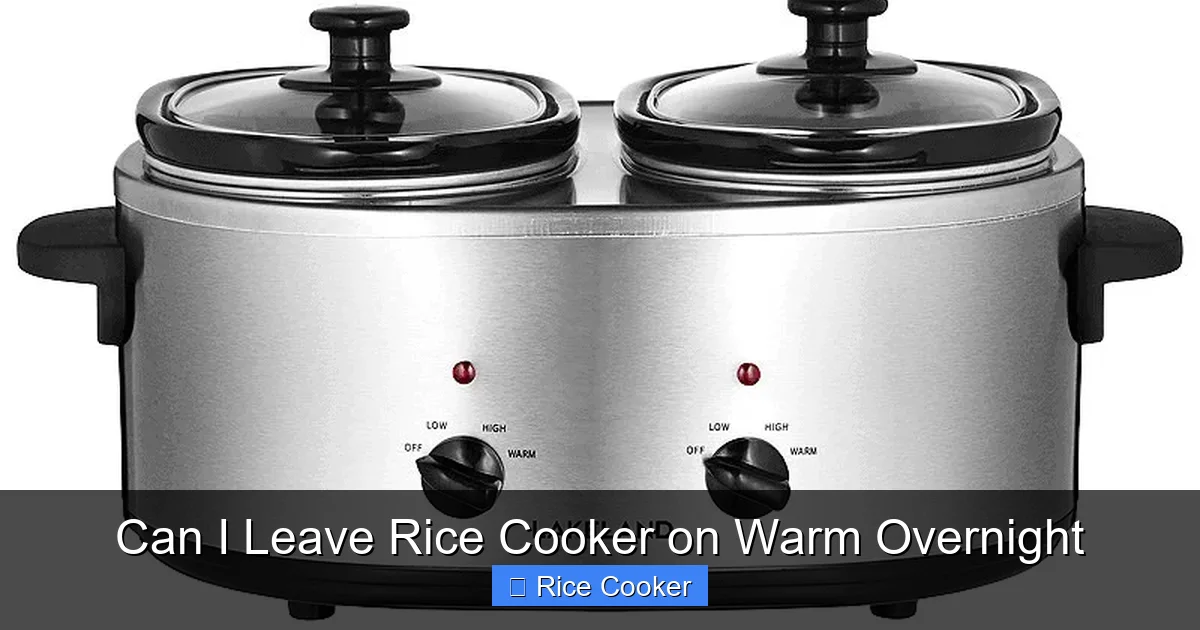
Leaving your rice cooker on the “warm” setting overnight is generally safe due to its built-in temperature control, but it’s not always the best idea. While modern rice cookers are designed to maintain a low heat without overcooking or burning, leaving them on for too long can affect food quality and potentially pose health risks if not used properly. For optimal safety and taste, it’s recommended to turn off the rice cooker after cooking and store leftover rice in the refrigerator within one hour.
Key Takeaways
- Safety First: Most rice cookers have an automatic shut-off feature when switching to “warm,” but prolonged use may strain the heating element or compromise food safety if bacteria grow.
- Not All Rice Cookers Are Equal: Some models lack advanced insulation or precise temperature control, making them less reliable for overnight warming compared to high-end digital units.
- Food Quality Degrades Over Time: Even on low heat, cooked rice can dry out, develop off-flavors, or become unappetizing after several hours—especially in humid environments.
- Refrigeration Is Safer Than Warm Storage: Storing rice in the fridge prevents bacterial growth (like from Bacillus cereus), which can occur even at warm temperatures if held above 40°F (4°C) for too long.
- Use the Warm Setting Wisely: The “warm” function is ideal for short-term holding (up to 2–3 hours), not extended periods like overnight.
- Cleanliness Matters: Residual moisture and food particles inside the cooker can promote mold or bacterial growth if left uncleaned after use.
- Alternative Solutions Exist: Consider using insulated containers, slow cookers with warm settings, or smart plugs to automate shutdowns for safer long-term storage.
[FEATURED_IMAGE_PLACEHOLDER]
Can I Leave Rice Cooker on Warm Overnight?
If you’re someone who cooks rice frequently—whether for meals, snacks, or batch prep—you’ve probably wondered: can I leave rice cooker on warm overnight? It sounds convenient, right? Wake up to perfectly warm rice ready to serve without having to reheat it. But before you plug in and walk away, let’s dig into what really happens when you do this, how your appliance works, and whether it’s truly safe—or smart—to leave it running all night.
Rice cookers are kitchen staples for a reason: they’re simple, reliable, and do most of the work for you. From fluffy jasmine rice to sticky sushi rice, these devices make cooking consistent and foolproof. But their convenience comes with responsibility. Unlike stovetop pots that require constant attention, rice cookers automate much of the process. Still, understanding how they operate—and what happens when you change their behavior—is key to using them safely and effectively.
In this article, we’ll explore everything you need to know about leaving your rice cooker on warm overnight. We’ll cover the science behind the “warm” setting, compare different rice cooker models, discuss food safety guidelines, and offer practical alternatives if you want to keep rice warm longer without risk. By the end, you’ll know exactly when it’s okay—and when it’s better—to power down your appliance.
The Science Behind the “Warm” Setting
How Does the Warm Setting Work?
When you switch your rice cooker to the “warm” setting, it activates a lower-temperature heating element designed to maintain cooked rice at a safe serving temperature—usually around 140°F to 165°F (60°C to 74°C). This keeps the rice from cooling too quickly while preventing further cooking or drying out.
Most modern rice cookers use a thermostat system that turns the heating element on and off in cycles. So even though it says “warm,” the element isn’t constantly on—it pulses to maintain that ideal range. That means energy consumption stays relatively low, and the risk of overheating is minimal.
However, here’s the catch: once the internal temperature drops below the set point, the heating kicks back in. If your kitchen is cool or the rice has absorbed ambient air, the cycle repeats. Over many hours—like overnight—this repeated cycling can wear down components slightly and may not be as efficient as intended.
Why Rice Cookers Have a Warm Function
The “warm” mode exists primarily for convenience during meal service. Imagine finishing dinner and realizing you still have leftovers that need to stay ready for tomorrow’s lunch. Instead of reheating later, you can leave the rice in the cooker on warm until you’re ready to eat.
This function also helps prevent condensation from building up inside the container by keeping things consistently warm—not hot. Too much moisture can make rice soggy or encourage microbial growth, so the warm setting strikes a balance between preservation and texture.
But again, this is meant for short durations. Think minutes to a few hours, not full nights.
Is It Safe to Leave Rice Cooker on Warm Overnight?
The Short Answer
Technically, yes—many people do leave their rice cookers on warm overnight without immediate issues. But “safe” doesn’t always mean “ideal.” There are real risks involved, especially related to foodborne illness and appliance longevity.
Food Safety Concerns
Cooked rice is a prime breeding ground for Bacillus cereus, a bacterium that can survive boiling temperatures and produce toxins that cause food poisoning. These spores are often present in raw rice and don’t die during normal cooking—they just go dormant.
Once cooked rice is cooled slowly—or kept at room temperature—the spores can reactivate, multiply, and release toxins. Even refrigeration doesn’t kill the spores; it only slows their growth. If you leave rice sitting at room temperature (or in a warm rice cooker) for more than two hours, you enter the danger zone where bacteria thrive.
The USDA recommends discarding perishable foods left out for more than two hours—four hours if the temperature is above 90°F (32°C). So technically, if your rice cooker maintains a steady 140°F+, it might seem outside that window. But here’s the problem: the “warm” setting rarely holds that exact temperature all night. Fluctuations happen, and brief dips below 140°F can allow bacteria to grow.
Appliance Longevity and Energy Use
Running your rice cooker non-stop for 8+ hours uses more electricity than necessary. While it won’t explode or catch fire instantly, constant cycling stresses the heating element and thermostat over time. This could shorten the lifespan of your appliance or lead to malfunctions down the line.
Additionally, some older or budget models may lack robust thermal regulation. Their thermostats might fail to shut off properly, causing the rice to dry out or even burn if the warm setting somehow engages the full-power heating coil.
What Happens to Rice Left on Warm All Night?
Texture and Taste Changes
Overnight, even on warm, rice tends to lose its fluffy structure. Moisture redistributes unevenly, leading to clumpy or gummy spots. The surface may dry out while the center stays soft—creating an unpleasant mouthfeel.
Taste-wise, rice can absorb odors from nearby spices, herbs, or even cleaning products lingering in the kitchen. Plus, starch retrogradation occurs over time, making the rice firmer and less flavorful when reheated later.
Mold and Bacterial Growth Risks
While the warm setting inhibits mold at typical room temperatures, if humidity is high or the lid isn’t sealed tightly, condensation can pool inside. That damp environment is perfect for mildew or yeast to develop—even if you don’t see it right away.
Bacterial growth is trickier. Bacillus cereus produces heat-resistant toxins, meaning even if you reheat the rice thoroughly, those toxins remain active. Symptoms include nausea, vomiting, and diarrhea—often starting 6–15 hours after ingestion.
Real-Life Example: A Nightmare Morning
Sarah, a busy mom of three, decided to make a large pot of brown rice before bed so breakfast would be easy. She switched her rice cooker to warm and went to sleep. When she woke up, the rice looked fine—still moist and warm. But after eating it with eggs for breakfast, her kids and husband all felt sick within hours. A doctor diagnosed food poisoning linked to improperly stored rice. Sarah learned the hard way that appearance can be deceiving.
Types of Rice Cookers and Their Warm Settings
Basic Analog Rice Cookers
These older models typically have two settings: cook and warm. They rely on simple bimetallic switches and don’t offer much temperature precision. Once switched to warm, they usually keep the heating element on continuously—no pulsing like modern units.
Because of this, basic models are less reliable for overnight use. The constant heat increases the chance of drying out the rice or triggering safety mechanisms that shut off the unit unexpectedly.
Digital Rice Cookers with Advanced Features
High-end digital rice cookers (like Zojirushi or Cuckoo models) use microprocessors to monitor temperature closely. They pulse heat intelligently and may include features like:
- Keep-Warm Cycles: Automatic shut-off after 12–24 hours.
- Vacuum Insulation: Keeps food warm for up to 12 hours without power.
- Temperature Sensors: Detect when food cools and adjust accordingly.
Even with these advanced systems, manufacturers rarely recommend leaving rice on warm overnight. The manual for most states: “Do not use the keep-warm function for more than 10 hours.”
Multi-Functional Pressure Cookers
Devices like Instant Pot combine pressure cooking with rice functions and sometimes offer a “stay warm” option. However, their warm settings are similar to standard rice cookers—meant for short-term holding.
Using them overnight is possible but carries the same food safety caveats. Always check your model’s user manual for specific guidance.
Best Practices for Storing Leftover Rice
Cooling Quickly Is Key
The #1 rule for safe rice storage is cooling rapidly. Don’t let cooked rice sit out for more than one hour before refrigerating. Splitting large batches into shallow containers speeds up chilling.
Proper Refrigeration Steps
- Portion Control: Divide rice into meal-sized servings.
- Cool Before Covering: Let containers reach room temp briefly (5–10 mins) before sealing to prevent condensation.
- Label & Date: Write the date on containers—rice should be eaten within 4–6 days.
- Avoid Cross-Contamination: Use clean utensils every time you scoop.
Reheating Safely
Always reheat rice to an internal temperature of 165°F (74°C). Microwave in short bursts with a splash of water to restore moisture. Stir between intervals to ensure even heating.
Freezing for Long-Term Storage
For rice you won’t eat soon, freeze it in airtight freezer bags or containers. Frozen rice stays safe indefinitely, though quality degrades after 1 month. Thaw overnight in the fridge before reheating.
Alternatives to Leaving Rice Cooker On Warm Overnight
Use an Insulated Food Warmer
Products like Thermos food jars or electric insulated boxes maintain warmth for 6–12 hours without electricity. Transfer cooked rice immediately after it finishes cooking—this preserves texture better than letting it sit in the cooker.
Smart Plugs for Automation
Wi-Fi-enabled smart plug lets you schedule when your rice cooker turns off. Set it to switch from cook to warm, then auto-shut after 2 hours. No guesswork needed!
Slow Cooker Warm Mode
If you have a slow cooker, its “warm” setting is often more stable than a rice cooker’s. Just be sure to follow the same food safety rules.
Batch Cooking + Meal Prep
Cook rice in bulk, cool, refrigerate, and portion into containers. Grab one when hungry—no waiting, no risk.
When Might It Be Acceptable to Leave Rice Cooker on Warm?
In rare cases—like a power outage where you need backup warmth, or if you’re using a top-tier model with excellent insulation—you might consider it. But always prioritize safety. If you’re unsure, err on the side of caution and transfer the rice.
Also, never leave any appliance unattended while cooking or warming food. Fire hazards increase with prolonged unattended operation, especially in homes with pets, children, or flammable materials nearby.
Conclusion: Make Informed Choices About Your Rice Cooker
So, can you leave your rice cooker on warm overnight? The answer is: maybe, but probably not a good idea.
While modern rice cookers are built to handle extended warm periods safely, food safety experts and appliance manuals alike advise against it. The risks—from bacterial growth to compromised texture—outweigh the convenience. Instead, adopt smarter habits: cook ahead, cool fast, refrigerate promptly, and reheat thoroughly.
Your rice cooker is a powerful tool, but like any kitchen gadget, it responds best to responsible use. By understanding its limits and following proven food safety practices, you’ll enjoy delicious, safe rice every time—without worrying about what’s lurking in the dark corners of your countertop.
Next time you’re tempted to hit “warm” and walk away, remember: true convenience lies in preparation, not shortcuts.
Final Tip:
If you absolutely must keep rice warm for a late-night snack or unexpected guest, transfer it to a sealed container and place it in the warmest part of your oven (turned off, with the door cracked open)—not the rice cooker itself. This reduces both food and appliance risks.
FAQS
Is it safe to leave rice cooker on warm all night?
It’s generally not recommended. While the warm setting can maintain temperature, leaving rice on for 8+ hours increases the risk of bacterial growth and affects food quality. For maximum safety, transfer rice to the fridge within one hour.
Can rice cooker catch fire if left on warm?
Modern rice cookers have safety features to prevent fires, but leaving any appliance unattended for long periods raises risks. Older models or faulty units may pose hazards, so always monitor unusual smells, smoke, or sounds.
How long can rice stay on warm in a rice cooker?
Most food safety guidelines suggest no more than 2–3 hours on warm. Beyond that, bacteria can multiply even at low heat, especially if the temperature fluctuates.
Does leaving rice cooker on warm use much electricity?
Yes, though modestly. A rice cooker on warm uses about 10–20 watts per hour. Running it overnight adds up—plus, continuous use may strain components over time.
Should I clean my rice cooker before storing it overnight?
Absolutely. Even small amounts of moisture or food residue can promote mold or odors. Always wipe the inner pot, lid, and exterior before turning it off. Never store it with wet contents inside.
What’s the best way to keep rice warm for a party or event?
Use an insulated food warmer, chafing dish, or pre-warmed serving bowl. Avoid relying solely on the rice cooker’s warm function for extended periods. Keep hot foods above 140°F and cold foods below 40°F whenever possible.
This is a comprehensive guide about can i leave rice cooker on warm overnight.
Key Takeaways
- Understanding can i leave rice cooker on warm overnight: Provides essential knowledge
Frequently Asked Questions
What is can i leave rice cooker on warm overnight?
can i leave rice cooker on warm overnight is an important topic with many practical applications.