
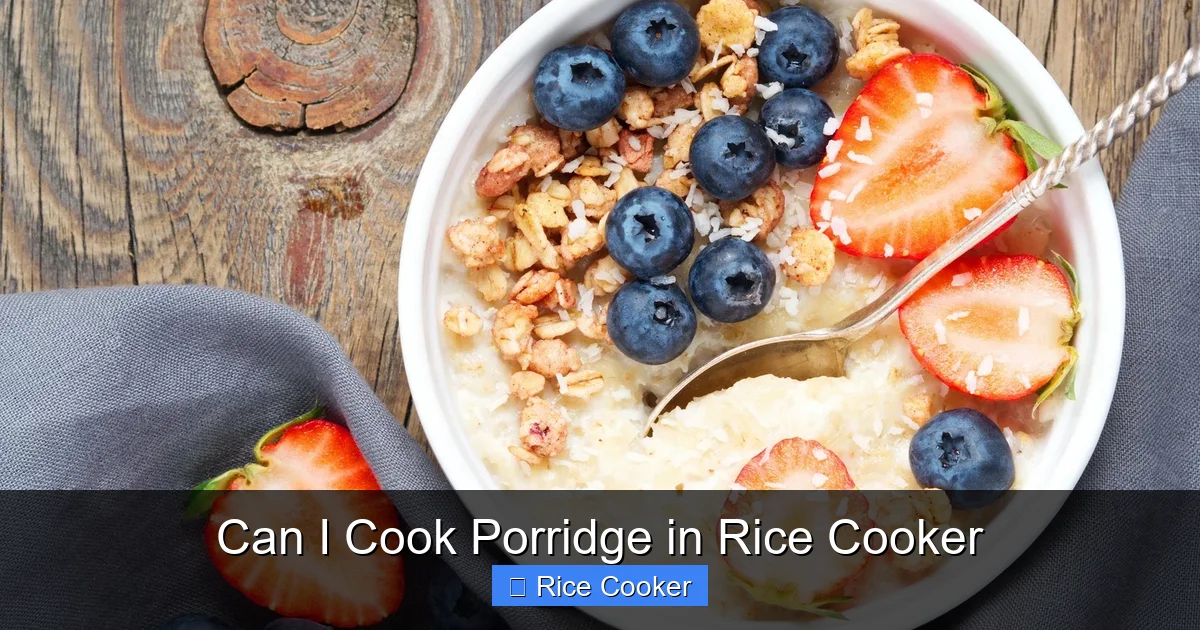
Absolutely! You can easily make delicious, creamy porridge using your rice cooker—no stovetop required. With the right ratio of liquid to oats and a few simple steps, your rice cooker does all the work, saving time and effort. Whether you’re making classic oatmeal or experimenting with quinoa or millet, this method delivers consistent, comforting results every time.
Key Takeaways
- Yes, it works: Your rice cooker is perfect for cooking porridge—just add oats, water or milk, and a pinch of salt.
- No stirring needed: Unlike stovetop porridge, rice cookers use automated settings that eliminate constant attention.
- Customizable: Swap oats for quinoa, barley, or even steel-cut oats depending on texture and flavor preferences.
- Healthy and nutritious: Porridge made in a rice cooker retains fiber, vitamins, and minerals without added fats.
- Time-saving: Set it and forget it—ideal for busy mornings or meal prep.
- Consistent results: The sealed environment ensures even cooking and creamy consistency.
- Easy cleanup: Most rice cooker pots are non-stick and dishwasher-safe, making cleanup a breeze.
Key Takeaways
- Understanding can i cook porridge in rice cooker: Provides essential knowledge
📑 Table of Contents
- Can I Cook Porridge in Rice Cooker? Absolutely—Here’s How!
- Why Use a Rice Cooker for Porridge?
- Basic Porridge Recipe for Rice Cooker
- Can You Use Different Types of Grains?
- Tips for Perfect Porridge in a Rice Cooker
- Customizing Your Porridge
- Troubleshooting Common Issues
- Can You Make Overnight Porridge in a Rice Cooker?
- Is Rice Cooker Porridge Healthier Than Stovetop?
- Cleaning and Maintenance Tips
- Final Thoughts: Why You Should Try It Today
Can I Cook Porridge in Rice Cooker? Absolutely—Here’s How!
There’s something deeply satisfying about waking up to the warm, comforting aroma of porridge simmering on the stove. But what if you could get the same cozy result without standing over the pot, stirring constantly? Enter the humble rice cooker—your new best friend for breakfast (and beyond). Yes, you read that right: you absolutely can cook porridge in a rice cooker, and it might just become your go-to method.
Unlike traditional porridge, which requires constant monitoring to prevent sticking or scorching, a rice cooker automates the process. Just add your ingredients, press a button, and let science do the rest. Whether you’re using rolled oats, steel-cut oats, or even alternative grains like quinoa or buckwheat, the rice cooker delivers consistent, creamy results with minimal effort.
In this guide, we’ll walk you through everything you need to know about making porridge in a rice cooker—from basic techniques to creative recipe ideas, troubleshooting tips, and even how to customize your porridge for dietary needs. By the end, you’ll be convinced that your rice cooker isn’t just for rice anymore.
Why Use a Rice Cooker for Porridge?

Visual guide about Can I Cook Porridge in Rice Cooker
Image source: choiyen.com
You might wonder: why bother making porridge in a rice cooker when a pot works just fine? The answer lies in convenience, consistency, and control. Let’s break down the advantages.
1. Hands-Free Cooking
One of the biggest perks of using a rice cooker is that you don’t have to stand by the stove. Once you add your ingredients, you can walk away. The rice cooker handles the heating, timing, and automatic shut-off. This is especially helpful during busy mornings when every minute counts.
2. Even Heat Distribution
Rice cookers use a heating element at the base that provides uniform heat. Unlike gas or electric burners, which can create hot spots, the rice cooker’s design ensures your porridge cooks evenly from bottom to top. This reduces the risk of burnt patches or undercooked grains.
3. Perfect Texture Every Time
The sealed environment and controlled cooking cycle help maintain the ideal moisture level. This leads to a creamy, tender texture that’s hard to achieve on the stovetop—especially with thick grains like steel-cut oats.
4. Energy Efficiency
Rice cookers use less energy than keeping a pot on the stove for long periods. Plus, they often switch to “warm” mode automatically once cooking is complete, so your porridge stays hot without overcooking.
5. Easy Cleanup
Most modern rice cookers come with non-stick inner pots that are dishwasher-safe. No more scrubbing stuck-on porridge off the bottom of a heavy pot.
Basic Porridge Recipe for Rice Cooker
Ready to try it? Here’s a simple, foolproof recipe for classic oat porridge using your rice cooker. This serves one person but can easily be doubled or tripled for a family.
Ingredients
– ½ cup rolled oats (not instant)
– 1 cup water or milk (dairy or plant-based)
– Pinch of salt
– Optional: 1 tbsp honey, maple syrup, or brown sugar
– Optional toppings: fresh fruit, nuts, seeds, cinnamon
Instructions
- Rinse the oats under cold water to remove excess starch (this helps reduce stickiness).
- Add oats, water (or milk), and salt to the inner pot of your rice cooker.
- Close the lid and select the “Porridge” or “Oatmeal” setting if available. If not, use the “White Rice” setting.
- Cook for about 20–25 minutes. Once done, let it sit for 5 minutes before opening the lid—this allows the porridge to thicken slightly.
- Stir gently, then add sweetener and toppings as desired.
Pro Tip:
For extra creaminess, use a 1:2 ratio of oats to liquid (e.g., ¼ cup oats to ½ cup liquid). For a thinner porridge, increase the liquid.
Can You Use Different Types of Grains?
While oats are the most common grain used for porridge, many others work beautifully in a rice cooker. Here are some popular alternatives:
Steel-Cut Oats
These take longer to cook than rolled oats—usually 30–40 minutes—but yield a chewier, more nutritious texture. Because they’re denser, you may need to add a bit more liquid and stir occasionally during the last few minutes.
Rolled Oats (Old-Fashioned)
The gold standard for porridge. They absorb liquid well and cook quickly, usually in 20–25 minutes. They’re also the easiest to digest.
Quinoa
Cooked quinoa makes a protein-rich, fluffy porridge. Use a 1:2.5 ratio (1 part quinoa to 2.5 parts liquid) and rinse thoroughly before cooking. Cook for 15–18 minutes.
Millet
A gluten-free grain with a mild, slightly sweet flavor. Cook for 20–25 minutes with a 1:2.5 ratio. Millet tends to be more absorbent, so keep an eye on it toward the end.
Buckwheat (Despite the name, it’s not related to wheat)
Rich in antioxidants and gives porridge a nutty taste. Use a 1:2 ratio and cook for 20–25 minutes. Rinse well before adding to the cooker.
Couscous or Farro
These work well too, though they require longer soaking or pre-cooking. Farro, in particular, benefits from a soak overnight to speed up cooking time.
Tips for Perfect Porridge in a Rice Cooker
Even with the right recipe, there are a few tricks to ensure your porridge turns out creamy, not lumpy or dry.
1. Rinse Your Grains
Many whole grains contain natural enzymes or starches that can make them stickier. Rinsing removes surface starch and helps prevent clumping.
2. Don’t Overfill the Pot
Never fill the inner pot more than halfway. Overfilling can cause overflow or uneven cooking. A good rule: leave at least 1 inch of space above the liquid.
3. Adjust Liquid Ratios
Different grains absorb liquid differently. Start with a 1:2 ratio (grain to liquid) and adjust based on preference. Thicker porridge = less liquid; thinner = more.
4. Stir Once at the End
After the rice cooker switches to “warm,” open the lid and give your porridge a gentle stir. This redistributes any settled grains and improves texture.
5. Use Milk for Creaminess
Substituting half or all of the water with milk (dairy or fortified plant-based) adds richness and flavor. For extra indulgence, try coconut milk or almond milk.
6. Add Sweeteners Last
Honey, maple syrup, or sugar can lose potency when exposed to high heat for too long. Add them after cooking to preserve flavor and nutrients.
7. Experiment with Flavorings
Try adding a pinch of cinnamon, vanilla extract, or even a dash of nutmeg during cooking. These enhance flavor without overwhelming the natural taste of the grain.
Customizing Your Porridge
One of the best things about porridge is its versatility. You can make it sweet, savory, spicy, or even dessert-style—all in the same rice cooker.
Sweet Porridge Ideas
– Banana-Oat Porridge: Mash a ripe banana into the cooked porridge and swirl in some peanut butter.
– Berry Compote Topping: Simmer fresh or frozen berries with a bit of honey and lemon juice, then spoon over warm porridge.
– Chocolate Chip Oatmeal: Stir in a few dark chocolate chips after cooking for a decadent treat.
Savory Porridge Options
– Lentil & Vegetable Porridge: Cook red lentils with diced carrots, celery, onion, and turmeric. Season with cumin and serve with a drizzle of olive oil.
– Cheese & Herb Porridge: Stir in grated cheddar, chives, and a sprinkle of black pepper after cooking.
– Miso-Glazed Tofu with Quinoa Porridge: Combine cooked quinoa with silken tofu, miso paste, and sesame oil for a Japanese-inspired bowl.
Dessert Porridge Recipes
– Coconut Chia Porridge: Mix chia seeds into coconut milk and let it sit overnight. In the morning, cook in the rice cooker for 15–20 minutes.
– Pumpkin Spice Oatmeal: Blend canned pumpkin with oats, cinnamon, nutmeg, and a splash of almond milk. Cook until thick and creamy.
– Date-Sweetened Brown Rice Porridge: Cook brown rice with dates, cardamom, and a touch of ghee for a Middle Eastern twist.
Troubleshooting Common Issues
Even with the best technique, you might run into a few hiccups. Here’s how to fix them.
Problem: Porridge is Too Watery
This usually means you didn’t use enough grain or didn’t cook long enough. Next time, reduce the liquid by 10–20% or extend cooking time by 5 minutes.
Problem: Porridge is Too Thick or Sticky
You likely used too much liquid or didn’t rinse the grains. Try reducing the amount of water next time or rinsing thoroughly before cooking.
Problem: Uneven Cooking (Some Parts Dry, Others Wet)
This can happen if the inner pot isn’t seated properly or if you overfilled it. Make sure the pot is fully inserted and doesn’t exceed ½ full.
Problem: Burnt Smell or Taste
This suggests the bottom layer is overheating. Always use a non-stick pot, avoid metal utensils inside, and ensure proper liquid levels.
Problem: Grains Are Undercooked
Some grains, like steel-cut oats, need longer cooking. Consider pre-soaking them for 30 minutes before adding to the cooker.
Can You Make Overnight Porridge in a Rice Cooker?
Yes! Overnight oats are a popular trend, and you can adapt that concept for other grains using your rice cooker. Here’s how:
The Method
Combine your chosen grain (e.g., rolled oats, quinoa, or millet) with liquid (milk or water) and a pinch of salt in a jar or container. Seal it and place it in the refrigerator overnight. The next morning, transfer the mixture to the rice cooker and cook on the “porridge” setting for 15–20 minutes.
Benefits
– Saves time in the morning
– Allows flavors to meld overnight
– Great for meal prep
Tip:
If you’re using raw grains like quinoa or millet, rinse them first to remove bitterness or enzyme inhibitors.
Is Rice Cooker Porridge Healthier Than Stovetop?
Nutritionally, there’s no significant difference between porridge cooked in a rice cooker versus on the stove. Both methods retain fiber, protein, and essential vitamins. However, the rice cooker offers some indirect health benefits:
– Less added fat: No need to stir in butter or oil.
– Portion control: Easier to measure ingredients precisely.
– Fewer calories from additives: You can focus on whole ingredients like fruits, nuts, and seeds.
That said, the healthiest porridge is made with minimal processing—choose whole grains, natural sweeteners, and nutrient-dense toppings.
Cleaning and Maintenance Tips
Keeping your rice cooker in top shape extends its life and ensures safe, hygienic cooking.
Daily Cleaning
– Unplug the unit before cleaning.
– Remove the inner pot and wash with warm, soapy water.
– Wipe the exterior and lid with a damp cloth.
– Avoid submerging the base or cord in water.
Deep Cleaning
– Once a week, clean the heating plate and steam vent with a soft brush or toothbrush.
– Check the gasket (rubber seal) for food residue and replace if worn out.
Storage
– Store the rice cooker with the lid slightly ajar to prevent mold.
– Keep in a cool, dry place.
Final Thoughts: Why You Should Try It Today
Making porridge in a rice cooker isn’t just a clever kitchen hack—it’s a lifestyle upgrade. It saves time, reduces stress, and lets you enjoy a warm, nourishing breakfast without babysitting the stove. Whether you’re a busy parent, a student, or someone who loves slow mornings, this method fits every schedule.
From classic oatmeal to exotic grain bowls, the possibilities are endless. And the best part? It’s simple, affordable, and uses equipment you already own.
So go ahead—grab your rice cooker, toss in some oats and milk, and press play. Your future self will thank you.
Frequently Asked Questions
Can I use instant oats in my rice cooker?
Yes, but rolled or steel-cut oats are preferred because they absorb liquid better and provide a creamier texture. Instant oats can become mushy if overcooked.
How long does it take to cook porridge in a rice cooker?
It typically takes 20–40 minutes depending on the grain. Rolled oats usually take 20–25 minutes, while steel-cut oats may need 30–40 minutes.
Do I need a special setting for porridge?
Not necessarily. Many rice cookers have a “Porridge” or “Oatmeal” setting. If yours doesn’t, the “White Rice” setting works well for most porridge recipes.
Can I make large batches in advance?
Absolutely. Cook extra porridge and store it in the fridge for up to 5 days. Reheat in the microwave or on the stovetop with a splash of milk.
Is it okay to add fruits or nuts during cooking?
It’s best to add delicate ingredients like bananas or berries after cooking. Nuts can be stirred in at the end to preserve crunch.
Can I use a rice cooker for savory porridge?
Yes! Lentil, vegetable, or cheese-based porridges work great. Just follow the same cooking method and adjust seasonings to taste.