
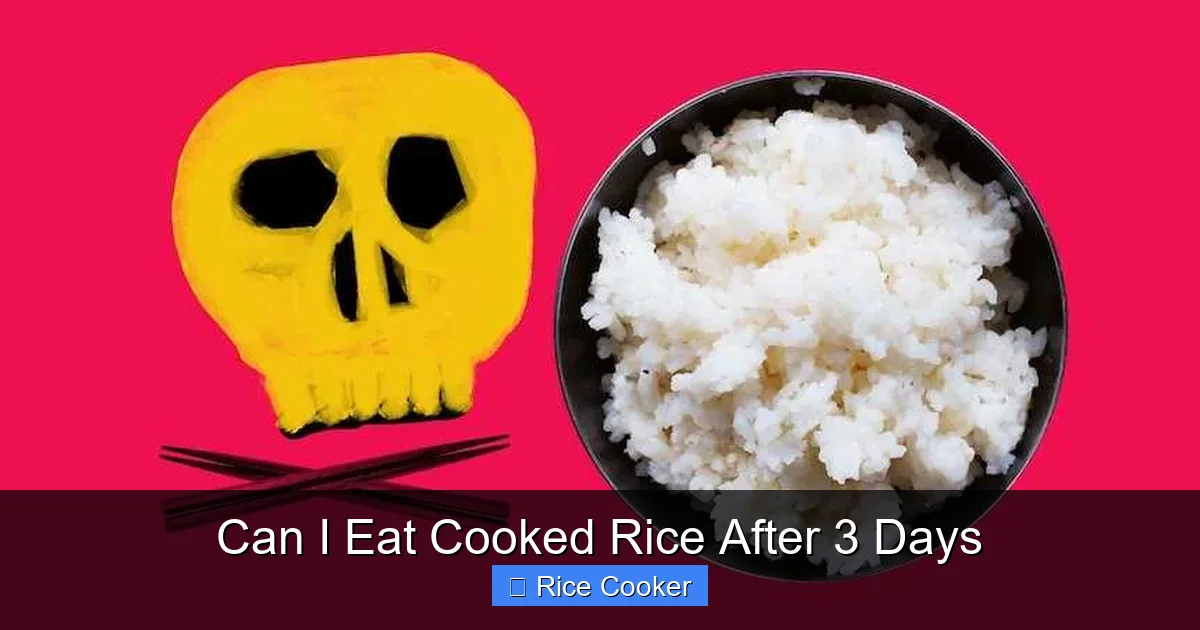
Can you eat cooked rice after 3 days? While it’s technically possible if stored properly, the risk of bacterial growth increases over time. To stay safe, always refrigerate within 2 hours of cooking, store in airtight containers, and consume within 3–4 days for best quality and safety.
Key Takeaways
- Rice can be eaten after 3 days, but only if stored correctly in the refrigerator.
- Bacillus cereus spores may survive cooking and grow into toxins when rice is left at room temperature.
- Proper storage—cooling quickly and using airtight containers—is key to preventing spoilage.
- Reheating rice to 165°F (74°C) kills bacteria, but doesn’t neutralize pre-formed toxins.
- Signs of spoiled rice include off smells, slimy texture, or unusual colors—discard immediately.
- Freezing extends shelf life; frozen rice lasts up to 1 month safely.
- Plain white rice is safer than seasoned rice due to lower moisture and added ingredients.
📑 Table of Contents
- Can You Eat Cooked Rice After 3 Days? A Complete Guide
- The Science Behind Rice Spoilage
- The First 72 Hours: What Happens in the Fridge?
- Safe Storage Practices: How to Keep Your Rice Fresh
- Signs That Your Rice Has Gone Bad
- Can You Reheat Rice Safely?
- Freezing Rice: A Game-Changer for Storage
- Seasoned vs. Plain Rice: Which Is Safer?
- Special Considerations for Vulnerable Populations
- What If You Get Sick After Eating Old Rice?
- Prevention Is Better Than Cure
- Conclusion: Enjoy Your Rice—Safely
Can You Eat Cooked Rice After 3 Days? A Complete Guide
If you’ve ever opened the fridge on a lazy Sunday morning and spotted that leftover bowl of jasmine rice from dinner three nights ago, you might wonder: “Can I eat cooked rice after 3 days?” It’s a common question—especially for busy households or college students living on minimal kitchen supplies. After all, rice is cheap, filling, and incredibly versatile. But food safety isn’t something to take lightly, especially when it comes to something as seemingly harmless as a bowl of leftover grains.
In this article, we’ll dive deep into the science behind rice storage, the risks of eating old rice, and practical tips to keep your meals both tasty and safe. Whether you’re using a rice cooker every night or just making extra for lunch prep, understanding how long cooked rice lasts—and how to tell if it’s gone bad—can save you from stomach troubles and wasted food.
The Science Behind Rice Spoilage
Why Rice Is Different From Other Leftovers
Unlike meat or vegetables, which spoil quickly due to high moisture and nutrient content, dry rice seems like an unlikely candidate for rapid decay. But here’s the twist: cooked rice contains moisture, and moisture invites bacteria. Specifically, the culprit is a bacterium called Bacillus cereus. This spore-forming bacteria is naturally present in soil and can contaminate uncooked rice. When rice is cooked, the heat kills most bacteria—but not the spores.
Visual guide about Can I Eat Cooked Rice After 3 Days
Image source: petshun.com
Here’s where things get tricky: if cooked rice is left at room temperature—even for just a few hours—the spores can reactivate, multiply, and produce toxins that cause food poisoning. These toxins are heat-stable, meaning reheating won’t destroy them. So even if your rice looks and smells fine, eating it could still make you sick.
How Long Does Cooked Rice Last?
The general rule of thumb from food safety experts like the USDA and FDA is that cooked rice should be eaten within 3 to 4 days when refrigerated properly. That means if you cooked rice on Monday, the latest you should eat it is Thursday or Friday. Beyond that, the risk of contamination rises significantly.
But what exactly happens during those critical first three days?
The First 72 Hours: What Happens in the Fridge?
Day 1: The Safe Zone
On day one, your rice is at its freshest. If you stored it in an airtight container and refrigerated it within two hours of cooking, it’s still safe to eat. At this stage, bacteria haven’t had time to multiply significantly. The texture remains fluffy, and the flavor is unchanged.
For maximum safety, cool the rice quickly before storing. Try spreading it out in shallow containers or dividing it into smaller portions. This helps it lose heat faster and enter the danger zone (between 40°F and 140°F) more slowly—a critical step in preventing bacterial growth.
Day 2: Watch the Signs
By day two, some bacteria may have started to grow, but they’re usually not enough to cause illness—yet. However, this is the last day to enjoy your rice with confidence. Still, pay attention to subtle changes. Does it smell slightly off? Is there a faint sourness? Even minor deviations from freshness can indicate early spoilage.
If you notice any of these signs, it’s better to err on the side of caution. Trust your senses—smell, sight, and touch are powerful tools in food safety.
Day 3: The Tipping Point
This is where the line gets blurry. Technically, rice stored properly can still be safe after three days. But the longer it sits, the higher the risk. By day three, Bacillus cereus colonies may have reached levels that increase the chance of toxin production, especially if the rice was exposed to fluctuating temperatures or improper storage.
That’s why many health professionals recommend eating rice within 3 days—not because it’s definitely spoiled, but because it’s the safest upper limit based on current research.
Safe Storage Practices: How to Keep Your Rice Fresh
Cool It Fast
One of the most important steps in preserving cooked rice is rapid cooling. Bacteria multiply rapidly between 40°F and 140°F, known as the “danger zone.” If your rice sits at room temperature for more than two hours (or one hour if it’s above 90°F), you’re rolling the dice with foodborne illness.
To cool quickly:
- Transfer rice to shallow pans or divide into small portions.
- Place containers directly into an ice bath or cold water.
- Avoid leaving large clumps uncovered, as they cool slowly and retain heat.
Use Airtight Containers
Plastic wrap or foil can trap moisture and create condensation, which encourages mold and bacterial growth. Instead, use glass or BPA-free plastic containers with tight-fitting lids. These prevent odors from seeping in and keep your rice fresh longer.
Label your containers with the date so you know exactly when it was made. This simple habit helps prevent confusion later when you’re deciding whether to eat or toss something.
Refrigerate Promptly
Once cooled, move the rice to the refrigerator immediately. The ideal temperature is below 40°F. Avoid placing hot rice directly in the fridge—it raises the internal temperature and affects other foods nearby.
If you’re using a rice cooker, most models have a “keep warm” setting, but don’t rely on it for long periods. That setting keeps rice around 140°F, which is within the danger zone. Use it only briefly, then transfer to the fridge.
Signs That Your Rice Has Gone Bad
Visual Clues
Fresh cooked rice should look soft, moist, and uniform in color. If you see:
- White patches or discoloration (yellowish or grayish spots)
- Mold growing on the surface
- A sticky or clumpy texture
…it’s time to throw it out.
Odor Warnings
Spoiled rice often develops an off-putting smell. Fresh rice has a mild, slightly nutty aroma. If it smells sour, ammonia-like, or just “off,” don’t risk it. Even if you can’t pinpoint the exact odor, trust your instincts—your body will let you know soon enough.
Texture Changes
Over time, rice can become slimy or overly soft. This is a red flag. Fresh rice should be firm but tender. If it feels mushy or glue-like, it’s likely contaminated.
Can You Reheat Rice Safely?
Yes—But With Caution
Reheating rice can kill bacteria, but again, it won’t eliminate toxins produced by Bacillus cereus. So while reheating makes the rice safer to eat, it doesn’t guarantee it’s toxin-free.
To reheat properly:
- Microwave in short intervals (30 seconds), stirring between each.
- Ensure the center reaches 165°F (74°C). Use a food thermometer if possible.
- Steam or fry in a pan with a bit of water and oil for even heating.
Never reheat rice more than once. Each time you heat and cool it, the risk of bacterial growth increases.
Freezing Rice: A Game-Changer for Storage
How to Freeze Cooked Rice
Want to extend the life of your rice beyond three days? Freezing is your best bet. Properly frozen rice can last up to one month—sometimes even longer—without losing much quality.
Steps:
- Portion rice into freezer-safe bags or containers.
- Remove as much air as possible to prevent freezer burn.
- Label with the date.
- Store in the freezer at 0°F or below.
Thawing Tips
When ready to use, thaw rice overnight in the refrigerator or quickly in a bowl of cold water. Avoid thawing at room temperature. Once thawed, treat it like fresh rice—eat it within 3–4 days.
Reheating frozen rice works the same way as regular leftover rice: heat thoroughly until steaming.
Seasoned vs. Plain Rice: Which Is Safer?
You might assume that plain boiled rice is the safest option. And you’d be right—up to a point. But even plain rice carries risks if mishandled. However, seasoned rice (like fried rice with eggs, soy sauce, or veggies) introduces additional variables:
- Added moisture from sauces or vegetables increases bacterial growth potential.
- Eggs and dairy products can spoil faster, raising overall risk.
- Cooking methods matter: stir-fried rice is typically cooked hotter and faster, which may reduce bacterial load compared to simmered dishes.
Still, the core rule applies: seasoned rice should also be refrigerated within 2 hours and eaten within 3 days.
Special Considerations for Vulnerable Populations
Some people are more susceptible to food poisoning than others. Infants, young children, pregnant women, older adults, and those with weakened immune systems should avoid eating rice older than 2 days, even if it looks fine. For them, the margin for error is smaller.
If you’re serving rice to someone in a high-risk group—like an elderly relative or a newborn—consider freezing portions right after cooking to minimize exposure.
What If You Get Sick After Eating Old Rice?
Symptoms of rice-related food poisoning usually appear within 6 to 15 hours after eating contaminated rice. Common signs include:
- Nausea
- Vomiting
- Abdominal cramps
- Diarrhea (sometimes watery, sometimes with blood)
If symptoms are mild, rest and hydration usually do the trick. But if you experience severe vomiting, high fever, or signs of dehydration (dry mouth, dizziness, reduced urination), seek medical attention immediately.
Prevention Is Better Than Cure
The best way to avoid rice-related illness is prevention. Here’s a quick checklist:
- Cook rice properly—use a food thermometer if needed.
- Cool and refrigerate within 2 hours.
- Store in clean, airtight containers.
- Eat within 3 days (or freeze for longer storage).
- Trust your senses—if it looks, smells, or feels wrong, don’t eat it.
Conclusion: Enjoy Your Rice—Safely
So, back to the original question: can you eat cooked rice after 3 days? Yes, you can—but only if it was stored properly from the start. The key lies in speed (refrigerating fast), containment (airtight storage), and awareness (knowing the signs of spoilage). While rice is a pantry staple for good reason, it demands respect when it comes to food safety.
Whether you’re using a rice cooker every night or meal-prepping for the week, keeping these guidelines in mind will help you enjoy your favorite grains without worry. Remember: when in doubt, throw it out. Your stomach will thank you.
Frequently Asked Questions
Is it safe to eat rice that’s been sitting out overnight?
No, cooked rice left at room temperature for more than 2 hours—especially above 90°F—can harbor Bacillus cereus spores that produce harmful toxins. Always refrigerate promptly.
Can I reheat rice multiple times?
It’s not recommended. Each reheating cycle increases the risk of bacterial contamination. Reheat only once, and ensure it reaches 165°F throughout.
Does cooking method affect how long rice lasts?
Yes. Stir-fried or fried rice tends to last slightly longer than boiled rice because higher cooking temperatures reduce initial bacterial load. Still, follow the same storage rules.
Can I eat rice that smells a little off?
No. Any unusual odor is a warning sign. Trust your nose—spoiled rice often emits sour or foul smells even before visible mold appears.
How do I know if rice is spoiled?
Look for discoloration, slimy texture, mold, or off odors. If any of these are present, discard the rice immediately—don’t taste test.
Can freezing ruin the taste of rice?
Freezing can slightly alter texture, making rice firmer upon thawing. However, with proper portioning and storage, most people find it still delicious when reheated correctly.