
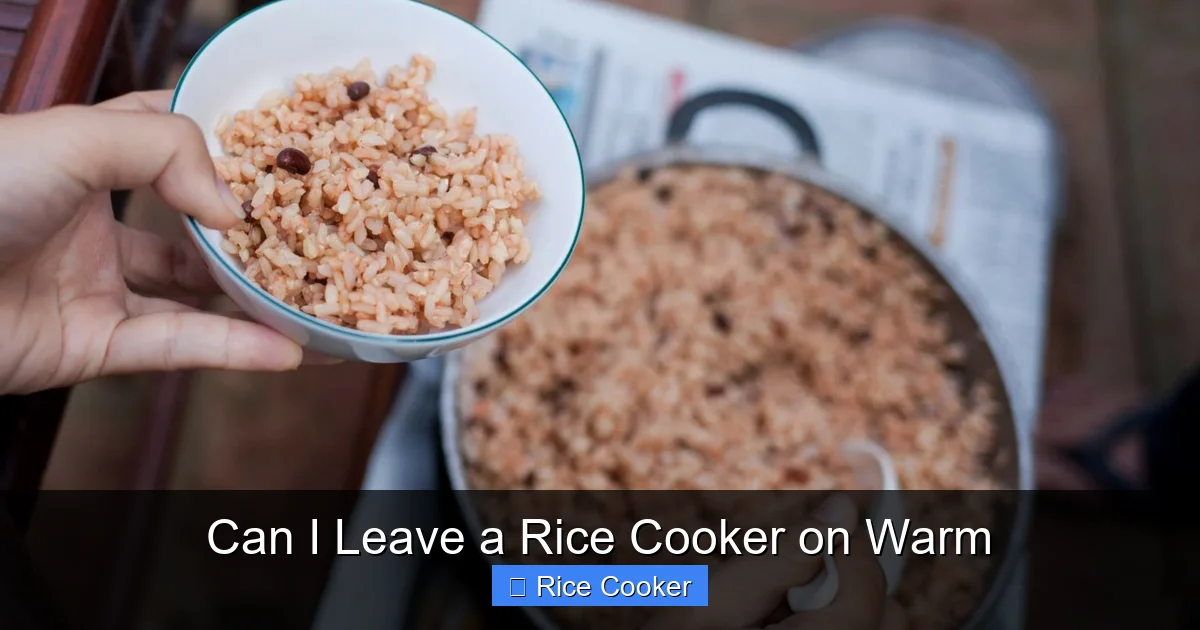
Yes, you can usually leave a rice cooker on the “warm” setting for several hours without harming the unit. Most modern rice cookers automatically switch to this mode after cooking and are designed to keep food at a safe temperature. However, leaving rice on warm for too long—especially in hot climates—can promote bacterial growth. To stay safe and preserve quality, follow manufacturer guidelines and avoid leaving rice on warm overnight unless your model is specifically rated for extended warming cycles.
Key Takeaways
- Understanding can i leave a rice cooker on warm: Provides essential knowledge
📑 Table of Contents
- Introduction: Your Rice Cooker’s Secret Feature
- How Does the “Warm” Setting Work?
- How Long Can You Safely Leave Rice Cooker on Warm?
- Is It Safe to Leave the Rice Cooker Unattended?
- Best Practices for Using the “Warm” Setting
- Common Misconceptions About Rice Cooker Safety
- What to Do If Something Goes Wrong
- Conclusion: Smart Use Makes All the Difference
Introduction: Your Rice Cooker’s Secret Feature
If you’ve ever wondered whether you can leave a rice cooker on warm, you’re not alone. Many home cooks rely on their rice cookers for convenience—cooking a perfect batch of jasmine rice or fluffy quinoa in under 30 minutes—and then leave it plugged in to keep dinner ready for hours. But is that really safe?
Modern rice cookers are smart appliances. They don’t just boil water and hope for the best. Instead, they use precise temperature controls, sensors, and automatic shut-offs to deliver consistent results every time. One of their most useful features is the “warm” function, which kicks in once the rice is fully cooked. It maintains a steady, low heat to keep your meal at serving temperature without overcooking or drying out the grains.
In this article, we’ll explore everything you need to know about leaving your rice cooker on warm—how long it’s safe, what risks to watch for, and how to use this feature responsibly. Whether you’re meal-prepping for the week or feeding a large family, understanding your rice cooker’s capabilities will help you make smarter, safer choices in the kitchen.
How Does the “Warm” Setting Work?
The Science Behind Warming
When you turn off a rice cooker, it doesn’t just stop heating immediately. Instead, it enters a phase called “keep-warm.” This mode activates after the cooking cycle completes and the internal sensor detects that the rice has reached the desired texture and temperature. At this point, the heating element turns off, but the warming plate beneath the inner pot stays active at a lower wattage.
Visual guide about Can I Leave a Rice Cooker on Warm
Image source: cleverkitchengear.com
This low-level heat keeps the rice between 160°F and 170°F (71°C to 77°C)—well above the danger zone, which is the temperature range where bacteria like Bacillus cereus (the culprit behind food poisoning from rice) thrive. Because of this, many experts consider the “warm” function a safety net, not a long-term storage solution.
What Happens Inside Your Rice Cooker?
Inside the unit, a thermostat monitors the temperature of the inner pot. Once cooking finishes, the thermostat signals the control board to switch from high-heat boiling to low-heat warming. The warming plate, located below the pot, gently maintains the temperature without reheating or drying out the rice.
Some advanced models even have dual heating elements or improved insulation to reduce heat loss, meaning the rice stays warmer longer. These features are especially helpful if you’re using a larger capacity cooker or cooking multiple servings.
Why Do Some Models Stay Warmer Longer?
Rice cooker manufacturers vary in their engineering. A higher-end model might retain heat better due to thicker insulation or more efficient heating elements. Similarly, certain brands like Zojirushi, Cuckoo, or Panasonic often include enhanced keep-warm functions that last up to 24 hours.
If you’re unsure about your model’s capabilities, consult the user manual. Most manuals specify how long the “warm” mode is designed to operate continuously. If yours says “12 hours,” it’s likely built to handle that duration safely.
How Long Can You Safely Leave Rice Cooker on Warm?
The General Rule: 4 to 6 Hours
Most rice cookers are safe to leave on the “warm” setting for up to 4 to 6 hours. This is based on food safety guidelines from organizations like the USDA and FDA, which recommend that perishable foods should not be held in the danger zone (40°F–140°F) for more than two hours.
Since the “warm” setting keeps rice above 160°F, it technically avoids the danger zone. However, over time, moisture and starch in the rice can break down, and even small amounts of bacteria introduced earlier (like during handling or cooking) may begin to multiply—even at warm temperatures.
What About Overnight?
Leaving rice on warm overnight is not recommended unless your rice cooker is specifically labeled for 24-hour keep-warm functionality. Even then, the rice may dry out, become sticky, or lose flavor. Plus, prolonged exposure to warmth can accelerate oxidation and nutrient loss.
If you must store rice overnight, the safest method is to transfer it to an airtight container and refrigerate it within two hours of cooking. Reheat thoroughly before eating.
Climate Considerations
Your environment plays a role too. In hot, humid climates, bacteria grow faster. If your kitchen is already warm, leaving rice on warm for more than 4 hours increases risk. Conversely, in cooler rooms, you might get away with slightly longer times—but never exceed 6 hours as a general rule.
Is It Safe to Leave the Rice Cooker Unattended?
Short-Term Use: Yes, Generally Safe
For short periods—say, 2 to 4 hours while hosting guests or running errands—it’s perfectly safe to leave your rice cooker on warm. The appliance won’t overheat or cause a fire because it’s designed to monitor its own temperature.
Long-Term Use: Proceed with Caution
While rare, issues can arise if something goes wrong. For example, if the thermostat fails or the heating element malfunctions, the rice could cool into the danger zone. Or, if the inner pot isn’t properly seated, uneven heating might occur.
To minimize risk:
– Never cover the rice cooker with a lid or towel—this traps steam and raises internal humidity.
– Avoid opening the lid frequently, as each opening releases heat and allows cool air in.
– Ensure the area around the rice cooker is well-ventilated and away from flammable materials.
Fire Safety Tips
Rice cookers are generally safe, but electrical issues can happen. Always plug directly into a wall outlet—not a power strip—and avoid using extension cords. If you smell burning or see smoke, unplug immediately and contact customer support.
Best Practices for Using the “Warm” Setting
1. Follow the Manufacturer’s Guidelines
Each model has different specs. A cheap basic rice cooker might only support 12 hours of warming, while a premium one could handle 24. Check your manual for exact details. If you’ve lost it, search online using your model number.
2. Don’t Overfill the Pot
Cooking too much rice means more mass to keep warm, which can strain the heating system. Stick to reasonable portions—about 2–4 cups of uncooked rice for standard models.
3. Stir Occasionally (Gently)
If you notice rice sticking to the bottom or forming a crust, give it a gentle stir with a non-metallic utensil. This redistributes heat and prevents scorching. But avoid frequent stirring, as it introduces cold air.
4. Keep It Clean
Dirt, oil, or residue on the warming plate can insulate heat and reduce efficiency. Wipe the exterior and clean the inner pot regularly. Some models have removable warming plates for easier cleaning.
5. Use Rice Cookers with Timer Functions Wisely
If your rice cooker has a delay timer, set it to finish cooking just before you plan to serve. This way, the rice spends less time on warm mode overall.
Common Misconceptions About Rice Cooker Safety
Myth: “If It’s Plugged In, It’s Dangerous”
False. Modern appliances are engineered to shut off when needed. As long as your rice cooker is in good condition and used according to instructions, leaving it on warm poses minimal risk.
Myth: “You Must Turn Off the Warm Setting Immediately”
Not true. Many people unplug their rice cooker right after cooking, but this isn’t necessary. The warm setting uses very little power—often less than 10 watts—so energy waste is negligible.
Myth: “All Rice Cookers Are the Same”
Great point. Budget models lack advanced sensors, while high-end ones offer better temperature regulation and longer warm cycles. Always research before buying if you plan to rely heavily on the warm function.
What to Do If Something Goes Wrong
Signs of Trouble
– The rice is cold or lukewarm after several hours on warm
– Strange smells or smoke coming from the unit
– The heating plate feels unusually hot to the touch
– Error lights appear on the display
If you notice any of these, unplug the rice cooker immediately and inspect it. Do not attempt to use it until it’s been checked by a professional.
Preventive Maintenance
To keep your rice cooker performing safely:
– Clean the inner pot after each use
– Wipe the exterior with a damp cloth weekly
– Replace worn parts (like seals or heating elements) as needed
– Store in a dry place when not in use
Conclusion: Smart Use Makes All the Difference
So, can you leave a rice cooker on warm? Absolutely—for short periods, yes. For most households, keeping rice warm for 4 to 6 hours is safe and convenient. Just remember that the “warm” setting is meant to maintain, not store, your food indefinitely.
By following best practices—checking your model’s limits, avoiding overnight use, and keeping the appliance clean—you’ll enjoy both safety and convenience. And if you’re ever in doubt, it’s always smarter to transfer rice to the fridge rather than risk foodborne illness.
Your rice cooker is a trusty kitchen companion. Treat it right, and it’ll serve you well for years—whether you’re making sushi rice, pilaf, or just keeping dinner ready while you relax.
Frequently Asked Questions
Can I leave my rice cooker on warm all night?
It’s not recommended unless your model specifically supports 24-hour keep-warm. Otherwise, bacteria can grow, and the rice may dry out. Refrigerate within two hours instead.
Does leaving a rice cooker on warm use a lot of electricity?
No,<| The warm setting uses very little power—usually under 10 watts. It’s energy-efficient and safe for short periods.
Will rice cooker catch fire if left on warm?
Rarely. Modern rice cookers have safety features like auto shut-off and thermal fuses. Only use them according to instructions and avoid covering or overloading.
What temperature does a rice cooker stay on warm?
Typically between 160°F and 170°F (71°C–77°C), which is above the food danger zone and helps prevent bacterial growth.
Should I stir the rice while it’s on warm?
Gently stir once if you notice sticking or crusting. Frequent stirring introduces cold air and reduces warmth retention.
How do I know if my rice cooker is faulty?
Look for error lights, unusual smells, cold rice after hours on warm, or excessive heat. If anything seems off, unplug and inspect or contact support.