
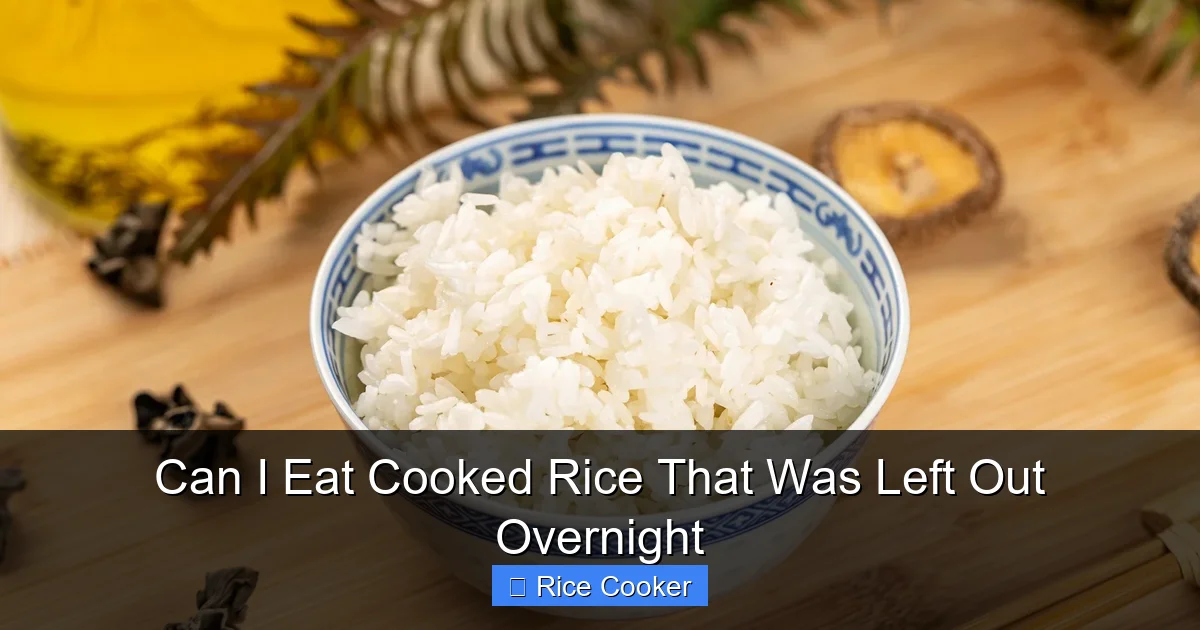
Eating cooked rice left out overnight isn’t always safe. Bacteria like Bacillus cereus can grow rapidly in room-temperature rice, especially if it’s not stored properly. When in doubt, throw it out—your health matters more than saving a meal.
# Can I Eat Cooked Rice That Was Left Out Overnight?
You’ve just finished a delicious dinner with a side of perfectly steamed rice. The leftovers are tempting—maybe you’re planning a quick lunch tomorrow or want to save time on prep. But what if you forgot to put the rice in the fridge before bed? Now it’s sitting on the counter overnight. Can you still eat it?
This is a question many of us have asked, especially after a busy day or when hosting guests. The short answer? It depends—but mostly, it’s better not to risk it. Let’s unpack why, how to tell if rice is safe, and what you can do to protect yourself from foodborne illness.
## Why Rice Is a Breeding Ground for Bacteria
Rice is unique among grains because it contains spores of *Bacillus cereus*, a type of bacteria commonly found in soil. When rice is harvested and processed, these spores survive even after cooking. While cooking kills the active bacteria, those resilient spores remain dormant.
Here’s the catch: if warm, cooked rice is left at room temperature, those spores can wake up, multiply, and start producing toxins. These toxins are heat-resistant, meaning they won’t be destroyed by reheating—even if you boil the rice again. That’s why simply reheating rice that sat out all night doesn’t guarantee safety.
### How Long Is Too Long?
The U.S. Department of Agriculture (USDA) recommends that perishable foods, including cooked rice, should not be left in the “danger zone”—between 40°F (4°C) and 140°F (60°C)—for more than two hours. After that window, bacteria multiply rapidly. If you’re in a hot environment (above 90°F/32°C), the safe time drops to just one hour.
So if your rice sat on the counter from 6 PM to 8 AM, that’s 14 hours in the danger zone. Even if it looks fine, it might not be safe.
## Signs Your Rice Might Be Unsafe
Sometimes, food poisoning symptoms aren’t immediate, and you might not notice anything off about the taste or smell. However, there are a few warning signs to watch for:
– **Texture changes:** Sticky, mushy, or unusually slimy rice could indicate bacterial growth.
– **Off odor:** A sour or rancid smell suggests spoilage.
– **Mold growth:** Visible mold means the rice should be discarded immediately.
– **Color shift:** Discoloration or unusual spots are red flags.
But remember: *Bacillus cereus* toxins don’t always change the look or smell of rice. That’s why relying on appearance alone is risky.
## Safe Handling Practices for Cooked Rice
Prevention is always better than dealing with foodborne illness. Follow these best practices to keep your rice—and you—safe.
### 1. Cool Quickly, Refrigerate Promptly
After cooking, rice should cool rapidly before refrigeration. Pour it into shallow containers (no deeper than 2 inches) to speed up cooling. Cover loosely while it cools to prevent condensation, then refrigerate within one hour.
Avoid leaving rice in the pot or deep bowls where heat lingers and slows cooling.
### 2. Use Clean Utensils
Always use clean utensils when handling cooked rice. Avoid touching it with bare hands, especially if you’ve been handling raw ingredients like meat or eggs.
### 3. Label and Date Leftovers
Store your leftover rice in airtight containers and label them with the date. Most cooked rice stays good in the fridge for 3–4 days. Beyond that, even if it looks okay, it’s best to discard it.
### 4. Reheat Thoroughly
When eating leftover rice, always reheat it to at least 165°F (74°C). Stir it well during heating to ensure even temperature throughout. Microwave-safe containers with lids work well—just vent the lid slightly to allow steam to escape.
For stovetop reheating, add a splash of water to prevent drying out and stir frequently.
## What About Rice Cookers?
Many people love using rice cookers because they make perfect rice every time—no guesswork. But what happens if you leave rice in the cooker overnight?
Most modern rice cookers have a “warm” setting that keeps rice at around 140–160°F (60–71°C). While this seems safe, it actually keeps rice in the danger zone. The USDA warns against using the warm setting for more than 1–2 hours.
So if your rice cooker was left on “warm” overnight, the rice likely spent several hours in the danger zone. In that case, it’s safest to discard it—even if it smells fine.
### Tips for Using Your Rice Cooker Safely
– **Unplug after cooking:** Turn off and unplug the rice cooker once the cycle ends.
– **Transfer to fridge promptly:** Move rice to the refrigerator within one hour.
– **Avoid long-term warming:** Use the warm function only for short periods.
## Freezing Rice: A Smart Option
If you often have too much rice, consider freezing it. Properly frozen rice can last up to six months without significant quality loss.
To freeze rice:
1. Cool it completely.
2. Portion into freezer-safe containers or bags.
3. Label with the date.
4. Freeze flat for easy stacking.
Thaw frozen rice in the refrigerator overnight or reheat directly from frozen—just add a little water to prevent dryness.
## Common Myths About Rice Safety
There are plenty of myths floating around about rice safety. Let’s clear them up.
### Myth: Boiling Rice Kills All Bacteria
False. As mentioned earlier, *Bacillus cereus* produces heat-stable toxins. Boiling may kill live bacteria, but it won’t destroy the toxins already present. That’s why reheating doesn’t guarantee safety if the rice was improperly stored.
### Myth: Vinegar or Lemon Juice Prevents Spoilage
Not necessarily. While acidic environments can slow bacterial growth, they don’t eliminate the risk of *Bacillus cereus* spores. Rinsing rice with vinegar won’t protect against toxin formation.
### Myth: Dry Rice Is Safer Than Wet Rice
Actually, moisture level doesn’t matter as much as temperature control. Both dry and wet rice can harbor bacteria if left in the danger zone.
## When to Seek Medical Attention
If you do eat rice that was left out overnight and experience symptoms like severe nausea, persistent vomiting, bloody diarrhea, or high fever, seek medical help. Foodborne illnesses can sometimes require treatment beyond rest and hydration.
Keep track of what you ate and when—this helps healthcare providers diagnose the issue faster.
## Cultural Perspectives on Rice Storage
In many Asian cultures, rice is consumed daily and often stored in ways that differ from Western practices. For example, some households keep small portions of rice at room temperature for immediate use. However, even in these contexts, rice is typically used within hours—not overnight.
Modern food safety guidelines apply universally, regardless of cultural habits. When in doubt, follow USDA recommendations.
## What If You’re Eating Out?
Restaurants handle rice differently. Some may store leftover rice in walk-in coolers, others might keep it warm on steam tables. While restaurants are regulated and inspected, mistakes can happen. If you suspect your restaurant served questionable rice, contact the establishment or report it to local health authorities.
## Final Thoughts: When in Doubt, Throw It Out
Cooked rice left out overnight is a common scenario, but it’s also a common source of foodborne illness. The risks outweigh the convenience of saving a meal.
Instead of guessing, follow the rule: if rice has been sitting out for more than two hours, discard it. Better safe than sorry—especially when it comes to your health.
Next time you cook rice, plan ahead. Portion it, cool it fast, and refrigerate promptly. With a little extra effort, you can enjoy safe, delicious leftovers without worry.
## Additional Tips for Rice Lovers
– **Batch cook wisely:** Cook only what you’ll realistically eat within 3–4 days.
– **Use rice in new recipes:** Turn cold rice into fried rice, rice salads, or rice pudding.
– **Invest in good containers:** Airtight, BPA-free containers make storage easy and safe.
By following these simple steps, you’ll keep your rice—and your family—healthy, happy, and free from unnecessary stress.
Key Takeaways
- Temperature danger zone: Rice left between 40°F (4°C) and 140°F (60°C) for over two hours becomes unsafe.
- Bacillus cereus risk: This bacteria thrives on starchy foods like rice and produces toxins that cause food poisoning.
- Proper cooling: Cool rice quickly in shallow containers to reduce bacterial growth.
- Refrigeration is key: Store leftover rice within one hour of cooking at or below 38°F (3°C).
- Reheating matters: Always reheat rice to an internal temperature of at least 165°F (74°C) to kill any potential bacteria.
- Symptoms to watch: Nausea, vomiting, diarrhea, or stomach cramps may indicate rice-related food poisoning.
- Freezing option: Freeze rice in portions for up to six months to extend shelf life safely.
Frequently Asked Questions
How long can cooked rice sit out at room temperature?
Cooked rice should not be left at room temperature for more than two hours, especially in temperatures above 90°F (32°C). After that, bacteria can multiply rapidly and produce toxins that reheating won’t destroy.
Can you get sick from eating rice left out overnight?
Yes, it’s possible. Bacillus cereus bacteria in rice can grow and produce heat-resistant toxins when rice is left in the danger zone (40°F–140°F). Symptoms include nausea, vomiting, diarrhea, and stomach cramps.
How do you know if rice has gone bad?
Signs include off odors, slimy texture, visible mold, or discoloration. However, toxins from Bacillus cereus may not alter taste or smell, so visual cues aren’t always reliable.
Is it safe to reheat rice that was left out?
Only if it was stored properly. Rice must be cooled, refrigerated within one hour, and reheated to at least 165°F (74°C). If it was left out overnight, it’s safest to discard it.
Can you freeze cooked rice?
Yes! Properly cooled and portioned rice can be frozen for up to six months. Thaw in the refrigerator or reheat directly from frozen, adding water if needed.
Should you rinse rice before cooking to remove bacteria?
Rinsing raw rice removes surface starch but doesn’t eliminate Bacillus cereus spores. Cooking kills bacteria, but spores remain. Rinsing doesn’t prevent food poisoning from leftovers.