
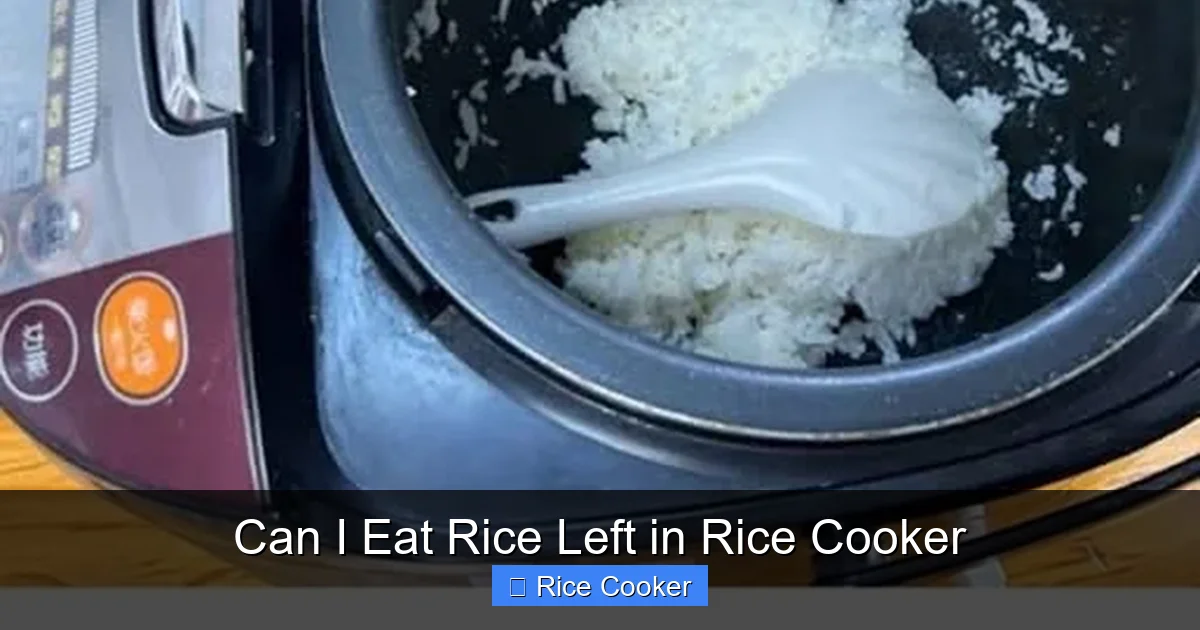
Can I eat rice left in my rice cooker? The short answer is yes, but only under the right conditions. If you leave cooked rice in a rice cooker after it’s done cooking and don’t turn it off, the built-in warming function may keep the rice at a temperature that prevents bacteria growth—but only for a limited time. However, if the rice has been sitting too long or improperly stored, it could become unsafe to eat. Always consider how long the rice has been in the cooker, whether the warming plate was on, and how you plan to store it afterward.
Key Takeaways
- Safety depends on timing: Rice left in a rice cooker for less than 2 hours at room temperature is generally safe to eat, especially if the warming function is active.
- Reheating is essential: Leftover rice should always be thoroughly reheated to at least 165°F (74°C) to kill any potential bacteria like Bacillus cereus.
- Proper storage matters: Transfer leftover rice from the rice cooker to an airtight container within 2 hours and refrigerate or freeze promptly.
- Rice cookers aren’t refrigerators: The warming plate keeps rice hot but doesn’t cool it down—leaving rice on “warm” for too long increases bacterial risk.
- Watch for spoilage signs: Discard rice if it smells off, feels slimy, or shows mold—even if it’s still warm.
- Cooking method affects safety: Basmati, jasmine, and other long-grain rice are more perishable than brown rice due to higher starch content.
- Freezing extends shelf life: Properly frozen rice can last up to 6 months, making it a great way to reduce waste.
📑 Table of Contents
- Can I Eat Rice Left in Rice Cooker?
- Understanding Rice Cooker Safety Features
- How Long Is Rice Safe in a Rice Cooker?
- Types of Rice and Their Shelf Life
- Signs That Rice Has Gone Bad
- Best Practices for Storing Rice Safely
- Common Myths About Rice and Safety
- Practical Tips for Everyday Use
- Conclusion: Enjoy Rice Safely, Every Time
Can I Eat Rice Left in Rice Cooker?
If you’ve ever come home late, started dinner early, or just forgotten about your perfectly cooked rice sitting in its pot, you’ve probably wondered: “Can I eat rice left in the rice cooker?” It’s a common question—and one with an important answer. The good news? Yes, you can eat rice left in your rice cooker—but only if certain conditions are met. Understanding how rice cookers work, how food safety applies to cooked grains, and what happens when you leave rice sitting can help you avoid stomach upset and enjoy your meal without worry.
Most modern rice cookers have a built-in warming function that kicks in automatically once the rice is fully cooked. This feature is designed to keep your rice warm for several hours, which sounds convenient—but convenience isn’t always synonymous with safety. While the warming plate may prevent the rice from cooling into the “danger zone” (the temperature range between 40°F and 140°F where bacteria multiply rapidly), it doesn’t eliminate the risk entirely if left too long. In fact, leaving cooked rice on the warming plate for more than 2–3 hours significantly increases the chance of bacterial growth, especially if the ambient temperature is warm.
This article will walk you through everything you need to know about eating rice left in a rice cooker—from immediate safety concerns to proper storage and reheating techniques. We’ll also cover how different types of rice behave, what signs indicate spoilage, and practical tips to keep your rice safe and delicious. Whether you’re meal prepping, dealing with leftovers, or just trying to avoid food waste, this guide has you covered.
Understanding Rice Cooker Safety Features
Before diving into whether it’s safe to eat rice left in a rice cooker, let’s break down how these appliances actually work. Most rice cookers operate using a simple yet effective mechanism: a thermostat-controlled heating element and a thermal fuse. Once the water evaporates and the rice reaches the ideal texture, the thermostat disengages the main heating coil, and the cooker switches to the warming mode—usually indicated by a red or yellow light.
Visual guide about Can I Eat Rice Left in Rice Cooker
Image source: m.media-amazon.com
The Warming Plate: Friend or Foe?
The warming plate is meant to maintain rice at a safe serving temperature, typically around 170°F to 190°F. This high heat discourages bacterial growth by keeping the food above the danger zone. However, here’s the catch: the warming function is not designed for long-term storage. Think of it like a car heater—it keeps things warm, but it doesn’t replace a refrigerator. Leaving rice on the warming plate for extended periods (more than 2 hours in warm environments) can lead to uneven heating, moisture loss, and even localized hot spots that might promote bacterial growth in cooler areas.
Temperature Control and Bacterial Growth
Bacillus cereus, a common bacterium that can grow in cooked rice, thrives between 40°F and 140°F. Once rice is cooked, it enters this danger zone quickly if not cooled properly. The USDA recommends that cooked rice should not sit at room temperature for more than 2 hours before being refrigerated. A rice cooker’s warming plate may prevent rapid cooling, but it doesn’t guarantee safety over time. In fact, studies have shown that even with the warming function active, rice can still develop viable spores of Bacillus cereus if left too long.
How Long Is Rice Safe in a Rice Cooker?
So, how long can you safely leave rice in a rice cooker? The general rule is this: if the rice has been on the warming setting for less than 2 hours in a cool environment (below 70°F), it’s likely still safe to eat. But beyond that, caution is necessary. Here’s a breakdown based on time and conditions:
- 0–2 hours: Generally safe, especially if the warming light is on and the rice remains hot throughout.
- 2–4 hours: Risk increases; best to refrigerate or reheat immediately if you plan to eat it later.
- More than 4 hours: Discard the rice unless you’re sure it was kept at a consistently high temperature (above 140°F) the entire time—which is rare outside commercial kitchens.
Keep in mind that humidity, room temperature, and how much rice is in the pot all affect safety. A full pot of rice retains heat better than a small portion, reducing surface cooling. Also, if your rice cooker has a “keep warm” timer (common in newer models), it usually shuts off after 12–24 hours, which helps prevent accidental over-warming.
What About Overnight?
Leaving rice in the rice cooker overnight is strongly discouraged. Even if the warming function cycles on and off, the rice will eventually cool below the safe threshold. Additionally, condensation can form inside the pot, creating a moist environment perfect for mold and bacterial growth. If you must store rice overnight, turn off the cooker, remove the rice, and place it in an airtight container in the refrigerator within 2 hours.
Types of Rice and Their Shelf Life
Not all rice is created equal when it comes to shelf life. Different varieties have varying levels of starch, moisture, and oil content, which influence how quickly they spoil. Here’s how common types compare:
White Rice (Long-Grain)
White rice, especially long-grain varieties like basmati or jasmine, is the most perishable type. After cooking, it should be refrigerated within 2 hours. When properly stored, cooked white rice lasts 3–4 days in the fridge and up to 6 months in the freezer. Its high starch content makes it particularly susceptible to bacterial growth if left unrefrigerated.
Brown Rice
Brown rice contains bran layers rich in oils, which oxidize faster than white rice. However, because it’s denser and lower in water content, cooked brown rice can last slightly longer—about 4–6 days in the refrigerator. Freezing extends its life even further. Brown rice is safer to leave in a rice cooker for a short time because its natural structure resists rapid spoilage.
Instant and Parboiled Rice
Instant rice cooks quickly and often includes preservatives, giving it a longer shelf life even after cooking—up to 5–7 days refrigerated. Parboiled (or converted) rice undergoes partial processing, making it more stable. These types are generally more forgiving if left in the cooker briefly, but they still follow the same basic food safety rules.
Sushi Rice and Specialty Varieties
Sushi rice is sticky and high in moisture, making it highly perishable. It should never be left in a rice cooker for more than 1 hour without refrigeration. Other specialty rices, like black or red rice, behave similarly to brown rice due to their outer layers.
Signs That Rice Has Gone Bad
Even if your rice looks and smells fine, it might not be safe to eat. Trust your senses—but also know what to look for:
- Off smell: Rancid, sour, or ammonia-like odors are red flags.
- Texture changes: Slimy, sticky, or overly soft rice indicates spoilage.
- Mold: White, green, or black fuzzy spots mean discard immediately.
- Color shifts: Darkening or browning of the grains can signal oxidation or contamination.
- Bloating or bulging containers: Indicates gas production from bacterial fermentation.
Remember: Bacillus cereus doesn’t change the taste, smell, or appearance of rice much—so relying solely on sensory cues isn’t enough. That’s why proper storage and timely consumption are crucial.
Best Practices for Storing Rice Safely
If you plan to save rice from your rice cooker, follow these steps to maximize safety and flavor:
Step 1: Cool Quickly (But Not Too Fast)
While you shouldn’t let rice sit in the cooker long, you also don’t want to shock it with ice baths. Simply remove the inner pot and let it cool at room temperature for 30–60 minutes before transferring to a container. Rapid cooling can trap moisture and encourage bacterial growth.
Step 2: Portion and Seal
Use shallow, airtight containers to allow quick chilling. Label each portion with the date and contents. Glass or food-grade plastic containers work well—avoid metal, which can react with acidic foods.
Step 3: Refrigerate Promptly
Place the container in the coldest part of the refrigerator (usually the back) within 2 hours. Avoid putting hot rice directly into the fridge, as it raises the internal temperature and can spoil other foods faster.
Step 4: Reheat Thoroughly
Always reheat rice to at least 165°F (74°C). Use a microwave with a damp paper towel to prevent drying, or steam it on the stovetop. Stir frequently to ensure even heating.
Step 5: Freeze for Long-Term Storage
For best results, freeze rice in 1-cup portions. Wrap tightly in plastic wrap before placing in freezer bags to prevent freezer burn. Frozen rice stays safe for 6–12 months and reheats beautifully when needed.
Common Myths About Rice and Safety
Let’s clear up some misconceptions that circulate online:
- Myth: Rice cookers sterilize rice.
Truth: They cook it thoroughly, but don’t kill all spores—especially heat-resistant ones like Bacillus cereus. - Myth: Rice left in a rice cooker overnight is safe.
Truth: Without refrigeration, bacteria will grow regardless of the warming function. - Myth: You can leave rice on “warm” indefinitely.
Truth: Most models have timers that shut off after 12–24 hours, but this isn’t a substitute for proper storage. - Myth: All rice is equally safe.
Truth: White rice spoils faster than brown or parboiled due to differences in composition.
Practical Tips for Everyday Use
Here are some real-world strategies to handle rice left in the cooker confidently:
- Set a timer: Use your phone or kitchen timer to remind yourself to move the rice within 2 hours.
- Use a thermometer: Check the internal temperature with an instant-read thermometer before eating.
- Divide large batches: Split extra rice into smaller containers for faster cooling.
- Repurpose safely: Turn leftover rice into fried rice, rice bowls, or casseroles—but only after proper reheating.
- Clean the pot: Wash the inner pot immediately to prevent residue buildup and odors.
And remember: when in doubt, throw it out. Foodborne illness is no joke, and rice-related cases are surprisingly common. It’s better to lose a small amount of food than risk your health.
Conclusion: Enjoy Rice Safely, Every Time
So, can you eat rice left in a rice cooker? Absolutely—but with smart habits. As long as the rice hasn’t been sitting too long, has been handled properly, and is reheated thoroughly, it’s safe and delicious. The key lies in understanding your appliance, respecting food safety guidelines, and trusting your instincts when something seems off.
Whether you’re meal prepping for the week, hosting a dinner party, or simply trying to reduce waste, knowing how to manage rice left in the cooker empowers you to make confident choices. With the right techniques, you can enjoy every grain without compromise.
Next time you see rice still warm in your rice cooker, don’t panic. Just ask yourself: How long has it been? Was the warming light on? Do I feel comfortable eating it? If yes—great! If not, refrigerate or freeze it promptly. Your future self will thank you.
Frequently Asked Questions
Can I eat rice left in the rice cooker overnight?
No, it’s not recommended. Even with the warming function, rice left in the rice cooker overnight can enter the danger zone for bacterial growth. Remove it, refrigerate within 2 hours, or discard it.
How long can cooked rice stay in a rice cooker?
Ideally, no longer than 2 hours. After that, the risk of bacterial growth increases significantly. For longer storage, transfer to an airtight container and refrigerate or freeze.
Is it safe to leave rice on “warm” for 3 hours?
Possibly, but only if the room temperature is cool and the rice remains above 140°F. Still, it’s safer to refrigerate it within 2 hours to eliminate uncertainty.
Can Bacillus cereus grow in rice left in a rice cooker?
Yes. Bacillus cereus spores can survive cooking and multiply if rice is left in the temperature danger zone (40°F–140°F) for too long, even if the rice cooker’s warming plate is active.
How do I reheat rice safely?
Heat rice to an internal temperature of at least 165°F. Use a microwave with a damp paper towel or steam on the stove. Stir occasionally and avoid cold spots.
Can I refreeze rice that’s been frozen and thawed?
Yes, but quality decreases with each cycle. For best taste and texture, consume thawed rice within 3–4 days and refreeze only once.