
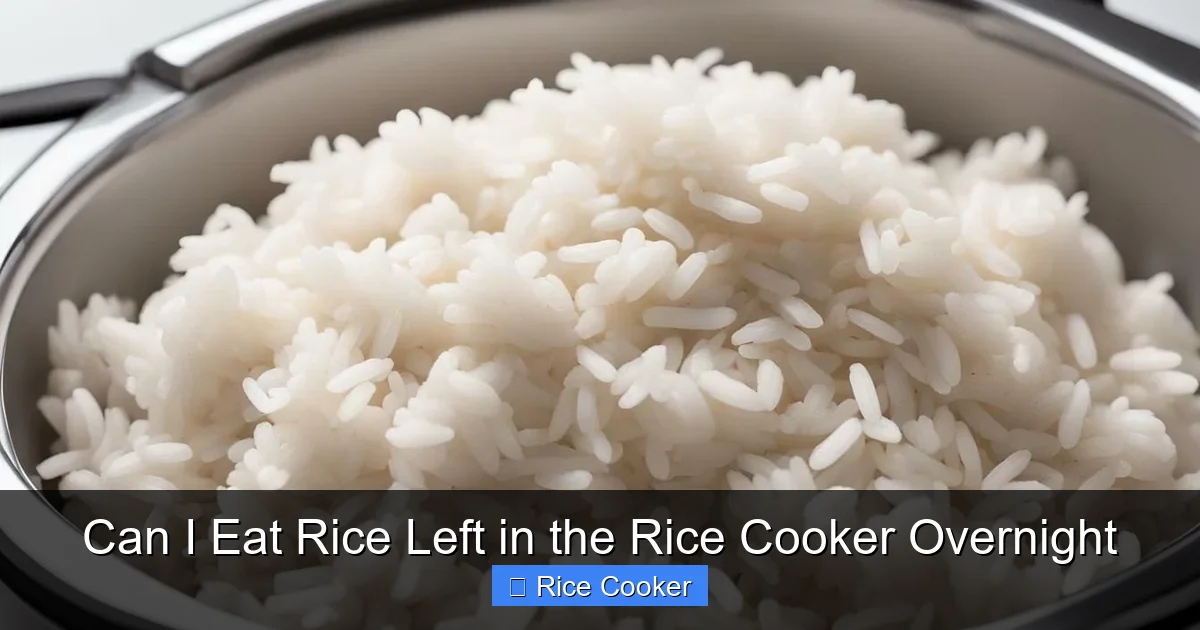
Yes, you can eat rice left in the rice cooker overnight—but only if it’s been stored properly. When cooled quickly and kept at or below 40°F (4°C), cooked rice is safe for up to 2 days. However, leaving it out at room temperature for more than 2 hours increases the risk of bacterial growth like Bacillus cereus. To enjoy safe, tasty leftovers, always transfer rice to an airtight container and refrigerate promptly. With the right steps, your rice cooker can be a convenient tool for meal prep, not just cooking.
Have you ever finished cooking a big batch of rice and thought, “Perfect—I’ll just leave this in the rice cooker overnight so it’s ready for tomorrow’s lunch?” It sounds convenient, right? But before you press “warm” and walk away, pause. While modern rice cookers have excellent heat retention, they don’t automatically keep food out of the danger zone where harmful bacteria thrive. So, can I eat rice left in the rice cooker overnight? The short answer is: not without risk. But with the right precautions, you can enjoy safe, delicious leftover rice—just not directly from the cooker after sitting all night.
Let’s break down everything you need to know about storing rice, avoiding foodborne illness, and making the most of your rice cooker without compromising safety. Whether you’re meal-prepping for the week or saving dinner leftovers, this guide will help you make smart choices every time.
Key Takeaways
- Room-Temperature Danger: Rice left in the rice cooker at room temperature for over 2 hours should not be eaten due to the risk of Bacillus cereus spore germination and toxin production.
- Safe Storage Method: Cool rice quickly (within 1–2 hours) and store it in a shallow, airtight container in the refrigerator at 40°F (4°C) or below.
- Reheating Is Crucial: Always reheat leftover rice to at least 165°F (74°C) to kill any potential bacteria before eating.
- Maximum Refrigeration Time: Cooked rice stays safe in the fridge for up to 48 hours; beyond that, it’s best to discard it.
- Freezing Extends Life: For longer storage, freeze rice in portions for up to 1 month, then thaw and reheat thoroughly.
- Watch for Signs of Spoilage: If rice smells off, feels sticky, or shows mold, throw it away immediately—even if it looks fine.
- Use a Thermometer: A food thermometer helps ensure rice reaches safe internal temperatures during reheating.
📑 Table of Contents
- Understanding the Science Behind Rice Safety
- The Risks of Leaving Rice in the Rice Cooker Overnight
- How to Safely Store Rice After Cooking
- Reheating Leftover Rice Safely
- Signs Your Leftover Rice Has Gone Bad
- Best Practices for Meal Prep and Rice Cookers
- Common Misconceptions About Rice Storage
- Final Thoughts: Convenience Meets Caution
Understanding the Science Behind Rice Safety
Cooking rice kills most surface bacteria, but here’s the tricky part: some bacteria produce spores that survive the cooking process. One of the most common culprits is Bacillus cereus, a bacterium found in soil and grains. These spores can survive boiling temperatures and, when rice cools slowly—especially in warm environments—they begin to grow and multiply.
When rice sits at room temperature (between 40°F and 140°F, known as the “danger zone”), those spores activate. In ideal conditions, they can double in number every 20 minutes. That’s why leaving rice in a warm rice cooker overnight creates a perfect breeding ground. Even though your rice cooker keeps food warm, it doesn’t get hot enough to kill newly formed toxins. So even if you reheat it later, those toxins remain—and they cause food poisoning.
This isn’t just a theory. Health authorities like the FDA and USDA consistently warn against letting cooked rice sit at room temperature for extended periods. The key takeaway? Speed matters when cooling rice.
The Risks of Leaving Rice in the Rice Cooker Overnight
Visual guide about Can I Eat Rice Left in the Rice Cooker Overnight
Image source: ricearray.org
Imagine this scenario: You cook a large pot of jasmine rice for dinner. After serving, you turn the rice cooker to “keep warm” and head to bed. The next morning, you scoop out a bowl and eat it cold—or reheat it slightly. Sounds harmless, right?
Wrong.
Here’s what actually happens:
– Between 60°F and 135°F, Bacillus cereus spores germinate into active bacteria.
– Within 6 to 12 hours, these bacteria multiply rapidly.
– Some strains produce heat-stable toxins that aren’t destroyed by reheating.
– Symptoms of rice-related food poisoning include nausea, vomiting, diarrhea, and stomach cramps—often appearing 1–5 hours after eating.
Even if your rice cooker has a “warm” setting that maintains around 190°F (88°C), it doesn’t eliminate the risk entirely. Why? Because once spores have activated and started producing toxins, higher heat won’t undo the damage. Plus, many rice cookers cycle between heating and warming, which can create pockets of cooler temperatures ideal for bacterial growth.
So while your rice cooker is a fantastic kitchen appliance, it’s not a substitute for proper food storage practices. Never assume it’s safe just because it’s plugged in.
How to Safely Store Rice After Cooking
The good news? You absolutely can enjoy leftover rice—just not straight from the cooker. Here’s how to do it safely:
Step 1: Cool the Rice Quickly
Don’t let rice sit at room temperature for more than 1–2 hours. The faster it cools, the lower the risk of bacterial growth. Here are two effective methods:
– **Ice Bath Method:** Place the rice in a wide, shallow container and submerge the bottom in an ice bath. Stir occasionally to speed up cooling.
– **Portion and Spread:** Divide the rice into smaller containers (like glass jars or plastic tubs). The smaller the amount, the faster it cools.
Step 2: Store in Airtight Containers
Transfer cooled rice to clean, airtight containers. Avoid using the original rice cooker pot unless it’s specifically designed for refrigeration (most aren’t). Glass or BPA-free plastic containers work well.
Step 3: Refrigerate Promptly
Place the containers in the refrigerator within 2 hours of cooking. Keep them on a shelf, not in the door, where temperatures fluctuate more.
Step 4: Label and Date
Write the date on the container. Freshly cooked rice lasts best in the fridge for up to 48 hours. After that, freeze it or discard it.
Step 5: Freeze for Long-Term Storage
For meals planned weeks ahead, freeze rice in 1-cup portions. Use freezer-safe bags or containers, squeeze out excess air, and label with the date. Frozen rice stays safe for up to 1 month. Thaw overnight in the fridge or microwave before reheating.
Reheating Leftover Rice Safely
Even if you’ve stored rice correctly, reheating is non-negotiable. Cold or lukewarm rice can harbor live bacteria. Here’s how to bring it back to life—safely:
Microwave Method
– Place rice in a microwave-safe dish.
– Add 1–2 tablespoons of water to prevent drying.
– Cover with a damp paper towel or vented lid.
– Heat in 30-second intervals until steaming hot (internal temp ≥165°F).
– Stir between intervals for even heating.
Stovetop Method
– Heat a non-stick pan over medium-low heat.
– Add a splash of water or broth.
– Stir frequently until rice is hot throughout.
– Taste and adjust seasoning if needed.
Oven Method
– Preheat oven to 350°F (175°C).
– Transfer rice to an oven-safe dish.
– Cover tightly with foil or a lid.
– Bake for 10–15 minutes, stirring halfway through.
Always use a food thermometer to confirm the center reaches at least 165°F. Visual cues like steam or warmth aren’t enough.
Signs Your Leftover Rice Has Gone Bad
Trust your senses—but remember, not all spoiled food gives obvious warnings. Still, look out for:
– **Unpleasant Odour:** Sour, foul, or ammonia-like smells indicate spoilage.
– **Texture Changes:** Slimy, sticky, or overly mushy texture is a red flag.
– **Mold Growth:** Visible spots of fuzzy green, black, or white mean throw it away.
– **Off Color:** Discoloration (grayish or yellowish patches) suggests bacterial contamination.
If you’re unsure, it’s safer to err on the side of caution. When in doubt, toss it.
Best Practices for Meal Prep and Rice Cookers
Rice cookers are amazing tools, especially for busy people. But to use them wisely, follow these tips:
Prep Ahead
Cook rice in batches on weekends. Cool, portion, and freeze. This saves time during the week and ensures consistent quality.
Avoid Constant Warming
Never leave rice in the cooker “on” for more than 2 hours total. Turn it off after use and clean it properly afterward.
Clean Your Rice Cooker Regularly
Residue builds up over time and can harbor bacteria. Wash the inner pot and lid with warm, soapy water after each use. Some models are dishwasher-safe—check the manual.
Use Fresh Ingredients
Old or improperly stored rice increases risk. Always use fresh rice and clean water when cooking.
Consider Rice Types
Long-grain white rice (like Jasmine or Basmati) dries out faster when stored, making it easier to spot spoilage. Brown rice, while nutritious, has more oil and may go rancid sooner. Store both types in airtight containers in the fridge or freezer.
Common Misconceptions About Rice Storage
There’s a lot of confusion around rice safety. Let’s clear up a few myths:
Myth: “As Long as It’s Warm, It’s Safe”
False. Warmth doesn’t guarantee safety. Bacteria grow fastest between 70°F and 125°F—so even “warm” settings can be risky if left too long.
Myth: “Rice Cookers Are Sanitized During Heating”
While high heat kills bacteria during cooking, it doesn’t sterilize the appliance afterward. Residual moisture can lead to mold or bacterial regrowth if not cleaned.
Myth: “Leftover Rice Smells Fine, So It’s Okay”
Not necessarily. Some toxins don’t affect smell or taste. When in doubt, don’t risk it.
Myth: “You Can Leave Rice Out All Day If You Reheat It”
No. Reheating doesn’t neutralize pre-formed toxins. Only rapid cooling and proper storage prevent them from forming in the first place.
Final Thoughts: Convenience Meets Caution
Can I eat rice left in the rice cooker overnight? Technically, yes—but only if you’ve removed it, cooled it, and refrigerated it within 2 hours. Directly consuming rice straight from the cooker after hours of sitting in the danger zone is unsafe.
Your rice cooker is a powerful kitchen companion, but it requires responsibility. Treat it like any other appliance handling perishable food. Cool fast, store tight, reheat thoroughly, and trust your instincts.
With these guidelines, you can enjoy perfectly cooked rice anytime—without the worry. Whether you’re making fried rice for dinner or building a meal prep plan, safe storage habits make all the difference. So next time you finish cooking, don’t hit “warm” and walk away. Instead, give your rice a quick cool-down, pop it in the fridge, and wake up to a safe, delicious meal.
Remember: safety isn’t complicated—it’s just about being thoughtful.
Frequently Asked Questions
Can I eat rice left in the rice cooker overnight if I turn it off?
No, turning off the rice cooker doesn’t make rice safe to eat after sitting at room temperature for more than 2 hours. Once rice cools below 135°F, Bacillus cereus spores can activate and produce toxins. Always cool and refrigerate rice within 2 hours.
Is it safe to eat rice that’s been in the rice cooker for 8 hours on “warm”?
It’s not recommended. The “warm” setting typically maintains temperatures between 140°F and 190°F, which can still allow bacterial growth if cycling occurs. Toxins may form even if reheating kills bacteria. When in doubt, discard it.
How long can cooked rice stay in the rice cooker safely?
No more than 2 hours. After that, the risk of Bacillus cereus contamination increases significantly. Remove rice from the cooker, cool it quickly, and store it in the refrigerator or freezer.
Does freezing rice kill bacteria?
Freezing slows bacterial growth but doesn’t kill bacteria or destroy toxins. However, it preserves rice safely for up to 1 month. Just reheat thoroughly after thawing.
Can I eat cold rice from the fridge the next day?
Yes, as long as it was cooled and stored properly within 2 hours of cooking. Cold rice from the refrigerator is generally safe, though reheating improves texture and safety.
Why does my leftover rice taste weird even after reheating?
This could be due to old rice, improper storage, or bacterial toxins that alter flavor. Always check for off smells, sliminess, or mold. If the taste seems unusual, it’s best to discard it.