
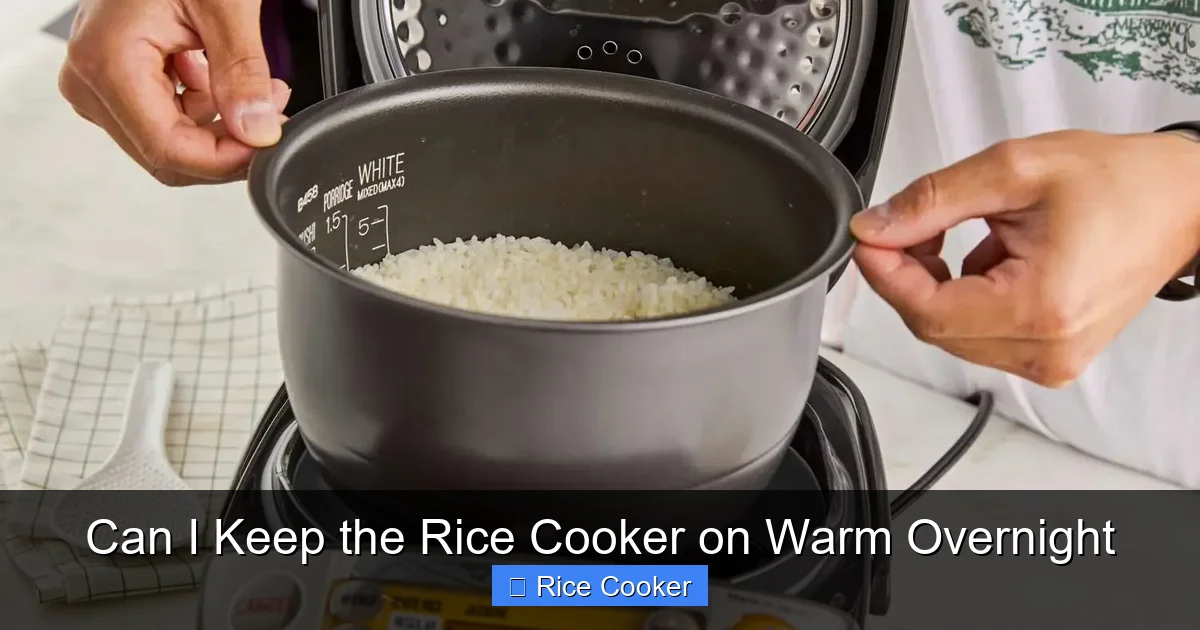
Can you leave a rice cooker on warm overnight? While many rice cookers have a built-in “keep warm” setting, it’s generally not recommended to leave them running all night. The warm setting keeps food at around 160–170°F (71–77°C), which is too warm for bacteria to grow rapidly—but still within the “danger zone” where harmful microbes can multiply quickly. For safety and food quality, it’s better to cool rice properly and refrigerate it within two hours.
Key Takeaways
- Not Recommended Overnight: Leaving your rice cooker on warm overnight increases the risk of bacterial growth and food spoilage, even in modern models with improved insulation.
- Warm Setting Isn’t Cold Storage: The “warm” function maintains a temperature between 160–170°F—still in the food safety danger zone (40–140°F)—where bacteria like Bacillus cereus thrive.
- Proper Cooling Matters: To safely store rice, cool it quickly by spreading it in shallow containers and placing it in the refrigerator within two hours of cooking.
- Use Fresh Rice Only: Never reheat or reuse rice that’s been sitting out for more than two hours, especially if left on warm for extended periods.
- Check Your Model: Some high-end rice cookers have advanced safety features, but most standard models aren’t designed for long-term storage.
- Signs of Spoiled Rice: Discard rice if it smells sour, has an off texture, or shows mold—never taste it to check.
- Best Practice: Cook only what you need and store leftover rice properly in the fridge or freezer for up to 4 days or 3 months, respectively.
📑 Table of Contents
- Can I Keep the Rice Cooker on Warm Overnight?
- The Science Behind Rice and Bacteria
- How Rice Cookers Work: Warm vs. Keep Warm
- Risks of Leaving Rice on Warm Overnight
- Safe Alternatives to Overnight Warming
- How to Tell if Rice Has Gone Bad
- Choosing the Right Rice Cooker for Your Needs
- Real-Life Scenarios and Solutions
- Expert Advice and Food Safety Guidelines
- Conclusion: Prioritize Safety Over Convenience
Can I Keep the Rice Cooker on Warm Overnight?
You’re probably standing in your kitchen after dinner, rice still hot and fragrant, wondering: Can I just leave my rice cooker on warm overnight? It seems convenient—why waste energy reheating rice in the morning when it’s already cooked and waiting? But before you plug in that rice cooker and hit the “warm” button at bedtime, let’s talk about food safety, rice cooker technology, and what actually happens when you leave cooked rice sitting on a warmer.
Rice cookers have become kitchen staples across the globe. Whether you’re making fluffy jasmine rice for Thai stir-fry or hearty brown rice for a grain bowl, these appliances do more than just cook—they often keep your meal warm until you’re ready to eat. But convenience comes with responsibility. While the “keep warm” feature sounds harmless, leaving your rice on it all night raises serious questions about safety, taste, and texture. In this guide, we’ll explore everything you need to know about whether you should keep your rice cooker on warm overnight, how to do it safely (if at all), and what to do instead.
The Science Behind Rice and Bacteria
Why Rice Is a Breeding Ground for Bacteria
Cooked rice is a perfect storm for bacterial growth—especially if it’s left in the “danger zone,” the temperature range between 40°F and 140°F (4°C to 60°C). This is where harmful bacteria like Bacillus cereus thrive. These spores are naturally present in uncooked rice and survive the cooking process. Once moisture and warmth are reintroduced (even from residual heat), they can multiply rapidly.
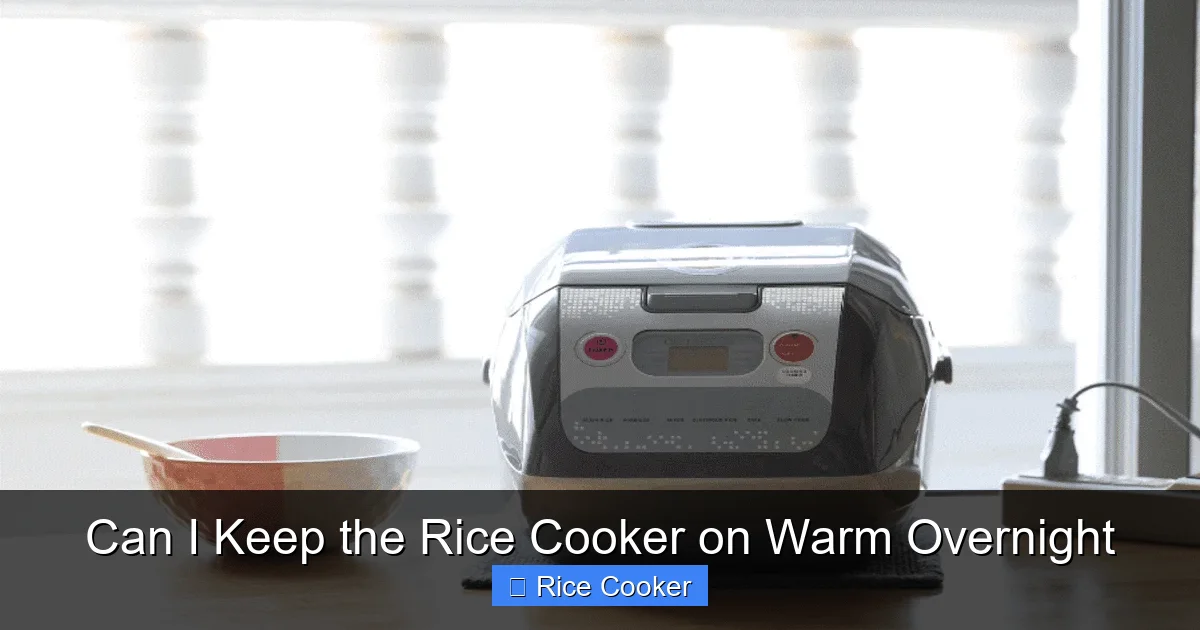
Visual guide about Can I Keep the Rice Cooker on Warm Overnight
Image source: urbanmatter.com
Here’s how it works: When rice cools slowly—say, sitting on a rice cooker’s warm setting all night—it lingers in that dangerous temperature band. Even though the rice cooker’s warm setting typically holds rice between 160°F and 170°F, that’s still above the danger zone. However, if the unit cycles off briefly or loses heat, the rice can drop into unsafe temperatures. Additionally, condensation from repeated opening of the lid can introduce moisture, further encouraging bacterial growth.
The Danger Zone Explained
Food safety experts warn that food should not sit in the danger zone for more than two hours. After that, bacteria can reach levels high enough to cause foodborne illness. Symptoms of Bacillus cereus poisoning include nausea, vomiting, and diarrhea—often mistaken for stomach flu. Unlike some bacteria, these spores aren’t killed by reheating unless the rice is brought to a rolling boil for several minutes.
This is why experts recommend against leaving rice on warm settings for long periods, even if it feels dry and warm to the touch. The risk isn’t always visible—no mold, no smell, no obvious change. But bacteria can be present without any warning signs.
How Rice Cookers Work: Warm vs. Keep Warm
Understanding the “Keep Warm” Function
Most rice cookers today come with a “keep warm” or “warm” mode. This function automatically kicks in after the rice is fully cooked and maintains the food at a set temperature—usually around 165–175°F. The goal is to prevent the rice from cooling too quickly while keeping it fresh for serving.
Modern rice cookers use thermal insulation, heating elements, and sometimes fuzzy logic circuits to regulate temperature. Some high-end models even have sensors that detect moisture levels and adjust warmth accordingly. But here’s the catch: “keeping warm” doesn’t mean “storing safely.” The setting isn’t designed for long-term preservation like a refrigerator or freezer.
Limitations of the Warm Setting
- Temperature Fluctuations: Many rice cookers cycle the heating element on and off to maintain warmth. During the off cycles, the rice temperature can drop into the danger zone.
- Moisture Loss and Reabsorption: As rice dries out on the warm plate, steam may condense when you open the lid, adding moisture back into the grains—ideal conditions for bacteria.
- Lack of Air Circulation: Rice cookers aren’t ventilated like ovens or dehydrators. Trapped moisture and stagnant air create a humid microclimate that promotes microbial growth.
In short, the warm setting is meant for short-term holding—like during a dinner party or when serving family meals. It’s not a substitute for refrigeration.
Risks of Leaving Rice on Warm Overnight
Food Safety Concerns
The biggest risk of leaving rice on warm overnight is foodborne illness. As mentioned earlier, Bacillus cereus can produce toxins that survive normal cooking and reheating. If rice sits on warm for 8+ hours, those toxins may accumulate, making the food unsafe even after reheating.
Additionally, prolonged exposure to warmth can degrade the quality of rice. Starch retrogradation occurs when cooled rice absorbs moisture and hardens. On warm settings, this process reverses slightly, but the texture becomes gummy and unappetizing over time.
Energy Use and Appliance Wear
Leaving your rice cooker on all night also wastes electricity. Depending on the model, the warm function can consume 20–50 watts per hour. Over time, constant cycling of the heating element may shorten the appliance’s lifespan.
Moreover, if you’re using a plastic or non-stick inner pot, continuous heat exposure can degrade coatings or release fumes—especially if the unit overheats or fails to regulate temperature properly.
When It Might Be Safe (But Still Not Recommended)
There are rare exceptions. For example, if you live in a very cold climate and your rice cooker has a powerful, reliable warm setting that maintains a consistent 160°F+ temperature without cycling off, the risk may be lower. Even then, health experts still advise against it.
If you absolutely must leave rice warm overnight—say, for a family gathering early in the morning—use a cooler with ice packs as a backup. Or transfer the rice to a thermally insulated container after 2–3 hours.
Safe Alternatives to Overnight Warming
Cook Only What You Need
The simplest solution is to cook smaller batches. Most people eat about ½ to ¾ cup of cooked rice per meal. Cooking just enough reduces waste and eliminates the need to store or reheat large amounts.
Use a measuring cup to portion out your rice before cooking. For example, if you usually serve 4 people, measure 2 cups of uncooked rice (about 4 cups cooked). That’s precise and manageable.
Proper Cooling Techniques
If you do cook extra rice, cool it quickly to slow bacterial growth. The “two-hour rule” is key: get rice into the fridge within two hours of cooking.
- Spread Thin Layers: Transfer cooked rice to shallow containers or baking sheets. A thin layer cools faster than deep piles.
- Cover with Plastic Wrap: Place plastic wrap directly on the surface to prevent crust formation and speed cooling.
- Refrigerate Promptly: Store in the coldest part of the fridge (usually the back) for best results.
Cooling rice from 140°F to 70°F in under an hour is ideal. If you’re in a warm kitchen, place the container in front of a fan or near a window to help airflow.
Reheating Safely
When you’re ready to eat, reheat rice thoroughly. Bring it to a rolling boil in a saucepan or microwave for 2–3 minutes, stirring halfway through. This kills any remaining bacteria.
A microwave-safe dish with a damp paper towel helps retain moisture and prevents drying. Always check that the internal temperature reaches at least 165°F.
How to Tell if Rice Has Gone Bad
Visual and Olfactory Cues
While bacteria don’t always change appearance, watch for these signs:
- Mold: White, green, or black spots on the surface.
- Sour Smell: Like yogurt gone bad or ammonia.
- Unusual Texture: Slimy, sticky, or overly soft grains.
Never taste rice to test it. Even a small amount of contaminated rice can make you sick.
Storage Guidelines
Store leftover rice in airtight containers in the refrigerator for up to 4 days. Label with the date so you track freshness. For longer storage, freeze in portions for up to 3 months. Thaw in the fridge overnight and reheat thoroughly.
Choosing the Right Rice Cooker for Your Needs
Features to Look For
If you frequently cook rice and want more control, consider a rice cooker with:
- Delay Timer: Start cooking before bed so rice is ready in the morning—without needing to stay warm.
- Insulated Inner Pot: Better heat retention without constant cycling.
- Keep Warm Duration Settings: Some models allow you to set how long the warm function stays active (e.g., 2 hours, 4 hours).
- Auto-Shutoff: Ensures the unit turns off after a set period, preventing overheating.
Top brands like Zojirushi, Panasonic, and Instant Pot offer models with advanced safety features. Read reviews and look for certifications like NSF or UL.
Maintenance Tips
Clean your rice cooker regularly. Remove the inner pot, wash with mild soap, and wipe the heating plate. Avoid submerging electrical parts. Check seals and lids for wear. A well-maintained appliance performs better and lasts longer.
Real-Life Scenarios and Solutions
Scenario 1: Family Dinner Prep
You’re hosting guests tomorrow and want rice ready at 6 PM. Instead of cooking at 5:30 PM and leaving it on warm, use the delay timer to start cooking at 10 AM. The rice will be freshly cooked and ready to serve—no overnight warming needed.
Scenario 2: Leftovers from Last Night’s Meal
You forgot to put last night’s rice in the fridge. It’s been on warm since 8 PM. If it’s now past midnight, discard it. Even if it looks fine, the risk of Bacillus cereus toxin is too high.
Scenario 3: Office Lunch Prep
You cook rice at home in the morning and bring it to work. Pack it in an insulated lunch box with a frozen gel pack. By lunchtime, it’ll be cool enough to eat safely—without ever touching the warm setting.
Expert Advice and Food Safety Guidelines
According to the USDA and FDA, cooked rice should never be left at room temperature for more than two hours. The same rule applies to rice kept on warm settings beyond that window. Health departments worldwide echo this guidance, emphasizing that convenience shouldn’t compromise safety.
Restaurants follow strict protocols: they never store rice on warm plates overnight. Instead, they cool, refrigerate, and reheat as needed. Home kitchens should adopt similar practices.
Conclusion: Prioritize Safety Over Convenience
So, can you keep the rice cooker on warm overnight? Technically, yes—but it’s not safe, not recommended, and not worth the risk. The warm setting is a short-term tool, not a storage solution. By understanding how rice interacts with heat and bacteria, you can make smarter choices in the kitchen.
Instead of relying on your rice cooker to keep rice warm all night, take a few extra minutes to cool and refrigerate it. Use a delay timer for morning meals, portion wisely, and reheat thoroughly. These small steps protect your health and improve the quality of your rice.
Remember: if it’s been more than two hours since your rice was cooked, it’s time to move it out of the danger zone—regardless of what your rice cooker says.
Frequently Asked Questions
Can I leave cooked rice on the warm setting for 4 hours?
No, it’s not recommended. Even for short periods beyond two hours, bacteria can multiply to unsafe levels. Always refrigerate rice within two hours of cooking to ensure food safety.
Does the warm setting kill bacteria in rice?
No. The warm setting keeps rice hot but doesn’t kill existing bacteria. In fact, it creates ideal conditions for Bacillus cereus to grow. Reheating later may destroy some bacteria, but toxins produced during warming can persist.
Is it okay to leave rice on warm for 2 hours?
It’s borderline acceptable for very short periods (under 30 minutes), but best practice is to refrigerate within two hours total. Prolonged exposure increases risk, even if the rice looks and smells fine.
Can I reheat rice that was left on warm overnight?
Only if it was stored properly in the fridge. If rice was left on warm all night, discard it—even if reheated thoroughly. Toxins from Bacillus cereus aren’t destroyed by reheating.
What temperature does the warm setting maintain?
Typically between 160°F and 170°F (71–77°C). While this is above the danger zone (40–140°F), brief drops in temperature during cycling can allow bacteria to multiply.
Are there rice cookers safe to leave on warm overnight?
No rice cooker is officially certified for overnight warming. Even advanced models with auto-shutoff or insulated pots aren’t designed for long-term food storage. Always follow food safety guidelines.